Monthly Newsletter
May-June 2022 - Vol. 17, No. 5
<April 2022 | July 2022>
Top Stories
Passion for animals inspires honorary veterinary degree for Cheryl Mellenthin
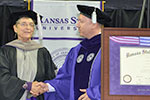
The graduating class of veterinarians for 2022 celebrated with a special “plus one” during its commencement exercises at Kansas State University, held May 13. Their invited “classmate” didn’t actually attend classes, yet has provided some of the most impactful resources used to teach students at the college.
|
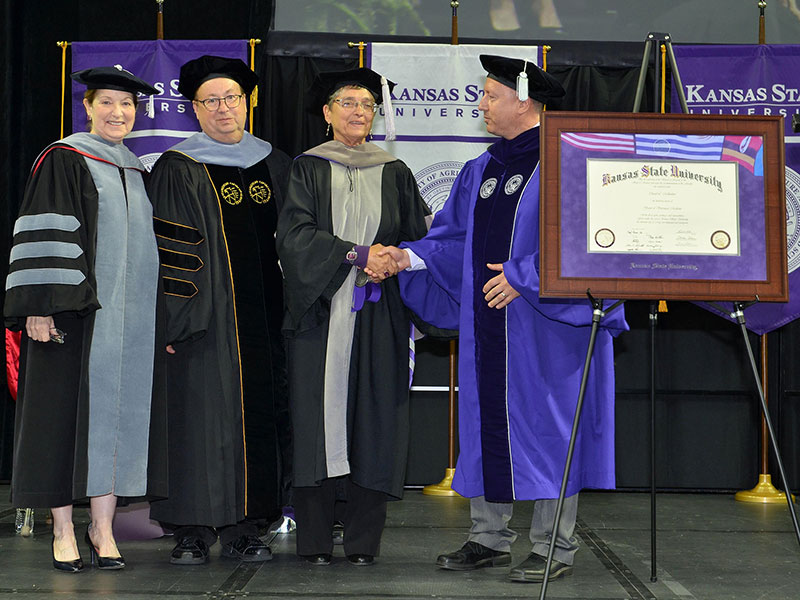
Because of Cheryl Mellenthin’s indelible and enduring passion for animals, as well as her innovation to build educational training programs, the College of Veterinary Medicine bestowed her with an honorary Doctor of Veterinary Medicine degree. This is the first time the college has made such a presentation. Mellenthin, who lives in Cat Spring, Texas, is a retired neonatal ICU nurse. Her late husband, Mark Chapman, graduated with a bachelor’s degree from Kansas State University in 1965. “Cheryl has dedicated her life to animals in need — her first rescue was an apricot miniature poodle abandoned and tethered to a shrub in 1979,” explained Dr. Bonnie Rush, Hodes Family Dean. “She has always appreciated her veterinarians and wanted to extend her impact, so she began supporting veterinary training programs. Absent Cheryl Mellenthin, we do not have a shelter medicine program and we do not have a Clinical Skills Laboratory. She has impacted every graduate from the class of 2022.” The presentation of the honorary degree was approved by the Kansas Board of Regents in March. New K-State President Richard Linton conferred the degree citing Mellenthin’s “service to the profession, support for veterinary student training, and commitment to improving the lives of pets.” “I am overwhelmed by this incredible honor from the K-State College of Veterinary Medicine,” Mellenthin said. “I would like to give a big thank you to Hodes Family Dean Bonnie Rush. Also, a huge thanks needs to go to Dr. Brad Crauer and all the veterinary students who traveled with the mobile spay/neuter unit to ‘fix’ over 32,000 dogs and cats in shelters across the state of Kansas. I can donate a mobile unit, but without the work and initiative of Dr. Crauer and the students, it does no good. It is a joy to work with such a wonderful group of people.”
“Since the day she rescued that poodle in 1979, Cheryl founded a nonprofit organization to address the homeless pet population near Houston, Texas,” Dr. Rush said. “She mobilized a network of 90 volunteers and veterinarians to provide care for more than 38,000 pets and counting. She cares for approximately 70 special needs animals at her home on any given day.” Mellenthin has provided opportunities at not just one, but two colleges of veterinary medicine – the other being Texas A&M. More than 1400 veterinary students have participated in shelter medicine, clinical skills, community outreach, and disaster response through educational initiatives she has supported. “Because of her initiatives, routine medical care and surgical sterilization has been provided for an estimated 90,000 animals,” Dr. Rush said. “Imagine the number of unwanted pets she has prevented. The number of animals secondarily impacted through enhanced training of veterinarians is immeasurable. Our graduates are more confident and proficient due to her support." |
CVM presents scholarships and special awards during annual banquet
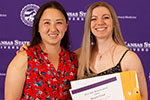
The Kansas State University College of Veterinary Medicine hosted its 2022 Senior Banquet on May 10 at the Hilton Garden Inn. The college presented approximately $160,000 in scholarships to graduating seniors, with a total 74 awards that were presented, some to multiple recipients.
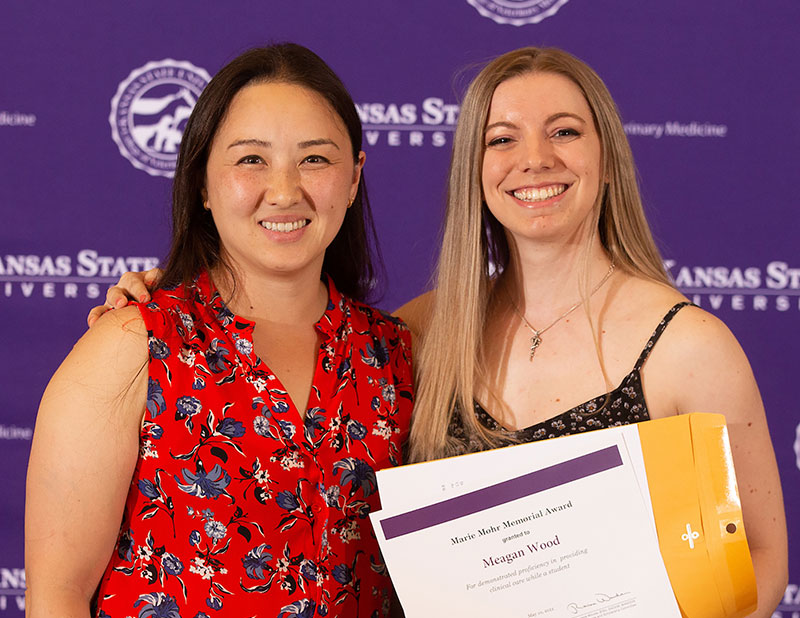
Dr. Stephanie Durbin congratulates the new Dr. Meagan Wood with the Marie Mohr Memorial Award, which was created in 1968, making it one of the older scholarships at the veterinary college.
Two groups of students completed the requirements for concurrent certificate programs in addition to their Doctor of Veterinary Medicine degree studies. Nine students were presented with the Food Animal Veterinary Certificate and three students with the Shelter Medicine Veterinary Certificate. Special awards were also presented during the banquet for distinguished faculty, house officers and staff.
See the full list of scholarships and awards online.
“This class has survived and thrived through difficult circumstances brought on by the pandemic: hybrid learning, navigating a new learning environment and re-establishing normalcy during the service-learning year of clinical studies,” said Dr. Bonnie Rush, Hodes Family Dean of the college. “These students have demonstrated resilience and are ready to begin their careers as veterinarians to serve clients and communities. These scholarships recognize excellence and reward their hard work.”
Three members of this year’s graduating class were recognized with an appreciation award for their service to the United States military: Anna Kucera, Iulia Osipova and Amanda Preczewski.
The Pet Tribute Faculty Award provides the senior students with an opportunity to honor a faculty member who distinguishes themselves through exceptional role modelling as a compassionate caregiver and healthcare professional. This year’s senior class voted for Dr. Stefanie Durbin, clinical assistant professor.
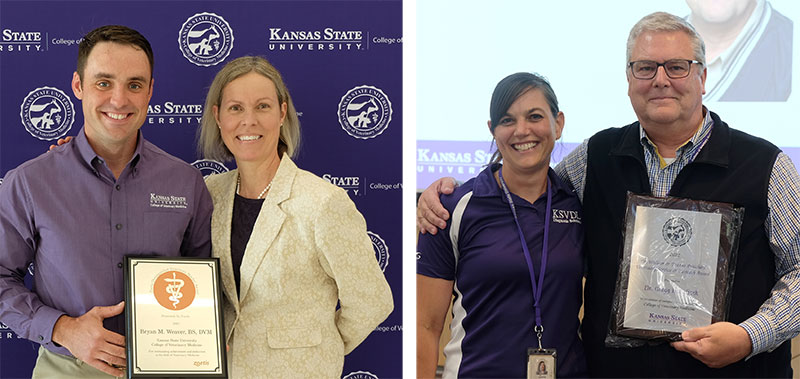
Dr. Bryan Weaver, left was chosen for the 2022 Zoetis Distinguished Veterinary Teaching Award, presented by Dr. Elizabeth Davis. On the right Dr. Jamie Retallick presents the 2022 Dr. William and Deanna Pritchard Veterinary Service and Outreach Award to Dr. Gregg Hanzlicek.
Two annual faculty awards were also presented during the banquet. Dr. Bryan Weaver, clinical associate professor in livestock services, was selected as the recipient of the 2022 Zoetis Distinguished Veterinary Teaching Award. Since 1963, the Zoetis Distinguished Veterinary Teaching Award has been presented at each of the U.S. veterinary colleges to an outstanding teacher who advances the veterinary profession by inspiring students to their highest levels of achievement and professionalism.
The Dr. William and Deanna Pritchard Veterinary Service and Outreach Award was established in 2012 to emphasize the importance of service and outreach in the veterinary profession. The award's namesake, Dr. Pritchard, earned his DVM at K-State in 1946 and was a professor and dean emeritus of the College of Veterinary Medicine at the University of California at Davis. This year’s recipient of the Pritchard Award is Dr. Gregg Hanzlicek, clinical associate professor of diagnostic medicine and pathobiology and director of outreach and production animal field investigations for the Kansas State Veterinary Diagnostic Laboratory.
K-State recognizes Dr. Elizabeth Davis as outstanding department head for 2022
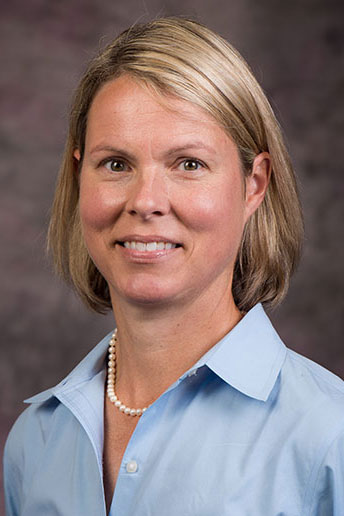
Dr. Elizabeth Davis, associate dean of clinical programs, is one of three individuals recognized and honored by Kansas State University with a 2022 Presidential Award for teaching and leadership excellence.
 |
|
| Dr. Elizabeth Davis |
Dr. Davis serves as head of the Clinical Sciences department and director of the Veterinary Health Center and was chosen as the recipient of the Presidential Award for Outstanding Department Head. Two other faculty winners were chosen from main campus. Elizabeth Hale, doctoral student and graduate teaching assistant in mathematics in the College of Arts and Sciences, was the winner of the Presidential Award for Excellence in Undergraduate Teaching for a Graduate Teaching Assistant. Linda Yarrow, instructor of food, nutrition, dietetics and health in the College of Health and Human Services, received the Presidential Award for Excellence in Undergraduate Teaching.
Each award includes a $5,000 honorarium sponsored by the university president's office and Curtin Property Company, a real estate development firm with offices in Manhattan and Kansas City.
"Honoring excellence among Kansas State University's faculty and leaders has been a proud tradition of the Curtin Property Company for more than 25 years and we are pleased to continue this unique partnership with the university," said Chris Curtin, company president. "The Curtin Property Company, its numerous K-State graduates and its Manhattan associates at Georgetown Apartment Homes and Westchester Park Apartments congratulate the 2022 Presidential Awards of Excellence winners."
Dr. Davis has served as head of the Clinical Sciences since 2017 after being appointed interim head in 2016. She was named director of the Veterinary Health Center in 2021 after serving as interim director since 2019. In 2022, she was appointed as associate dean of clinical programs, while retaining her duties leading Clinical Sciences and the Veterinary Health Center.
Under her leadership, Dr. Davis has initiated several changes to enhance and increase efficiency, collaboration, research, and teaching and learning. These changes include enhancing and renovating existing facilities and construction of new facilities. She spearheaded moving 25 faculty laboratories and offices to facilitate department collaboration and research efforts and the repurposing of underutilized space to serve as research space. These efforts have paid off as grant funding has increased every year under her leadership. Dr. Davis helped raise funding for new facilities and renovations to existing ones, including the new equine performance testing center and renovations to the Hill's Pet Health and Nutrition Center.
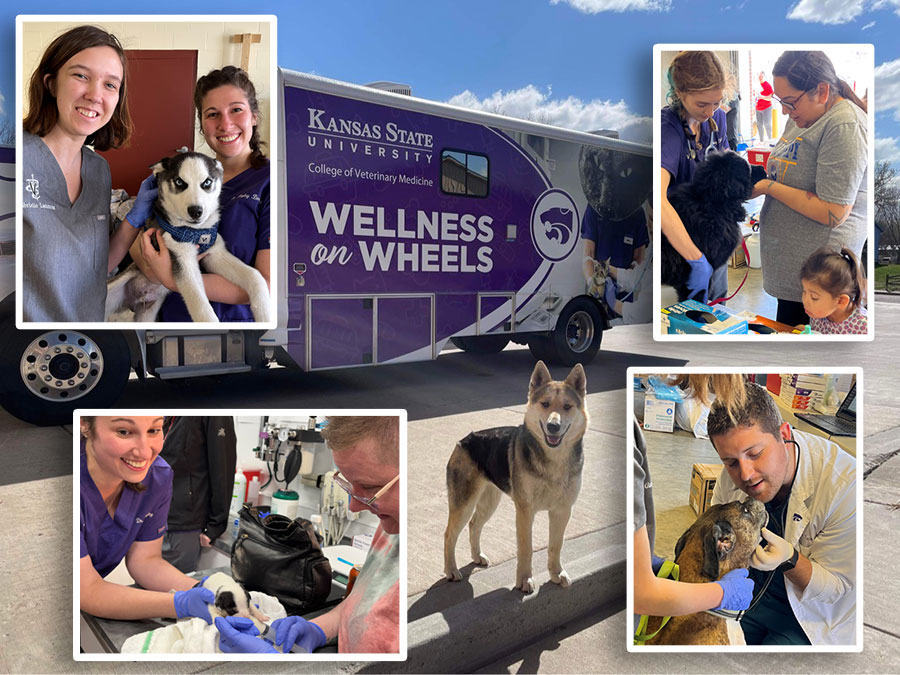
To support faculty, staff and students, Dr. Davis has initiated several programs, acquired necessary equipment and improved processes. These efforts include launching an early career development program for young faculty. She manages clinical rotations for the college's fourth-year students, including the shelter medicine program rotation and its mobile service unit, which provided more than 5,300 veterinary procedures in both 2020 and 2021 around Kansas. She also obtained gift funding for a second mobile unit, Wellness of Wheels, which supports disaster relief and community outreach for underserved populations in Kansas City, Wichita and Nebraska. Dr. Davis also made sure K-State veterinary students had the least disrupted clinical training program in North America through the pandemic.
"It is an honor and privilege to be the recipient of the 2022 Presidential Award for Outstanding Department Head," Dr. Davis said. "Supporting faculty in the clinical sciences department who help provide the highest level of education for veterinary students in a professional degree program is a common mission throughout the college and department. It is a true honor to directly contribute to the success of the educational program within the college."
More Headlines
CVM appoints Nagaraja and Shi for Upham and Appleton professorships

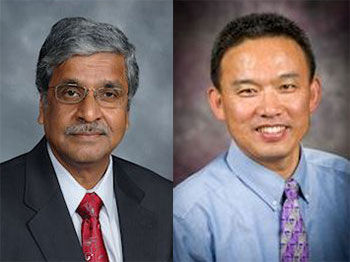
Sometimes good thing come in pairs, such as two faculty members in the college who have received special professorship appointments. Dr. T.G. Nagaraja is the new holder of the Dr. Roy Walter Upham Endowed Professorship and Dr. Jishu Shi was chosen as the inaugural holder of the Dr. Wayne and Hilda Appleton Endowed Professorship.
 |
|
| Drs. T.G. Nagaraja and Jishu Shi |
Dr. Nagaraja is a University distinguished professor of veterinary microbiology in the Diagnostic Medicine and Pathobiology department. His appointment is 70% research and 30% teaching. His research expertise is in gut microbiology of beef cattle, focused primarily on the role of rumen microbes in function and dysfunction of the rumen, and on foodborne pathogens, particularly Shiga toxin-producing Escherichia coli and salmonella in cattle. His research is a blend of basic and applied studies and involves collaborative interactions with epidemiologists, molecular biologists, pathologists and ruminant nutritionists.
Included in Dr. Nagaraja's teaching responsibilities are veterinary bacteriology, and mycology lecture and laboratory for sophomore Doctor of Veterinary Medicine students, ruminant digestive physiology for freshman Doctor of Veterinary Medicine students and two graduate courses, rumen metabolism and rumen microbiology. Additional responsibilities include serving as the College of Veterinary Medicine's director of the graduate programs in pathobiology and veterinary biomedical science.
“For nearly 25 years, T.G. has been a role model and mentor for veterinary and graduate students, and faculty,” said Dr. Derek Mosier, professor and department head of diagnostic medicine and pathobiology. “His achievements as a researcher and educator exemplify those qualities represented by the Dr. Roy Walter Upham Professorship. This is a well-deserved recognition of his contributions to the college.”
In the Department of Anatomy and Physiology, Dr. Jishu Shi, is a professor of vaccine immunology. During his 14-year career at K-State, Dr. Shi has attained national and international recognition for his research focused on advancing our understanding of swine immunology, especially as this pertains to the development of vaccines and diagnostic assays to combat swine fevers.
Dr. Shi is also the founding director of the U.S.-China Center for Animal Health — a K-State-based training center that improves bilateral collaboration in veterinary education and research and assists U.S. animal health companies to access the Chinese market. Dr. Appleton graduated in the class of 1942 and served as a mixed animal practitioner and swine producer.
“I am delighted Dr. Shi has been named the inaugural recipient of the Dr. Wayne and Hilda Appleton Endowed Professorship,” said Dr. Hans Coetzee, University Distinguished Professor and head of anatomy and physiology. “In respect of Dr. Appleton’s career, Dr. Shi’s accomplishments in swine immunology make it fitting for him to be the first recipient of this professorship. As founder of The U.S.-China Center for Animal Health, Dr. Shi’s leadership has been a point of pride for our department, college and university for the past 12 years.”
In addition to these newly appointed professorships, nine other faculty in the College of Veterinary Medicine currently hold endowed professorships or chaired positions. They are:
Dr. Robert Larson – The Edgar E. and M. Elizabeth Coleman Chair
Dr. Mike Sanderson – The W.S. and E.C. Jones Departmental Chair of Clinical Epidemiology
Dr. Kenneth Harkin – Steven and Colleen Hodes Professorship in Veterinary Medicine
Dr. Walter Renberg – Roy and Lucille M. Doughman Professorship
Dr. David Renter – Dr. Robert MacDonald Professorship in Veterinary Medicine
Dr. Michael Apley – The Edwin J. Frick Chair
Dr. Thomas Schermerhorn – Morgan K. "Al" Jarvis Chair in Veterinary Medicine
Dr. Ellyn Mulcahy – James B. Nichols Master of Public Health Professorship
Dr. Mary Bagladi-Swanson – Pet Tribute Professorship
The selection committee for professorships is composed of Drs. Matt Basel, Diane Mason, Jordan Gebhardt and James Roush, faculty members in the College of Veterinary Medicine.
Veterinary Health Center team vaccinates animals for COVID-19 at Manhattan’s Sunset Zoo
This spring, Kansas State University zoo veterinarians and staff from the Sunset Zoo in Manhattan joined forces to protect all the zoo animals against COVID-19. Dr. Sara Gardhouse, assistant professor in exotic pet, wildlife and zoological medicine, said the COVID-19 vaccine for zoo animals is slightly different than Moderna and Pfizer.
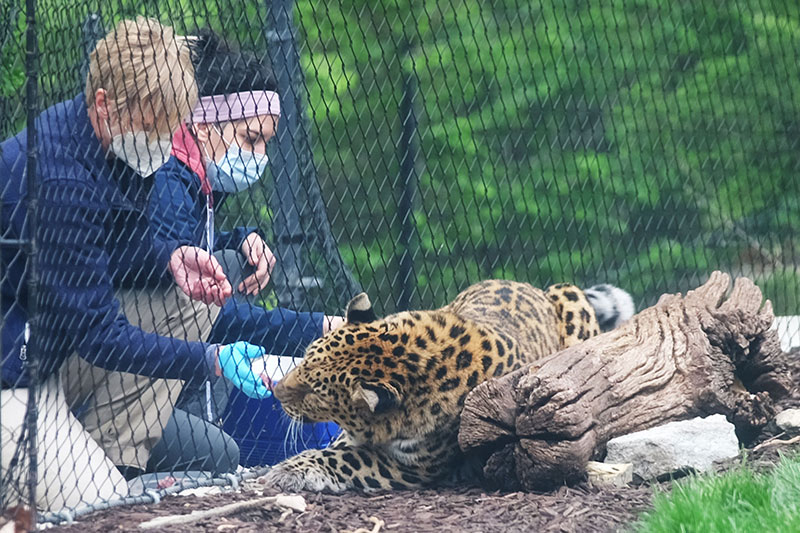
Sunset Zoo's Denise LeRoux, large animal keeper, and Dr. Jasmine Sarvi, resident with the Veterinary Health Center, inject vaccine into Vlad, the Amur leopard.
“The vaccine we are using is produced by Zoetis,” said Dr. Gardhouse, who is also a clinician in the Veterinary Health Center at K-State. “Zoetis has donated over 15,000 doses of this USDA authorized experimental vaccine to ensure protection of the animals in our zoos, conservation centers, academic centers and government organizations.”
Dr. Gardhouse explained that even though this vaccine differs in some ways from the human vaccine it has a lot of similarities.
“The antigen (the virus) is the same as in the human vaccines, but the carrier (adjuvant) is different,” Dr. Gardhouse said. “This allows the vaccine to be safe for use in animal species. The Zoetis vaccine requires an initial dose, followed by a booster in three weeks.”
As of now, Sunset Zoo animals that require protection have all received their first dose of vaccine.
“We are in the process of administering all of their boosters now,” Dr. Gardhouse said. “The Sunset Zoo has focused on vaccinating animals that are known to be susceptible to the virus, and in which species positive cases have been reported – this includes a large number of the zoo mammals and the primates that we have.”
Dr. Gardhouse noted there have been outbreaks in primates, mustelids (members of the weasel family, such as otters and ferrets), and many felidae (cat) species in other zoos and facilities.
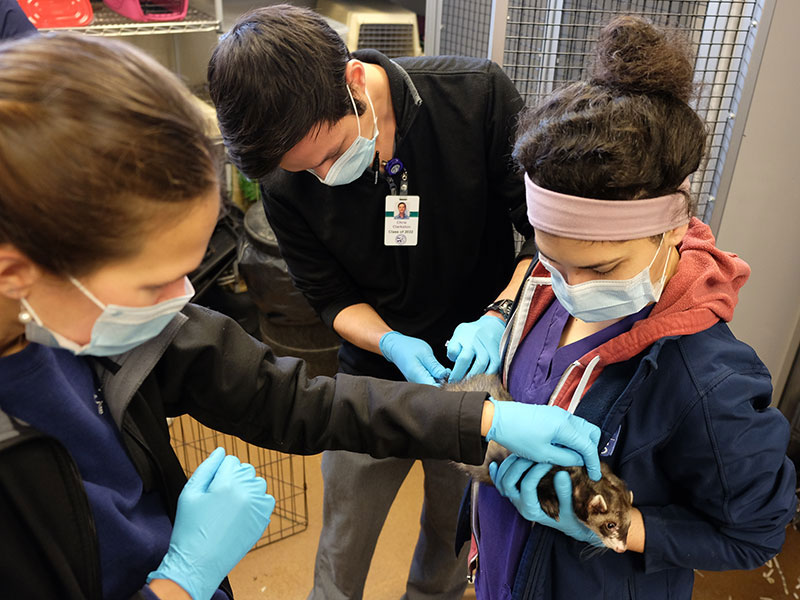
Dr. Sara Gardhouse supervises Dr. Christopher Clarkston and Dr. Jasmine Sarvi vaccinate a ferret in the Sunset Zoo's education center.
“The administration of vaccines to zoo animals is slightly different than administration of vaccines to humans,” Dr. Gardhouse said. “For many of the animals at the Sunset Zoo, the keepers have worked hard to have them trained to receive injections. This process starts with teaching them to lean against a mesh or wire cage, followed by desensitizing them to blunt pokes, and finally sharp pokes and injections.”
To date, the Sunset Zoo has not seen any side effects in the animals.
“We are all thrilled that our animals are going to be protected, just like the humans that work with them,” Dr. Gardhouse said.
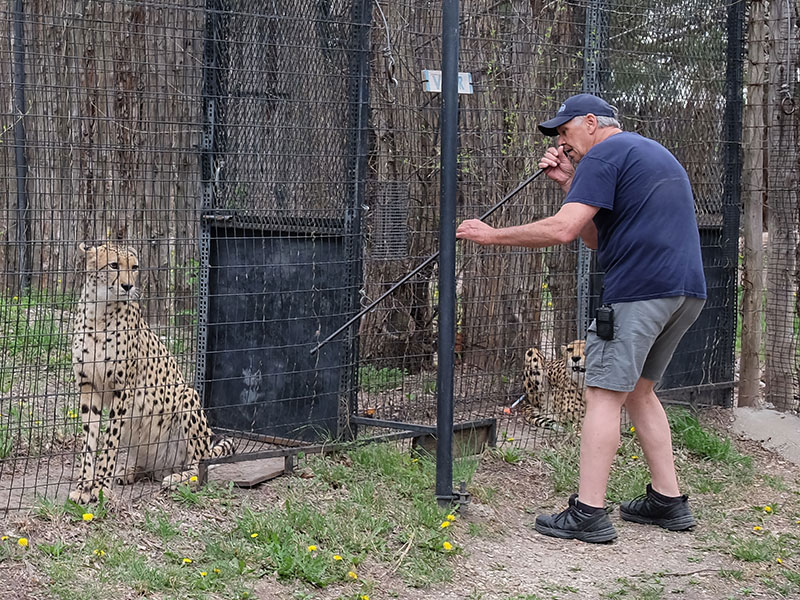
Curator of animals at Sunset Zoo, Kirk Nemechek darts a vaccine into one of Sunset Zoo’s two cheetahs.
“Sunset Zoo is grateful for the dedicated staff and leadership of the Veterinarian Health Center at Kansas State University that help give our animals excellent care, including these very important vaccines for the wellbeing of our animals,” said Scott Shoemaker, director of Sunset Zoo.
The write stuff: Veterinary students win cash prizes in national essay contest
By Wendy Barnes

Knowledge of the role of veterinary medicine in American history has helped two K-State veterinary students win third and fourth place honors in the 2022 Smithcors essay contest sponsored by the American Veterinary Medical History Society (AVMHS).
|
Hadley Watson, third-year veterinary student, earned third place for her essay, “Developments in the Understanding and Treatment of Feline Infectious Peritonitis: 1963-2021." She received an $800 cash prize, a complimentary one-year membership to the society and potential publication in the journal, “Veterinary Heritage.” Nathan Jackson, third-year veterinary student, tied for fourth place with his essay, “Glanders: A History." He received a $500 cash prize, a complimentary one-year membership to the society and potential publication in the journal, Veterinary Heritage. The essays were scored blindly by a panel of AVMHS judges, who after much deliberation, determined a two-way tie for fourth place. As a result, Jackson was bumped up from honorable mention and snagged the second fourth place slot. The winning essays were written in fall 2021 while the students were enrolled in the elective course, History of Veterinary Medicine, taught by Dr. Howard Erickson, professor emeritus of physiology and history of veterinary medicine. “I encourage all of the students to submit their essays for the Smithcors Student Veterinary History Essay Contest sponsored by the American Veterinary Medical History Society,” Dr. Erickson said. “Students in veterinary medicine have a very comprehensive curriculum, so this is no easy task. However, the exercise provides a unique opportunity for the students to learn about the heritage of their profession by researching and writing about a veterinary history topic of their interest.” Named in honor of J. Fred Smithcors, DVM, Ph.D., who founded the AVMHS and authored books on veterinary history, the annual contest is open to DVM students in the United States, Canada and the West Indies. For more information about the Smithcors essay contest visit https://www.avmhs.org/essay-contest. |
College of Veterinary Medicine presents fourth annual staff awards
After dealing with two years’ worth of a pandemic, lockdowns, closures, extra cleaning and sanitization, the College of Veterinary Medicine, or CVM, took time out recently to celebrate and recognize its hard-working staff members.
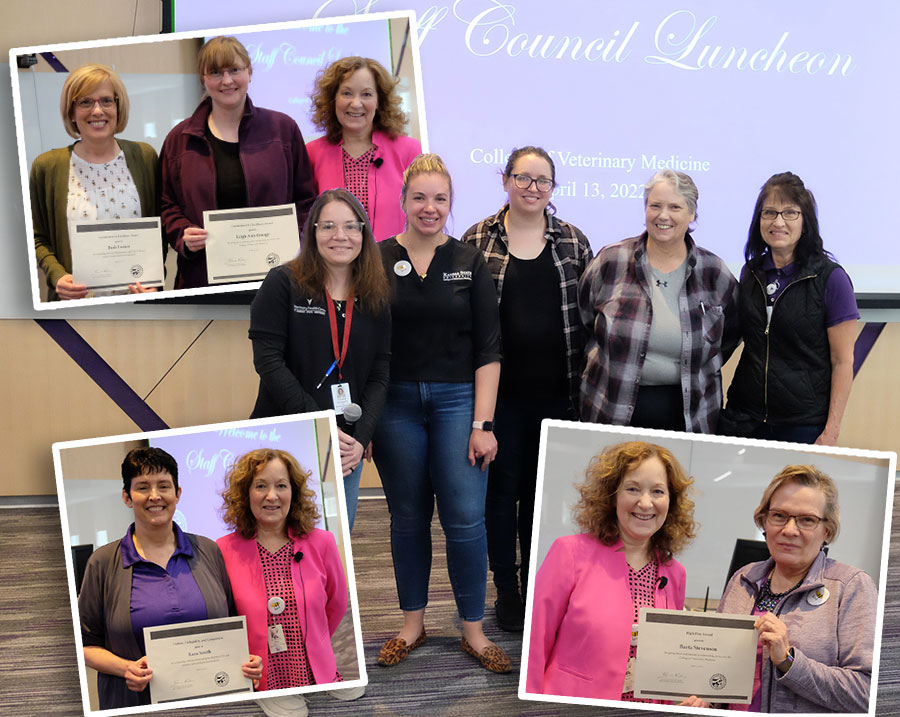
The annual staff council lunch includes several awards presentations. Top inset: Barb Turner and Leigh Ann George receive the Commitment to Excellence Award from Hodes Family Dean Bonnie Rush. Bottom left inset: Kara Smith is the recipient of the Culture, Collegiality and Compassion Award. Bottom right: Barta Stevenson is one of four recipients of the High Five Award. Background image: Staff Council members Christine Hackworth, Hana Johnson, Molly Lohman, Joanna Berg and Susan Hazelbaker host the luncheon and awards presentations. Other recipients who were unable to attend are listed in the story.
A luncheon was hosted April 13 by the CVM Staff Council, who represent all unclassified and university support staff in the college. One of the main priorities of the Staff Council is to acknowledge staff members for their contributions to the college’s mission.
Christine Hackworth, nurse outreach program coordinator and chair of the Staff Council, said one way the council chooses to promote the employees is through its fourth annual Staff Awards program.
“The staff awards are just a small token to recognize the hard work, dedication and amazing talent of our CVM staff,” Hackworth said. “We have more nominees than we have awards, so we work with an outside panel who makes the difficult decision of the award winners. Every employee brings a unique technique, prospective and level of knowledge to the CVM and while we would like to recognize everyone unfortunately, we are limited to the number of awards we can present.”
“Our entire staff and staff council have gone above and beyond in the last few years,” said Dr. Bonnie Rush, Hodes Family Dean. “Through all the challenges, we have a team who finds a way to ensure this college fulfills its primary mission to educate students in veterinary medicine. We enjoy this opportunity to recognize these individuals who have been nominated by their peers and strive to make us better every day.”
There are three award categories: High Five Award; Culture, Collegiality and Compassion Award; and Commitment to Excellence Award. Nominations can be submitted by faculty, staff or administrators in the college, but must be accompanied by at least two letters of support.
The awards for 2022 are as follows:
High Five Award: Presented to an employee who has gone above and beyond in enhancing one or more components of the College of Veterinary Medicine's mission of exceptional teaching, impactful research, outstanding service, extraordinary graduates.
This year's recipients are: Barta Stevenson, program assistant for the Master of Public Health program; Joe Montgomery, communications manager; Brandy Nowakowski, administrative assistant in diagnostic medicine/pathobiology; and Joel Sanneman, research associate, anatomy and physiology department
Culture, Collegiality and Compassion Award: Presented to an employee who enhances a feeling of belonging for all of the College of Veterinary Medicine and creates a more inclusive environment while enhancing the College of Veterinary Medicine's mission of Exceptional Teaching, Impactful Research, Outstanding Service, Extraordinary Graduates.
This year’s recipient is: Kara Smith, laboratory manager, purchasing and technical support for faculty research
Commitment to Excellence Award: Presented up to six employees who have gone beyond in enhancing one or more components of the College of Veterinary Medicine’s mission of Exceptional Teaching, Impactful Research, Outstanding Service, Extraordinary Graduates.
Recipients:
Mark Koller, research compliance specialist in the veterinary diagnostic laboratory; Leigh Ann George, postdoctoral fellow in diagnostic medicine/pathobiology; and Barb Turner, graduate program assistant.
Veterinary team eyes the road to provide vision exams for working dogs
As part of a national event, an ophthalmology team from the Veterinary Health Center at Kansas State University will provide free eye exams this May for guide dogs, disability assistance dogs, detection dogs, military working dogs and other search-and-rescue dogs that selflessly serve the public.
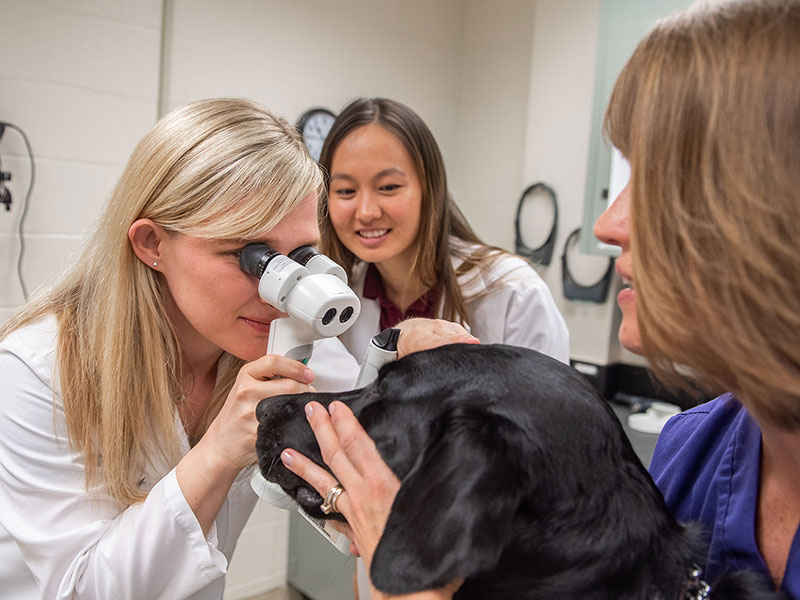
Dr. Jessica Meekins conducts an eye exam on a canine in this file photo.
Each year, board-certified veterinary ophthalmologists across the U.S., Canada and Puerto Rico collectively provide more than 7,500 free eye exams as part of the American College of Veterinary Ophthalmologists (ACVO)/Epicur Pharma National Service Animal Eye Exam event. The Veterinary Health Center has been proud to participate in this philanthropic event since 2013. After a two-year hiatus due to the global pandemic, the event resumed in 2022.
The event is sponsored by the American College of Veterinary Ophthalmologists and Epicur Pharma, as well as several generous industry sponsors. The doctors and staff at the Veterinary Health Center at Kansas State University and participating board-certified ophthalmologists volunteer their services, staff and facilities at no charge for service and working animals and their owners/agents to participate in the event.
This year the K-State team of Dr. Jessica Meekins, associate professor, and Dr. Amy Rankin, professor, both in the College of Veterinary Medicine, along with Jennifer Klingele, RVT, a veterinary nurse in the Ophthalmology Department, will go on the road during the month of May to conduct eye exams at KSDS Assistance Dogs Inc. in Washington, Kansas. KSDS is a nonprofit organization that provides guide dogs for the visually impaired, service dogs to assist individuals with physical disabilities, and facility dogs that assist professionals in the field of education, counseling, healthcare, retirement or the legal system. Drs. Meekins, Rankin, and Jen will also travel to McConnell Air Force Base and the Wichita Police Department to provide exams for military and police working dogs.
Dr. Meekins said, "Our goal is to screen active working animals for eye diseases that could impair their ability to perform their jobs, and in doing so help them better serve their human owners and handlers."
During the complete eye exam, Drs. Meekins and Rankin will look for problems including redness, squinting, cloudy corneas, retinal disease, early cataracts and other serious abnormalities. Early detection and treatment are vital to these working animals.
Read more information about American College of Veterinary Ophthalmologists/Epicur Pharma National Service Animal Eye Exam events online.
Summer travel tips for pet owners
Summer travel season is in full swing. The Veterinary Health Center's Dr. Susan Nelson says there are many factors to consider when deciding to travel with your pets.
"Make sure that the trip you have planned is suitable for your pet," said Dr. Susan Nelson, clinical professor of clinical sciences at the university's Veterinary Health Center. "Many pets experience anxiety when traveling in vehicles or suffer from motion sickness, so it may not be a good idea to take them with you. If you have no option but to take them, you can talk to your veterinarian about medications to help ease their anxiety or nausea." Dr. Nelson recommends having all pets restrained in some way when traveling with them in a vehicle. Cats and small dogs tend to travel best in secured crates, while specialized harnesses for larger dogs help keep them fastened in the vehicle. Allowing pets to remain loose in vehicles can be extremely dangerous because the animal can get between the driver's feet and the pedals. If a window is open, they may jump out and become injured or killed. "Having your dog ride unrestrained in the back of a pickup is also dangerous due to the risk of jumping or falling out, and it is illegal in some states," Dr. Nelson said. Additionally, since heat stress and heat exhaustion are a common concern during the summer, Nelson said it's crucial to not leave pets unattended in the car, even with the windows cracked open, as temperatures can soar to dangerous levels in a matter of minutes. For road trips Dr. Nelson suggests stopping every two to three hours to allow your dog time for exercise and to relieve itself. Unless leash trained, leave cats in their crates. "You can bring along a litter box and let the cat use it inside the car during extended trips," Dr. Nelson said. "Line the crate with plenty of absorbent material, such as newspaper, in case of accidents — and pack some cleaning supplies just in case." It's also a good idea to bring along a supply of tap water, food and treats that your pet is used to eating and drinking. This can minimize gastrointestinal distress that can be caused by consuming water or food the pets are not used to drinking or eating. Freezing water in a bowl and then letting it slowly thaw during the trip is a good way to prevent it from splashing out. If your travel plans involve crossing state lines with your pet, health certificates are required by most states, as well as other possible health requirements. These certificates can only be issued by a U.S. Department of Agriculture-accredited veterinarian. You can check your state of destination's requirements online at the USDA-APHIS Traveling With Your Pet website. If traveling by car, the certificates are valid for 30 days. If traveling by plane, most airlines require health certificates within 10 days of traveling. In addition to health certificates, some airlines require acclimation statements from the animal's veterinarian that state the animal is accustomed to the temperature. It is important to note that pets are not allowed to fly when temperatures exceed 85 degrees. "If it is hotter than 85 degrees, no pets are allowed to fly, so you should schedule your flights for early in the morning or during evening hours because of the heat restrictions," Dr. Nelson said. Dr. Nelson advises against sedation for a pet that will be traveling by plane. Sedatives can affect a pet's balance and ability to regulate its body temperature, which can be crucial if the pet will be in the plane's cargo hold. If excessive noise or motion sickness are an issue, Dr. Nelson advises consulting with your veterinarian about options to make the flight more comfortable for the pet. "My best advice is to get on the airline's website before booking travel and find out everything they require as far as crate specifics and other flight regulations," Dr. Nelson said. "Be aware that many airlines prohibit certain breeds from traveling on their planes, regardless of the time of year." Regardless of how you are traveling this summer, Dr. Nelson encourages pet owners to have some form of identification for their pets. Ideally, a pet will have tags and a microchip, and crates or carriers labeled with pet and owner identification. Consider carrying a picture of your pet in case it should get lost and you need proof of ownership. Also make sure you have enough of your pet's medications, if needed, to last the entire duration of your trip. When boarding a pet, Dr. Nelson suggests checking with the facility on health requirements. The most common requirement is for the animal's vaccinations to be up to date before it is admitted to the facility. "Core vaccines — the distemper combinations for cats and dogs and rabies — are almost exclusively required," Dr. Nelson said. "Most also require kennel cough vaccines for dogs, and some require the canine influenza vaccine. Some facilities may have additional requirements for cats. Be proactive and call ahead to ensure your veterinarian has time to get your pet vaccinated so they will be adequately protected before they arrive at the kennel." Dr. Nelson said many facilities offer additional amenities, such as individual or group playtime and grooming services. She recommends confirming drop-off and pickup times for the facility. Having a neighbor, relative or family friend provide care for your pet is also an option. Certified, professional pet sitters are available in some areas as well. Nelson cautions owners to always have plans in place in case of a pet emergency. For more information, contact the K-State Veterinary Health Center at 785-532-5690.
 |
|
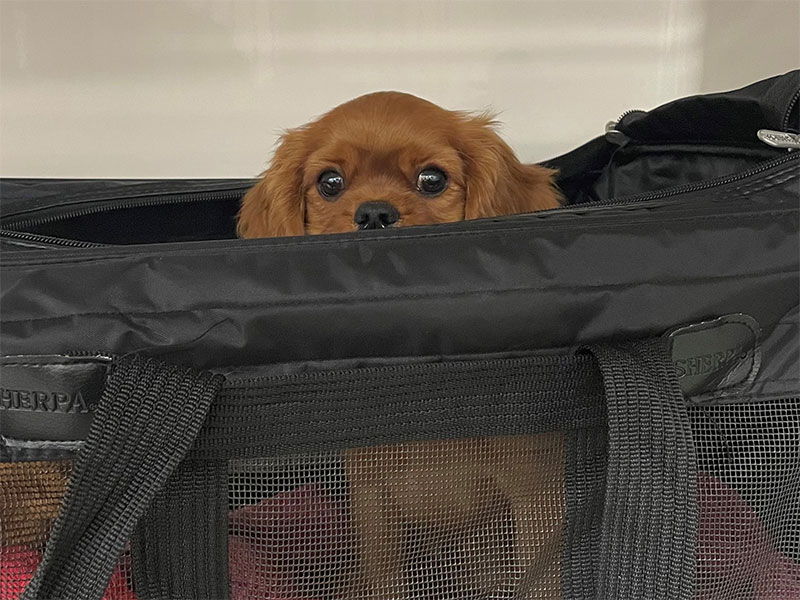
Advance planning is key to smooth traveling with family pets. Dr. Susan Nelson offers tips to consider before finalizing summer travel plans. Photo courtesy Rachel Gooldy.
Regular features
Alumni Events, Development and Continuing Education
 Annual Reunions, Alumni Awards and the Annual Golf Tournament top our alumni headlines this month. The Veterinary Medical Alumni Association organizes alumni receptions at several of the national annual conferences plus continuing education events and more. The AVMA reception is coming up soon, so be sure to register at the link inside.
Alumni Updates
Alumni classes gather for reunion weekend
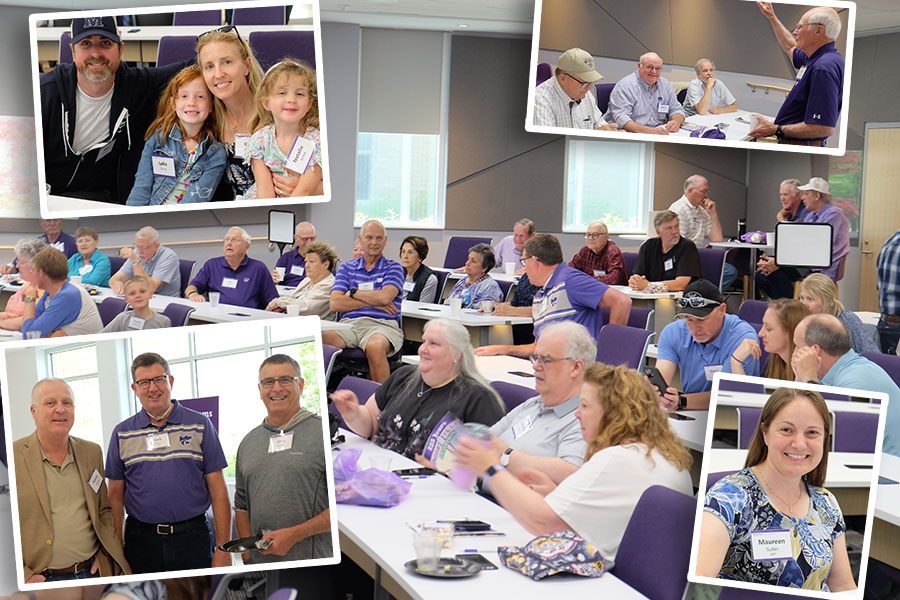
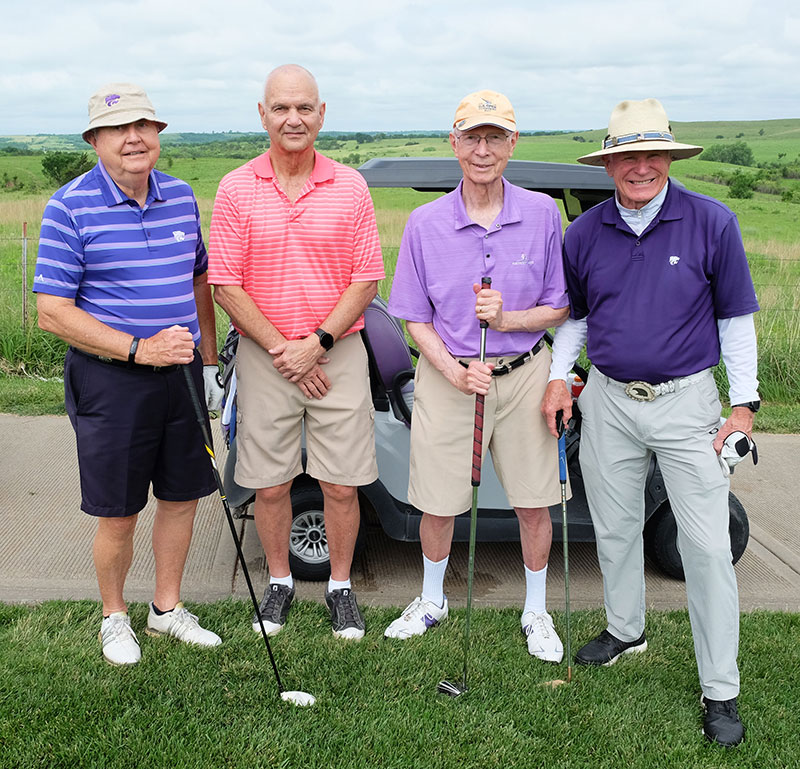
The annual class reunions kicked off the first weekend in June and included members of classes from 1962 to 2017. The college welcomed the classes in the Boehringer Ingelheim Animal Health Atrium and Auditorium, as shown in the above photo collage. Other activities included tours and the annual scholarship golf tournament, featuring several participants such as this experienced team below featuring Drs. Jim Hicks '67, Ken Winters '67, Howard Erikson '59 and Jim Dale '67.
Alumni Awards highlight luncheon at annual conference
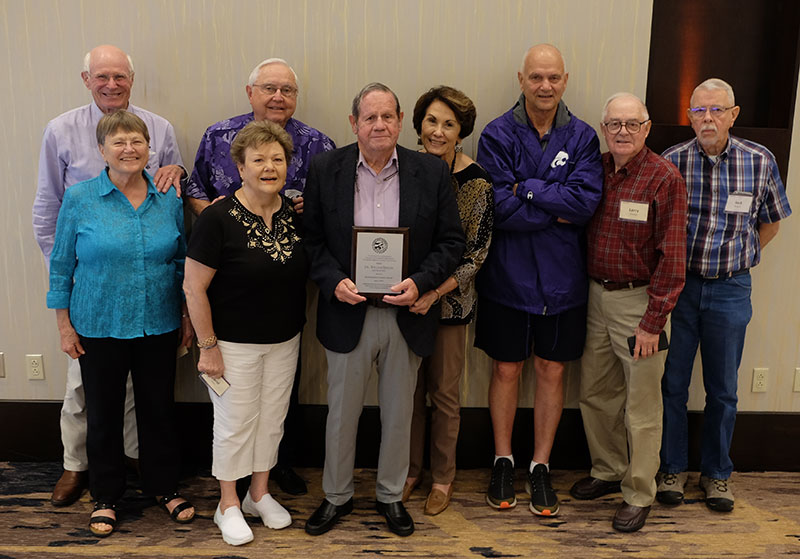
Above, class of 1967 classmates help Dr. Billy Bergin celebrate his selection for a 2022 Distinguished Alumnus Award. This year's honorees include:
Dr. Janver Krehbiel '62, Distinguished Alumnus Award
Dr. Ty Brunswig '14, Outstanding Young Alumnus
Dr. Susan Nelson '89, E.R. Frank Award
Dr. Mike Apley '87, E.R. Frank Award
Submit nominations for Alumni Recognition Awards onlineSee our new online nomination form to nominate a fellow alumnus for one of our many annual recognition awards, presented at the national conferences: VMX, WVC, AVMA and the Annual Conference for Veterinarians. See full details at the link below. |
In Memoriam - Recently Departed Alumni
Dr. Charles E. Knudsen, DVM 1967 Dr. Nicholas Patrick Schroeder, DVM 1970 Dr. Ralph Edward Jewell, DVM 1971 Dr. Richard Doyle Jamison, DVM 1973 Dr. Cassius M. Tucker, DVM 1982 (click highlighted names for obituary) |
Questions about Alumni or CE events?Contact:
|
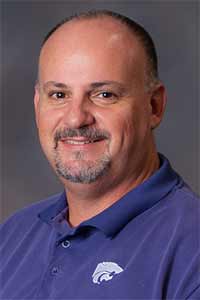 Tony Ballard
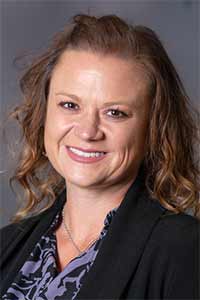 Sarah Keatley
News Ticker
|
More activities and accomplishments in the College of Veterinary Medicine: |
VHC welcomes new class of interns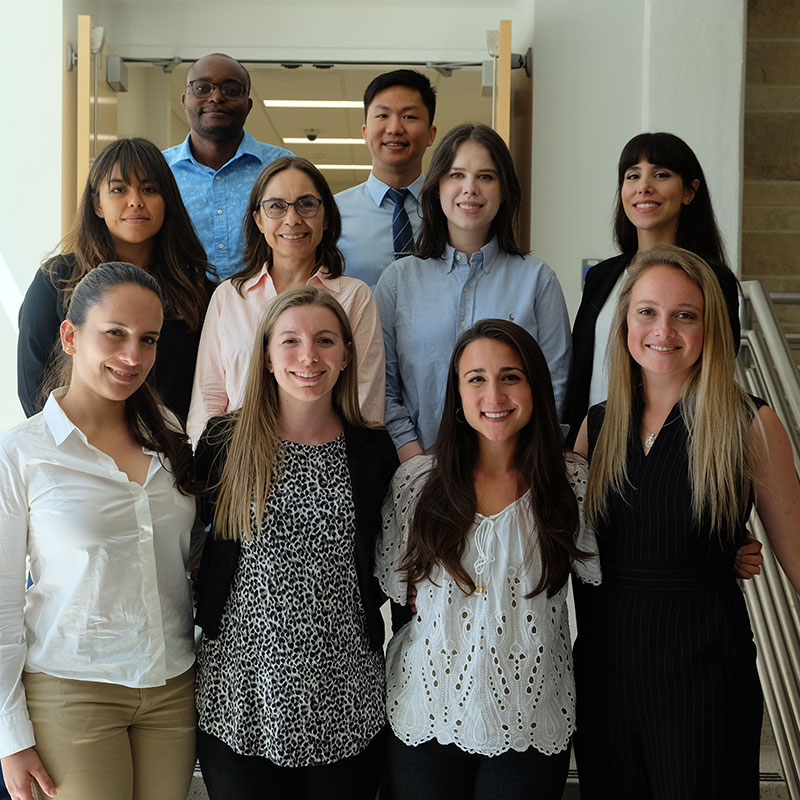
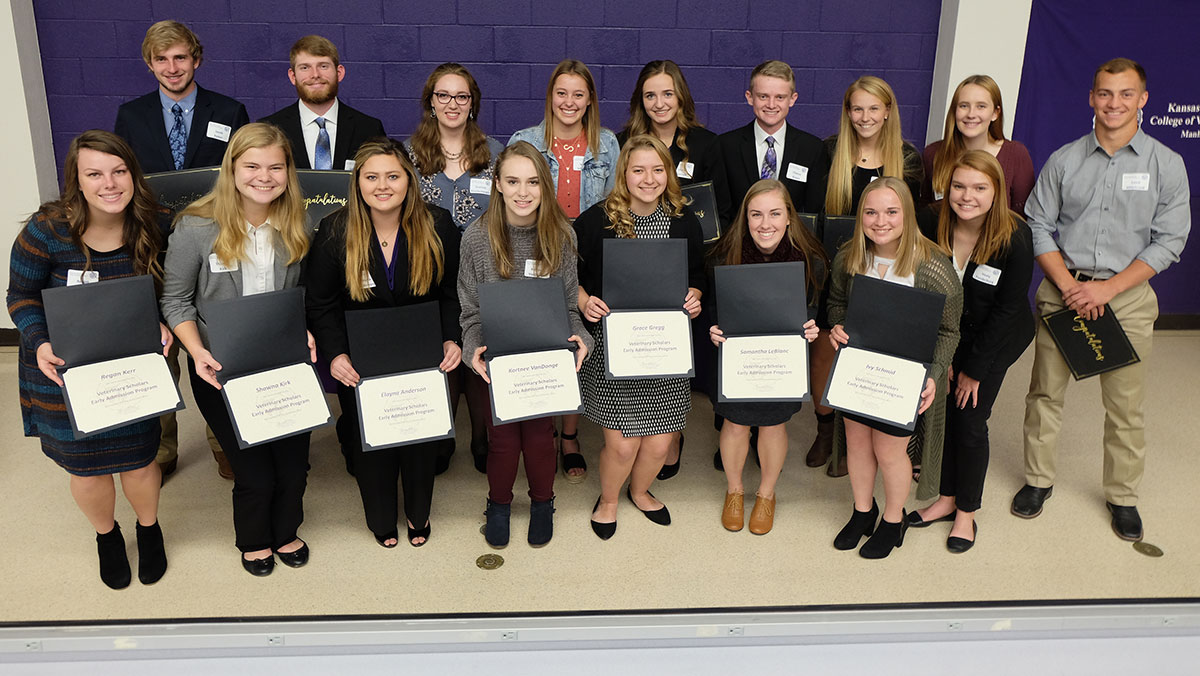
Front row, from left: Dr. Barbara Ontiveros, equine; Drs. Meagan Wood, Jessica Zito and Devin Osterhoudt, small animal medicine and surgery. Middle row: Dr. Karla Olguin Rangel, small animal medicine and surgery; Dr. Lorelei Bojorquez, diagnostic imaging and radiology; Dr. Charlee Sturkie, small animal medicine and surgery; and Dr. Niki Nabavi, small animal medicine and surgery. Back row: Dr. Tichaona Murambinda, shelter medicine; and Dr. Tim Lin, small animal medicine and surgery. |
|
On April 7, during the student public health poster competition held for National Public Health week, Dr. Raghavendra Amachawadi had two students place. Ramya Kalam (a master's student) placed third in the graduate level with her poster, “Public Health Importance of Escherichia coli pathotypes involved in swine colibacillosis and its effect on antimicrobial resistance” and Samantha Rice, junior in animal science and industry, placed first in the undergraduate level with her poster, “Antimicrobial Activities of Cannabinoids Against Bacterial Pathogens that cause Liver Abscesses in Feedlot Cattle.” Dr. James Carpenter and the CVM hosted An Exotic Companion Mammal Symposium presented by Oxbow on April 3. Drs. Carpenter and Sara Gardhouse gave a joint talk, “Pharmacokinetics and Clinical Significance of Cannabidiol/Cannabidiolic Acid, Robenacoxib, and Firocoxib in the Rabbit: Recent KSU Studies.” During National Volunteer Appreciation Week April 17-23, Dr. Raelene Wouda was recognized by the American College of Veterinary Internal Medicine (ACVIM) for her volunteer role as Certification Liaison to the ACVIM Board of Regents with the goal to further improve the process of residency training and certification. Dr. Anne Lovett, Livestock Services third-year resident, was selected as the winner for Kansas State University at the 19th Annual Capitol Graduate Research Summit in Topeka. Her research mentors are Drs. Kathryn Reif and Emily Reppert. Dr. Miriam Martin was chosen earlier this year as a 2022 Midwest Section American Society of Animal Science Young Scholar award recipient and has now been selected as a national Young Scholar recipient. She will give an invited talk at the National American Society of Animal Science meeting in Oklahoma City in June. |
Faculty chosen for ER Frank Awards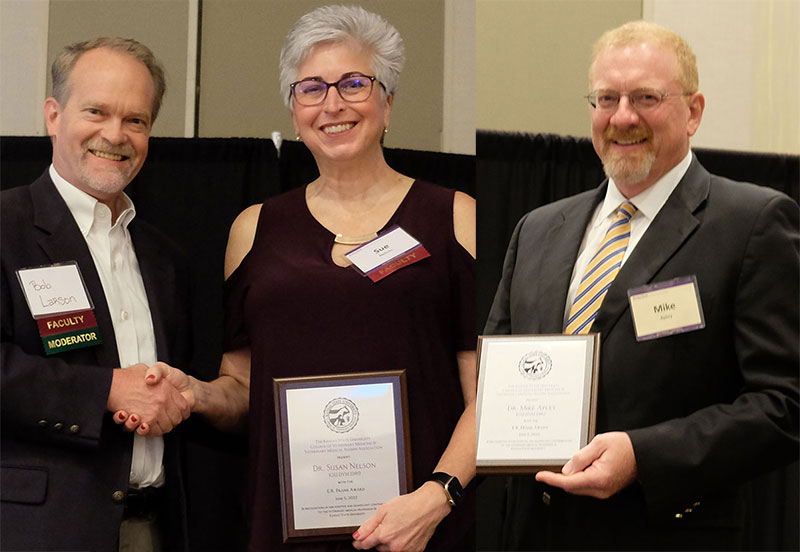
Dr. Robert Larson congratulates Dr. Susan Nelson and Dr. Mike Apley on being this year's recipients of the ER Frank Award. This Award is presented to a faculty member who displays meritorious service to the college as well as the same professional essence of Dr. Frank, who was a longtime faculty member in equine surgery and a K-State alumnus. Nominees must have at least a 15-year relationship with the college, possess a noteworthy record of service and display an unassuming and unpretentious manner throughout their careers. |
Shelter Medicine teams goes on the road to provide services
|
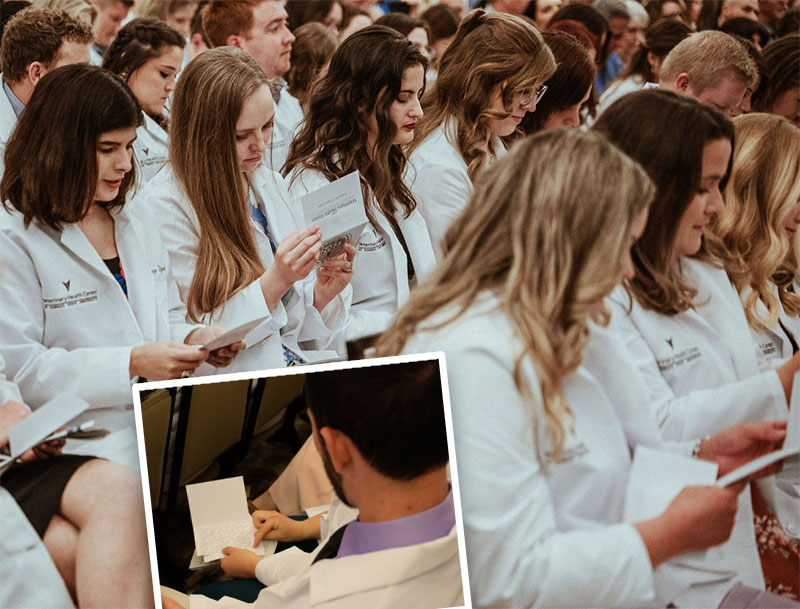
White Coat Ceremony delivers words of encouragement
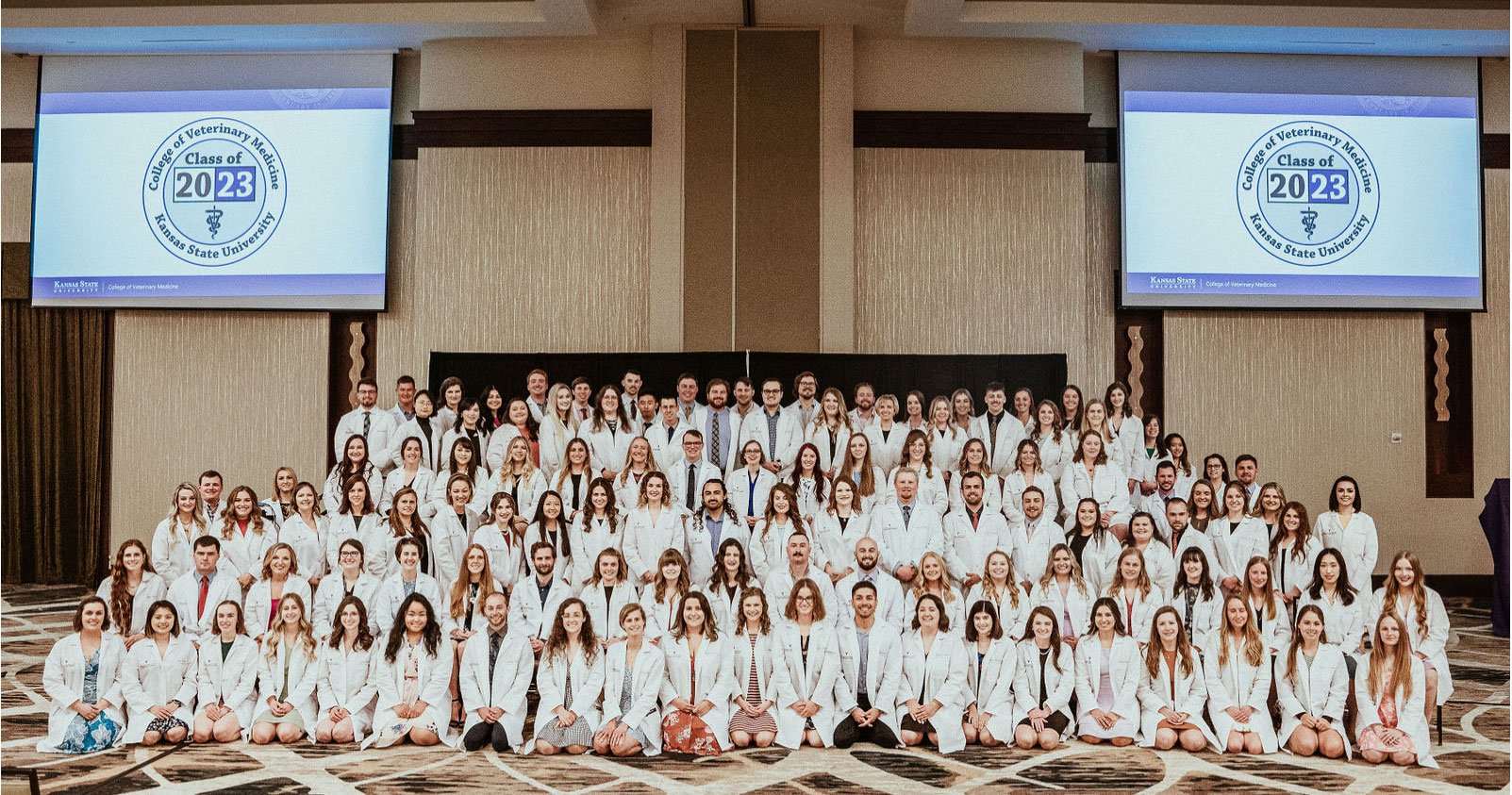 Presenting the class of 2023 - click photo to enlarge this image. A video of the 2022 White Coat ceremony is available for viewing online. |
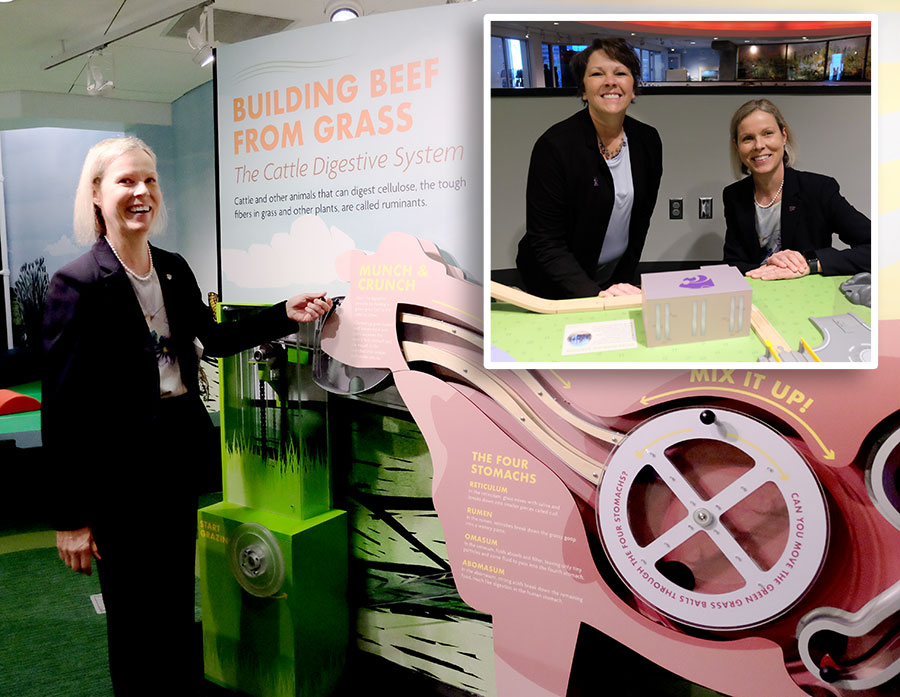
Flint Hills Discovery Center incorporates Veterinary Health Center in new 'Prairie Playscape'
|
Fond Farewells: Good luck to new veterinarians in class of 2022
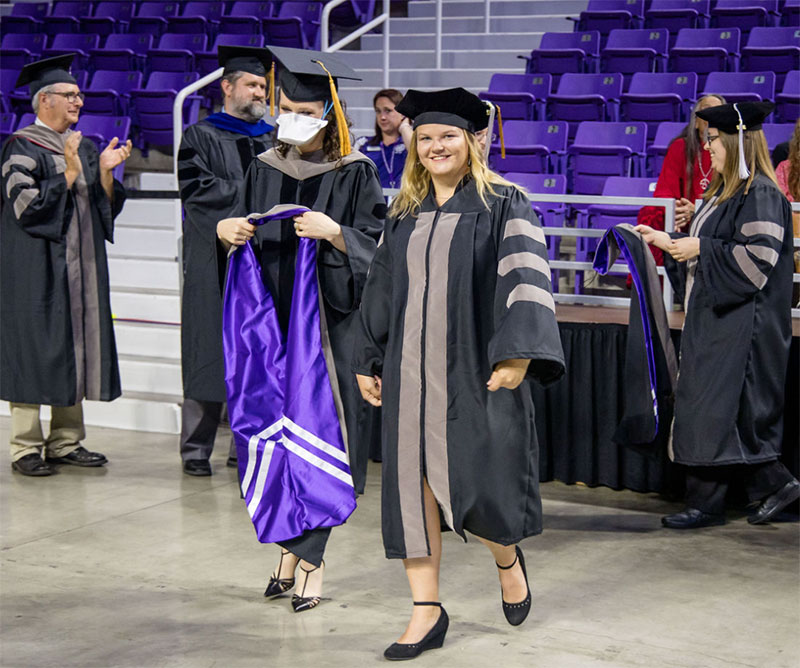
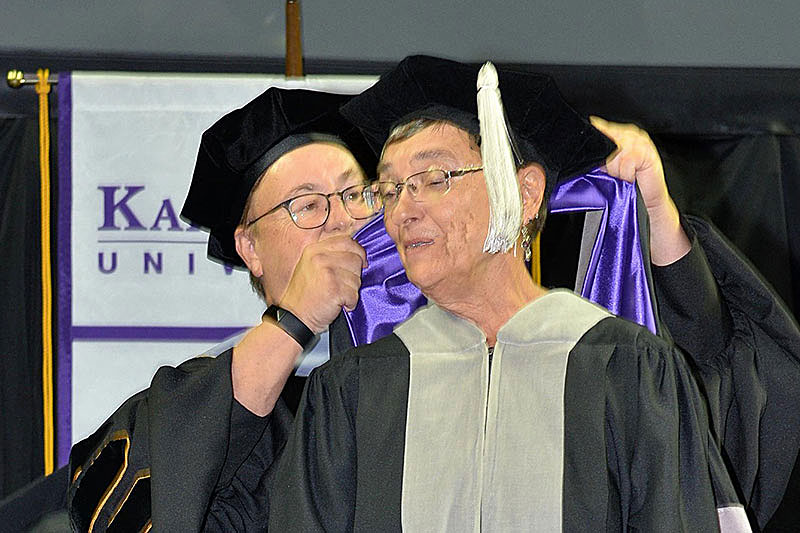
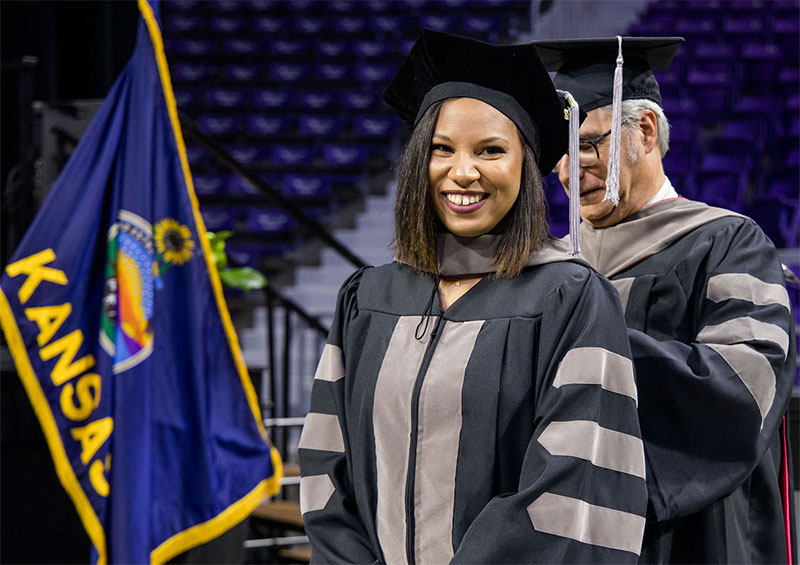
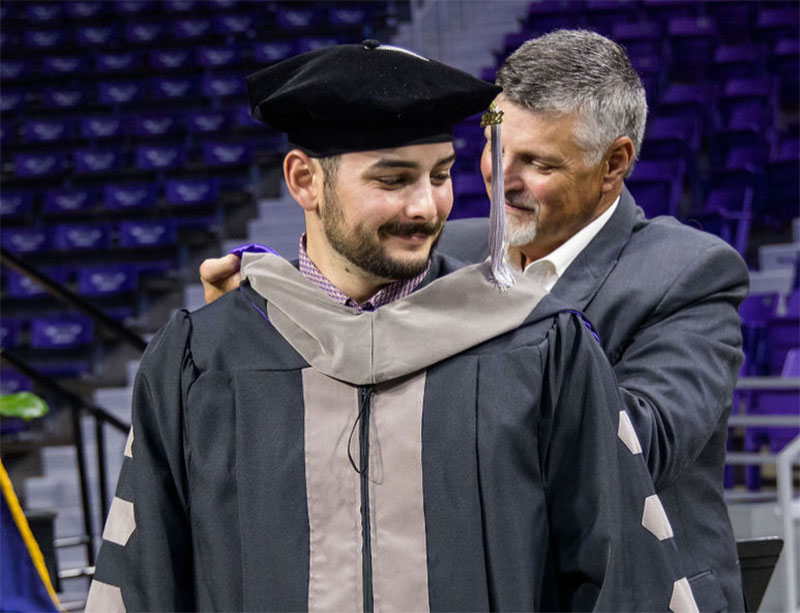
Dr. Emily Reppert (left), associate professor in agricultural practices, accompanies an excited, new Dr. Madison Ludewig, as they prepare for the hooding ceremony. A video of the commencement exercises is available online. |
 Join the College of Veterinary Medicine on LinkedIn and add us to your profile under education and/or employment to help build and engage our online social community! Follow the LinkedIn page here: www.linkedin.com/company/kstatevetmed
New Arrivals/Recent Departures
Lifelines is published each month by the Marketing and Communications Office at the College of Veterinary Medicine. The editors are Joe Montgomery, jmontgom@vet.k-state.edu.