
Monthly Newsletter
July 2022 - Vol. 17, No. 7
<May-June 2022 | August 2022>
Top Stories
Researchers successfully test first vaccine to prevent bovine anaplasmosis
A new study in the College of Veterinary Medicine at Kansas State University is paving the way forward in controlling a devastating and costly cattle disease: Bovine Anaplasmosis.
“Our publication is unique and is the first in addressing the urgent need to develop a vaccine against an important tick-borne disease,” said Dr. Roman Ganta, University Distinguished Professor and director of the Center of Excellence for Vector-Borne Diseases in the College of Veterinary Medicine. “Currently there is no effective vaccine in the market, so this effort required innovative approaches in developing a vaccine.”
Dr. Ganta said anaplasmosis is a major problem, not only in the United States, but around the world.
“Economic impact of the disease is in the billions of dollars of losses annually throughout the world,” Dr. Ganta said. “The disease can spread rapidly by mechanical transmission routes, besides transmitted by over 20 different tick species.”
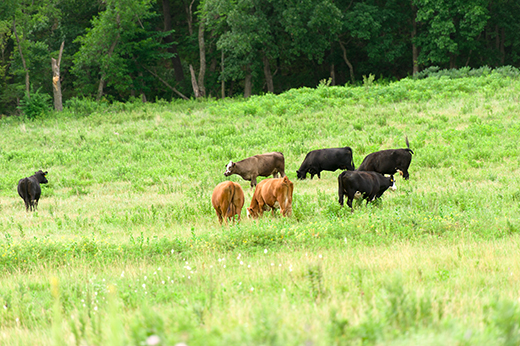 Dr. Ganta said anaplasmosis is the primary reason many producers feed animals with an antibiotic supplement (chlortetracycline), which has been proven not to be effective.
“We started a major research project in defining the disease throughout California and parts of Missouri and Kansas,” Dr. Ganta said. “Independent of animals fed with antibiotic supplement, about 50-60% of all animals are positive for the disease. Farm practices, however, may make some difference in controlling the disease, but having a good vaccine is the best option for controlling the disease. We are the only research team working on it and developed the first protective vaccine.”
Dr. Ganta’s research article, “Targeted mutagenesis in Anaplasma marginale to define virulence and vaccine development against bovine anaplasmosis” was published in PLOS Pathogens in May. Co-authors included a group of scientists from St. George’s University in the West Indies, Animal Diseases Research Unit of the US Department of Agriculture in Pullman, Washington, and other veterinary researchers in the departments of anatomy and physiology, and clinical sciences at Kansas State University.
“This is a truly outstanding paper that represents what I believe to be the greatest advance in anaplasmosis vaccine development in 50 years,” said Dr. Hans Coetzee, University Distinguished Professor and head of anatomy and physiology. “We are grateful for the opportunity to collaborate with this group on such an impactful project.”
“Our work has been identified as ‘very significant,’ so we were able to receive support from an endowed fund managed by the California Cattleman’s Association (CCA),” Dr. Ganta said. “In particular, this funding is by the Russell L. Rustici Rangeland and Cattle Research Endowment, which primarily supports faculty at the University of California, Davis. Due to our research’s impact, the majority of the funding came to us through a collaboration with a colleague at that university.”
Dr. Ganta gave a talk last fall at UC Davis and at a CCA meeting. He is invited to share his research at the National Cattlemen’s and Beef Association meeting in Reno later this month.
CVM hosts veterinary educators conference
From June 27 to29, the College of Veterinary Medicine hosted 153 registrants for the Veterinary Educator Collaborative, or VEC. This biennial conference is a component of the American Association of Veterinary Medical Colleges that fosters faculty development and promotes best practices among veterinary educators.
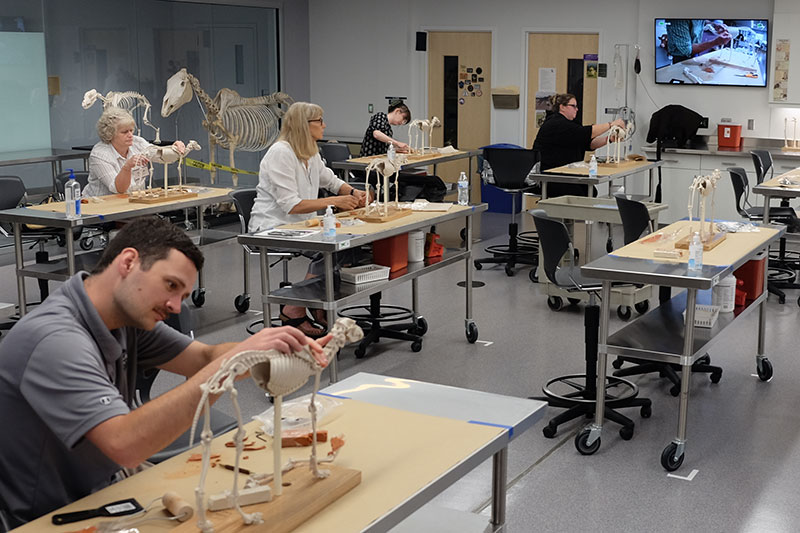
Participants attend the "Enhancing Anatomy Education with Clay Modeling" session in the Clinical Skills Lab.
The AAVMC represents the global academic veterinary medical community and includes members from more 50 schools in the U.S., Canada and abroad.
“We were very pleased to showcase our facilities while interacting with colleagues from schools across the U.S. and some who traveled internationally,” said Dr. James Roush, associate dean of academic programs and student success.
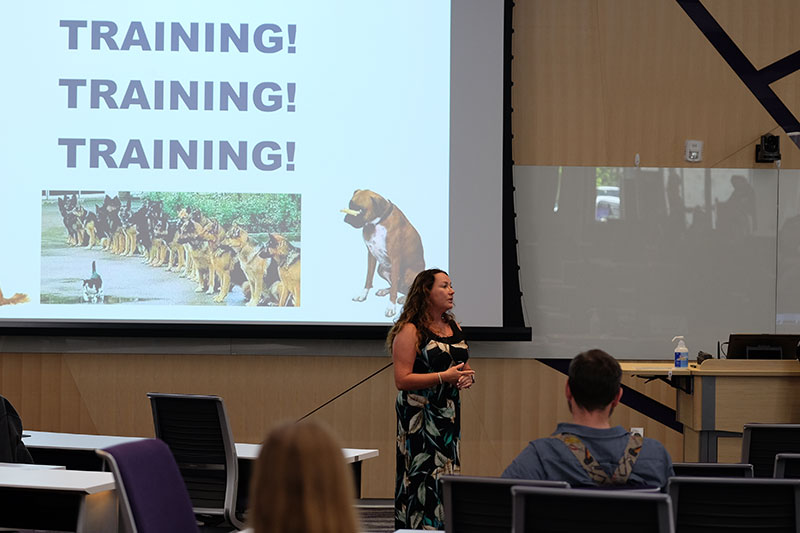
The VEC featured 57 separate workshops and seminars.
Dr. Roush led a planning team that included veterinary staff/event coordinators Sarah Keatley, Tony Ballard and Taylor Richter.
“Supporting veterinary educators is more critical than ever and the AAVMC welcomed the opportunity to sponsor the recent Veterinary Educator Collaborative hosted by Kansas State University,” said Dr. Caroline Cantner, the AAVMC director for professional development. “Originally scheduled for June of 2020, the Veterinary Educator Collaborative provided a valuable space for members of the veterinary academic community to come together after an extraordinarily challenging two years. We are grateful for the collaboration with Kansas State University and for everyone who contributed to and participated in the event.”
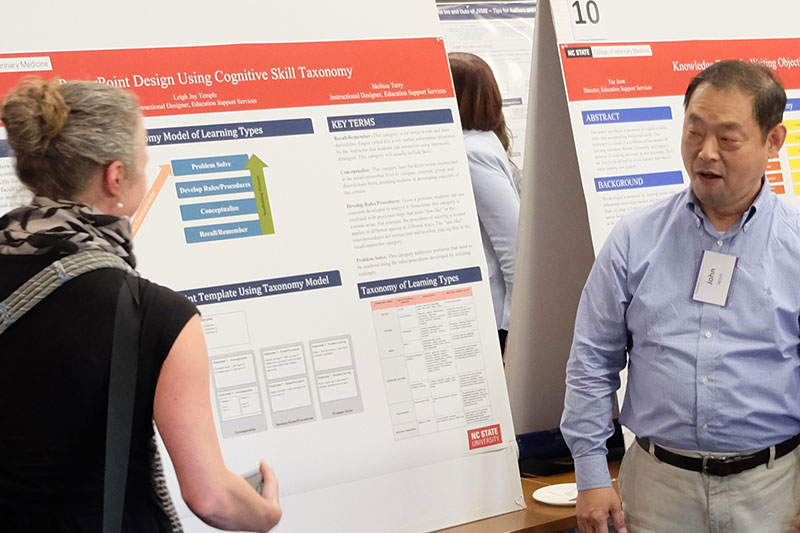
A poster session gives participants to learn about new innovations in teaching. A total of 24 posters were presented during the conference.
The keynote address was titled “Competency-Based Medical Education at the University of Kansas,” and was presented by Dr. Giulia Bonaminio, senior associate dean for medical education, and Dr. Mark Meyer, senior associate dean for student affairs, both at the University of Kansas Medical Center.
Dr. Roush said, “As veterinary educators, we have much in common with our colleagues in human medicine, so it’s valuable to have an opportunity to compare and contrast current educational strategies.”
Homecoming spotlights camaraderie fostered through U.S.-China Joint DVM Program
The old expression “two heads are better than one” took on new meaning this year at the annual celebration of the U.S.-China Joint DVM Program at Kansas State University held in May.
This year’s graduates were asked to bring a friend so each could share anecdotes about the value of friendship while tackling the challenges of completing a Doctor of Veterinary Medicine, especially for the Chinese students for whom English is a second language.
“When talking about the impact of classmates on me, I have always been amazed by how intelligent, mentally mature and hard-working they are,” said Dr. Weihan Wang, who graduated from K-State with a DVM degree this May. “They have always been supporting me and helping me do my fourth-year class rotations. Helping and supporting each other makes our lives much easier.”
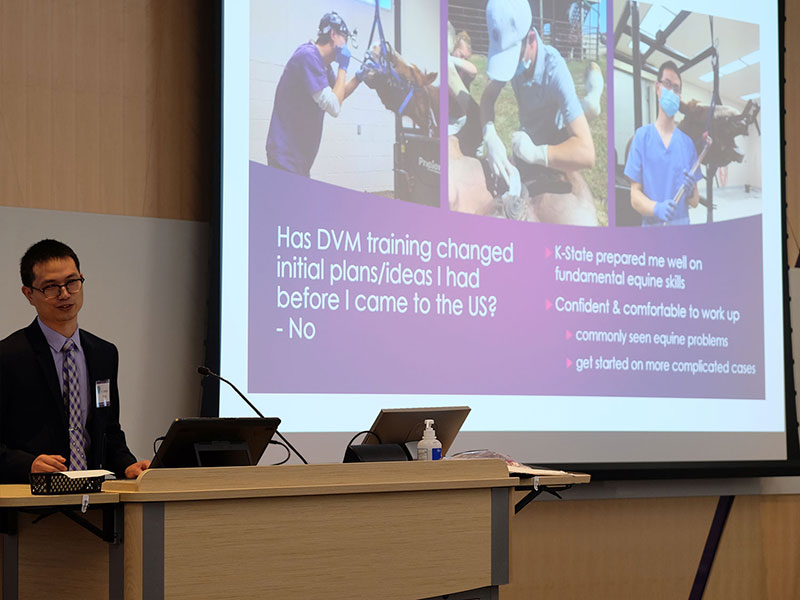
Dr. Weihan Wang asks himself whether his original career goals changed during his time in veterinary college at Kansas State University. The short answer is, “No,” as he plans to work in equine medicine upon his return to China.
His classmate and co-graduate, Dr. Ron Orchard, said, “K-State is a pretty amazing place that has opened up the world to me. Even though I’ve had the fortune to travel a bit, even before I came here, I’ve not met and made as many meaningful connections around the world till I came to K-State. I hope this leads to further projects that Weihan and I can perform together in China, and I think this program provides us a blueprint on how we can accomplish that.”
For each graduating class year, there are four to six Chinese students who enroll at the K-State campus to complete one year of pre-veterinary studies so they can be acclimated to studying in the United States. Afterwards, the students may apply to study for their Doctor of Veterinary Medicine degrees at either K-State or one of four other U.S. veterinary colleges: University of Minnesota, Iowa State University, University of Georgia and University of Missouri.
“I love working in a team and developing bonds with my co-workers,” said Dr. Lauren Fukshima. She and Dr. Yilei Zheng completed their DVM degrees at the University of Minnesota this year. “[Dr. Zhang] is one of the most hard-working, intelligent and funny people I’ve ever been lucky to know, and I’m really lucky to have her as a friend. I learned a lot about the differences and similarities in life and school in China, compared to America. Her future students are incredibly lucky to have her as a teacher.”
The other graduates and their friends are: Drs. Sichao Mao and Catharine Found, from Iowa State University; and Drs. Xinyi Xu and Amber Irick, from the University of Georgia. The Chinese graduates in the U.S.-China Joint DVM program will go back to China at top Chinese universities as associate professors.
“The goal of the US-China Joint DVM Program is to train the trainers of Chinese veterinary medicine,” said Dr. Jishu Shi, professor and director of the U.S.-China Center for Animal Health at the K-State College of Veterinary Medicine.
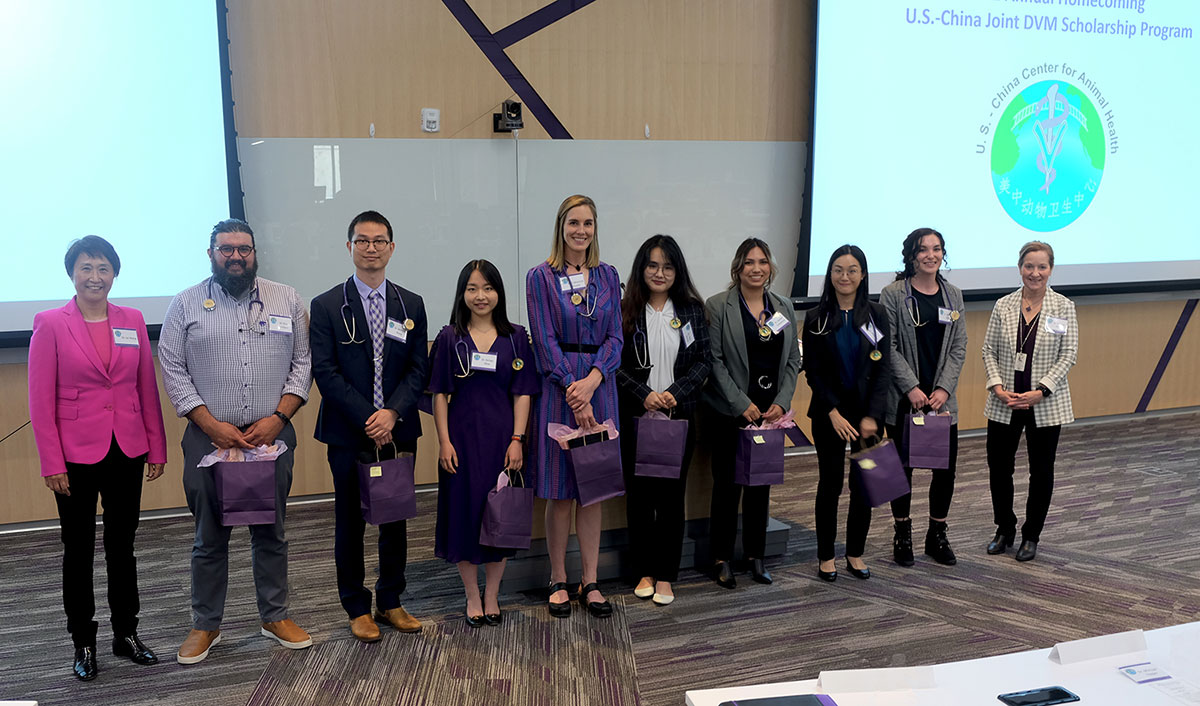
The recent graduates in the US-China Joint DVM program received gifts after giving presentations on their educational experiences. From left: Lei Wang, program manager for the US-China Center for Animal Health, Drs. Ron Orchard, Weihan Wang, Sichao Mao, Catharine Found, Yilei Zhegn, Lauren Fukushima, Xinyi Xu, Amber Irick and Hodes Family Dean Dr. Bonnie Rush.
Dr. Shi told the graduates, “When you came here five years ago, you were goodwill ambassadors of Chinese people, so in a few weeks, you will go back to China, and I hope you be the goodwill ambassadors of American people. You will develop more and newer bridges between the two countries, especially for global medicine.”
The U.S.-China Center for Animal Health provides scholarships to cover the first year of pre-veterinary tuition and five years of student activities through funding from Zoetis, Yebio Bioengineering and Banfield Pet Hospital. The China Scholarship Council supports four years of DVM tuition and living stipends for five years.
In addition to the recent graduates, the homecoming event included the current DVM students in the program, who each gave a status report on their activities over the last school year. There were five students who just finished their pre-veterinary studies at K-State and 12 DVM students currently attending the four universities in the program.
The rest of the guest list included administrators from each of the schools, plus Dr. Michael Topper, director of international affairs and chair of the American Veterinary Medical Association’s committee on international veterinary affairs. He previously served as AVMA president from 2017 to 2018. Dr. Topper gave a leadership seminar on the second day of the homecoming event.
More Headlines
Shelter Medicine meets community needs at home and away
July was a busy month for the CVM's Shelter Medicine program. Teams of faculty, staff and students participated in two events. The first event was in Manhattan at the Douglass Community Center and the other event was in Kansas City at the Metro Lutheran Ministry building.
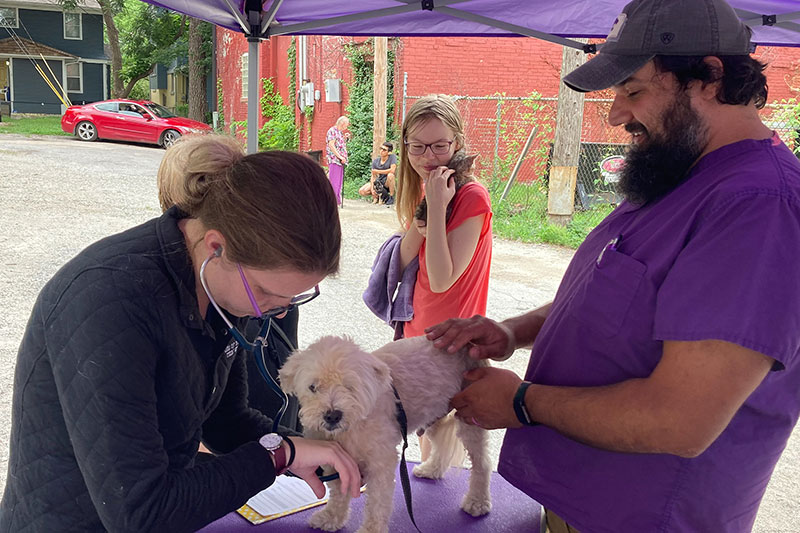
Fourth-year student Kacey Cooper examines a local pooch with assistance from Dr. Ron Orchard.
The Shelter Medicine program was joined by the T. Russell Reitz Animal Shelter in Manhattan and a group of Washington Mandela Fellows to host a community outreach vaccination clinic that was held July 5 at the Douglass Community Center.
"We saw the opportunity to partner with the Mandela Washington Fellowship during this community outreach event as a win-win-win," said Dr. Ron Orchard. "We get to share with the Mandela Washington fellows the steps we’re able to take to provide veterinary care for the most vulnerable in our community, while allowing our fourth-year veterinary students to gain more hands-on clinical experience."
"The Mandela Washington Fellowship is a very prestigious group and to be able to share our program with them is an honor," said Dr. Brad Crauer, associate clinical professor and Shelter Medicine director.
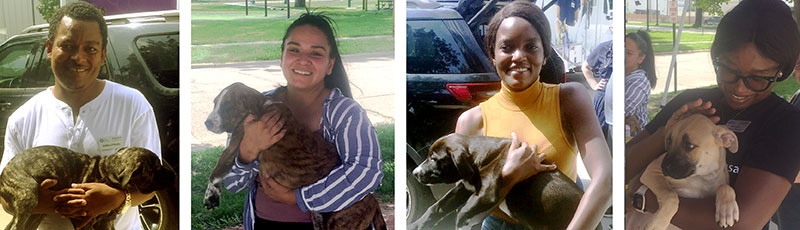
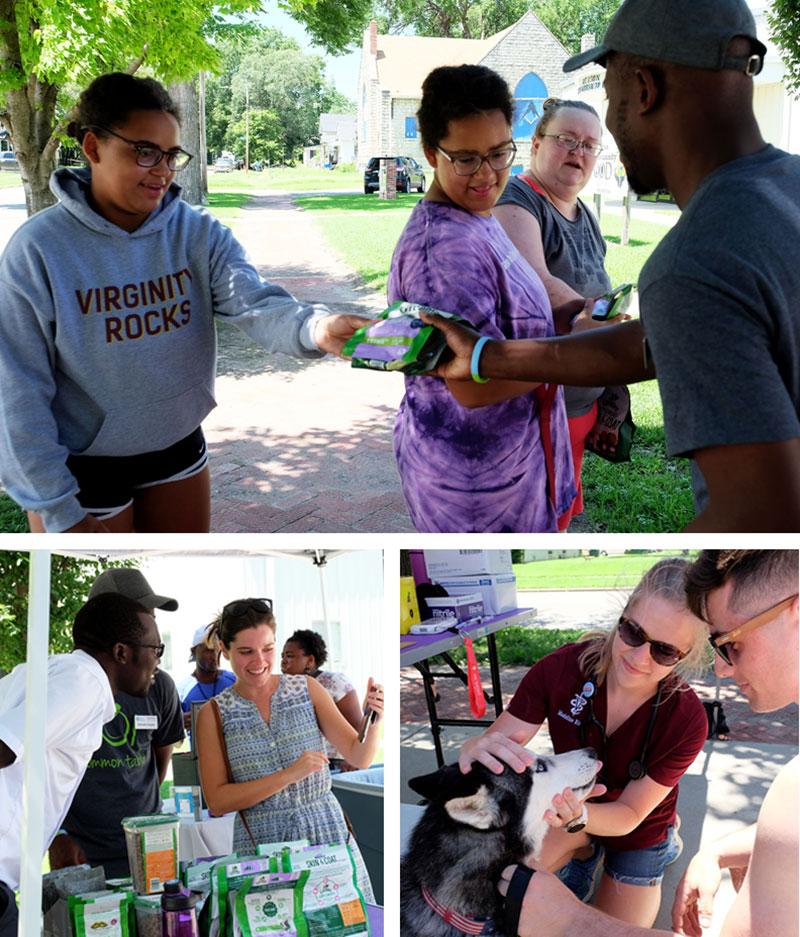
Top row: A group of Mandela Washington Fellows help out during a vaccination clinic at the Douglass Center in Manhattan. From left: Addisu Fekadu, Karina Moncayo-Michel (program assistant with the Staley School of Leadership Studies at K-State), Sandra Nyika and Nyangah Rogers-Wright . Bottom right: Madeleine Riede, fourth-year student, takes a look at a husky.
On July 9, the K-State Shelter Medicine monthly community outreach event was held in partnership with the Community Veterinary Outreach (CVO). The event was located at Metro Lutheran Ministries in Kansas City, Missouri. Dr. Cody Dressler and the surgery rotation was onsite providing spay and neuter services on the Mobile Surgery Unit.
Dr. Ron Orchard and the Community Outreach rotation and four students: Kacey Cooper, Jessica Garrison, Madeline Riede and Jennifer Schneider, utilized the Wellness on Wheels Vehicle for a walk-up clinic. They even provided a dental procedure by a local veterinarian and CVO director with Jessica assisting! They partnered with the CVO team which consisted of volunteer DVMs and support.
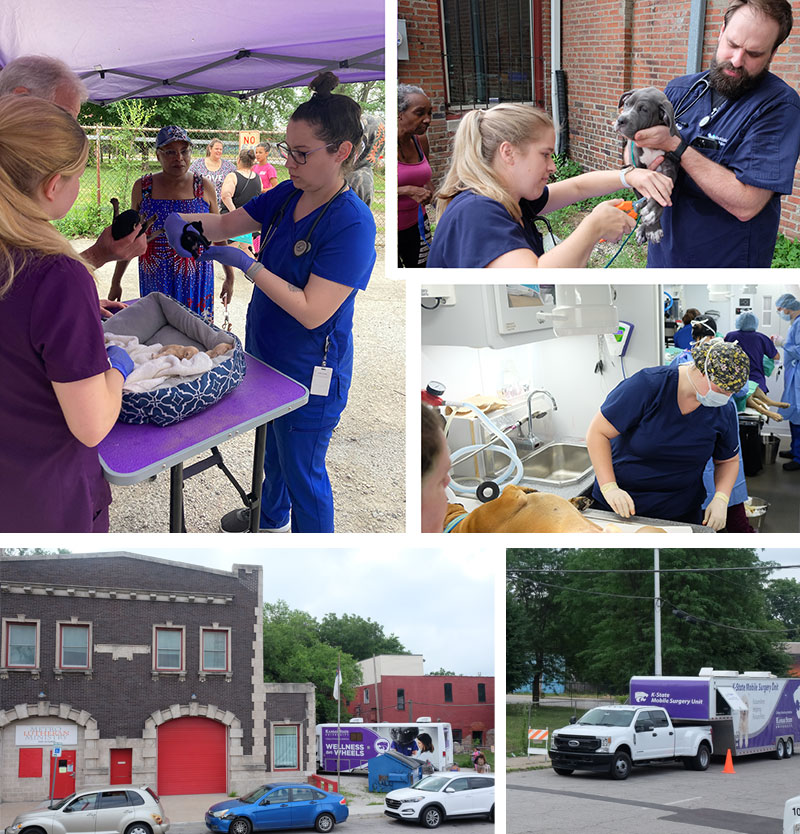
Upper left: Fourth-year student Jenny Schneider identifies genders on some puppies brought to the outreach event in Kansas City. Top right: Madeleine Riede, fourth-year student clips the nails on a dog being held by Dr. Daniel Reub, DVM class of 2014. Middle right: Students working inside the Mobile Surgery Unit, parked next to the Metro Lutheran Ministry.
Rabbit Hemorrhagic Disease Virus 2 (RHDV2) Discovered in Kansas
As of April 2022, RHDV2 has been found in the states highlighted on the accompanying maps in the "keep reading" section. RHDV2 was discovered this month in a domestic rabbit housed in Eastern Kansas.
The Kansas Department of Animal Health has quarantined the facility.
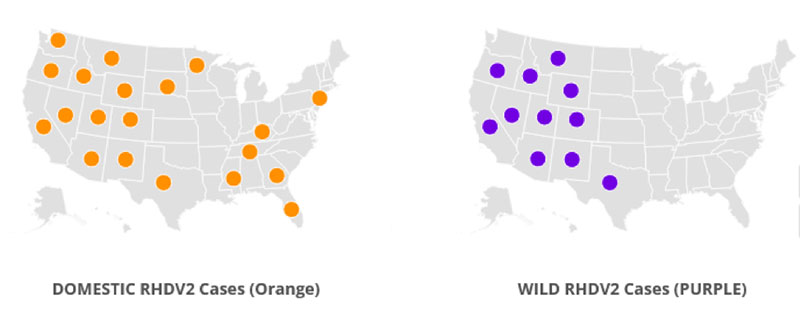
For more information about RHDVD2 in Kansas, please visit:
Kansas Department of Agriculture: Rabbit Hemorrhagic Disease Virus Serotype 2
Center of Excellence for Vector-Borne Diseases represents K-State at international rickettsiology conference in South Carolina
 The Center of Excellence for Vector-Borne Diseases, or CEVBD, was well-represented this year at the 31st meeting of the American Society for Rickettsiology, or ASR, held June 25-28, at Greenville, South Carolina.
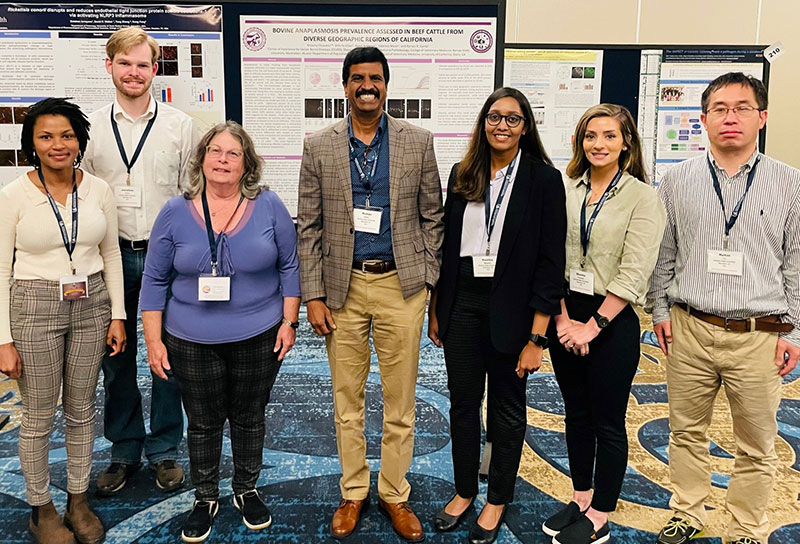
Two faculty members, Dr. Roman Ganta, university distinguished professor and director of the CEVBD, and Deborah Jaworski, assistant professor (fourth and third from left in above photo); were joined by (from left) three graduate students Dominica Genda, Jonathan Ferm and Swetha Madesh; and two scientists, Shawna Fitzwater and Huitao Liu.
Dr. Ganta was the invited keynote speaker at the opening day reception. He talked about ASR history since its establishment in 1979 and gave his perspectives on past and current active rickettsial research progress plus his visionary future goals to advance and fill in major research gaps. Dr. Ganta listed opportunities available for new generation scientists pursuing careers in rickettsial disease-related research.
"The American Society for Rickettsiology is a great forum to interact with scientists from the USA and abroad having research interests on rickettsial diseases resulting from various tick and other vector-borne pathogens," Dr. Ganta said. "Its annual meetings are ideally suited for learning new research advances and also to build a network of collaborations for both young and senior scientists engaged in rickettsial research."
The recent ASR conference was the first in-person meeting after the COVID pandemic. This year’s conference was attended by nearly 200 scientists representing several different countries.
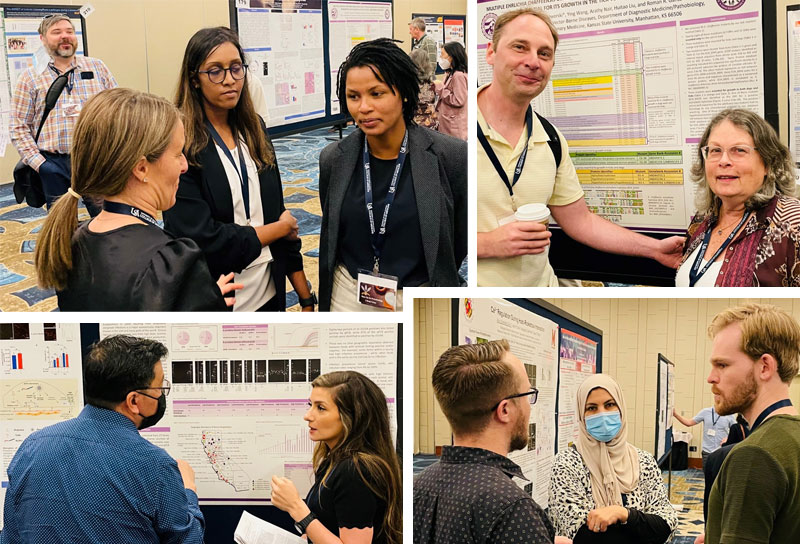
The CEVBD team presented research at the ASR poster session and networked with other scientists from around the world.
Oral presentations:
Roman Ganta: Targeted Mutagenesis in Anaplasma marginale to define virulence and vaccine development against bovine Anaplasmosis. Co-authors; P. Hove, S. Madesh, A. Nair, D. Jaworski, H. Liu, J. Ferm, M. D. Kleinhenz, M. A. Highland, A. K. Curtis, J. F. Coetzee, S. M. Noh, Y. Wang, D. Genda
Jonathan Ferm: Targeted mutagenesis in Anaplasma phagocytophilium for modified live vaccine development. (Note: Jonathan is the recipient of an American Society for Rickettsiology travel award.)
Poster presentations:
Shawna Fitzwater: Bovine Anaplasmosis prevalence assessed in beef cattle from diverse geographic regions of California. Co-authors; S. Chen, A. Schlieper, G. Maier, and R. R. Ganta
Dominica Genda: RNA analysis of Ehrlichia chaffeensis 7 genes spanning from ECH_0659 to ECH_0665 encoding for several phage related proteins and their orthologs in related Anaplasma and Ehrlichia species. Co-authors; J. Ferm, H. Liu, and R. R. Ganta
Deborah Jaworski: Multiple Erhlichia chaffeensis genes critical for its persistent infection in a vertebrate host are nonessential for its growth in the tick vector, Amblyomma americanum. Co-authors; Y. Wang, A. Nair, H. Liu, and R. R. Ganta
Huitao Liu: EcxR is a global gene regular which interacts with the promoter segments of multiple Ehrlichia chaffeensis genes transcribed by RNA polymeraseloenzyme containing the housekeeping or alternative sigma factors. Co-authors; C.A. Knox, L.U.M. Jakkula, Y. Wang, and R.R. Ganta
Swetha Madesh: The canine host serving as a sentinel species for tick-borne diseases caused by Anaplasma, Ehrlichia, and Borrelia pathogens impacting human health in the USA. Co-authors; A. Nair and R.R. Ganta
Regular features
Alumni Events, Development and Continuing Education
 The Veterinary Medical Alumni Association organizes alumni receptions at several of the national annual conferences plus continuing education events and more.
Alumni Updates
CVM to honor Dr. Luis Montaner with Alumni Recognition Award
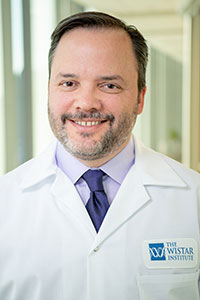 Dr. Luis Montaner, Philadelphia, Pennsylvania, has been selected by the Kansas State University College of Veterinary Medicine for its 2022 Alumni Recognition Award to be presented in conjunction with the annual convention of the American Veterinary Medical Association (AVMA) being held in Philadelphia this year at the end of July. The award is given to veterinarians whose careers have served as exemplary role models for future alumni in a professional and community setting.
Dr. Montaner, originally from San Juan, Puerto Rico, obtained his Doctor of Veterinary Medicine degree from Kansas State University in 1989 and a doctorate in experimental pathology from the University of Oxford, UK, in 1995. He joined The Wistar Institute in 1995 as an assistant professor and promoted to professor in 2007. Dr. Montaner is currently vice president for scientific operations and professor at The Wistar Institute.
K-State Olathe hires Dr. Douglas Shane as new animal health instructor
Dr. Douglas Shane, DVM class of 2015 and Ph.D. in pathobiology in 2016, is joining Kansas State University's Olathe campus as a teaching assistant professor of animal health, effective July 25.
Dr. Shane, who has a background in data analytics and clinical development, will instruct graduate-level courses to students in animal health degree and certificate programs and master's programs with animal health tracks. He will serve as a major professor to students and as a committee member for their degree program. Dr. Shane also will lead workshop sessions in the campus' animal health-related professional development programming.
Recognizing the impact made by Col. George T. Dalziel at 104 years young
See the newest Alumni Biography Video: Dr. Walter Colon, DVM class of 1967
A video for Dr. Walter Colon is the newest addition to our Alumni Biography Video page. The goal is feature interviews with our Extraordinary Graduates with 40 years of experience or more, and share the stories of their lives and careers in the hope of creating an enduring legacy and to inspire future generations of veterinary students. If you are interested in taking part in this exciting and meaningful project, please contact alumni@vet.k-state.edu.
Submit nominations for Alumni Recognition Awards onlineSee our new online nomination form to nominate a fellow alumnus for one of our many annual recognition awards, presented at the national conferences: VMX, WVC, AVMA and the Annual Conference for Veterinarians. See full details at the link below. |
In Memoriam - Recently Departed Alumni
(no listings reported this month) |
Questions about Alumni or CE events?Contact:
|
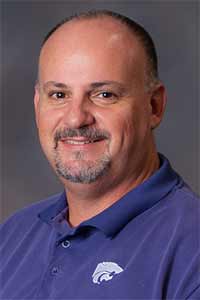 Tony Ballard
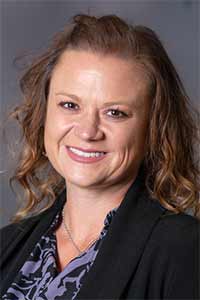 Sarah Keatley
News Ticker
| More activities and accomplishments in the College of Veterinary Medicine: |
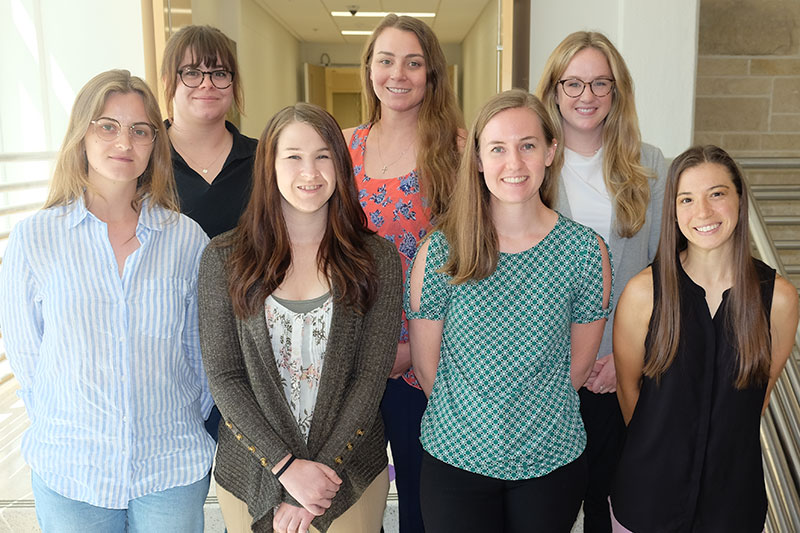
VHC welcomes new residents and interns
Back row (left to right): Drs. Hannah Neill, livestock services; Danielle Cucuzella, equine surgery; and Sarah Scott, oncology. Front row (left to right): Drs. Viktoria Granacka, equine medicine; Caylie Voudren, small animal medicine; Kathryn Ryan, anesthesiology; and Darby Toth, small animal surgery.Not pictured: Drs. Ashley Bowyer, ophthalmology; Michell Gonzalez, anesthesiology; Trey Neyland, livestock services; and Lauren Ryon, radiology. |
|
|
|
Dr. Mike Apley was presented the 2022 Clinical Sciences Award for Excellence in Junior Faculty Mentoring. He was nominated by Dr. Raghu Amachawadi. Dr. Brian Lubbers has been designated as a Big XII Faculty Fellow for 2023 in support of his visit and collaboration with Texas Tech University. Drs. Jessica Meekins and Shane Lyon have been invited to join the AAVMC Council on Outcomes-based Veterinary Education (COVE) national working group. This is an oversight committee that will be involved with the application and implementation of competency-based veterinary education into the curriculum of CVMs. They will serve as college representatives and will help contribute to this mission here at the CVM. The Department of Clinical Sciences faculty played a major role in the 84th Annual Conference for Veterinarians held at K-State June 5-7. Clinical Sciences faculty members that presented included: Large Animal
Small Animal
Dr. Bob Larson spoke at a client meeting for Ogallala Animal Clinic on June 16 regarding beef heifer development. Dr. Emily Reppert attended the ACVIM forum in Austin, TX June 22-25 and presented, “Wellness among candidates in the ACVIM large animal internal medicine training programs.” Dr. William Whitehouse attended the ACVIM forum in Austin, TX June 22-25 and presented, “Diltiazem Infusion Alterations on Glomerular Filtration Rate, Electrolyte Excretion, and Urine Output in Health Dogs.” |
 Join the College of Veterinary Medicine on LinkedIn and add us to your profile under education and/or employment to help build and engage our online social community! Follow the LinkedIn page here: www.linkedin.com/company/kstatevetmed
New Arrivals/Recent Departures
Lifelines is published each month by the Marketing and Communications Office at the College of Veterinary Medicine. The editors are Joe Montgomery, jmontgom@vet.k-state.edu.