Monthly Newsletter
June 2017 - Vol. 12, No. 6
< May 2017 | July 2017 >
Top Stories
Historic Graduation Class
First sponsored Chinese students earn DVMs since 1949
This year’s commencement exercises for Kansas State University’s College of Veterinary Medicine featured a historic trio of graduates: the first set of formally sponsored Chinese students to earn Doctor of Veterinary Medicine degrees since 1949.
A fourth student earned his Doctor of Veterinary Medicine at the University of Minnesota. All four students, Yaoqin Shen, Jing Li, Bo Liu and Yi Ding, were supported by the China Scholarship Council through a groundbreaking partnership with the U.S.-China Center for Animal Health at Kansas State University, which was originally signed in 2012.
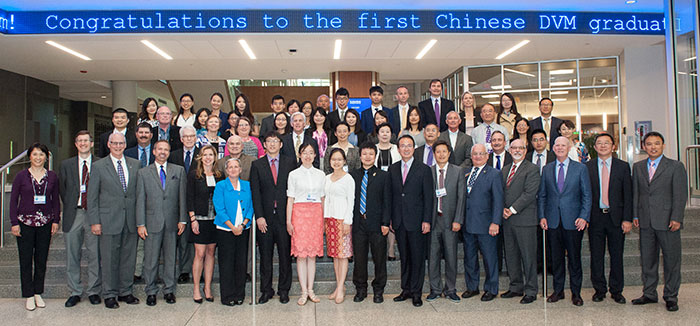
The US-China Center for Animal Health hosts a homecoming with graduates, students and special guests from the institutions and sponsoring partners for the Joint DVM Program.
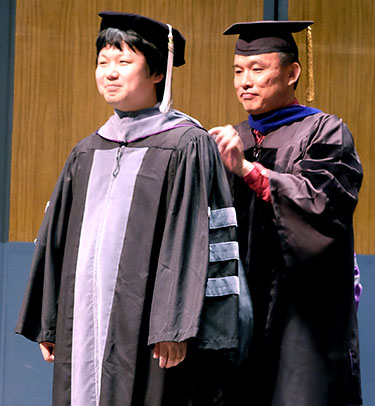
Dr. Jishu Shi, director of the US-China Center of Animal Health, places the hood over newly graduated Dr. Jing Li.
“This will be an end of study of veterinary medicine in school, but a new start of a lifelong learning,” add Dr. Jing Li, a class of 2017 K-State graduate. “The learning of veterinary medicine is not only about knowledge and skills, but also further understanding of this profession and what we as veterinarians can do for the well-being of animals and humans. I am grateful that the U.S.-China joint DVM program has provided me a great opportunity to look at the grand view of veterinary medicine in both China and US.”
“This is a momentous occasion for the U.S. China Center for Animal Health,” said, Dr. Tammy Beckham, dean of the College of Veterinary Medicine. “The graduation of the first class of students from Kansas State University is truly an occasion to celebrate. The fabric of this Center speaks to the globalization of veterinary medicine and our ability as partners to impact future generations of veterinarian professionals in the U.S. and China. U.S. and Chinese students that are graduating from this class and classes to come will have the opportunity to learn not only about veterinary medicine in our partner country, but will also have the opportunity to experience and learn about each other’s culture. I have no doubt the students graduating as a part of this program will go on to collaborate and build relationships within the U.S. and China and forge a true One World, One Health, One Medicine approach.”
On May 31 and June 1, the U.S.-China Joint DVM Program celebrated the graduations of this historic group of students through its annual homecoming. The program has engaged a large group of institutions and sponsoring partners, which included senior executives of the China Scholarship Council, Zoetis, Banfield Pet Hospital, the Consulate General of China in Chicago, Chinese Veterinary Medical Association, American Veterinary Medical Association, American Association of Veterinary Medical Colleges, USDA Animal and Plant Health Inspection Service, K-State Olathe, Kansas Department of Agriculture, JinYuBaoLing Bio-Pharmaceutical Company, and Shor-Line, as well as deans from partnering veterinary colleges in the U.S.
“The U.S.-China joint DVM Program and partnership have provided numerous benefits to both the College of Veterinary Medicine and to Kansas State University,” said Ruth Dyer, senior vice provost at Kansas State University. “Internationalization is one of the common elements of the university’s K-State 2025 visionary plan, and this program directly contributes to those efforts. Our international students bring new ideas, new perspectives and a wide variety of experiences to the university and enrich the educational environment for all of our students, faculty and staff.”
“In October 2012, the China Scholarship Council and Kansas State University signed a memorandum of understanding to establish a joint DVM program, filling the gap in our country’s veterinary education, and opening a new chapter in further collaboration of veterinary medicine between China and the United States,” said Jinghui Liu, Secretary-General, China Scholarship Council. “During implementation of the program, we have received strong support from Kansas State University and other partnering universities in the United States, to whom I would like to express my sincere gratitude on behalf of the China Scholarship Council.”
Ming Wang, vice president of the Chinese Veterinary Medical Association, expounded on Liu’s comments.
“Chinese modern veterinary education was originated from the West,” Wang said. “In the early 20th century, several outstanding students were sent by the government to study in the United States and Europe for Doctor of Veterinary Medicine (DVM) degrees. After their return, they established veterinary schools in China. This U.S.-China Joint DVM Program not just marks the second time of veterinary collaboration between the U.S. and China, but also opens a new era in the veterinary histories of both countries. The Chinese DVM graduates are like seeds, which have been soaked in the nutrient --- American veterinary education and will blossom and fruit in the rich land of China!”
The U.S.-China joint DVM scholarship program is sponsored by Kansas State University, the China Scholarship Council, Zoetis/International Veterinary Collaboration for China, the Chinese Veterinary Medical Association and Banfield Pet Hospital. The U.S.-China Center for Animal Health initiated and has led the program through partnerships with the governments, universities and animal health industry in the U.S. and China since its establishment in 2012.
“The U.S.-China joint DVM program advances veterinary education and promote the development of animal health industry in China,” said Rimma Driscoll, vice president of Zoetis. “These four DVM students will be the pioneers to bring the revolution to veterinary profession and education. Zoetis is so proud to be part of this program and will continue to support more DVM students.”
“Banfield Pet Hospital is proud to partner with the U.S.-China Center for Animal Health on the U.S.-China joint DVM program and do our part to facilitate the sharing of best practices in veterinary medicine between the United States and China,” said Dr. Daniel Aja, senior vice president and chief medical officer for Banfield. “These graduates will have the opportunity to positively influence the way veterinary medicine is practiced in their local communities back in China, magnifying this program’s impact and making a better world for pets.”
“The relationships these Chinese students have built over five years of working with U.S. veterinarians and veterinary students will open new lines of communication between animal health professionals in both countries,” said Dr. Ralph Richardson, CEO and dean of K-State Olathe and former dean of the College of Veterinary Medicine.
The U.S.-China Joint DVM Program consists of one year pre-veterinary program at Kansas State University and four year veterinary program at Kansas State University or its partnering schools in the U.S. The homecoming event included reports from 19 of the students who shared anecdotes and other memorable experiences as pre-veterinary students at Kansas State University and as veterinary students enrolled respectively at Kansas State University, the University of Minnesota, Iowa State University and the University of California, Davis.
“The first year in this program is wonderful,” said Hao Shi, who is a pre-veterinary student. “I met a lot of amazing veterinarians, excellent teachers and aspiring veterinary students. Living in their presence makes me a better person on my way to pursue my dream. I really appreciate the chance of being a part of U.S.-China joint DVM program.”
One of the main goals of the U.S.-China Joint DVM Program is to help universities in China become accredited at the same standards set forth by the American Veterinary Medical Association (AVMA).
“The U.S.-China Joint DVM Program provides a wonderful opportunity for the U.S. veterinary profession to grow our collaborative relationship with our Chinese veterinary colleagues,” said Dr. Joe Kinnarney, AVMA immediate past president. “We may be separated by a body of water, but veterinary medicine in both of our countries faces the same challenges. If we are to collectively meet those challenges and continue to achieve great things on behalf of veterinary medicine, it is critically important for the AVMA to continue working together with the U.S.-China Center for Animal Health at Kansas State University and its partners, particularly the Chinese Veterinary Medical Association.”
Dr. Andrew Maccabe, CEO for the Association of American Veterinary Medical Colleges, praised the program for its overall impact on the future of veterinary medicine.
“Increased international engagement is a key goal for the AAVMC,” Dr. Maccabe said. “For several years, Kansas State University College of Veterinary Medicine has been a leader in this area. Health and disease problems are inherently global in nature, so promoting human and animal health needs to be addressed in a collaborative way with partners around the world. We appreciate China's shared interest in achieving excellence in veterinary medicine, and we appreciate the cultural and academic enrichment this exchange program offers.”
Dr. Jishu Shi, director of U.S.-China Center for Animal Health applauded the first Chinese DVM graduates’ achievement as the conclusion of the celebration on May 31.
“This group of Chinese DVMs are the goodwill ambassadors of the U.S. and China,” said Jishu Shi. “The successful completion of their DVM studies in the U.S. is the realization of their first career dream. Our students have worked very hard in the last five years. I am confident that they will chase bigger and better dreams in China when they help the next generation students become better veterinarians.”
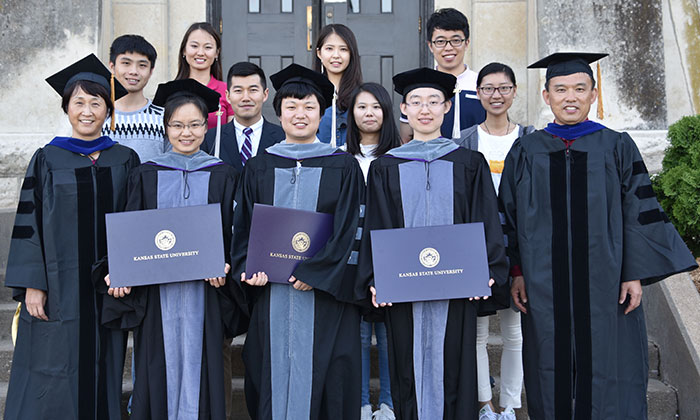
The first Chinese DVM grads stand front and center in front of Anderson Hall immediately after commencement ceremonies. Front row from left: Dr. Lei Wang, Dr. Bo Liu, Dr. Jing Li, and Dr. Yaoqin Shen. Middle row, current K-State DVM students: Ming Xu, Zezhong Zheng, Hao Shi and Yiping Zhu. Back row: Xiaotong Wu, Yuqi Yan and Kaiwen Chen.
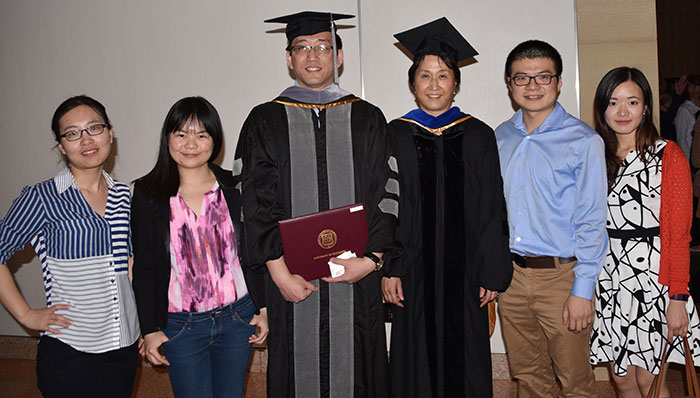
Dr. Yi Ding is the first graduate from the University of Minnesota. He is joined Dr. Wang and current UMN DVM students: Huan Zeng, Aolei Chen (to his left) and Zhen Yang, Meng Li. (to the right of (Dr. Wang).
JAALAS cover features research by 2017 grad, Dr. Valerie Head

Getting an article published in an academic journal can be quite an accomplishment — even for a seasoned researcher. To have that work featured on the cover of a journal is rarer yet. Dr. Valerie Head, can now add that accomplishment on top of earning her Doctor of Veterinary Medicine degree in May.
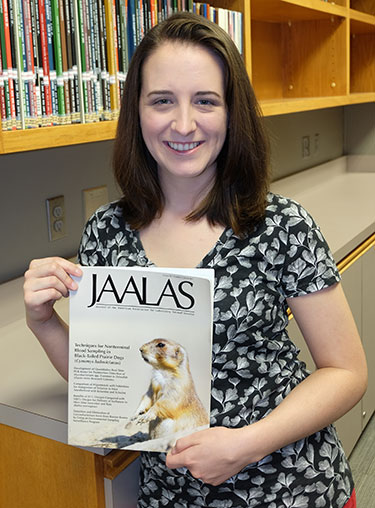
Dr. Valerie Head shows the cover of the Journal of the American Association for Laboratory Animal Science.
The Journal of the American Association for Laboratory Animal Science selected "Techniques for Nonterminal Blood Sampling in Black-Tailed Prairie Dogs (Cynomys ludovicianus)," as the lead cover article in its March 2017 issue. Dr. Head wrote the article as a student under the guidance of Dr. David Eshar, assistant professor, companion exotic pets, wildlife & zoo animal medicine in the College of Veterinary Medicine, and with help from Dr. Melissa Nau, a former intern in the Veterinary Health Center at Kansas State University.
“This is a nice gesture and an honor for anyone, let alone a student,” Dr. Eshar said. “JAALAS is the most respected journal in its field, and we had received numerous responses from people who saw the article. This is important work. Black-tailed prairie dogs are used as an animal model for research on gallbladder stones and several infectious diseases, kept in zoological collections and also as privately-owned pets, so having proper techniques for obtaining blood samples would be very valuable for that purpose. ”
“I had been unable to find where a comprehensive, instructive resource on the appropriate techniques for venipuncture and the collection of nonterminal blood samples had ever been published in regard to this species,” Dr. Head explained. “The detailed and illustrated information we presented in the article can aid clinicians and researchers in handling these animals and in performing venipuncture and anesthesia. Having this work put on the cover of the journal is very exciting.”
After graduation, Dr. Head said she plans to work in a small animal and exotic medicine practice in Texas, where she will treat similar animals in a clinical setting, and continue contributing to veterinary medical literature.
Tanzanian Students Raymond and Dominica - Twinning Project
Meet Dominica Genda and Raymond Sulle, veterinary students from Sokoine University in Tanzania, who visited the KSUCVM for six weeks during the spring semester as part of an OIE-sponsored twinning project between K-State and Sokoine University.
Video produced by Kent Nelson and Joe Montgomery
Frontier program trains Cochran Fellows from Central America in trade facilitation
 For the second time in less than a year, a team of food safety and international trade scholars in the Frontier program at Kansas State University provided trade-facilitation training for foreign officials sponsored through the USDA’s Cochran Fellowship program.
Associate professor Dr. Justin Kastner (Diagnostic Medicine/Pathobiology), assistant professor Dr. Sara Gragg (Animal Sciences and Industry and K-State Olathe), adjunct faculty member Dr. Jason Ackleson (Washington, D.C.), and Ph.D. student Danny Unruh (Food Science, K-State Olathe), and program coordinator Steve Toburen (Diagnostic Medicine/Pathobiology) executed a two-week-long training event involving regulatory and trade officials from Honduras, Guatemala, and El Salvador.
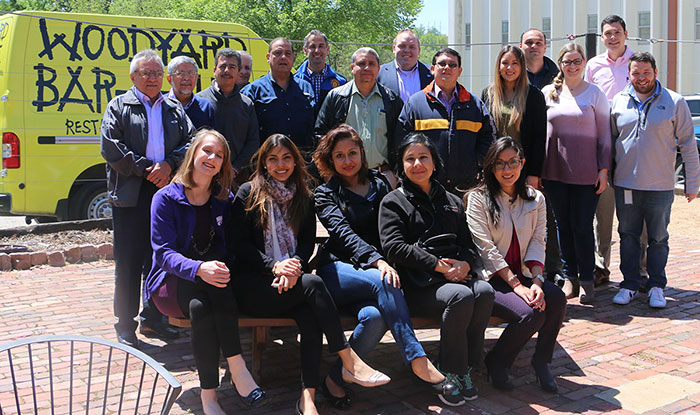
International trade scholars from the Frontier program work with a group of Cochran Fellows from Central America in Kansas City, at K-State Olathe and in Washington D.C.
|
|
|
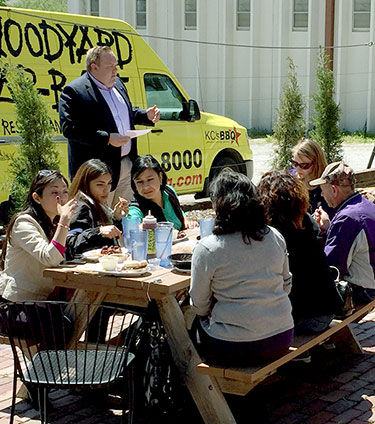
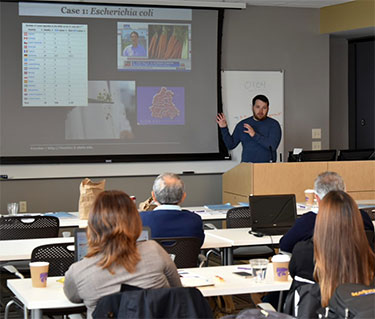
| Top: KSU Student body president Jack Ayres gives a bilingual welcome to the Cochran Fellows at the iconic Woodyard Bar-B-Que in Kansas City. Below: A training sessions at with Danny Unruh, Ph.D. student in food science at K-State Olathe. |
|
|
|
The training program mirrored another one delivered last August for Cochran fellows from East Africa [maybe, Joe, provide a link to your previous story here]. On April 23, members of the Frontier team flew to Washington D.C. to meet with the fellows, and the training began in earnest with briefings and presentations at the USDA’s office buildings in Washington, D.C., a visit to the Animal and Plant Health Inspection Service in Riverdale, Maryland, and a special talk by Dr. Jason Ackleson, Frontier co-director and Director of Strategy or the U.S. Department of Homeland Security Office of Policy.
After three days in Washington, Unruh accompanied the delegates to the Midwest, where they received additional training at the K-State Olathe campus. With Unruh and Drs. Gragg and Kastner taking the lead, additional support was provided by Spanish-speaking graduate students Francisco Najar, graduate student in food science, Ileana Cepeda, a master of public health student, and Daniel Vega, graduate student in food science. As part of an institutional welcome held at Kansas City’s iconic Woodyard Bar-B-Que, K-State Student Body President Jack Ayres delivered a bi-lingual welcome.
Frontier alumnus and USDA Food Safety and Inspection Service official Ryan Bradburn also spoke with the delegates.
Kansas City-area site visits included the Olathe Horticulture Research and Extension Center and the Roasterie in Kansas City, Missouri.
“Dr. Cary Rivard, director of the K-State Horticulture Research and Extension Center in Olathe greeted the fellows at the research center,” Dr. Gragg said. “Dr. Rivard shared details about research trials at the center and answered questions from the fellows about horticulture, trade, and plant health. The fellows also enjoyed a walking tour of the center, where they observed the research trials currently in progress and learned about high tunnel production.”
“During their time in Kansas City, the fellows visited a major fruit and vegetable research center and a tremendously popular coffee roaster, showcasing the benefit of K-State Olathe’s strategic location,” Unruh said. “At the research farm, the fellows interacted with plant and crop experts, learning invaluable lessons on high-tunnel crop production and the challenges (and solutions) facing farmers across Kansas and the United States. At the Roasterie, the fellows toured a facility that receives coffee beans from their home nations and air roasts them for consumers, restaurants, and grocers across the Midwest region.”
After a week of training in Kansas City and Olathe, the group returned to Washington for a special visit to the Port of Baltimore, where the officials observed first-hand the complexity of operations required to facilitate the import and export of agricultural and food products.
Drs. Kastner and Ackleson, co-directors for the Frontier program, involve both graduate and undergraduate students in such trainings on cross-border cooperation and the food trade. Undergraduates Sarah Jones, Macy Sherwin, and Clara Wicoff assisted in the training, which included the fellows developing individual “work plans” to take back to their home countries.
“This is my second time assisting with a Cochran Fellowship training event and both times have been an incredible experience for both the fellows and the K-State students involved in the training,” Jones said. “The USDA’s partnership with Kansas State and Frontier allows undergraduates, such as myself, to make connections with Federal government employees as well as agriculture and economic representatives from the respective countries—an experience I am unable to have within the walls of a classroom. The experiences I have had with the Cochran Fellowship program provide invaluable training in sanitary and phytosanitary trade issues for both fellows and students alike.”
Professor Emeritus Curtis Kastner assisted with the development of the work plans. He offered perspectives on both the food industry and Central America (from whence he trained several graduate students during his career).
The attending fellows were, from Guatemala’s Ministry of Agriculture, Livestock and Nutrition: Eduardo Taracena Zamora, pest risk analyst; Ricardo Horacio Amado Fernandez, lawyer; Jorge Mario Gomez Castillo, chief of surveillance for plant pest and arp; and Guillermo Ortiz, plant health director. Fellows from Honduras’ Ministry of Agriculture, Livestock and Nutrition: Jose Allan Sabillon Sabillon, supervisor animal quarantine; and Feliciano Paz Fernandez, supervisor plant quarantine. Other trainees were Angel Galan Jose Angel Alvarez, quarantine division chief for the Ministry of Agriculture and Livestock, El Salvador; Lizeth Guadalupe Ramirez Araujo, technical analyst; Chamber of Commerce and Industry of El Salvador; Yasmara Guadalupe Fuentes Cardoza, tbt and legal affairs specialist for the Ministry of Economy, El Salvador; and Maria Eugenia Portillo Pacas, executive director of the Federation of Chambers of Commerce of Central America.
The Department of Agriculture's Foreign Agricultural Service administers the Cochran Fellowship Program. It is U.S.-based and provides agricultural training opportunities for senior and mid-level specialists and administrators. Countries must be classified as middle-income, an emerging democracy or an emerging market to be eligible.
“Frontier is pleased to continue to support the Cochran Fellowship Program, which helps advance US foreign policy goals and build capacity abroad,” Dr. Ackelson said. “The Cochran program does this by offering the kind of innovative training and experiential learning activities for which Frontier is known.”
More Headlines
New travel opportunities in India
Kansas State University’s College of Veterinary Medicine is creating new opportunities to provide veterinary student with exposure to international experiences. The college’s latest efforts involve formal collaborations with the Rajiv Gandhi Institute of Veterinary Education and Research (RIVER) in Puducherry, India.
“International exposure, whether that be hosting international students at K-State or K-State students gaining experience overseas, plays an immeasurable role in building the leadership and problem-solving skills of veterinary students,” said Dr. Keith Hamilton, executive director of International Programs in the veterinary college. “New collaborations with veterinary schools in other countries helps promote the visibility and credibility of the Kansas State University College of Veterinary Medicine internationally.”
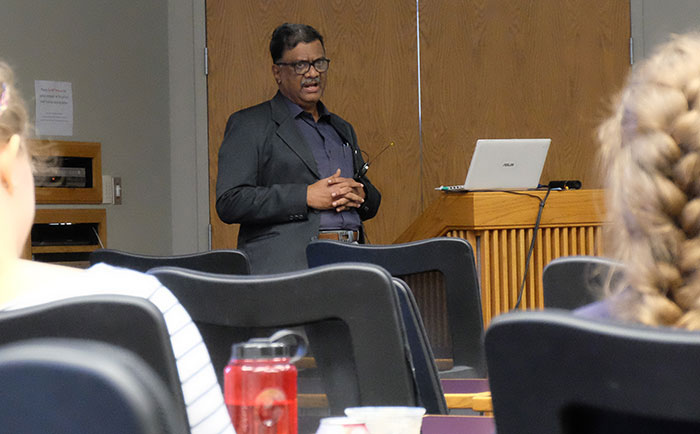
Dr. Ramesh Kumar, dean of RIVER, invites students to visit India.
In April, the veterinary college hosted a visit from Dr. Ramesh Kumar, dean of RIVER, when he personally invited K‑State veterinary students and faculty to consider externships, mentorships, study tours and research projects in India.
“Dr. Hamilton and I visited the RIVER campus last September, so we were very excited for Dean Kumar to help us take the next step forward in our collaboration plans,” said Dr. Sanjeev Narayanan, professor in diagnostic medicine and pathobiology at Kansas State University. “Our objective is to leverage this partnership to broaden and enrich educational experiences for veterinary students, Master of Public Health students and faculty at both the K-State College of Veterinary Medicine and RIVER by providing opportunities for exposure to a wider range of clinical cases, techniques and production systems.”
Dr. Kumar presented seminars and videos where he listed potential benefits for students and faculty to visit RIVER, such as the chance learn about tropical animal and zoonotic diseases, local breeds of animals, and clinical practice and structure in India as contrasted with the United States. He said being exposed to a new culture would broaden the global perspective of participants.
“A visit to RIVER offers an enormous opportunity for K-State students to see with their own eyes, investigate, and treat a broad and diverse range of clinical presentations in large and small animals which they would never have the opportunity to see in Kansas,” Dr. Hamilton said.
RIVER’s location in Puducherry is on the coast of India, not far from the city of Chennai. Dr. Hamilton said it is a welcoming town with outstanding ambiance, food and culture, frequented by many tourists, particularly from France.
“Kansas State University hopes to welcome a small group of veterinary students from Pondicherry this fall who will observe on clinical rotations and learn about the role of veterinarians in the USA,” Dr. Hamilton said. “This summer, there are some K-State students going to Pondicherry, but they are doing so under their own steam. We hope to develop a formal, supervised exchange or study tour for next year. We are also hoping to collaborate with other veterinary schools in the US.”
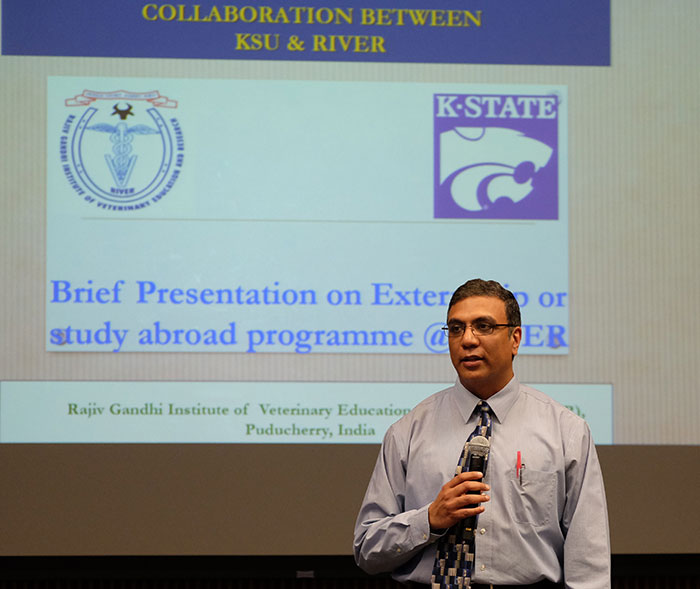
KSUCVM professor Dr. Sanjeev Narayanan shares some thoughts on why he thinks student travel to India would be beneficial.
Under the current agreement, there won’t be a charge for tuition fees, but participating students will be responsible for making their own travel arranges and must cover their incidental expenses on their own. The host schools will provide local accommodations.
To learn more about this program and other international veterinary opportunities, visit the International Programs web page: http://www.vet.k-state.edu/international
CVM faculty earn promotion and tenure
Three faculty members in the CVM are among 76 Kansas State University faculty members who have received promotions in rank, while 51 faculty members also earned tenure. The promotions include 26 faculty members to the rank of full professor, 49 faculty members to the rank of associate professor with tenure, and one member to the rank of clinical full professor.
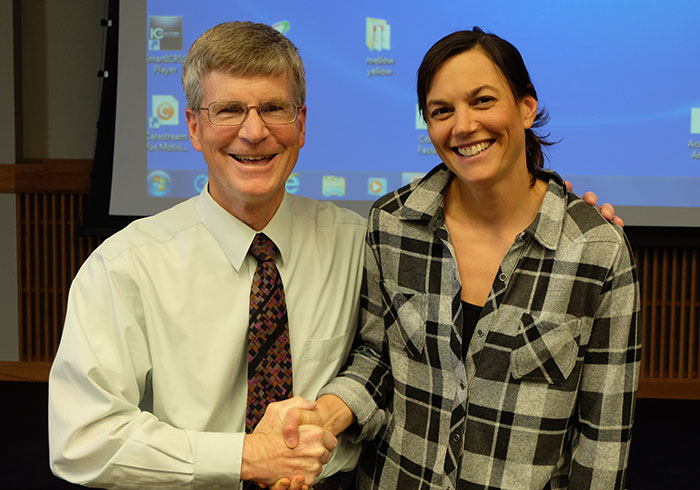
DMP Dept. Head Dr. Derek Mosier congratulates Dr. Jamie Henningson for being promoted to associate professor with tenure.
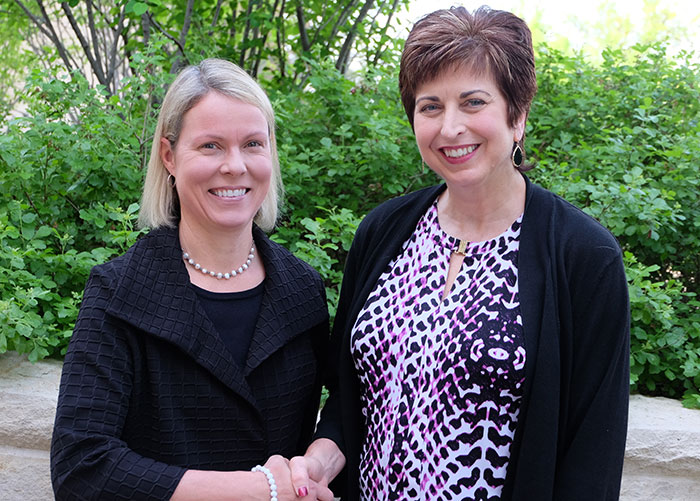
Clinical Sciences head Dr. Beth Davis contratulates Dr. Susan Nelson for being promoted to clinical full professor.
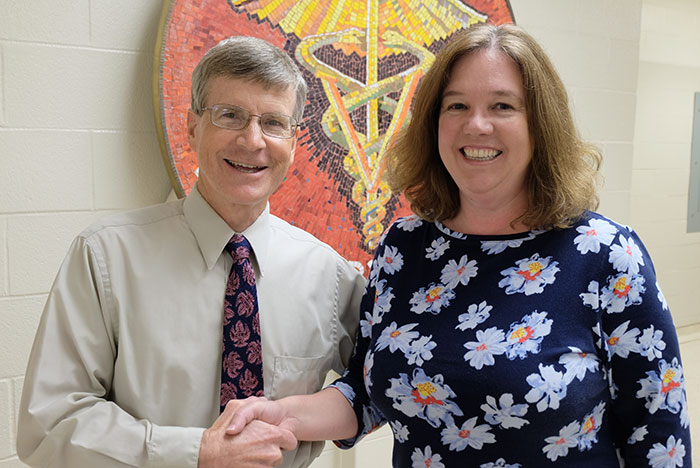
DMP Dept. Head Dr. Derek Mosier congratulates Dr. Dana Vanlandingham for being promoted to associate professor with tenure.
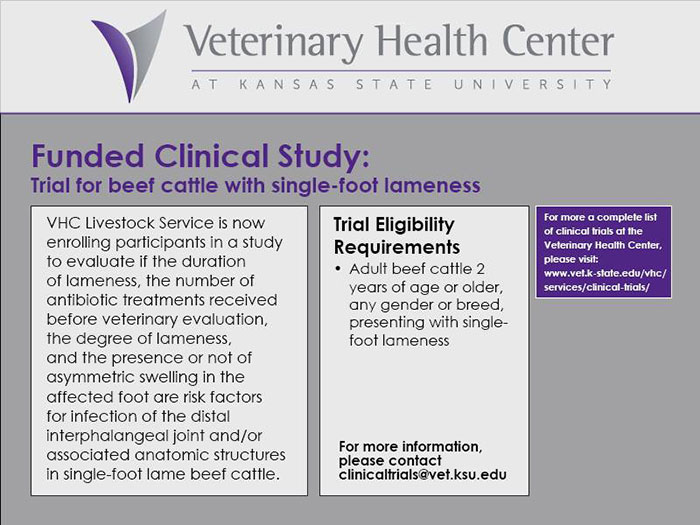
Master of Public Health degree now offered at K-State Olathe
Kansas State University's Master of Public Health degree program is coming to Greater Kansas City. Two of the program's four emphasis areas are now available via K-State Olathe to students who are seeking a career in the high-demand field of public health.
| The university's MPH program, which is accredited by the Council on Education for Public Health, prepares graduates to better address health issues at the local, state, national and international levels. At K-State Olathe, students can focus on food safety and biosecurity or infectious diseases and zoonoses. "Public health is a rapidly growing and increasingly important field, particularly in the areas of infectious diseases and zoonoses and food safety and biosecurity," said Dr. Ellyn Mulcahy, director of the MPH program and associate professor in the College of Veterinary Medicine at Kansas State University. "These areas complement Greater Kansas City's robust animal health and food science industries, and are a natural fit for K-State Olathe's efforts on workforce development through education." The food safety and biosecurity emphasis focuses on the complex nature of food safety and biosecurity policies, globalization and international trade throughout the food production cycle. Students will learn how to identify and categorize the risks, challenges and solutions relating to food safety and security. The infectious diseases and zoonoses emphasis focuses on emerging infectious diseases, prevention programs, the public's ability to respond to bioterrorism and biosecurity emergencies, and coordination of a rapid response among key organizations in the event of an outbreak. Enrollment for the degree program is currently open. Courses are taught by faculty experts from multiple departments and fields at Kansas State University so that students gain a comprehensive understanding of public health and their area of emphasis. Classes are taught online, in-person and a hybrid of the two. Learn more about the degree or sign up for the program at olathe.k-state.edu/mph. |
ENDING SOON: Alumnus Dr. Lee Penner subject of special photo exhibit at Beach Museum
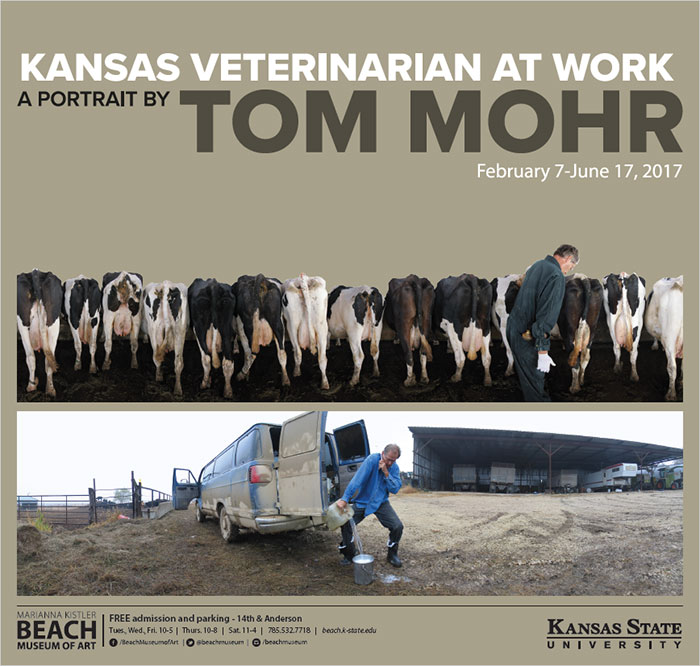
Over a span of twelve years, Tom Mohr followed Dr. Lee Penner, DVM class of 1976, with his camera, as the large animal veterinarian made his rounds among family farms in Kansas. What emerges from this photographic adventure is a multifaceted representation of contemporary Kansas farm life, as seen through such routine tasks as calf deliveries and such dramatic events as a nighttime necropsy. Mohr's photographs challenge his viewers to appreciate Kansas and its farmers with fresh eyes, expanding into contemporary times the movement of Regionalism started in the 1930s by John Steuart Curry, Thomas Hart Benton, and Grant Wood. See through Mohr's camera the grandeur of a vast field with a lone red barn, the quirky charm of the veterinarian's mud-encrusted van, and the strong bonds nurtured by a doctor and his community.
Jessica Eisenbarth receives Oxbow scholarship
Fourth-year student, Jessica Eisenbarth is the lone recipient of Oxbow Animal Health’s veterinary degree scholarship.
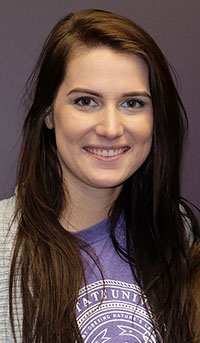 As a company specializing in the care and nutrition of small and exotic animals worldwide, Oxbow annually supports five academic scholarships at different education levels: high school, undergraduate, veterinary technology and Doctor of Veterinary Medicine. The scholarships provide financial support to outstanding students pursuing education in the exotic and companion animal veterinary fields.
Oxbow scholarship winners are chosen for interest and involvement in the field of exotic animal health, excellence in academic achievement, and expression of future career goals and interests. Eisenbarth, who is now entering her fourth year of veterinary college, was chosen for Oxbow's Veterinary Medicine Academic Scholarship.
"I am extremely passionate about exotic animal species, their health and welfare, and public education about these species," said Eisenbarth, who is concurrently working on a master's degree in diagnostic medicine and pathobiology. "I am so very honored for having been awarded this scholarship. It will allow me to pursue my passions of providing more readily available health care for these species and teach others about the unique things they offer."
Eisenbarth is currently participating in a preceptorship for four weeks with Disney's animal health team in Orlando, Florida.
"This is a clinical and pathology preceptorship that allows me to focus on my career goals of becoming a zoo/aquarium veterinarian," Eisenbarth said. "It's already been a wonderful opportunity and I'm only a couple days in."
"The Oxbow family is passionate about supporting the future of exotic animal health," said Melissa Ross, Oxbow's director of marketing, education and innovation. "One important way we support this future is through our annual academic scholarships. The 2017 Oxbow Academic Scholarship recipients represent what we see as a very bright future for exotic health, medicine and care. We are proud to support these students as they work toward becoming tomorrow's leaders in exotic animal health."
Largest Chinese animal vaccine company to add labs, offices in Manhattan
The largest animal vaccine company in China announced May 31 that it will open a research lab and offices in the Kansas State University Office Park, which is on the north side of the Manhattan campus.
Officials for Jinyu Bio-technology Co. Ltd. said that this is the first time that the company has established facilities in the United States. The company will focus on the research and design of vaccines for swine and cattle, as well as developing educational materials for Chinese companies and veterinarians.
"When university-focused companies like Jinyu Bio-technology locate adjacent to K-State's campus, partnerships develop with faculty expertise and research to promote real-world application and discovery," said Greg Willems, Kansas State University Foundation president and chief executive officer. "The K-State Office Park advances opportunity for these current and future collaborations to boldly move K-State and the needs of a global community forward."
Jinyu plans to employ four to six scientists. The company has researched the Manhattan location for nearly two years and was drawn to its connection with the Kansas City Animal Health Corridor, which stretches from Manhattan to Columbia, Missouri. It is home to more than 300 animal health companies, which account for more than half of the sales generated annually by the global animal health industry.
"The Kansas City Animal Health Corridor's international reputation is a strategic advantage for more and more animal health companies," said Kimberly Young, corridor president. "We are thrilled to welcome Jinyu to our corridor community and look forward to the company's leadership and effort."
Chongyu Zhang, Jinyu chairman, said the company's decision was based on a belief that Manhattan and Kansas State University are in the forefront of animal health research that is relevant to Chinese animal agriculture and the world.
"Manhattan is the home to many world renowned scientists in the Kansas State University College of Veterinary Medicine, Biosecurity Research Institute and the future National Bio and Agro-defense Facility,” Zhang said.
He added that Jinyu is growing quickly internationally and is looking forward to developing long-term, mutually beneficial relationships with partners in the region. The company may add manufacturing facilities in the future.
"The addition of Jinyu Bio-technology to the Kansas City Animal Health Corridor is truly a partnership of innovation and expertise," said Antonio Soave, secretary of the Kansas Department of Commerce. "We, as a state, must continue to engage excellent biotech companies like Jinyu, as Kansas continues to become one of the leading locations for bioscience in the nation."
Many organizations played a key role in attracting Jinyu to the region, including the state of Kansas and the Kansas Department of Commerce; city of Manhattan and Manhattan Area Chamber of Commerce; Kansas State University, Kansas State University Institute for Commercialization, KSU Foundation, College of Veterinary Medicine and the university's U.S.-China Center for Animal Health; the Kansas City Area Development Council; and the Kansas City Animal Health Corridor.
"Jinyu has state-of-the-art pilot production and manufacturing facilities, strong financial support for research and development, and great market penetration in China," said Jishu Shi, director of the U.S.-China Center for Animal Health. “This partnership is the first for K-State with a Chinese animal health company. It will accelerate the commercialization of novel discovery and development ideas generated by K-State scientists."
Tammy Beckham, dean of the College of Veterinary Medicine, said the agreement supports the university's interest in research and development of biopharmaceuticals.
"In addition, Jinyu's expansion to Manhattan will help support economic development through the addition of jobs and partnerships,” she said. “I am absolutely thrilled to welcome Jinyu to the state of Kansas and look forward to a long and robust partnership."
Peter Dorhout, Kansas State University's vice president for research, said the university's strength in animal health research helps attract large companies to the region and contributes to the economic impact in Riley, Geary and Pottawatomie counties, which amounted to $882 million in fiscal year 2015.
"Partnerships in animal health in particular help university and industry researchers inhabit the cutting edge," Dorhout said. "Protecting animal health requires adapting to changing global circumstances, and we want to ensure that our researchers and students are prepared to contribute and to help industry address urgent needs."
Dorhout added that the partnership further advances the university's goal to become a Top 50 public research university by 2025.
"K-State's 2025 strategic plan encourages us not only to create a culture of excellence that results in increased research activities, but also to fully engage with people and build necessary infrastructure," he said. "We are working to ensure that K-State innovations are applied to improve global food security, bio-agro defense, animal and human health, and more.
"Engagement is part of our land-grant heritage, so our attention to this area isn't new, but 2025 infused new energy into these efforts," Dorhout said. "Industry partnerships also enhance the opportunities we can offer to our students through involving undergraduate and graduate students in individual research projects as well as internships and full-time employment opportunities."
Lyle Butler, president of the Manhattan Area Chamber of Commerce, hailed Jinyu's announcement as another success story for the city of Manhattan and the Kansas City Animal Health Corridor.
"Our partnerships with the university family, the state of Kansas and the Kansas City Animal Health Corridor were critical in attracting Jinyu to the state," Butler said. "Jinyu's decision to locate in Manhattan is yet another example of the successes that can come from our shared university/community economic development strategy to attract high-pay, knowledge-based jobs and grow the regional economy through the leverage of Kansas State University's research and talent.”
Jinyu's Manhattan operations will be located in Phase II of the Kansas State University Office Park, which is scheduled to break ground in July. The company will begin operations in 2018.
Regular features
Alumni Events, Development and Continuing Education
 The Veterinary Medical Alumni Association organizes alumni receptions at several of the national annual conferences plus continuing education events and more.
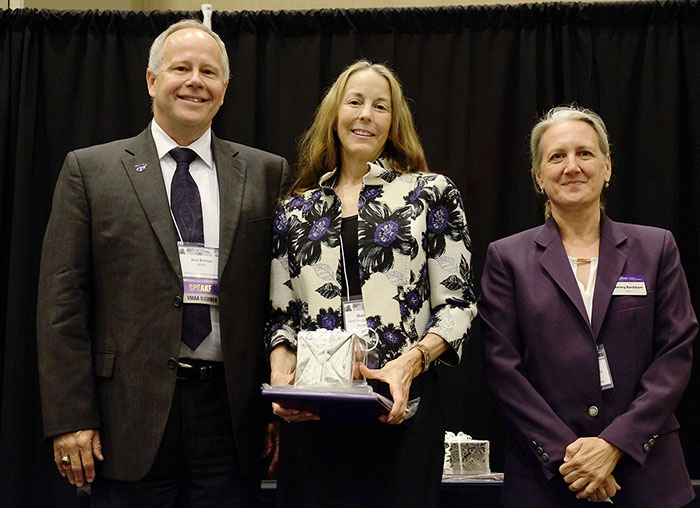
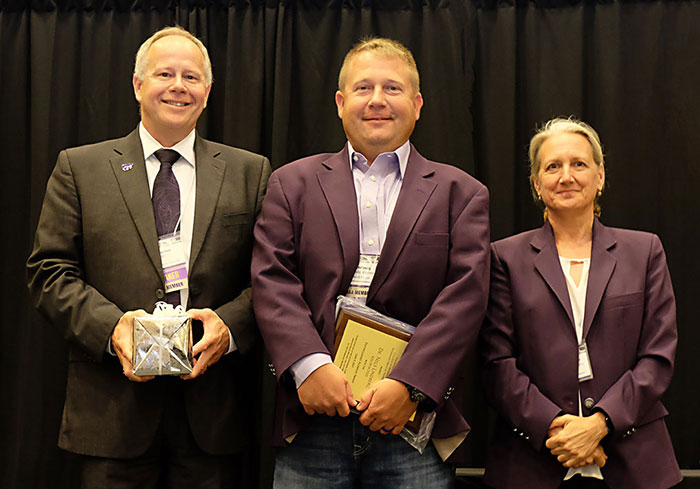
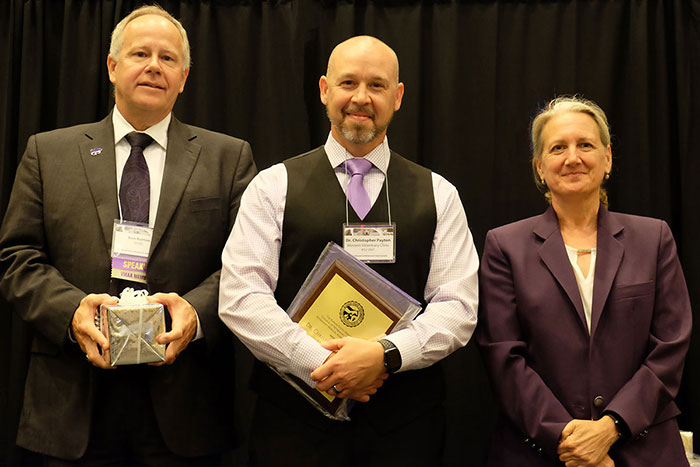
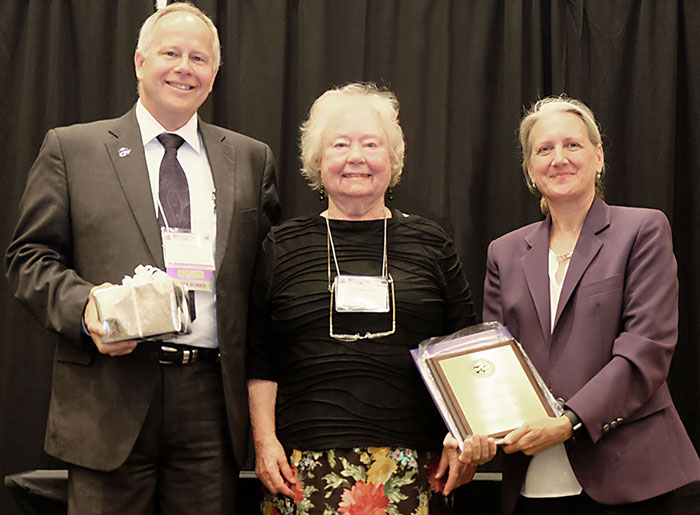
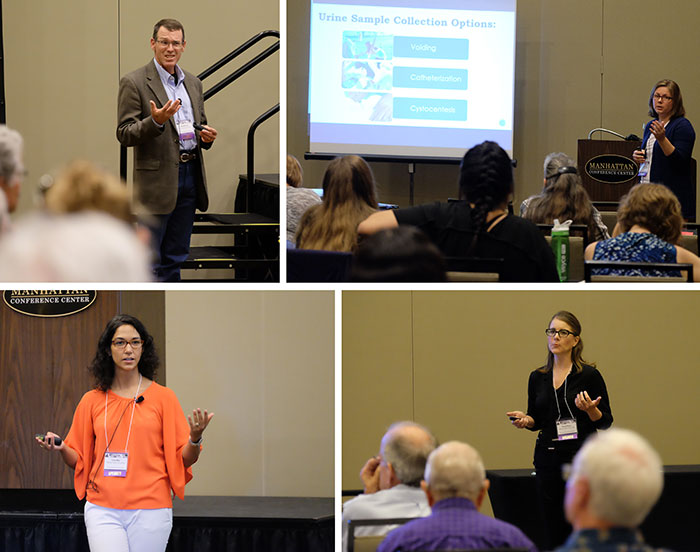
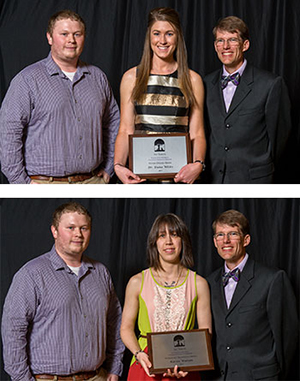
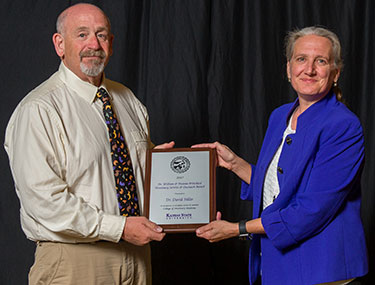
A whole host of awards at 79th Annual Conference for VeterinariansThe CVM honored a group of five alumni and faculty members at the 79th Annual Conference for Veterinarians held June 4 at the conference brunch.
|
|
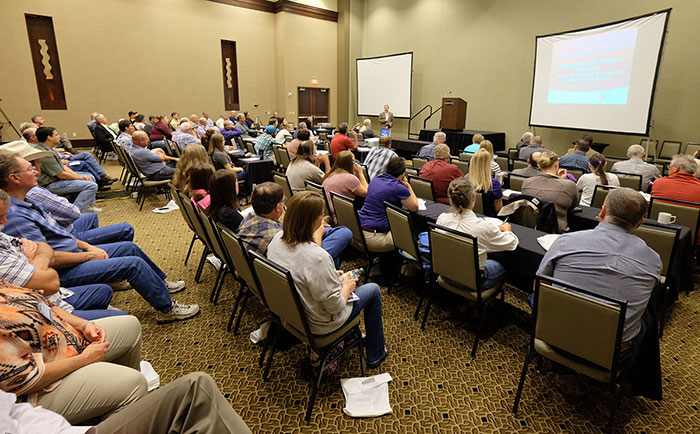
More pictures from the 79th Annual Conference for Veterinarians
|
|
In Memoriam - Recently Departed AlumniDr. Oren Kelsey, DVM 1951 Dr. W. Luke Fry, DVM 1977 |
|
Questions about Alumni or CE events?Contact:
|
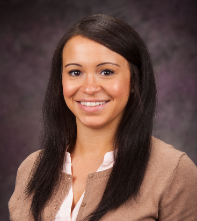 Ashley McCowan
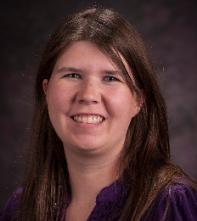 Dana Parker
News Ticker
More activities and accomplishments in the College of Veterinary Medicine:
|
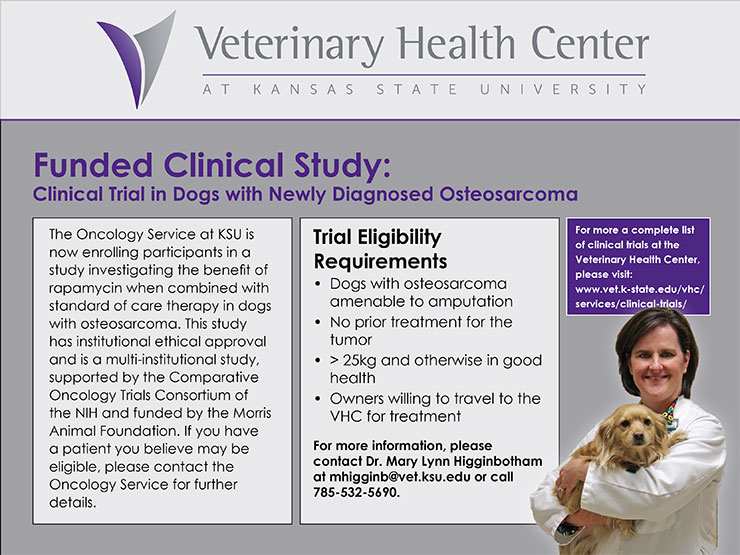
Dr. Ryane Englar joined the Department of Clinical Sciences May 8. He is the clinical educator for the new clinical skills program beginning with first-year students. Dr. Kara Berke began May 30 as the new Clinical assistant professor of soft tissue and orthopedic surgery. Dr. Chris Blevins was a guest on Ag AM in Kansas talk show on April 27, 2017. Dr. Blevins was featured on the “Horsing Around” segment discussing equine skin diseases and issues. Dr. Mary Lynn Higginbotham and Misty Bear, Clinical Trials Coordinator, participated in the 2017 Research Showcase in Kansas City on Wednesday, May 17. Dr. Neala Boyer was presented with the Pet Tribute Faculty Award. This award recognizes those who demonstrate exceptional compassion in the care and treatment of patients. The award is determined by a vote of the senior class. Drs. Chris Blevins and Mike Moore co-authored a case report in the Kansas State Veterinary Diagnostic Laboratory’s Diagnostic Case Report entitled, “Equine Strangles.” http://www.ksvdl.org/reports/april_2017/equine.html |
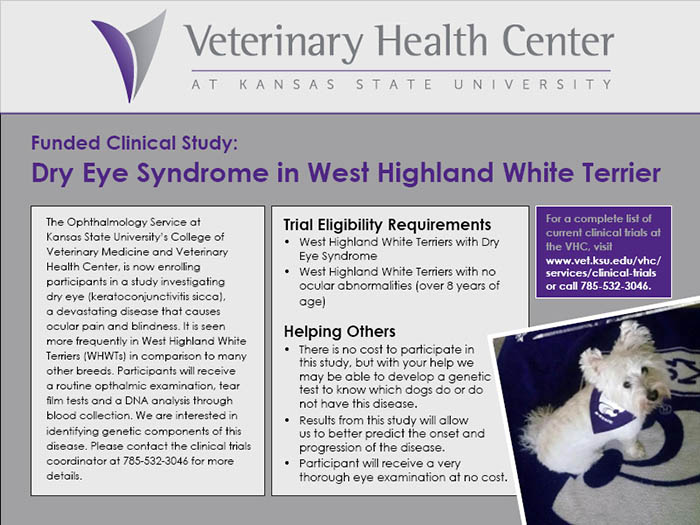
New Clinical TrialsClinical Trial for dogs with cranial cruciate ligament rupture receiving TPLO by Dr. Kenneth Harkin and Dr. Jim Roush http://www.vet.k-state.edu/vhc/services/clinical-trials/Fortetropin.html This study evaluates if supplementing fortetropin, a freeze-dried fertilized egg yolk product, into a dog’s normal diet after TPLO surgery will prevent muscle atropy and/or shorten time to resolution of lameness. Eligible dogs must have:
Evaluation of a novel point-of-care test for histoplasmosis in dogs and cats by Dr. Kate KuKanich http://www.vet.k-state.edu/vhc/services/clinical-trials/HistoplamosisPointofCare.html This study evaluates if a new method will prove to be an accurate, point-of-care test to diagnosis histoplasmosis. Dog and cats with suspected histoplasmosis are eligible for enrollment, as well as dogs or cats with clinical signs similar to histoplasmosis (but diagnosed with something other than histoplasmosis) to be entered into control arm of study. Histoplasmosis Genotyping in Dogs and Catsby Dr. Kate KuKanich http://www.vet.k-state.edu/vhc/services/clinical-trials/HistoplasmosisGenotyping.html This study will collect Histoplasma organisms from dogs and cats for fungal culture, genotyping, and drug susceptibility testing. Eligibility: Any dog or cat previously diagnosed with histoplasmosis. Still taking enrollees for two more dogs into Dr. Mary Lynn Higginbotham’s lymphoma trial: Trial for dogs with newly diagnosed B-cell lymphoma http://www.vet.k-state.edu/vhc/services/clinical-trials/BcellLymphoma.html This trial investigates the safety and efficacy of combination therapeutic protocol incorporating chemotherapy and immunotherapy (ECI-LYM-1) which utilizes an autologous tumor vaccine and infusion of autologous tumor specific T-cells in dogs with naturally occurring B-cell lymphoma. Eligibility criteria:
|
Renovation updatesAccess to Trotter 3rd floor from both Mosier walkway and Coles walkway are closed for construction. The Anatomy Lab – Trotter 304 renovated has begun. Estimated completion date is January 2017. First year veterinary students will move to 1st floor of Trotter and 3rd year veterinary students to Frick. Frick will be reserved strictly for third year veterinary students. The Trotter 104 lab will be the temporary Anatomy Lab. Estimated completion date is August 2017. A family restroom will be added to Trotter 1st Floor Restroom. Estimated completion date is August 2017. Trotter 1st Floor Mother’s Room. The shower area will be renovated for two mother’s rooms. Estimated completion date is August 2017. |
Special Awards at Senior Honors Banquet
|
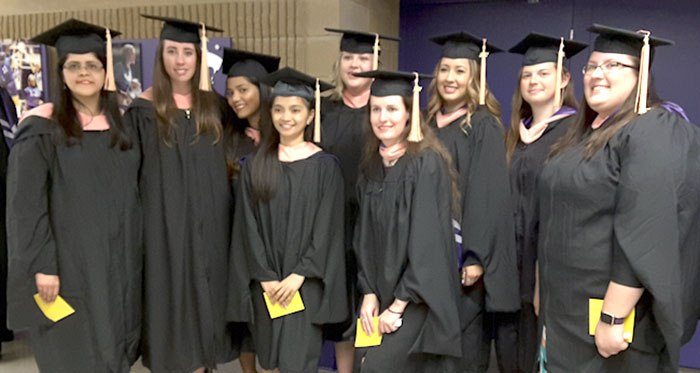
Congratulations to the 2017 MPH graduates
From left: Marisol Aguirre Rojas, Deider Bean, Prscilla Brenes, Nike Frans, Alyssa Gehle, Bridget Byquist, Ileana Cepeda, Hayleigh Paussauer and Emily Sperry. |
|
|
New Arrivals/Recent Departures
Welcome to:
Jinping Fu, Veterinary Diagnostic Laboratory, Research Assistant
Cody Heskett, Veterinary Diagnostic Laboratory, Research Assistant
Molly Lohman, Veterinary Diagnostic Laboratory, Research Assistant
Emily Gilbert-Esparza, Veterinary Diagnostic Laboratory, Research Assistant
Zan Bertolino, Veterinary Health Center, Veterinary Techinican I
Luiza Castanhas, Anatomy & Physiology, Office Specialist III
Morgan Fyffe, Dean of Veterinary Medicine, Accountant II
Cathy Troupe, Veterinary Diagnostic Laboratory, Research Assistant
Barbara Turner, Dean of Veterinary Medicine, Program Assistant
Yuan Feng, Veterinary Diagnostic Laboratory, Research Assistant
Andrea Parrish, Dean of Veterinary Medicine, Librarian
Cara Koerperich, Dean of Veterinary Medicine, Accountant I
Jennifer Minton, Veterinary Diagnostic Laboratory, Intern
Farewell to:
Ju Lin Weng Huang, Diagnostic Medicine/Pathobiology, Research Assistant
Krystin Sothers, Dean of Veterinary Medicine, Accountant I
Nicole Jensen, Veterinary Health Center, Agricultural Technician
John Griffin, Clinical Sciences, LOCUM Instructor
Joshua Springfield, Diagnostic Medicine/Pathobiology, Research Assistant
Jessy Richard, Veterinary Health Center, Client Services Assistant
Tania Arevalo, Dean of Veterinary Medicine, Interpreter
Lifelines is published each month by the Marketing and Communications Office at the College of Veterinary Medicine. The editor is Joe Montgomery, jmontgom@vet.k-state.edu.
Lifelines index
Download a printable version of Lifelines (this is condensed and has less information than above)
Note: File is in Adobe Acrobat (PDF) format.