
Monthly Newsletter
September 2021 - Vol. 16, No. 9
<August 2021 | October 2021>
Top Stories
New $3.68 million NIH grant supports Rocky Mountain spotted fever vaccine
Dr. Roman Ganta, director of the Center of Excellence for Vector-Borne Diseases, has received a $3.681 million grant from the National Institutes of Health to continue his longtime work on tick-borne diseases.
The grant supports Dr. Ganta's research into vaccine development for Rocky Mountain spotted fever, a disease with high mortality rates — 30 to 80% — and primarily caused by the bite of a tick infected with Rickettsia rickettsii. This pathogen infects both dogs and people in the United States and is prevalent in Mexico, Central America and South America. "Unless some of these infections are diagnosed quickly and treated, death can occur within a short timeframe," Dr. Ganta said. " Infections are often misdiagnosed as people may not always realize ticks have bitten them. That makes it very important to have vaccines that can be used to prevent infections." Recent vaccine studies under Dr. Ganta's direction demonstrated the feasibility of vaccine development preventing severe Rocky Mountain spotted fever. The goals of the currently funded project are to define a broadly applicable vaccine with long-lasting protection. "Collectively, we have had a great funding base for continuing our internationally recognized, innovative and impactful research program targeting important tick-borne diseases," Dr. Ganta said. "Our research findings on various projects pursued at K-State with extraordinary effort set the path for our continued competitive funding success for research projects on several tick-borne diseases." Dr. Ganta's previous and ongoing research involves pathogenesis, immunology, genetics, gene regulation and development of novel vaccines to combat tick-borne diseases caused by Anaplasma and Ehrlichia species pathogen infections. Dr. Ganta also has been actively pursuing vaccine research against a significant cattle disease, bovine anaplasmosis, with funding from the Russell L. Rustici Rangeland and Cattle Research Endowment, University of California. He is also investigating an important foreign animal disease of ruminants called heartwater disease. "I foresee that we will continue our efforts in executing impactful research for many more years at our college," Dr, Ganta said. "The NIH grant support secured three years in a row is a great testimony for our hard work and is also a big boost to our efforts to promote the college's goal of impactful research."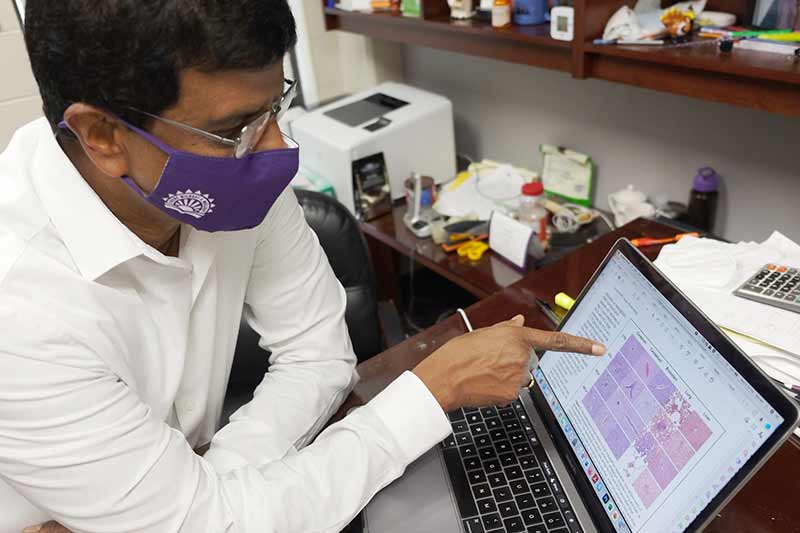
Dr. Roman Ganta points out a graph from one his recent research articles related to vaccine research for Rocky Mountain spotted fever.
College welcomes new class of Early Admission Scholars
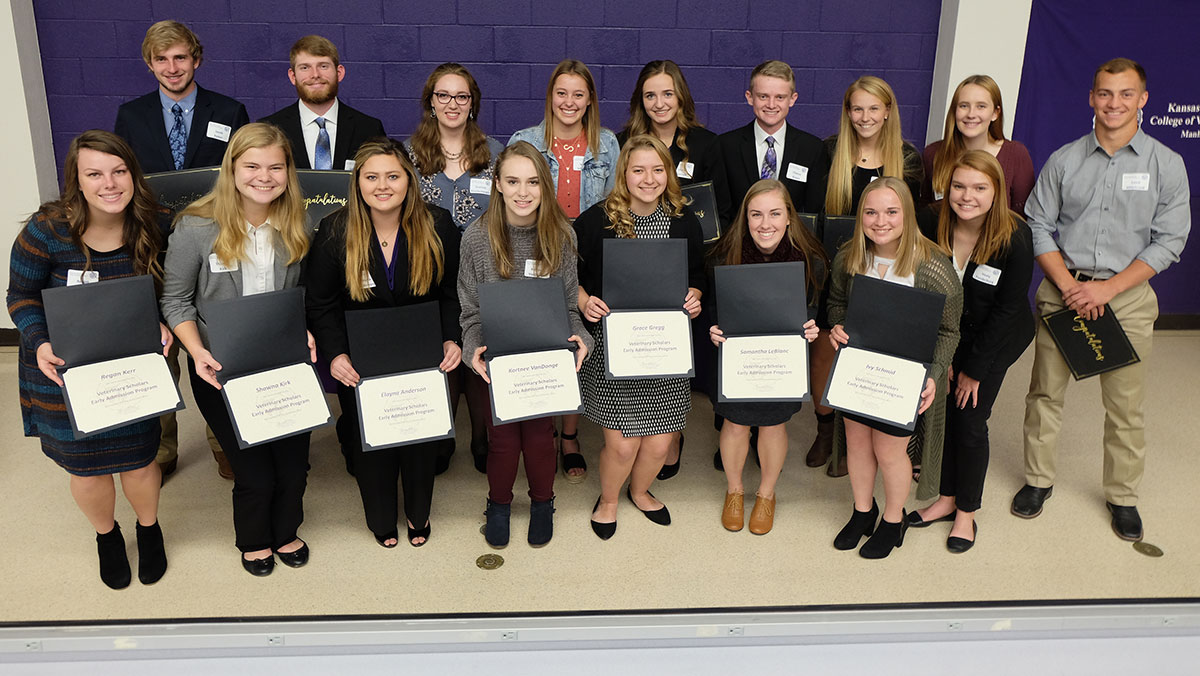
A new group of Kansas State University undergraduate students has a special opportunity to become veterinarians. The College of Veterinary Medicine recognized nine students for being selected in its Early Admission Program at the College of Veterinary Medicine on Aug. 27.
Established in 1999, the Early Admission Scholars Program recruits the best and brightest undergraduate students who are committed to studying veterinary medicine. "The students inducted into the Veterinary Scholars Early Admission Program represent the top 5% of Kansas State University students academically," said Dr. Callie Rost, assistant dean for admissions. "I congratulate everyone selected. We had between 40 and 50 applications for the program this year, so these students are a very select group who impressed the selection committee with their potential for veterinary medicine." The 2021 class of Early Admission Scholars, all first-year students in animal sciences and industry: Jenna Holt, Mound City; Ava Wieser, Overland Park; and Morgan D'Albini, Spring Hill. From out of state: Alexandra Livingston, Los Alamitos, California; Tiffany Lee, Pensacola, Florida; Kendra Siefker, Sibley, Missouri; Masyn Arena, Beatrice, Nebraska; Katherine Kunkel, Houston, Texas; and Abigail Schmoldt, Slinger, Wisconsin. Successful candidates in the Early Admission Scholars program must maintain a 3.3 grade point average during completion of the science prerequisites and complete the 64 hours of prerequisites by the end of the spring semester prior to beginning the Doctor of Veterinary Medicine curriculum in the fall. Graduate Records Examination, or GRE, scores are no longer required for any applicant. The science courses on the prerequisite list must be completed at Kansas State University. Candidates also must strengthen their veterinary experiences, attend K-State events and participate in volunteer work. The College of Veterinary Medicine assigns a veterinary student mentor to each Early Admit Scholar to stimulate career and academic development and to provide orientation and access to college activities. The pre-veterinary students attend regular meetings during the academic year to develop a sense of community and share their progress. Information on how to apply for the program, including a link to a PDF on program requirements, is available online at vet.k-state.edu/admissions/early-admit/index.html. Current high school seniors can apply now through Feb. 1, 2022.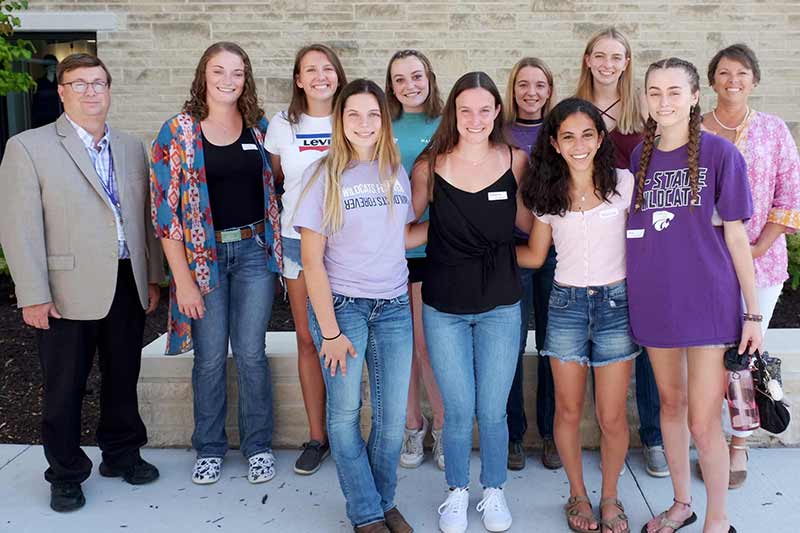
The 2021 class of Early Admission Scholars for the Kansas State University College of Veterinary Medicine. Back row, from left: Associate Dean James Roush, Kendra Siefker, Abby Schmoldt, Allie Livingston, Jenna Holt, Morgan D’Albini and Assistant Dean Callie Rost. Front row, from left: Masyn Arena, Katherine Kunkel, Tiffany Lee and Ava Wieser.
Fourth-year student receives new Aurora Pharmaceutical scholarship

Fourth-year student Colton Hull joins a nationwide group of veterinary students who were selected to receive a brand new scholarship. A company in Minnesota just announced the recipients of its inaugural Aurora Pharmaceutical DVM Student Scholarship Program.
In all, the program designated $50,000 in scholarships, including 10 individual scholarships of $2,500 — in addition to three individual scholarships of $5,000 and one individual scholarship of $10,000. Colton was named as one of the recipients selected for the $2,500 scholarship that will help cover costs associated with obtaining his degree. “On behalf of Aurora I want to extend my congratulations to Colton,” said Mike Strobel, DVM, CEO and founder of Aurora Pharmaceutical. “We look forward to continuing to grow this program in the years ahead to show our support to the next generation of DVM professionals.” “I am extremely grateful to Aurora Pharmaceutical for this generous scholarship,” Colton said. “I plan to join a mixed-animal veterinary practice in Kansas after graduation, and this scholarship helps bring me closer to that goal. It is great to see companies actively investing in the futures of veterinary students, and I am very thankful to have been selected as a recipient of one of their scholarships.” For students interested in the program, you can find additional information at aurorapharmaceutical.com/scholarships. About Aurora Pharmaceutical Inc. Aurora Pharmaceutical is a veterinary pharmaceutical product development and manufacturing company headquartered in Northfield, Minnesota. Based on more than thirty years of experience in veterinary practice, medicine, agriculture, and research and development, Aurora applies its unique expertise to fulfill a wide array of needs within the veterinary industry. Aurora strives to create the products needed in the veterinary industry by using innovative, state-of-the-art, environmentally friendly technologies.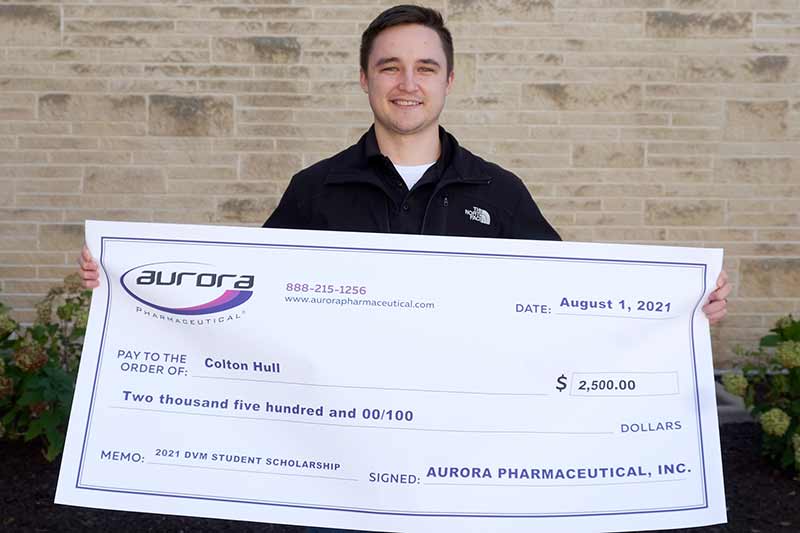
Fourth-year student Colton Hull is one of 15 students chosen for the new Aurora Pharmaceutical DVM Student Scholarship .
More Headlines
K-State and Elanco Animal Health Incorporated sign strategic alliance to improve animal health
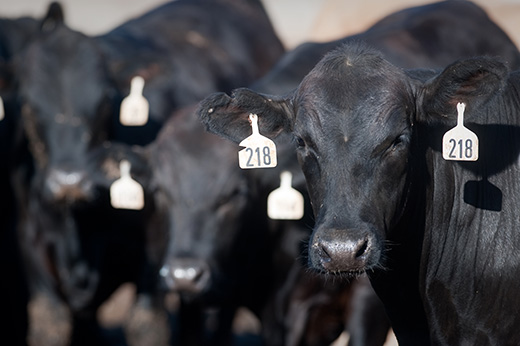 Kansas State University and Elanco Animal Health Incorporated are combining efforts to tackle innovation for companion animal and livestock health. A five-year strategic alliance agreement between the university and Elanco will allow for collaborative research and intellectual property licensing for commercialization activities.
Researchers will focus on activities supporting sustainable practices in livestock production and pet health; vector-borne and emerging disease prevention and treatment; and advanced understanding of the microbiome in animals. Elanco's research and development model includes attracting leading innovators as a partner of choice. They have chosen K-State as a primary key veterinary partner.
"K-State and Elanco have many areas of shared strengths and goals. The alignment is a natural fit," said Dr. Bonnie Rush, dean of the K-State College of Veterinary Medicine. "The exchange of scientific expertise between talented scientists from both entities will create a special environment for rapid advancements. The cumulative experience and balance of science and commercialization ensure technologic advancements will achieve practical application."
One of the key objectives of the partnership is to establish novel approaches to increase sustainable practices, reducing the carbon footprint of livestock production, with the ultimate goal of providing innovative solutions to veterinarians and producers to maintain healthy animals using safe and efficient solutions.
Elanco will collaborate with K-State faculty, embed scientists in K-State laboratories and utilize specialized research resources to engage in fundamental and applied collaborative research. Through the partnership, Elanco will support K-State graduate students, fellows and faculty and facilitate an exchange of expertise through researcher exchange programs.
"An alliance with Kansas State University is truly a win-win for both organizations," said Jose Simas, executive vice president of the U.S. Farm Animal business for Elanco. "It provides Elanco with an opportunity to engage with experts beyond our own walls, focusing on timely innovation and practical solutions. Meanwhile, K- State has the opportunity to utilize the commercial expertise of a leading animal health organization with nearly 70 years of industry experience."
The collaboration allows research that is at the forefront of innovation for the monitoring of new diseases to tailor research programs and provide product solutions, as well as development of innovative approaches to existing vector-borne diseases by leveraging common strengths.
"Forming this strategic alliance with Elanco enhances our ability to receive critical industry feedback earlier in the process on discoveries consistent with their external innovation targets," said Bret Ford, director of business development and licensing, animal health at K-State Innovation Partners. "In addition, the interaction will shine a spotlight on the talent and expertise of our faculty and will demonstrate how their applied research can tackle some of the biggest problems affecting the health and well-being of animals."
Elanco Animal Health Incorporated is a global leader in animal health dedicated to innovating and delivering products and services to prevent and treat disease in farm animals and pets, creating value for farmers, pet owners, veterinarians, stakeholders, and society as a whole. With nearly 70 years of animal health heritage, Elanco is committed to helping customers improve the health of animals in their care while also making a meaningful impact on local and global communities. At Elanco, the vision of Food and Companionship Enriching Life and the Elanco Healthy Purpose™ Sustainability/ESG Pledges work to advance the health of animals, people and the planet.
"As the state's land-grant university, K-State has a long history of commitment to innovations in animal health and agricultural sustainability research," said Beth Montelone, senior associate vice president for research. "This alliance with Elanco will enable K-State to continue this work and contribute important advancements to the industry."
USDA grant supports new K-State hotline for diagnosing toxic animal emergencies
 Rapid response to animal health emergencies has prompted the creation of a new veterinary toxicology training program at Kansas State University. A $248,000 USDA grant will enhance the ability of researchers in the College of Veterinary Medicine to answer calls for help.

The goal of the program, developed by Drs. Steve Ensley, clinical veterinary toxicologist, and Bob Larson, professor of production medicine, is to create impactful and innovative outreach tools. This will better enable livestock veterinarians to recognize and address toxicology problems in food animal species, especially cattle, small ruminants and pigs.
This project will utilize veterinary telemedicine and other distance-based education resources, including a toxicology hotline call-in for practicing veterinarians, CONSULT training for common livestock toxicology problems and YouTube training videos.
One main objective is to create a much-needed call-in service for food animal toxicology questions with nationwide reach to address common toxicological emergencies.
“The toxicology section at the KSVDL and I receive multiple calls each day dealing with questions about food animal veterinary toxicology from across the U.S.,” Dr. Ensley said. “Many questions are about current cases that veterinarians are dealing with and they want assistance in answering specific questions. Because of the infrequent nature of most toxicological case presentations, most practicing veterinarians find it difficult to maintain the current knowledge necessary to quickly address specific toxicological emergencies.”
“The combination of these outreach portals will provide valuable and currently unavailable resources for practitioners, particularly young ones within five years of graduation,” Dr. Larson said. “In addition, this program will greatly enhance currently available toxicology resources for teaching veterinary nurses and veterinary students during the last two years of their professional education.”
Dr. Larson said some of the resources can even be modified to be content-appropriate to introduce important animal health concepts to students in grades 11 and 12 in high school.
Outreach portals for the training materials will include the websites for the Beef Cattle Institute, Kansas State Veterinary Diagnostic Laboratory, K-State Continuing Education, and the Colby Community College Veterinary Nursing Program.
KSVDL veterinarian shares tips for handling vaccinations, maintaining effectiveness
A Kansas State University veterinarian is reminding producers that properly handling bottles containing livestock vaccinations is crucial so that it remains effective for the animal.
Dr. Gregg Hanzlicek, director of the Production Animal Field Investigations at K-State, said that keeping the vaccination bottles between 35-45 degrees Fahrenheit and out of UV light is critical. Some other tips, according to Dr. Hanzlicek, include: Dr. Hazlicek said once the vaccine reaches temperatures above 45 degrees F, the virus will be killed. In a recent study, researchers looked at 300 producers, retailers and veterinary clinics, where temperature logs were placed in the refrigerators where the vaccines were stored. “What they found was that 76% of those 300 hundred refrigerators did not keep those temperatures between 35-45 degrees,” Dr. Hanzlicek said. Dr. Hanzlicek recommended that people handling the vaccines use a temperature logger to make sure that the vaccines are staying in the proper temperature range, including guarding against the vaccine getting too cold. “Freezing will have a negative effect on both modified live and kill (vaccines),” Dr. Hanzlicek said. More information is available from local extension offices in Kansas.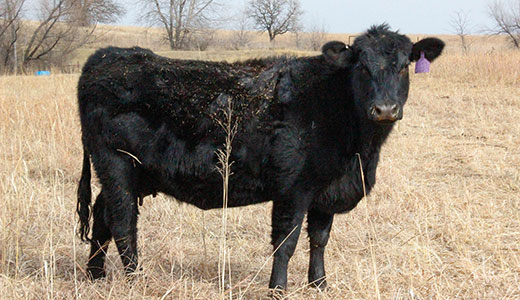
Livestock vaccinations should be stored between 35-45 degrees Fahrenheit to remain viable for the animal, said K-State veterinarian Dr. Gregg Hanzlicek.
“The UV light will have a detrimental effect on the live virus that’s in the mixed-up vaccine,” Dr. Hanzlicek said.
Many automatic syringes used for administering livestock vaccinations will have the barrel of the syringe -- where the vaccination is -- covered to reduce exposure to UV rays. “It’s still best if you can just keep those (syringe) guns out of the light completely," Dr. Hanzlicek said.
Clarenburg Lecture to feature molecular physiologist at College of Veterinary Medicine

As part of its annual Clarenburg Lecture series, the College of Veterinary Medicine will be hosting Dr. Walter Boron on Tuesday, Oct. 5. Dr. Boron’s lecture topic is, “Molecular physiology of the NBCs: pathways for carbonate and carbon dioxide,” and will be presented in the Boehringer Ingelheim Animal Health Auditorium at 4 p.m.
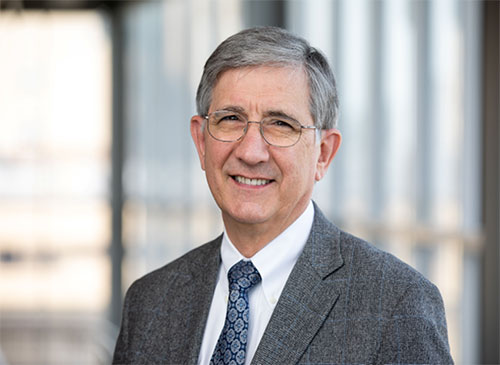
Dr. Walter Boron, Distinguished University Professor, Myers/ Scarpa Professor and chair of the physiology and biophysics department at Case Western Reserve University, will present the Clarenburg Lecture Oct. 5 in the new BIAH Auditorium.
The Rudolf Clarenburg Lectureship was established in 1996 to honor the late Dr. Rudolf Clarenburg, professor of physiology in the College of Veterinary Medicine. This lecture series brings nationally acclaimed scientists to Kansas State University to discuss their research interests with students and faculty throughout the university.
Dr. Boron is Distinguished University Professor, Myers/ Scarpa Professor and chair of the physiology and biophysics department at Case Western Reserve University in Cleveland, Ohio. He earned his AB in chemistry at Saint Louis University, and his M.D. and Ph.D. in physiology and biophysics at Washington University in St. Louis.
Dr. Boron joined Yale University as a postdoctoral fellow with Emile Boulpaep in 1978, and remained there for the next 29 years, serving three terms as chair of the Department of Cellular & Molecular Physiology. In 2007, he returned to his hometown of Cleveland. Dr. Boron developed his lifelong interest in acid-base transport and intracellular-pH regulation with his Ph.D. mentors Albert Roos and Paul De Weer, and his interest in renal HCO3− transport with Boulpaep. His group currently focuses on three related areas: the molecular physiology of the Na+-coupled HCO3− transporters, molecular CO2/HCO3− sensors, as well as CO2 and O2 channels.
Dr. Boron is former president of the American Physiological Society (APS) and former secretary-general of the International Union of Physiological Sciences (IUPS), as well as former editor-in-chief of two journals, Physiological Reviews and Physiology. He and Emile Boulpaep co-edit the textbooks Medical Physiology and Concise Medical Physiology. Among Boron’s accolades are an honorary doctorate from Aarhus University (2014), and election to the National Academy of Medicine (2014).
The Clarenburg Lecture series is made possible by the generous support received from the Clarenburg family to honor and recognize the significant contributions made by Dr. Clarenburg to the Department of Anatomy and Physiology and the College of Veterinary Medicine.
Cattle Chat: Factors influencing cow supplementation pre- and post-weaning
A well-balanced diet is important in human’s overall health plan. Similarly, just as our caloric needs adjust throughout the life cycle, nutritional fluctuations happen in the beef cow, said the experts at Kansas State University’s Beef Cattle Institute on a recent Cattle Chat podcast.
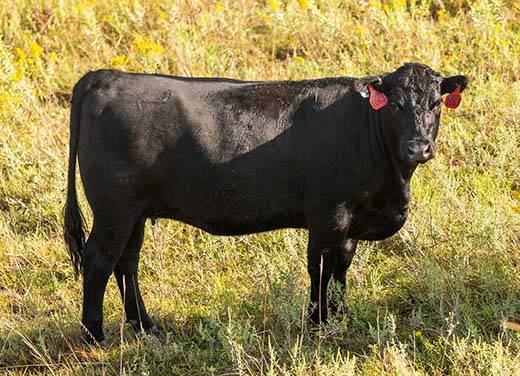
Early fall is a good time to assess the body condition of spring calving cows.
“Right after weaning, the beef cow’s energy requirements are low,” said veterinarian and BCI director Dr. Brad White.
Fellow veterinarian Dr. Bob Larson suggested the first step in making a nutrition plan for the cowherd is to assess the body condition of the cows.
“By knowing the body condition, producers can either get by with minimal supplementation for cows in good nutritional shape, or if they are thin, this is a good time to add weight on them while they are in mid-gestation and not lactating,” Dr. Larson said.
For thin cows, beef cattle nutritionist Dr. Phillip Lancaster said the most economical way to add weight is by turning them out on grass while it is still available.
“Aside from the inconvenience of hauling hay and cost of feeding supplements later in the winter, by waiting to supplement the cows in the last trimester of their pregnancy, producers will have less time to ensure that cows reach a desired body condition by calving,” Dr. Lancaster said.
However, he added, from an efficiency standpoint, research has shown that adding body condition in late lactation is improved over that of a non-lactating, or dry, cow.
“If you can separate the thin cows and their calves and feed them away from the other cows in the herd, that can be an advantage, but it also takes more work to manage that system,” Dr. Lancaster said.
White added that the management strategy will be dependent on several factors on the operation, one of which is access to the cows.
“Logistically, it may be easier to add weight on the cows after weaning,” he said.
To hear more of this discussion, listen to the Cattle Chat podcast online.
Regular features
Alumni Events, Development and Continuing Education
 The Veterinary Medical Alumni Association organizes alumni receptions at several of the national annual conferences plus continuing education events and more. This month's section includes the monthly listings of recently departed alumni and links to their obituaries, plus a new link for submitting nominations for Alumni Recognition Awards.
Dr. Vern Otte receives 2021 Distinguished Alumnus Award
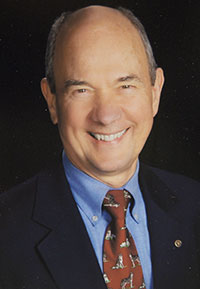
Dr. Vern Otte, Leawood, Kansas, has been selected by the Kansas State University College of Veterinary Medicine’s Alumni Association for its 2021 Distinguished Alumnus Award, to be presented as part of the Alumni Awards Brunch during the Alumni Reunion Weekend on Sept. 25. This award is in recognition of his outstanding achievements, humanitarian service, and contributions to the veterinary profession.
Dr. Otte, originally from Great Bend, Kansas, earned a bachelor’s degree in 1964 and a Doctor of Veterinary Medicine degree in 1975, both at Kansas State University. After graduation, he practiced at Raritan Hospital for Animals (Edison, New Jersey) until 1977. He then owned and practiced at the State Line Animal Hospital, Leawood, from 1977 to 2014, at which time he sold the practice to his associate. He remained active until retiring from practice in 2017. Dr Otte became Board Certified by the American Board Veterinary Practitioners in 1983 and has been granted Emeritus Status by ABVP. Dr. Otte has been a trail veterinarian for the Iditarod Sled Dog Race in Alaska for 11 years.
Dr. Pat Payne receives 2021 ER Frank Award
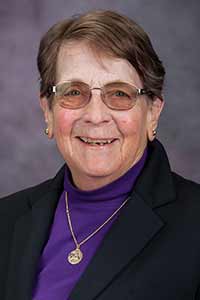
Dr. Patricia Payne, Manhattan, Kansas, has been selected as the recipient of the 2021 E.R. Frank Award by the Kansas State University College of Veterinary Medicine and its Veterinary Medical Alumni Association.
Dr. Payne is being recognized for her time as a faculty member at K-State and service as director of the Diagnostic Parasitology Laboratory. She is also well-respected in the college for her dedication in training puppies for KSDS Assistance Dogs Inc.
This award is presented as part of the Alumni Awards Brunch during the Alumni Reunion Weekend held Sept. 25.
The E.R. Frank Award is presented to a faculty member who displays meritorious service to the college as well as the same professional essence of Dr. Frank, who was a longtime faculty member in equine surgery and a K-State alumnus. Nominees must have at least a 15-year relationship with the college, possess a noteworthy record of service and display an unassuming and unpretentious manner throughout their careers.
See Dr. Payne's biography here.
Dr. Trent Fox receives 2021 Outstanding Young Alumnus Award
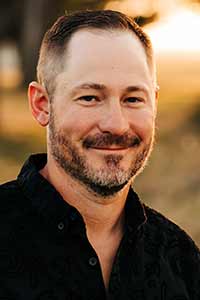
Dr. J. Trent Fox, Hays, Kansas, is the recipient of the 2021 Outstanding Young Alumnus Award for his notable achievements since graduating from Kansas State University. The award is presented by the K-State College of Veterinary Medicine and the K‑State Veterinary Medical Alumni Association during the Awards Brunch at the Reunion Weekend held Sept. 25.
Dr. Fox received his Doctor of Veterinary Medicine degree from Kansas State University in 2010. He also earned a Ph.D. in pathobiology, ruminant microbiology and epidemiology in 2007, also at K-State. Prior to that, he earned a master’s degree in ruminant nutrition from Texas A&M University in 2004. He completed a bachelor’s degree in animal sciences at K-State in 2002.
New video added to CVM Alumni Biography Video series
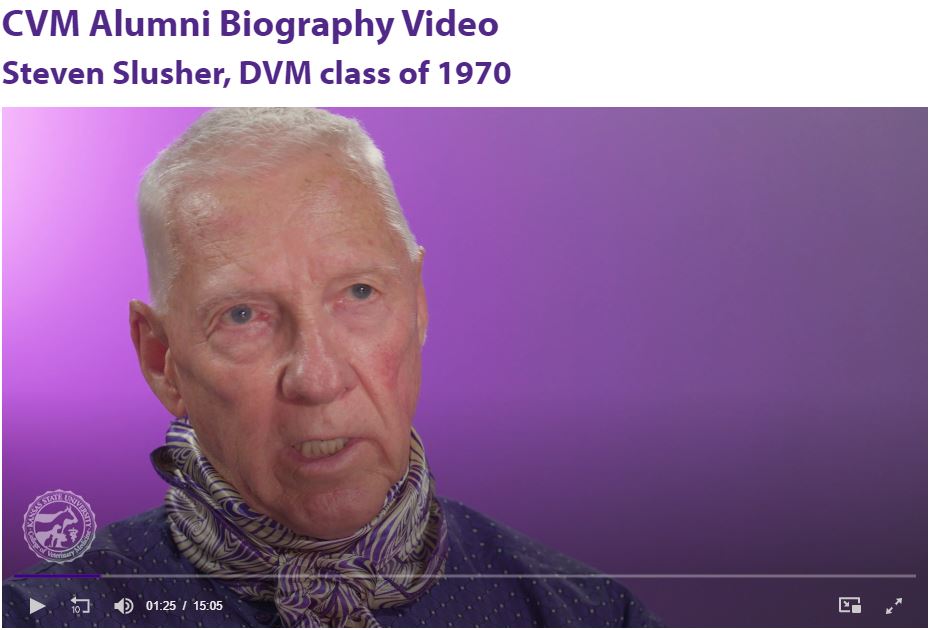
See the latest addition to our series of Alumni Biography Videos: Dr. Steven Slusher, DVM class of 1970. You can find the full list of Alumni Video Biographies here. We're scheduling interviews with alumni who have 40 years of experience or more, where you can share the stories of your life and career. We seek to create an enduring legacy and inspire future generations of veterinary students. If you are interested in taking part in this exciting and meaningful project, please contact alumni@vet.k-state.edu.
|
Vet Town at the College of Veterinary Medicine
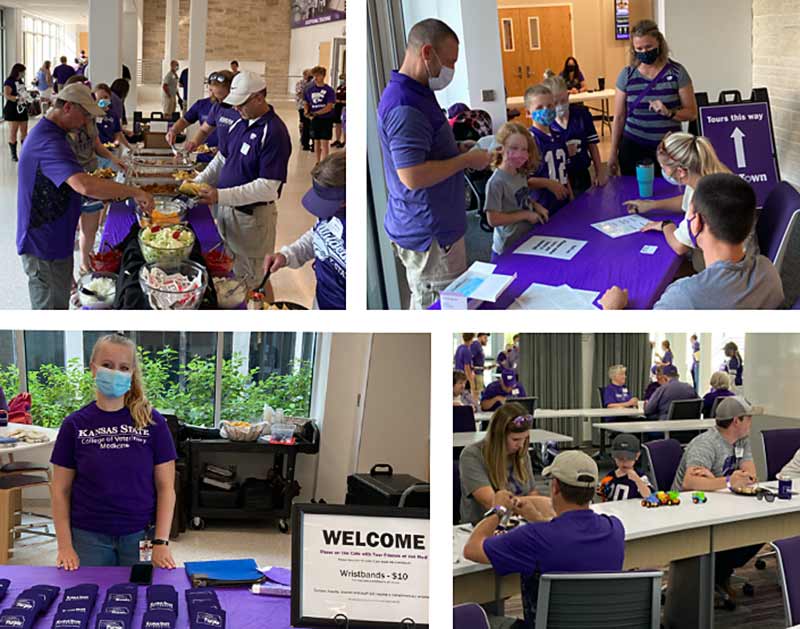
Cat Town has now been renamed Vet Town and is hosted by the College of Veterinary Medicine in the new BIAH Auditorium at 1710 Denison Avenue. This relocation provides a special opportunity for alumni to park free at the College of Veterinary Medicine and to come together with other alumni, their family and their friends to cheer on the Cats, plus you can shop for CVM merch at the new Wildcat Corner! See our new page here for VetTown. |
|
Submit nominations for Alumni Recognition Awards onlineSee our new online nomination form to nominate a fellow alumnus for one of our many annual recognition awards, presented at the national conferences: VMX, WVC, AVMA and the Annual Conference for Veterinarians. See full details at the link below. |
|
In Memoriam - Recently Departed Alumni
Dr. Leighton E. Fairbairn, DVM 1953 Dr. James R. Guglielmino, DVM 1971 Dr. Alan G. Bosomworth, DVM 1979 Dr. Upali M. Jayasekara, MS 1978 and PH.D. in pathology 1979 (click highlighted names for obituary) |

Questions about Alumni or CE events?Contact:
|
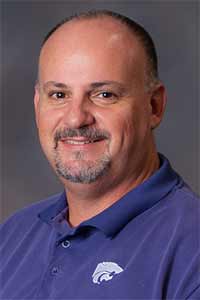 Tony Ballard
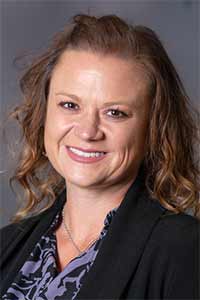 Sarah Keatley
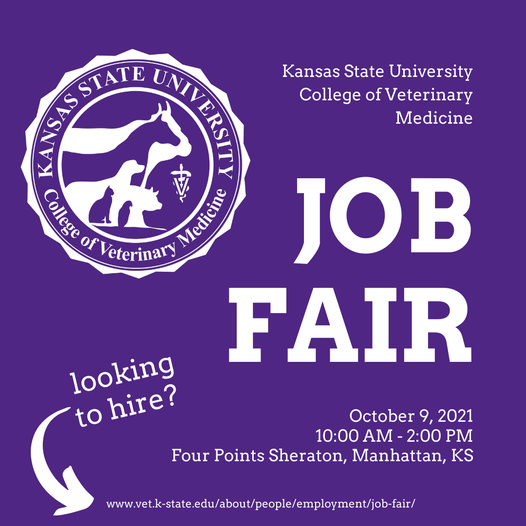
The 2021 Kansas State University College of Veterinary Medicine Job Fair will be held face-to-face. From 10 a.m.-1 p.m., students will have the opportunity to briefly interact with prospective employers in a traditional Job Fair format. From 1 p.m.-2 p.m., interested students and employers may schedule indivdual 10-minute interviews based on mututal interest. For questions about the Job Fair, call Sarah Keatley at 785-532-4528 or email keatley@vet.k-state.edu.
News Ticker
|
More activities and accomplishments in the College of Veterinary Medicine: |
|
Congratulations to Dr. Michael Kleinhenz for passing the American College of Veterinary Clinical Pharmacology (ACVCP) Board Certification Exam! Dr. Kleinhenz also participated as a panelist in the 2021 Virtual Cannabis Research Conference hosted by Colorado State University. His session involved FDA, state regulators and other researchers and included a discussion of the steps necessary to gain FDA-CVM approval for industrial hemp by-product. He provided a summary of the current industrial hemp research conducted at K-State including studies addressing potential efficacy and safety concerns. Congratulations to Drs. William Whitehouse and Justin Thomason who mentored Angela Thomson-Butler (Class of 2024) this summer in the Veterinary Research Scholars Program (VRSP). Angela was named the Morris Animal Foundation Veterinary Student Scholar and Drs. Whitehouse and Thomason were awarded $5,000 to support Angela’s stipend. Thank you to the Clinical Sciences faculty and staff that helped make Vet Med ROCKS a great success! The summer camp was held Aug. 1-4 for high school, middle school and elementary school students. Clinical Sciences volunteers: Drs. James Carpenter, Kate KuKanich, Shane Lyon, Dylan Lutter, Matt Miesner, Melissa Upchurch and staff, Gina Jensen and Susan Rose. Dr. Mike Apley presented, “What have we learned (scientifically and practically) in 50 years of antibiotic progress” at the Academy of Veterinary Consultants meeting in Amarillo, Texas, on Aug. 5-7. Dr. Bob Larson presented “50 years of progress and history-innovations in diagnostics and therapy in beef cattle” at the same meeting. Dr. Brian Lubbers join the CattleChat podcast hosted by the Beef Cattle Institute. Dr. Mike Apley presented at the National Cattlemen’s Beef Convention in Nashville, Tennessee, Aug. 11-12. Dr. Apley's presentation, “Tipping points for changes in antimicrobial use in cattle,” was given to the Cattle Health and Well-being Committee. The freshman clinician orientation in the Veterinary Health Center was held on Aug. 20 for the Class of 2025. Current fourth-year students provided groups of 14-15 first-year students a tour of the VHC through eight different stations where a 5-10 minute activity, demonstration or talk was provided. Dr. David Biller presented five lectures at the 35th Annual Convention Conference Puerto Rico Veterinary Medical Association in San Juan, Puerto Rico, held from Aug. 27-28. Dr. Biller’s presentation titles:
Dr. James Carpenter presented, “Pharmacokinetics of Cannabinoid and Cannabidiolic Acid Administered Orally in the Rabbit” at ExoticsCon 2021 in Nashville, Tennessee, Aug. 28-Sept. 2. |
 Join the College of Veterinary Medicine on LinkedIn and add us to your profile under education and/or employment to help build and engage our online social community! Follow the LinkedIn page here: www.linkedin.com/company/kstatevetmed
New Arrivals/Recent Departures
Lifelines is published each month by the Marketing and Communications Office at the College of Veterinary Medicine. The editors are Joe Montgomery, jmontgom@vet.k-state.edu, and Piper Brandt, pnbrandt@vet.k-state.edu.