
Monthly Newsletter
October 2021 - Vol. 16, No. 10
<September 2021 | November 2021>
Top Stories
$3.43 million NIH grant to create core research facility

Like a hub that connects the spokes of a wheel, the College of Veterinary Medicine is creating a new research center that brings together five highly focused laboratories at Kansas State University.
The core laboratory is being made possible by a $3.43 million grant from the National Institutes of Health and will strengthen research efficiency and collaboration among K-State scientists and beyond. The core-facility suite is the final element of a three-phase renovation at the College of Veterinary Medicine. Phase 1 delivered the Boehringer Ingelheim Auditorium adjacent to Mosier Hall — a 220 seat, contemporary educational space. Phase 2 became the Hill's Pet Health and Nutrition Center for clinical training and community service, which occupies the first-floor space created by deconstruction of the outdated, two-story auditorium. Phase 3, the 5,000-square-foot research laboratory, will occupy the second floor of the old auditorium space. "This new core research facility strategically combines five key disciplines: animal model/pathology, molecular and cellular biology, microscopic imaging, flow cytometry and cell sorting, and next-generation sequencing," said Dr. Bonnie Rush, dean of the College of Veterinary Medicine. The new research facility represents a critical component of the university's research infrastructure to support infectious disease studies. It will provide direct support of K-State's Center on Emerging and Zoonotic Infectious Diseases, or CEZID, which was created by an $11.3 million grant in 2020 through the NIH's Center of Biomedical Research Excellence, and nearby federal facilities in Manhattan that include the U.S. Department of Agriculture's National Bio and Agro-Defense Facility, or NBAF, and Arthropod-Borne Animal Diseases Research Unit. "This will give our university a modern biomedical research facility with advanced instrumentation and technical support to foster collaborative, transdisciplinary science across the university and beyond," Rush said. "This is critical to promoting a robust research and training environment where researchers can answer the most challenging and urgent biomedical questions of our time." Dean Rush said the latest NIH grant will support CEZID and collaborating scientists to advance the discovery and molecular characterization of infectious pathogens and diseases affecting animals and people. Projects within this new core research facility will bridge areas of excellence across K-State colleges that conduct STEM research. These projects examine cross-cutting themes, such as virulence factors and host-pathogen interactions of pathogens of significance for human health, employing in vitro systems and animal models." The newly funded, core-facility suite will assemble state-of-the-art technologies in a single location to facilitate the delivery of coordinated services for academic, corporate and federal researchers in imaging and molecular analyses, providing a complete range of services from whole tissues to single-cell nucleic acid analyses. Currently, CEZID has collaborative partnerships with the University of Missouri, Columbia; MRI Global in Kansas City, Missouri; and regional pharmaceutical companies in the Kansas City Animal Health Corridor, such as Boehringer Ingelheim Animal Health in St. Joseph, Missouri, CEVA Animal Health in Lenexa and Elanco Animal Health in Overland Park. Dean Rush said the proposed plan is to complete renovation and then occupy the consolidated biomedical core facilities by the fourth quarter of 2023. (Editor's note: The project as described in this announcement is supported by the U.S. Department of Health and Human Services, National Institutes of Health under Award Number C06OD031987. The content is solely the responsibility of the authors and does not necessarily represent the official views of the National Institutes of Health.)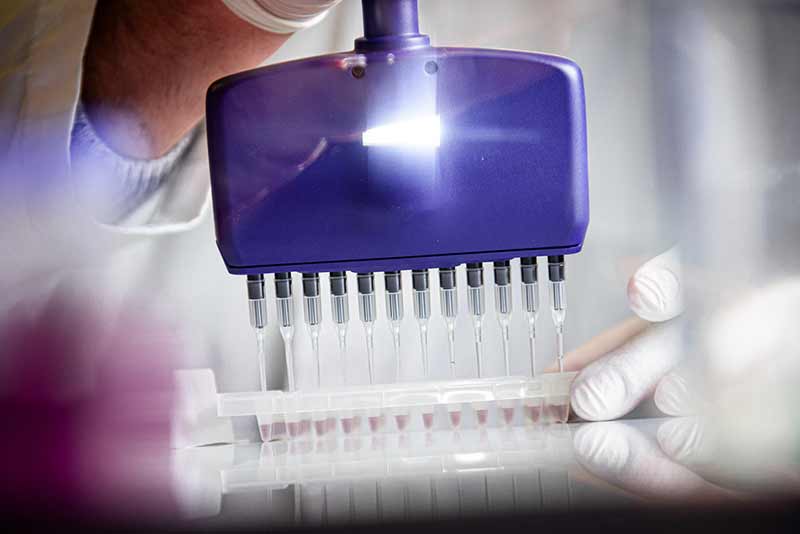
A $3.43 million grant from the National Institutes of Health will help the Kansas State University College of Veterinary Medicine bring together five key laboratories that deal with infectious disease work into one research suite.
"Kansas State University is poised to become the preeminent institution to advance the discovery and development of biosecurity strategies for emerging and zoonotic infectious diseases," Dean Rush said. "With the upcoming deployment of the National Bio and Agro-Defense Facility next to our college, K-State will be the only U.S. university with a full continuum of biosecurity level-1 through biosecurity level-4 facilities co-located on one campus. The new core laboratory will be an important resource for non-containment research."
Currently, existing laboratories are isolated from each other, spread across three buildings and in some cases, hosted by individual faculty members, creating a burden for the host scientist and inefficient workflow for all parties, Dean Rush said. Consolidating these individual facilities into a combined core will improve laboratory access, optimize research workflows and experimental outcomes, and provide coordinated training opportunities for students.
Meet the new class of scholars in Veterinary Training Program for Rural Kansas
Four new students in the College of Veterinary Medicine have been chosen for the largest veterinary scholarship program offered by the state of Kansas: the Veterinary Training Program for Rural Kansas.
This year's recipients are first-year veterinary students Chelsey Bieberle, Bushton; Emma McClure, Hugoton; Bryant Karlin, Manhattan; and Chandler Rogers, Topeka. "The Veterinary Training Program for Rural Kansas fulfills an important educational and service mission for the state of Kansas," said Bonnie Rush, dean of the College of Veterinary Medicine. "These students completed a rigorous selection process. They will complete additional training beyond the curricular requirements of the professional degree program to prepare them for success in rural practice." The Veterinary Training Program for Rural Kansas was passed by the state Legislature in 2006 to provide a financial incentive to provide rural areas in Kansas with committed veterinarians. "The program helps retain some of the brightest and best veterinary students in Kansas," Rush said. "The scholarship recipients — past, present and future — create a unique community of supportive colleagues and represent the future of rural veterinary practice in Kansas." Program participants are eligible for up to $20,000 in loans per year to pay their tuition. Upon completion of their Doctor of Veterinary Medicine degree, each graduate is required to work at a full-time veterinary practice in one of the 91 Kansas counties with fewer than 35,000 residents. For each year the graduate works in rural Kansas, $20,000 worth of loans are forgiven by the state. Graduates are expected to work four years in a designated county to receive $80,000 in loan waivers. Ninety-six percent of graduates are completing or have completed their loan obligation through service. Graduates who do not complete through service are required to repay the loan. The funds are reinvested through the addition of students to the program. Ninety-three percent of graduates who have completed their four-year obligation remain in a qualifying county. Seventy percent remain in the original practice and community they entered after graduation. The student scholars spend time during the summer and breaks in the academic year learning about foreign-animal disease preparedness, natural disaster response, rural sociology, small business management and public health. They also will spend three weeks in a rural veterinary practice during their senior year, applying the principles of small business management to rural veterinary practice.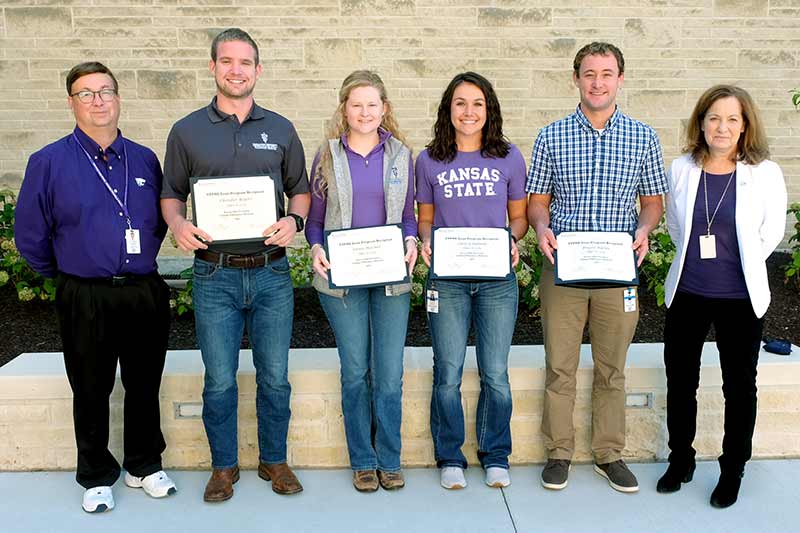
Four veterinary students are recipients of the Veterinary Training Program for Rural Kansas (VTPRK) scholarship. From left are Dr. James Roush, associate dean for academic programs and student success for the College of Veterinary Medicine, with veterinary students Chandler Rogers, Emma McClure, Chelsey Bieberle and Bryant Karlin, and Dr. Bonnie Rush, dean of the College of Veterinary Medicine.
Third-year student selected for NBAF Scientist Training Program fellowship
Jayden McCall, third-year veterinary student from Wichita, was recently awarded the National Bio and Agro-Defense Facility Scientist Training Program fellowship, or NTSP fellowship.
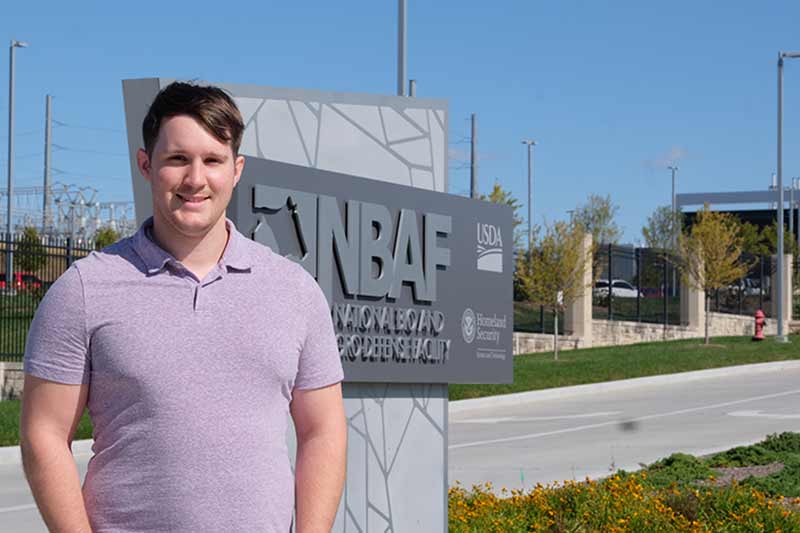
Third-year student Jayden McCall has been accepted in the National Bio and Agro-Defense Facility Scientist Training Program fellowshi program.
Jayden will receive tuition, stipends and funds for supplies and travel through a $1.6 million cooperative agreement with the U.S. Department of Agriculture's Animal and Plant Health Inspection Service.
While in veterinary school, Jayden's interest in food animal medicine was piqued during a 2020 veterinary research scholars program that matches scholars with faculty mentors to develop a summer research project.
"I've always been interested in infectious diseases, immunology and vaccine development but hadn't had the opportunity to study that in a research setting," Jayden said. "I really enjoyed being able to apply my knowledge and experience regarding infectious diseases and learning more about the vaccine development process."
McCall is involved in African Swine Fever Virus subunit vaccine development with his research mentor, Waithaka Mwangi, professor of diagnostic medicine in the College of Veterinary Medicine.
"Jayden is focused, hardworking and highly motivated," Dr. Mwangi said. "The NSTP fellowship is further recognition of his potential as a researcher and it will offer him an opportunity to pursue his career goal."
Jayden was also selected to receive a prestigious national award by the Foundation for Food and Agriculture Research and Association of American Veterinary Colleges to support his research project in summer 2021.
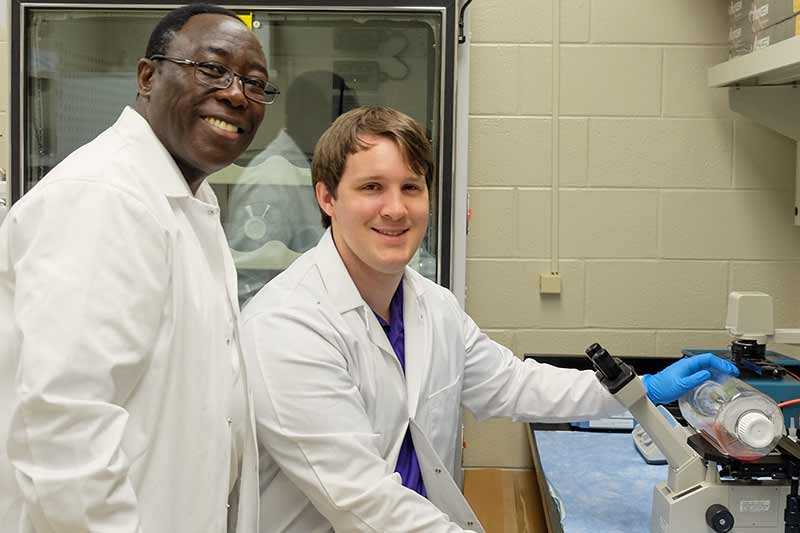
Third-year student Jayden McCall performs research with his research mentor, Dr. Waithaka Mwangi, during the summer of 2021 in the Veterinary Research Scholars Program.
NSTP fellows are selected for their strong interest and expertise in emerging animal diseases, diseases that infect both animals and people, or foreign animal diseases that threaten global health and food security. Once the fellowship program is completed, they are committed to working at the Foreign Animal Disease Diagnostic Laboratory at the Plum Island Animal Disease Center in New York and, ultimately, the National Bio and Agro-defense Facility, or NBAF, which is under construction adjacent to the university's Manhattan campus.
"This work combines my interests of vaccine development and infectious diseases in the food animal setting to protect our livestock species," Jayden said. "This opportunity with NBAF is exciting because I will be able to stay in Kansas where I have family, while still helping with the important work of keeping livestock safe in the U.S."
More Headlines
Ribbon-cutting launches Boehringer Ingelheim Animal Health Auditorium
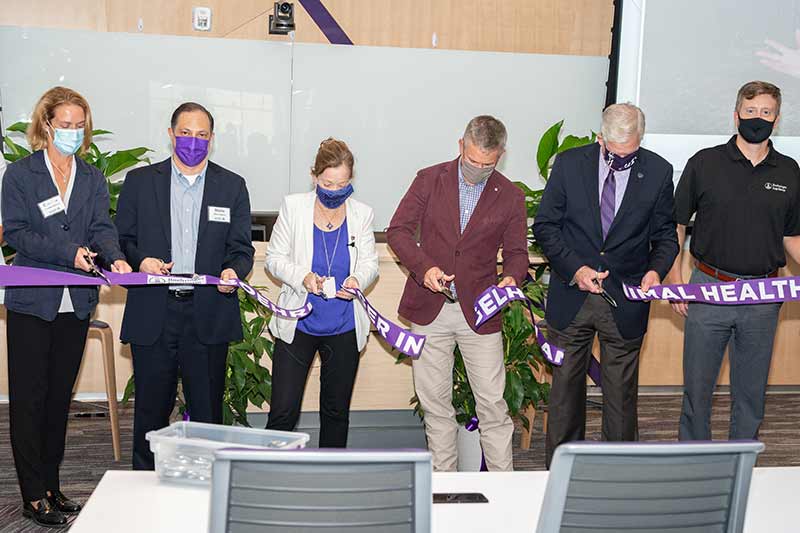
The newest learning space in the College of Veterinary Medicine at Kansas State University opened its doors Oct. 1 with an official dedication and ribbon-cutting ceremony.
The Boehringer Ingelheim Animal Health Auditorium provides the college with premier space for student lectures, seminars and campuswide events while recognizing a leading, global provider of animal health products. In addition to the ribbon-cutting, the college hosted a group of about 15 Boehringer Ingelheim employees for a three-day campus visit, including engagement opportunities with faculty and students, presentations on research projects in the college and at the National Bio and Agro-Defense Facility, and tours of the college. The auditorium features 6,400 square feet of meeting space and allows for a private conference room configuration with tables in the back of the auditorium. The main auditorium has 220 seats, while the conference area expands capacity to 280 seats. Seating is designed to facilitate student-to-student discussion and collaboration. Microphones situated around the room promote interaction, and eight screens offer multiple viewing options for attendees. The auditorium is part of an addition to Mosier Hall that includes an 1,800-square-foot atrium connected to Trotter Hall. An interior walkway overlooks the atrium and a four-panel mural that reflects the historic transition in the four mission areas of the college: exceptional teaching, impactful research, outstanding service and extraordinary graduates. The east-facing doors to the atrium serve as the new public entrance to the veterinary college. "The Boehringer Ingelheim auditorium and atrium provide our college with beautiful and functional space for presentations and public gatherings," said Bonnie Rush, dean of College of Veterinary Medicine. "The auditorium is the primary classroom for third-year veterinary students and serves as the principal space for all-college meetings, continuing education and after-hours activities. We are thrilled to have this significant enhancement, now central to our college, thanks to the generous support of Boehringer Ingelheim." "The Kansas City Animal Health Corridor and Boehringer Ingelheim share a history dating back more than 100 years," said Randolph Legg, head of U.S. commercial business for Boehringer Ingelheim Animal Health. "The collaboration with Kansas State University furthers our commitment to this community, where so many of our dedicated employees live and work, and to the future of veterinary medicine." The auditorium project is part of a larger, strategic collaboration between the College of Veterinary Medicine and Boehringer Ingelheim that supports a strong pipeline of highly skilled veterinarians and continued innovation in the heart of the Kansas City Animal Health Corridor. In 2019, Boehringer Ingelheim's U.S. Animal Health business agreed to donate $800,000 over a five-year period to the KSU Foundation. The funds are supporting interaction and collaboration between Boehringer Ingelheim and students at the K-State College of Veterinary Medicine, one of the leading animal health schools in the country. The collaboration has created opportunities for Boehringer Ingelheim employees to train and present to students, and allow for additional professional development and learning initiatives between Boehringer Ingelheim and the university. Boehringer Ingelheim will be able to host training sessions, symposiums and events in the auditorium that will expose veterinary students to emerging trends in animal health as well as potential career opportunities.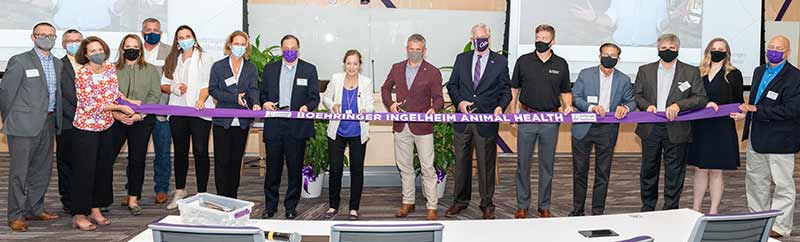
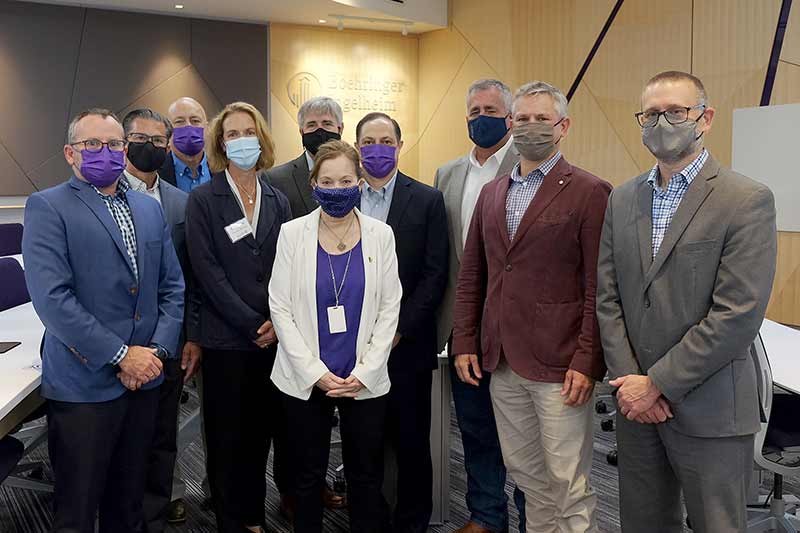
A large group of representatives from Boehringer Ingelheim Animal Health join Dean Bonnie Rush in the BI Auditorium, including Dr. Zach Mills (red jacket), an alumnus from the DVM class of 1999, and the head of Veterinary Professional Services, U.S. Pet Business, for Boehringer Ingelheim.
CVM receives Insight Into Diversity 2021 Health Professions Higher Education Excellence In Diversity (Heed) Award
The College of Veterinary Medicine at Kansas State University received the 2021 Health Professions Higher Education Excellence in Diversity (HEED) Award from INSIGHT Into Diversity magazine, the oldest and largest diversity-focused publication in higher education.
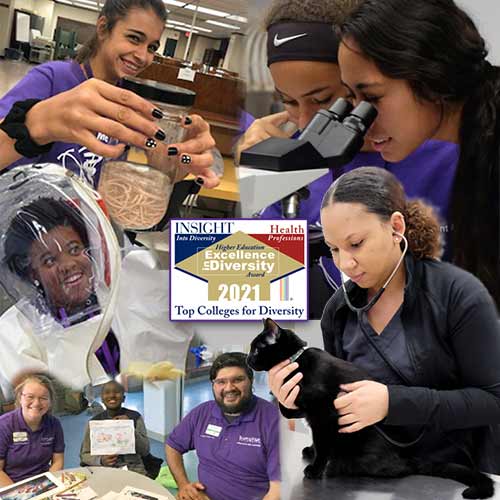
As a recipient of the annual Health Professions HEED Award — a national honor recognizing U.S. health colleges and universities that demonstrate an outstanding commitment to diversity and inclusion — Kansas State University will be featured, along with 50 other recipients, in the December 2021 issue of INSIGHT Into Diversity magazine.
“Our first Health Professions HEED Award represents recognition of significant college-wide initiatives in cultural transformation,” said Dr. Bonnie Rush, dean of the College of Veterinary Medicine. “The award is also a reminder of our responsibility to continue to strengthen and grow in our efforts to provide a welcoming environment for all. We are committed to preparing the leaders of tomorrow to carry the values of diversity, equity, and inclusion to their future destinations, magnifying the impact of this work. I am grateful for Dr. Callie Rost’s [associate dean for admissions] vision and inspiration to lead these efforts.”
INSIGHT Into Diversity magazine selected K-State because of the veterinary college’s efforts to identify and incorporate opportunities for growth in diversity, equity and inclusion.
Faculty, staff and students are encouraged to complete a wide variety of training through the Diversity and Resilience Institute of El Paso and the Purdue Certificate for Diversity and Inclusion in Veterinary Medicine. In addition to training, the WCB Scholarship is specifically designated for students demonstrating commitment to bringing diverse people together and for serving disadvantaged populations.
The College of Veterinary Medicine also experienced growth by expanding its recruiting practices with two USDA NIFA grants: SPARK and SPRINT. These programs focus on recruiting students from rural Kansas and students with an indigenous, native or tribal heritage.
Internal activities include the development of a monthly “Intercultural and Inclusion Lunch and Learn” series and the creation of student organizations such as VOICE, or Veterinarians for One Inclusive Community for Empowerment, and the LatinX Student Veterinary Medical Association.
Outreach activities include “This is How We ROLE,” a program where veterinary students demonstrate the potential for a career in veterinary medicine to a local, underrepresented youth population. A large group of faculty, staff and students participate annually in “Everybody Counts – Manhattan,” a grassroots effort to provide social services and information in Riley County. The college’s Community Veterinary Outreach Program regularly travels to provide animal health services at the Santee Sioux Reservation in Nebraska, the Metro Lutheran Ministry Mission in Kansas City, Missouri, and other regional locations.
“The Health Professions HEED Award process consists of a comprehensive and rigorous application that includes questions relating to the recruitment and retention of students and employees — and best practices for both — continued leadership support for diversity, and other aspects of campus diversity and inclusion,” said Lenore Pearlstein, publisher of INSIGHT Into Diversity magazine. “We take a detailed approach to reviewing each application in deciding who will be named a Health Professions HEED Award recipient. Our standards are high, and we look for schools where diversity and inclusion are woven into the work being done every day across their campus.”
Other recipients of the 2021 Health Professions HEED Award are:
A.T. Still University of Graduate Health Sciences
Albert Einstein College of Medicine
Betty Irene Moore School of Nursing, University of California, Davis
College of Public Health at The Ohio State University
Columbia University College of Dental Medicine
Duke University School of Nursing
Florida State University College of Medicine
Frontier Nursing University
Johns Hopkins School of Nursing
Louisiana State University School of Veterinary Medicine
McGovern Medical School at the University of Texas Health Science Center at Houston
MGH Institute of Health Professions
University of Michigan Medical School
Michigan State University, College of Veterinary Medicine
NYU Rory Meyers College of Nursing
Oklahoma State University Center for Health Sciences
Philadelphia College of Osteopathic Medicine
Purdue University College of Veterinary Medicine
TCU and UNTHSC School of Medicine
Texas A&M University (TAMU) - College of Veterinary Medicine & Biomedical Sciences (CVMBS)
Texas A&M University Irma Lerma Rangel College of Pharmacy
The Medical College of Wisconsin, Inc.
The Medical University of South Carolina
The Ohio State University College of Medicine
The Ohio State University College of Nursing
The Ohio State University College of Optometry
The Ohio State University College of Veterinary Medicine
UNC Gillings School of Global Public Health
University of Alabama at Birmingham School of Public Health
University of Arkansas for Medical Sciences (UAMS)
University of California, Riverside School of Medicine
University of Cincinnati College of Nursing
University of Cincinnati James L Winkle College of Pharmacy
University of Cincinnati, College of Allied Health Science
University of Florida College of Dentistry
University of Florida College of Pharmacy
University of Houston College of Nursing
University of Kentucky College of Medicine
University of Louisville Health Sciences Center
University of Maryland School of Nursing
University of Miami Miller School of Medicine
University of Minnesota School of Nursing
University of Mississippi Medical Center
University of Rochester School of Nursing
University of Virginia School of Medicine
University of Wisconsin-Madison School of Nursing
UT Southwestern Medical Center
Vanderbilt University School of Nursing
Virginia Tech Carilion School of Medicine
Weill Cornell Medicine
For more information about the 2021 Health Professions HEED Award, visit insightintodiversity.com.
Veterinary Health Center receives Rawhide Portable Corral gift
A new gift is putting Kansas State University veterinarians “out to pasture”, and the benefit is improved health care for livestock. The Rawhide Portable Corral company in Abilene recently made a special delivery to the Livestock Services team at the Veterinary Health Center at K-State.
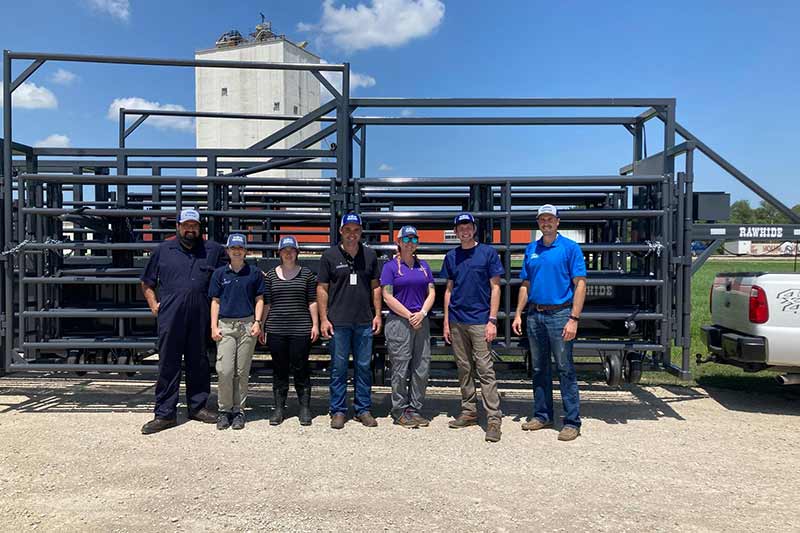
Eric Blythe, sales reprentative from Rawhide Portable Corrals in Abilene, delivers a donation to the Livestock Services team at the Veterinary Health Center.
Owners John and Mary (Kohman) McDonald delivered one of their portable corral systems as a gift to the College of Veterinary Medicine. John is the inventor of the product.
“The Rawhide Portable Corral system is a very generous donation that enables the Kansas State Veterinary Health Center to offer an additional service to our livestock clientele,” said Dr. Bryan Weaver, clinical assistant professor. “This very functional system allows us to provide working facilities to our clients who may not have such facilities on site as needed to work a set of cattle. This increases our speed and efficiency of palpating and vaccinating cattle in the field, while also greatly improving safety for the cattle, client, veterinary staff and students.”
“We donated a corral to the veterinary college because John and I want the students to get hands-on use of our equipment so they can see how they could possibly utilize the system in their practices in the future,” said Mary McDonald, who graduated from Kansas State University in 1984 with a bachelor’s degree in animal sciences and industry. “Our corrals are all over the country, and many of our customers are veterinarians. They like using a corral when they go on site.”
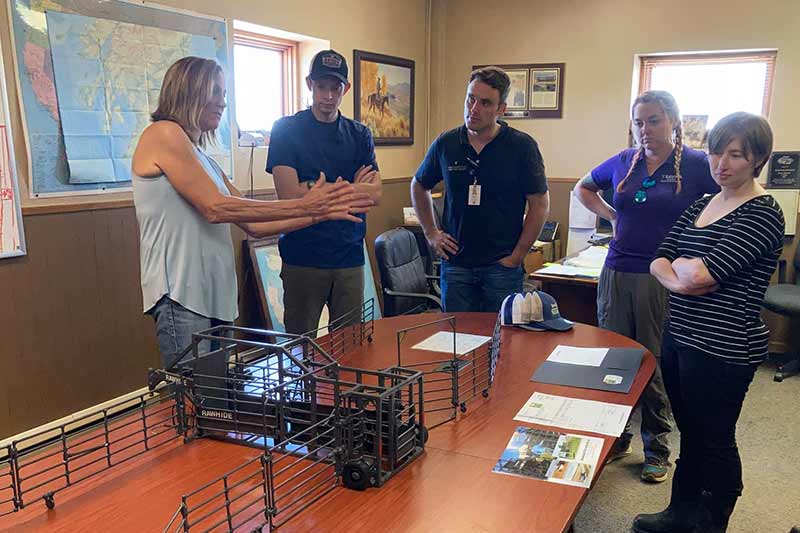
Company co-owner Mary McDonald (left) shows a model of the Rawhide Portable Corral system to the Livestock Services team from the Veterinary Health Center at Kansas State University.
Dr. Weaver explained that the Rawhide Portable Corral system may be hauled to a given location at the time of a herd working, or may be set up ahead of time to allow clients to use the corral system to catch cattle prior to veterinary team arrival.
“Clients may contact the VHC to schedule a farm call and request use of the Rawhide system at that time for an additional fee,” Dr. Weaver said. “The portable corral also happens to be beneficial for our ‘Junior Surgery Lab’ organized by our lab manager, Gina Jensen.”
The surgery laboratory course incorporates several species though out the year, such as canine, feline, equine and bovine, which helps students build their general surgical knowledge and skills. Dr. Weaver said many of the large-animal-focused students look forward a portion of the course titled “Bovine C-section Lab.”
“The bovine C-section lab takes place over multiple weeks and allows students the opportunity to develop skills in areas such as: general livestock surgical principles, local anesthesia and pain management, obstetrics, neonatal (calf) resuscitation, colostrum management, post-op care of both mother and newborn,” Dr. Weaver said. “This lab requires a great deal of planning in the year leading up to the main event as cows must be selected and bred nine months prior, so that calves are vigorous at the time of delivery. These pregnancies must later be confirmed by palpation and ultrasound, and general herd health practices (vaccinations, deworming, etc) performed to ensure a healthy cow and calf.”
Dr. Weaver said the portable corral system offers greater flexibility while working cattle throughout the year, and improves safety for students who will eventually perform the C-section procedure during these activities.
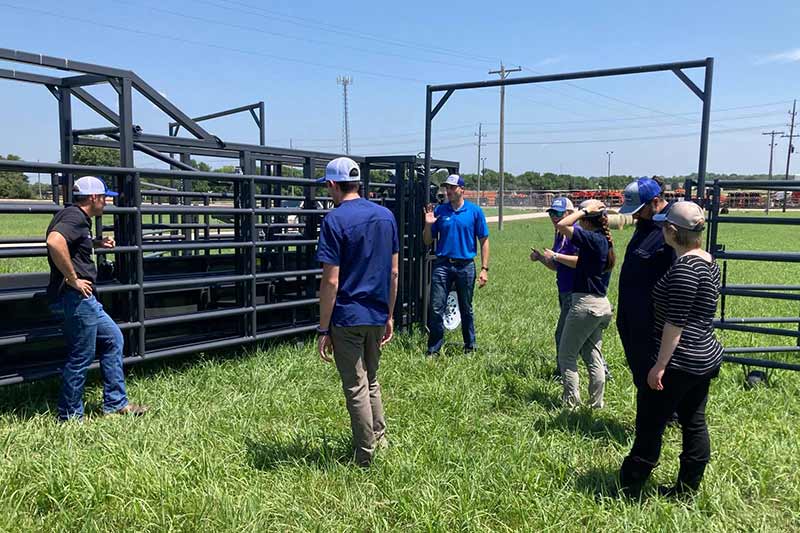
Rawhide representative Eric Blythe (center) helps the Veterinary Health Center’s livestock team set up one of the corrals.
“Another unique educational opportunity for fourth-year veterinary students at the VHC is the ‘Advanced Palpation’ rotation led by Dr. Shaun Huser,” Dr. Weaver said. “For six weeks in the fall, three groups of students palpate over 3,000 head of cows and heifers to grow their pregnancy diagnosis skills in preparation for their first day after graduation from veterinary school. Similar to the other field services offered by the Livestock Services team at K-State, the Rawhide Portable Corral system allows our students to palpate more cows in a wider variety of settings, all while improving safety for the cattle, clients, and students alike.”
Dr. Susan Nelson says don't flee from flea and tick prevention now that fall is here
 Just because fall is here doesn't mean it's time to stop using flea and tick preventatives on pets, according to a Kansas State University veterinarian. "These wonderful 70-80 degree temperatures that we are enjoying after a hot summer are also ideal temperatures for fleas to thrive," said Dr. Susan Nelson, clinical professor at the Veterinary Health Center.
Flea and tick prevention for dogs and cats is important year-round — even when temperatures start to cool, according to VHC small-animal clinician Dr. Susan Nelson.
Dr. Nelson said that over the hot summer months, fleas laid eggs, their larva hatched and now the immature fleas are emerging from their pupae as they sense the more moderate temperatures.
"There are typically a large number of fleas in the environment this time of year," Dr. Nelson said, "and if you haven't been using any flea preventives up until now, it is possible your pet — and home — have already been infested."
Many areas of the country see fleas year-round as wildlife and stray animals serve as a warm host for them. Nelson said that ground temperatures near the foundation of buildings also stay warmer long past the first few frosts, so fleas can survive there as well.
Fleas aren't the only pests that can stick around in the fall. Dr. Nelson said ticks also can survive in the environment for much longer than people think and that some species even prefer to live within the walls of your home.
"Fall is also the time when the nymphs of some species hatch out," Dr. Nelson said. "It can be quite disturbing to take a peaceful nature walk with your pooch, only to find that you and your dog come back covered with hundreds of tiny nymph ticks, the latter which many refer to as 'seed' ticks."
Since both fleas and ticks are capable of transmitting many diseases to pet owners and their pets, some that can cause severe illness and even death, it is important to continue preventives year-round.
"If you are already treating your pets year-round for these pests, keep up the good work," Dr. Nelson said.
If your dog or cat is not already on a flea and tick preventative, Dr. Nelson said it might take a little longer to rid them from your house and yard. She also said it is important all pets in the household be treated for fleas and ticks, even if they do not go outdoors. She said pets who stay inside and who are not treated are often a source of a persistent infestation and a reason your efforts may fail when trying to rid them from your environment.
"The good news is there are fantastic products out there for both dogs and cats that can rapidly remove fleas and ticks from your pets and help rid them from your environment more quickly than in the past," Dr. Nelson said. "Be sure to ask your veterinarian about which product is best for your pet and your environment."
Regular features
Alumni Events, Development and Continuing Education
 The Veterinary Medical Alumni Association organizes alumni receptions at several of the national annual conferences plus continuing education events and more. This month's section includes the monthly listings of recently departed alumni and links to their obituaries, plus a new link for submitting nominations for Alumni Recognition Awards.
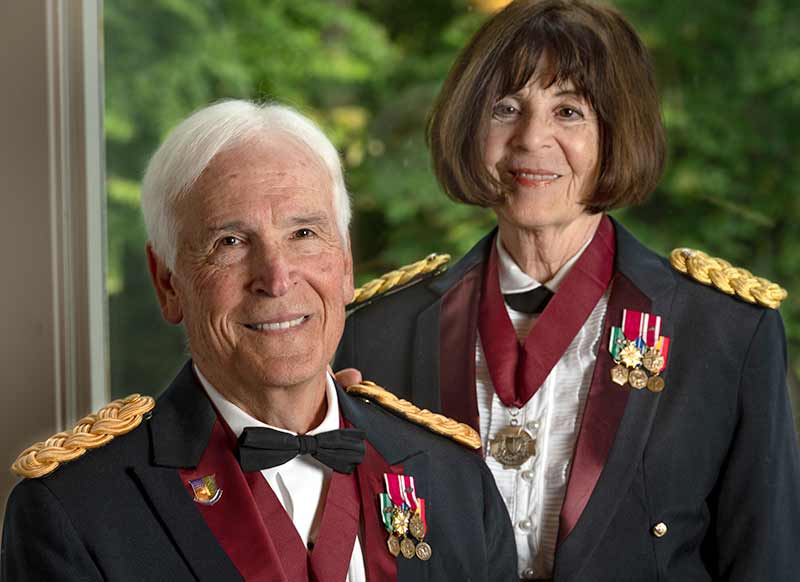
K-State Alumni Association to present excellence awards to Drs. Nancy and Jerry Jaax
The K-State Alumni Association will honor Kansas State University alumni Dr. Jerry Jaax and Dr. Nancy Dunn Jaax as the recipients of the Alumni Excellence Award. They will receive the award at a banquet on Friday, Nov. 12, at the K-State Alumni Center.
The Alumni Excellence Award is an annual award recognizing an alumna or alumnus of K-State whose career, service and achievements exemplify the spirit, values and excellence of the university. Read the full story.
Reunion weekend features double the classes
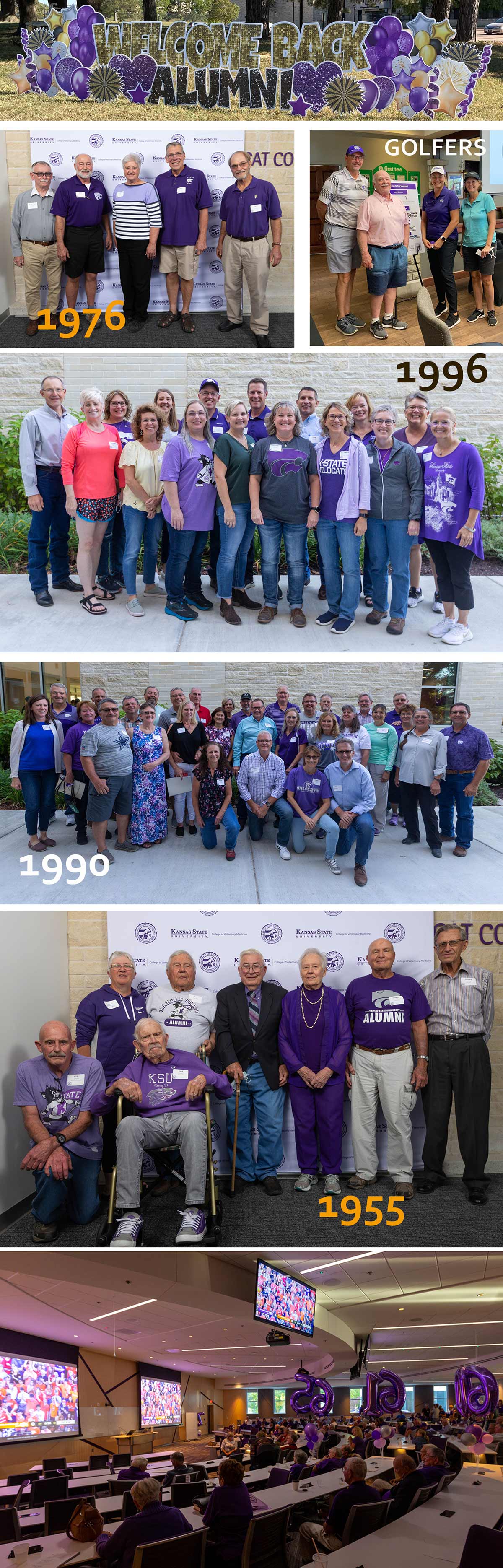
Due to the COVID-19 pandemic, class reunions had to be canceled in 2020. To make up for it, each of the reunion classes were invited to return this year along with the 2021 reunion classes held Sept. 25. While there were twice as many graduating classes to host, special arrangements were made to include the participants in multiple rooms at the veterinary college. A watch party was held for the K-State football game and the annual scholarship golf tournament took place the next day. Below are a few of the pictures.
Alumni Updates
Dr. Jeanne M. Wallace, DVM 1986, was recently elected by her peers to the position of Vice President after having served on Board of Directors of the American College of Laboratory Animal Medicine (ACLAM) for a three-year term. Over the next four years she will be, vice president, president-elect, president, and then past president. Her term commences on Oct. 19, 2021.
Dr. Allison Crow, DVM 2014, was in featured in a news story Sept. 23 for her community outreach work in Topeka. "A Topeka veterinarian is providing free pet services for the homeless"
Dr. Sharon Powell, DVM 1990, was recently appointed to the Florida Board of Veterinary Medicine by Gov. Ron DeSantis. Dr. Powell is owner of Edison Park Animal Hospital in Fort Myers, Florida. She has served on the Board of Veterinary Medicine since 2016, is a past president of the Caloosa Veterinary Medical Society and a current member of the Central Florida Academy of Veterinary Medicine.
Dr. Sara Throne, DVM 2001, a senior director of veterinary services at Simmons Foods in Bentonville, Arkansas, was recognized for Outstanding Field Case and/or Diagnostic Report Award at the virtual meeting of the American Association of Avian Pathologists for her presentation “Sunday Morning Calls are Never Good!”
Submit nominations for Alumni Recognition Awards onlineSee our new online nomination form to nominate a fellow alumnus for one of our many annual recognition awards, presented at the national conferences: VMX, WVC, AVMA and the Annual Conference for Veterinarians. See full details at the link below. |
|
In Memoriam - Recently Departed Alumni
Dr. Donald Edwin Seibel, DVM 1960 Dr. Alan G. Bosomworth, DVM 1979 Darrel Ray Clark, DVM 1988 William Smallwood (former VHC employee) (click highlighted names for obituary) |
Questions about Alumni or CE events?Contact:
|
 Tony Ballard
 Sarah Keatley
News Ticker
| More activities and accomplishments in the College of Veterinary Medicine: |
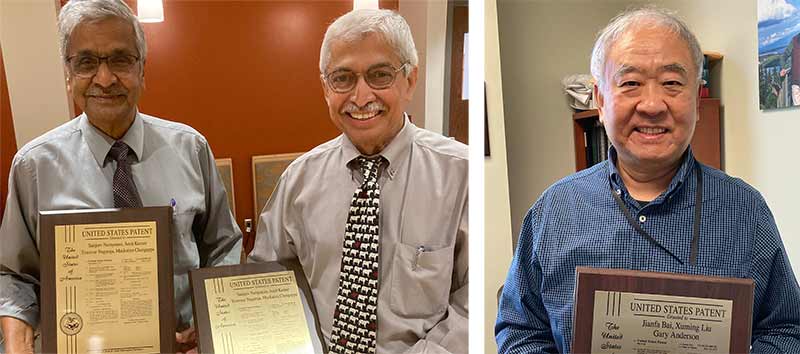
Congrats to (from left) Drs. T.G. Nagaraja, M.M. Chengappa and Jianfa Bai, who were presented with plaques in honor of their recent patents: "Compositions and methods for detecting, treating, and protecting against fusobacterium infection" — Drs. Nagaraja and Chengappa; and "Co-detection and association of multiple gene from the same genome in a sample" — Dr. Bai. |
|
Congrats to Dr. Abbie Viscardi for being chosen for a 2021 AABP Foundation Cattle Welfare Grant Award for her project, "Evaluating the efficacy of two local anesthetic options to reduce pain in calves after cautery dehorning." Welcome to Dr. Nathaniel Kapaldo, anesthesia clinician, and congratulations on passing the American College of Veterinary Anesthesia and Analgesia (ACVAA) Board Certification Exam. Congrats to the Dr. Brad White on receiving a $191,800 grant from the International Consortium for Antimicrobial Stewardship in Agriculture (through the Foundation for Food & Agriculture Research). Dr. White is developing predictive models to determine cattle’s BRD risk at the time of feedyard placement. He is receiving additional funding from Innovative Livestock Services Inc., Hy-Plains Feedyard, Veterinary Research and Consulting Services and the Beef Alliance. Congratulations to Drs. Erin Hennessey and Erica Chavez-Peon who both passed their preliminary radiology board exam and Dr. Hannah Turner passed her certification exam! Dr. Maria Jugan presented an abstract, "Fecal microbiota transplant versus probiotic supplementation as treatment for dogs with acute hemorrhagic diarrhea syndrome," at the 27th International Veterinary Emergency & Critical Care Symposium in Nashville Sept. 11-15. Dr. Ronnie Elmore presented, “Communication – The Key to Diversity,” for the Sept. 14 Intercultural and Inclusion Lunch and Learn. Drs. Robert Larson and Brad White were featured in Morning Ag Clips on Sept. 14 with an article, “Factors influencing cow supplementation pre- and post-weaning.” Dr. Larson had an article, “Understanding Anaplasmosis Risk,” published in the farm journal Drovers on Sept. 14. The Shelter Medicine Program traveled to the Santee Sioux Reservation in Nebraska for their bi-annual community outreach trip Sept. 17-19. The team saw over 100 patients for wellness exams and vaccines and performed 40 surgical procedures. Participants included: Drs. Brad Crauer, Neala Boyer and Hayley Barkoviak and shelter med nurse Kelsey Decker along with third- and fourth-year veterinary students. Dr. Mike Apley moderated a discussion by a panel of industry experts on the role of antibiotics and technology in the beef industry at this year’s Production Animal Consultation (PAC) Summit for Industry Leaders held in Lincoln, Nebraska, Sept. 29. The Beef Cattle Institute’s CattleChat podcast reached a milestone in September with 10,930 total downloads! Congratulations to Drs. Brad White, Robert Larson, Phillip Lancaster and Brian Lubbers. Drs. Paige Adams and Ellen Mulcahy recently edited and published the fall issue of the One Health Newsletter. The theme of this issue is "One Health in Action." Story topics for this issue include a One Health perspective on COVID-19’s neuroscientific aspect; the relationship between shared-biking programs and improved health of plants, animals and humans; black fungus in India; and more. Pharmacy technician, Terry Solis-Galvez, CPhT has received a passing score on his national Technician Product Verification Certification. The dispensary is excited to have him credentialed in this area, as it demonstrates his skill in safeguarding patients from dispensing errors and expresses his commitment to excellence as a pharmacy technician. Terry becomes the fourth full-time pharmacy technician to earn this credential. |
Kind Heart Celebration features surprises and opportunities to give
The KSU Foundation hosted the 5th annual Kind Heart Celebration for the veterinary college on Sept. 24. Dean Bonnie Rush gave updates on the college, and then a video was played featuring a special surprise. Dr. Wayne Ingmire and his wife Jane had created a scholarship award for veterinary students, and in the video, the scholarships were presented to the first two recipients. After the video finished playing, Dr. Ingmire talked about how rewarding it is to give out scholarships to students. He told attendees of the celebration to check under their chairs where two individuals each found a $2,000 scholarship taped to the underside. Dr. Ingmire said they could pick any of the students attending the banuqet and present them with the scholarship, so that other people could share in the joy of giving. As another part of the program, Dr. David Biller led a "fireside chat" with four fourth-year veterinary students who talked about the impact scholarships provide.
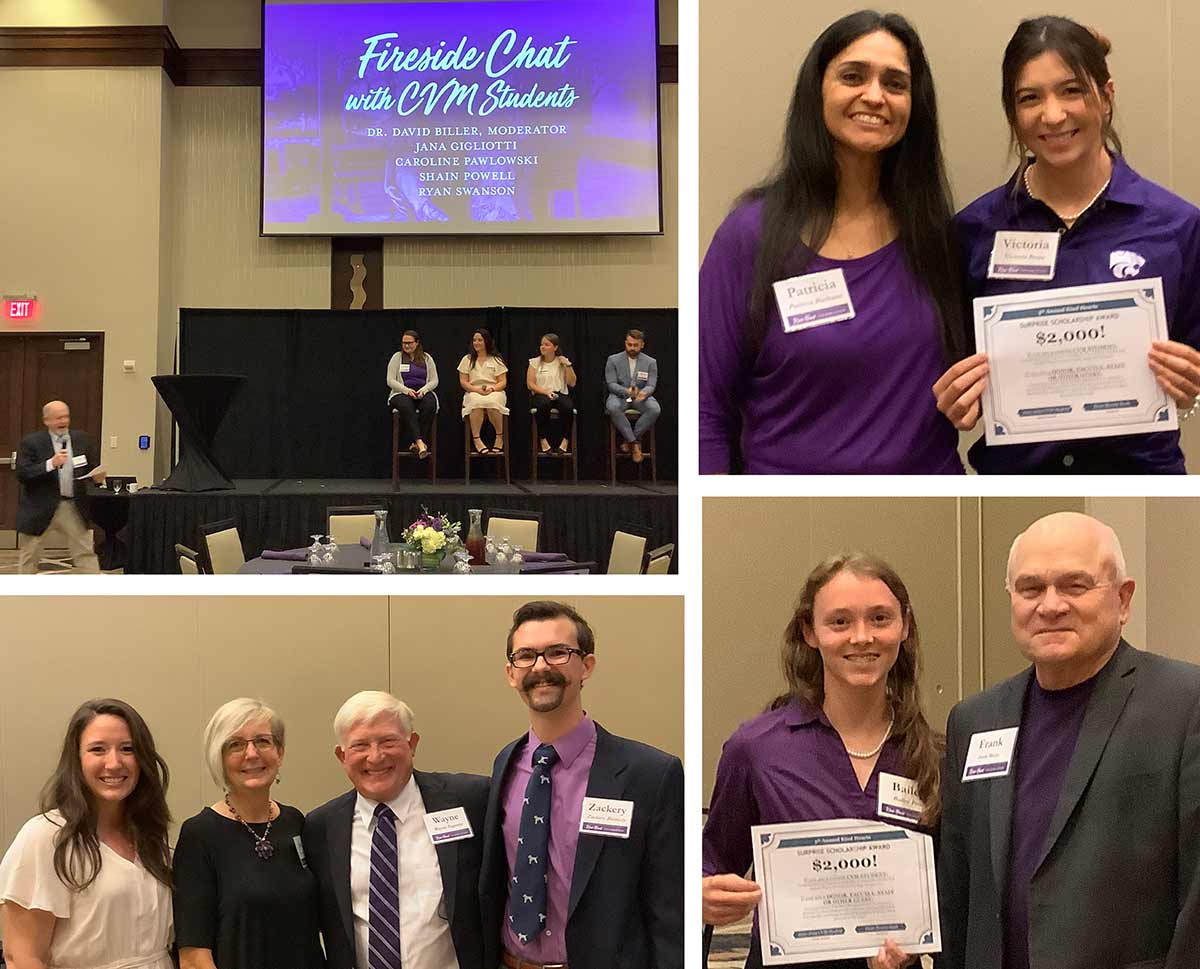
Top left, Dr. David Biller asks a panel of fourth-year students to explain what it means to receive a scholarship. The students are (l-r): Caroline Pawlowski, Jana Gigliotti , Shain Powell and Ryan Swanson. Bottom left: Dr. Wayne and Jane Ingmire congratulate Jana Gigliotti and Zach Bieberly on being selected for the inagural Ingmire Family Scholarship award. Top right: Patricia Barbano presents fourth-year Victoria Stone with one of the surprise scholarships. Middle right: Dr. Frank Blecha presents his surprise scholarship to second-year student Bailey Fritz.
Here's the video of the Dr. Wayne and Jane Ingmire suprising Jana Gigliotti and Zach Bieberly with the Ingmire Family Scholarship:
 Join the College of Veterinary Medicine on LinkedIn and add us to your profile under education and/or employment to help build and engage our online social community! Follow the LinkedIn page here: www.linkedin.com/company/kstatevetmed
New Arrivals/Recent Departures
Lifelines is published each month by the Marketing and Communications Office at the College of Veterinary Medicine. The editors are Joe Montgomery, jmontgom@vet.k-state.edu, and Piper Brandt, pnbrandt@vet.k-state.edu.