Monthly Newsletter
April 2021 - Vol. 16, No. 4
<March 2021 | May-June 2021>
Top Stories
CVM's Zoetis research award goes to Dr. Butch KuKanich
The College of Veterinary Medicine at Kansas State University presented its highest research award during its annual Phi Zeta Research Day activities on March 2: The 2021 Zoetis Animal Health Award for Research Excellence. Dr. Butch KuKanich was chosen as this year’s recipient. He is a professor and assistant department head in the Department of Anatomy and Physiology.
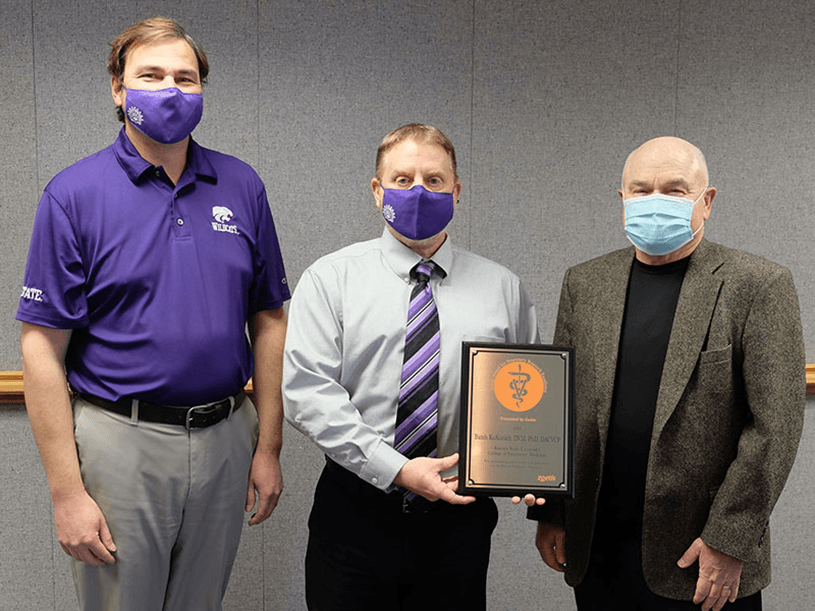
Dr. Hans Coetzee (left) and Dr. Frank Blecha (right) present the 2021 Zoetis Animal Health Award for Research Excellence to Dr. Butch KuKanich.
Dr. Butch KuKanich’s research focuses on methods to improve analgesia in dogs and determine drug metabolism and interactions in dogs. An important aspect of his research is to minimize the risk for veterinary drug diversion and misuse by people. His research includes pre-clinical and clinical research, and he enjoys the extensive research collaborations he has developed within Kansas State University and colleagues at other institutions. Dr. KuKanich also serves as a collaborator in pharmacology studies to improve animal welfare for many species of animals, both domestic and exotic. Among Dr. KuKanich’s accomplishment is that students he has mentored have been awarded 11 times during the annual Phi Zeta Research Day.
“The Zoetis Research Award is such an honor to receive,” Dr. KuKanich said. “This award would not be possible without the contribution of the great research collaborators, students, veterinary nurses, interns and residents who are part of the research teams. In addition, the support of the Comparative Medicine Group, Department of Anatomy and Physiology, College of Veterinary Medicine and Kansas State University has played a key role in my program. I feel that our teams’ applied veterinary research findings are making a large impact on the veterinary profession.”
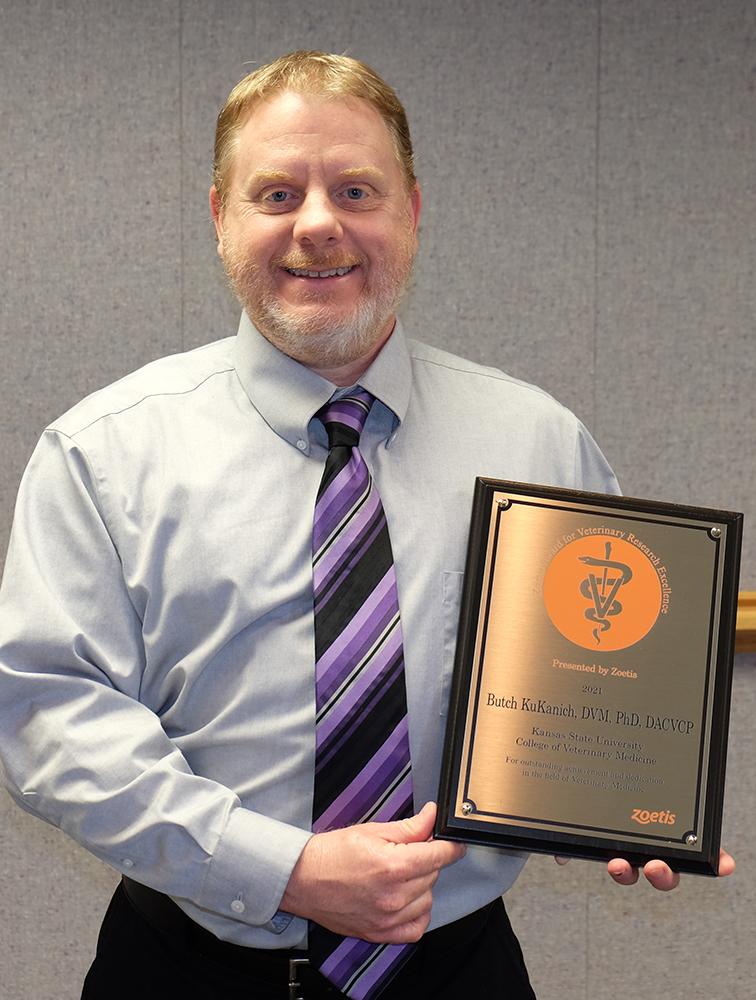
“Dr. KuKanich is an exceptionally creative and productive pharmacologist working at the forefront of pain management in companion animals,” said Frank Blecha, associate dean for research. “His current multi-investigator clinical trial is aimed at determining safety and efficacy of oral long-acting analgesic formulations for dogs with naturally occurring osteoarthritis. In his 15 years of work at K-State, Dr. KuKanich has published nearly 10 research publications each year, a truly remarkable accomplishment.”
Dr. Butch KuKanich earned his bachelor’s and Doctor of Veterinary Medicine degrees from Virginia Tech. He then completed a Ph.D. from North Carolina State University and while there became a Diplomate in the American College of Veterinary Clinical Pharmacology. Dr. Butch KuKanich practiced in small animal veterinary clinics for a combined time of eight years prior to joining the faculty at Kansas State University College of Veterinary Medicine.
For his work in veterinary science, Dr. KuKanich was named in the top 2% of researchers in the world according to a recent Stanford University study. He received the Dechra Analgesia Prize in 2020 for the manuscript “The effect of fluconazole on oral methadone in dogs.” Dr. KuKanich has 144 peer-reviewed manuscripts, mentored 72 student authors on peer-reviewed publications, 30 peer-reviewed manuscripts in support of interns and residents and 63 research abstracts. He has served on two graduate student committees as chair, 14 graduate student committees as committee member and as an external committee member for five doctoral students including four international students. He has also mentored 20 students in the Veterinary Research Scholars Program at K-State, one McNair Scholar and four students in the Developing Scholar Program, all at K-State.
College of Veterinary Medicine presents third annual staff awards
By Piper Brandt
Amidst the challenges of the pandemic over the past year, a select group of 20 College of Veterinary Medicine staff members stood out as they rose to meet those challenges. From this group of nominees, eight awardees were honored and presented with one of three different awards at a staff luncheon on April 5.
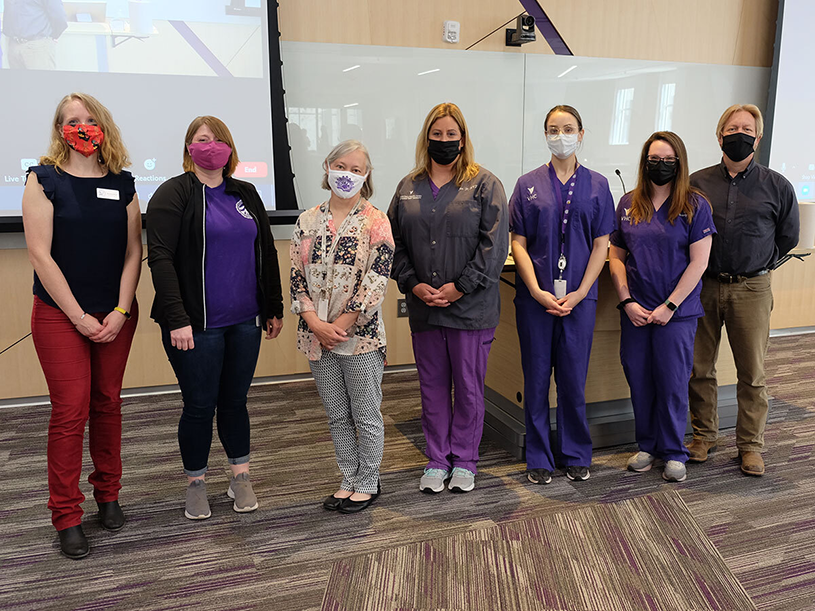
(From left to right) Kristina Wyatt, Carrie Fiest, Marla Pyle, Jennifer Panzer, Amber Melton, Brooke Neiberger and Kent Nelson receive their awards. Not pictured: Scott Morrill.
The luncheon was hosted by the college's Staff Council, which represents all unclassified and university support staff in the college. Established in 2017, one of the main priorities of the Staff Council was to acknowledge staff members for their contributions to the college's mission.
Boxed lunches were provided for the staff nominees, as well as those who nominated the staff members. All other staff were invited to attend the luncheon via Zoom and pick up their lunches to take back to their desks.
Gina Scott, computer information specialist and chair of the Staff Council, said one way the council chose to promote staff is through a staff awards program, which was launched in 2018.
"The purpose of the staff awards is for us to take the opportunity to recognize the hard work of our CVM staff," Scott said. "It gives us a chance to say thank you and that we appreciate their contributions to the college. Recognizing the accomplishments of others brings a sense of family to our college. Part of the awards includes a cash prize to confirm our commitment to supporting our people."
"This year was especially challenging for our CVM staff members given the COVID-19 pandemic," said Bonnie Rush, dean of the veterinary college. "It is a pleasure to honor our hard-working and committed staff who did not let the difficult circumstances of the past year slow them down."
The award categories are High Five Award; Culture, Collegiality and Compassion Award; and Commitment to Excellence Award. Nominations can be submitted by any faculty, staff or administrators in the college, but must be accompanied by at least two letters of support.
"It was super to have so many staff recognized by their peers and supervisors on all the hard work they did during a very difficult year," Scott said. "The council also appreciates so many people stepping up to make those nominations."
The recipients are as follows:
High Five Award: Kristina Wyatt, histopathology, Veterinary Diagnostic Lab. Presented to an employee who has gone above and beyond in enhancing one or more components of the College of Veterinary Medicine's mission of exceptional teaching, impactful research, outstanding service, extraordinary graduates.
Culture, Collegiality and Compassion Award: Amber Melton, veterinary nurse II. Presented to an employee who enhances a feeling of belonging for all of the College of Veterinary Medicine and creates a more inclusive environment while enhancing the College of Veterinary Medicine's mission of exceptional teaching, impactful research, outstanding service, extraordinary graduates.
Commitment to Excellence Award: Presented to six employees who have gone beyond in enhancing one or more components of the College of Veterinary Medicine's mission of exceptional teaching, impactful research, outstanding service, extraordinary graduates.
Recipients:
Brooke Neiberger, veterinary nurse I and director of the Canine Blood Donor Program.
Carrie Fiest, histology, Veterinary Diagnostic Lab.
Jennifer Panzer, veterinary nursing supervisor.
Kent Nelson, video producer.
Marla Pyle, laboratory administrator in the department of anatomy and physiology.
Scott Morrill, media production specialist.
Study finds reduction in milk production among anaplasmosis-infected cattle
Researchers at the Kansas State University College of Veterinary Medicine have published new data suggesting a negative effect on a dairy cow's milk production because of bovine anaplasmosis, a globally widespread livestock disease.
The article, "Assessment of within-herd seroprevalence of Anaplasma marginale antibodies and association with decreased milk production in an Iowa dairy herd," co-authored by Andrew Curtis, a doctoral student in physiology, and Dr. Hans Coetzee, professor and head of the anatomy and physiology department, appears in the April issue of Applied Animal Science. The researchers specifically found that 38% of the animals in the herd tested positive for bovine anaplasmosis, which is linked to significant production losses in cattle in the United States. "Anaplasmosis has been a large part of my doctoral research," Curtis said. "I was fortunate to be able to revisit a dataset collected in Iowa from 2008-2011 while working on my dissertation. Although the original survey was completed a few years ago, the impact of anaplasmosis on dairy cattle and milk production has remained poorly defined in the literature. We recognized the opportunity to describe the relationship that appears to exist between anti-Anaplasma marginale antibodies and dairy production." "This study demonstrates the need for careful monitoring for anaplasmosis infection across various geographic regions and especially in open herds not having rigorous diagnostic testing protocols," said David K. Beede, editor-in-chief of Applied Animal Science. "Poor biosecurity practices, such as failure to quarantine just-purchased animals or reusing hypodermic needles among animals for routine treatments, are risk factors." Cows that tested positive for the Anaplasma marginale antibodies produced significantly less milk than cows that tested negative. The authors concluded that by managing risks connected with new additions to a herd and by eliminating circumstances that may support disease transmission, production and herd health at the facility could have been safeguarded. "This is an important finding, as it demonstrates the need for further study of the effects of Anaplasma marginale in dairy settings," Dr. Coetzee said. "The survey results also indicate that freedom from bovine anaplasmosis cannot be assumed for an entire geographic region." Caused by the hemobacterium Anaplasma marginale, the clinical signs of the disease, which can be fatal, may include anemia, icterus, fever, weight loss, abortion, lethargy and lack of appetite. Anaplasmosis can be spread through ticks, horseflies and blood-contaminated objects, as well as through the placenta from cow to calf during pregnancy. Curtis is currently working with a set of calves to test for an implantable vaccine platform that has previously been used against bovine anaplasmosis. "This is a similar platform to one that our research group used to deliver an anaplasmosis vaccine in the past," Curtis said. "As research continues, we hope to have success with the implantable vaccine platform and prove its ability to deliver a variety of antigens — including, perhaps, a future anaplasmosis vaccine — over an extended period of time." The authors were supported by Agriculture and Food Research Initiative Competitive Grants from the U.S. Department of Agriculture's National Institute of Food and Agriculture.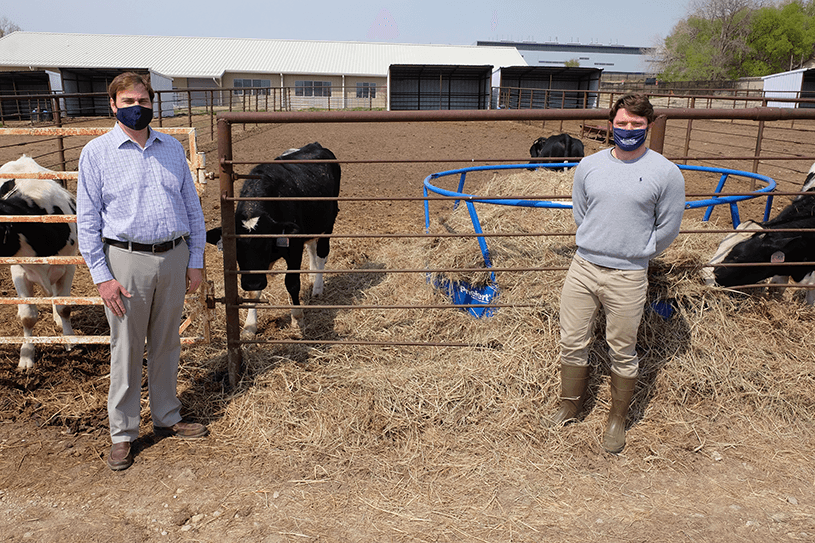
Dr. Hans Coetzee, professor and head of the anatomy and physiology department, left, and Andrew Curtis, doctoral student in physiology at Kansas State University, work with a cohort of calves for testing an implantable vaccine platform that may provide long-lasting protection against bovine anaplasmosis.
More Headlines
One-year master's program provides path for professional biomedical studies

Kansas State University continues to fulfill its land-grant mission through new programs that help serve unique educational needs. Launched in summer 2020, the new one-year master's degree in biomedical science program is attracting a broad mix of students to the College of Veterinary Medicine, serving as a bridge for opportunities both inside and outside of the veterinary medical curriculum. Part of the appeal lies in the program only requiring a yearlong commitment for completion of a master's degree.
"Often students are not sure what their future holds," said Dr. Matthew Basel, clinical assistant professor and associate director of the program. "The pre-professional one-year master's program is designed to introduce students to the biomedical field and prepare them for professional school. During the program, students are able to take advanced courses in a wide range of biomedical sciences, including anatomy, physiology, histology and pharmacology." "This program has been a great way to strengthen my application for dental school," said Julissa Andazola, who is in the program's first class of students. "I have been able to improve my grade point average while working on rigorous coursework." Andazola has a bachelor's in life sciences from K-State. "I applied for the one-year master's program to strengthen my application for veterinary school and gain the confidence I needed to successfully enter a professional program," said Elizabeth Grimes, another student in the program. Grimes came to K-State for the program after earning her bachelor's degree at another university. Hosted in the anatomy and physiology department, the pre-professional one-year master's program in biomedical science is a non-thesis, coursework-based master's degree that can be completed in 12 months. Typically a master's degree program takes about two years to complete. This program starts during the summer session and is completed at the end of the following spring semester. The 2021 program starts June 7. Applications for summer admission are being accepted through Friday, May 21. Along with Dr. Basel, program coordinators include Drs. Pradeep Malreddy and Cathy K. Sparks, clinical assistant professors who both teach anatomy courses in the veterinary college. "There are no specific admission requirements for this program, as we would like to serve a wide range of potential students," Dr. Malreddy said. "We do have some suggested guidelines for students that we think will help them be more likely to succeed. We recommend a bachelor's degree in a biomedical science-related field, a minimum 2.5 or higher overall grade point average and at least a 2.8 grade point average in their higher-level science courses or the last 45 hours of bachelor's degree studies." All students earning a master's degree at Kansas State University must complete a culminating experience that will be determined by the student in concert with his or her graduate committee. Culminating experiences include either an intellectually creative project, a final report or a culminating examination. "We believe the best place to prepare for professional school is at a professional school where students can interact with professors who understand the program," Dr. Basel said. "Students take courses designed to have the same rigor as any other professional health school and have access to world-class facilities. Classes begin in the summer semester with an intensive introduction to anatomy and physiology, followed by a mix of required and elective courses in the fall and spring." While the first class nears graduation in May, the program is currently taking applications for the next school year. Classes are scheduled to start in June. Applications are made through the Graduate School at Kansas State University, while the one-year master's program in biomedical science is administered through the College of Veterinary Medicine. For a full description of the program, the admission requirements and application procedures, go to vet.k-state.edu/education/graduate/one-year-masters/admissions.html.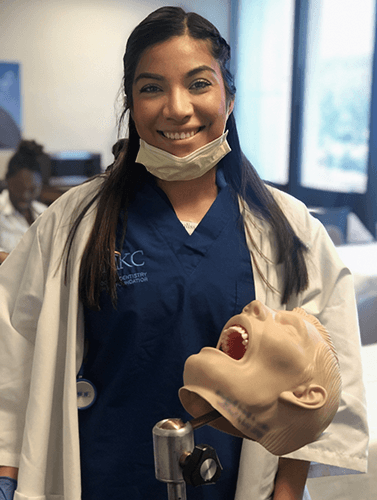
Julissa Andazola, a student in Kansas State University's one-year master's degree in biomedical science program.
New publication summarizes potential for African swine fever to spread through feed
Eight years of extensive research, including work at Kansas State University, has led to a disquieting scenario for swine producers: Feed and feed ingredients could potentially serve as means for the introduction and transmission of foreign animal diseases of swine.
Dr. Megan Niederwerder, assistant professor of diagnostic medicine and pathobiology in the College of Veterinary Medicine, recently published an overview on the significance of the collective feed research related to swine viruses and specifically to African swine fever virus. "Risk and Mitigation of African Swine Fever Virus in Feed" was published March 18 in the journal Animals. Research funding was provided by the National Pork Board. "Since the 2013 introduction of porcine epidemic diarrhea virus into the United States, researchers have investigated the potential role of feed and feed ingredients for the transboundary spread of swine diseases," Dr. Niederwerder said. "Feed ingredients are commodities traded worldwide, and the U.S. imports thousands of metric tons each year from countries where circulating foreign animal diseases have been identified." African swine fever, or ASF, is the most significant foreign animal disease threat to U.S. swine production, Dr. Niederwerder said. The primary goal of negative countries, such as the U.S., is to prevent ASF entry as there are no vaccines or treatments available. "The recent introduction of ASF into historically negative countries over the last few years has heightened the risk for further spread," Dr. Niederwerder said. "Investigations in my laboratory have characterized the stability of the African swine fever virus in feed ingredients subjected to transoceanic shipment conditions, the virus's transmissibility through the natural consumption of plant-based feed, and the mitigation potential of certain feed additives to inactivate African swine fever virus in feed." Dr. Niederwerder's latest review describes the current knowledge of feed as a risk for swine viruses and the opportunities for mitigating the risk to protect U.S. pork production and the global swine population from African swine fever and other foreign animal diseases. "Epidemiological evidence has linked contaminated feed with African swine fever virus field outbreaks in both Europe and Asia," Dr. Niederwerder said. "A rapidly expanding geographic distribution of African swine fever virus continues to increase the risk of U.S. incursion. With economic losses of African swine fever virus introduction into the U.S. swine herd estimated at more than $15 billion due to production losses and market disruption, the importance of preventing entry cannot be overstated." Dr. Niederwerder's article looks at potential ways to reduce African swine fever virus risk through feed biosecurity as well as through both physical and chemical mitigation protocols, such as heat treatment, storage time, and antimicrobial feed additives. "It is critically important that feed mitigation strategies continue to be investigated and adopted to reduce the risk of ASFV or other foreign animal disease entry through this route," Dr. Niederwerder said.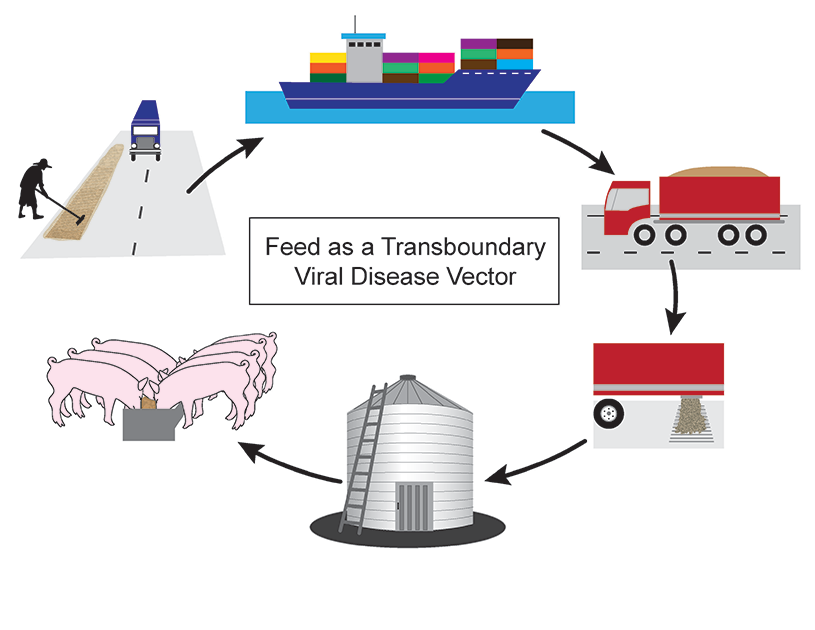
This illustration shows how feed ingredients may serve as transboundary vectors of swine viral diseases. Risky agricultural practices, such as drying grains on roadways represented in upper left corner, may contaminate feed ingredients in countries with circulating foreign animal diseases. The virus can potentially be transported across oceans and highways where the virus could survive and present a potential threat to livestock. Illustration courtesy of the journal Animals.
Dr. Susan Nelson shares tips on dog bite prevention

As the weather warms up, it's common to see dogs and their owners outside getting some fresh air and exercise. But, with this increased exposure of dogs to other people and other dogs comes an increase in the cases of dog bites.
The second week in April is National Dog Bite Prevention Week and a good reminder for everyone to practice safety around dogs, says Dr. Susan Nelson, clinical professor with the K-State Pet Health and Nutrition Center. According to the American Veterinary Medical Association, an estimated 77 million dogs live in the U.S. and 38% of U.S. homes have at least one dog. "The AVMA also estimates that more than 17,800 dog bites occur every year in the United States, with many of the victims children under 2 years of age," Dr. Nelson said. "According to the Insurance Information Institute, dog bites resulted in homeowner insurance payouts of $796.8 million in 2019. This was a 2.9% increase over the previous year. The national average for insurance claims related to a dog bite is $44,760." Dogs can bite for many reasons, but Dr. Nelson said it is usually because they are reacting to some type of stimulus. "Dogs will bite if they are scared, startled or feel threatened," Dr. Nelson said. "They will also bite to defend their territory or themselves. Mother dogs will bite to defend their pups if they feel they are threatened, and may dogs will bite to keep others away from food, treats or a prized toy or other object. Dr. Nelson has tips for both pets and their owners to stay safe and avoid biting experiences. "If you have a new puppy, it is very important to socialize it properly as well-socialized dogs are less likely to bite due to fear of strange people or being stressed by being in an unfamiliar environment," Dr. Nelson said. "This needs to happen very early during the first few months of life as this is a puppy's critical formative time. Ask your veterinarian for tips and good resources on how to do this." Dogs also should be kept on a leash when in public so they can be controlled, Dr. Nelson said. Dr. Nelson recommends using positive reinforcement during training, avoiding rough play between humans and dogs, giving dogs a safe space to enjoy meals where they won't feel threatened by other animals or humans, and giving dogs ample rest time to be away from both humans and other pets. "To avoid bites, humans are responsible for keeping themselves and their pets safe in difficult situations," Dr. Nelson said. "Assume that all dogs are capable of biting — because they are. Dogs need a safe place where they can go to be alone and not be bothered by people or other pets. This can be in the form of a crate, bed or small room." Dr. Nelson cautions that children and pets should never be left unattended and children should be taught to never approach an unfamiliar or sick dog, take a treat, toy or food from a dog, or to never hug, kiss or crowd a dog in a manner that could bring the animal stress. She emphasizes the importance of making sure all family members are educated on animal safety. This includes respecting the animal's need for privacy and to not bother it when it is eating or sleeping. One should always ask an owner if they one can pet their dog, Dr. Nelson said, and respect their wishes if they say no. "Don’t reach through or over a fence to pet a dog, even if it belongs to your neighbor," Dr. Nelson said. "Don’t play with puppies when their mother is around unless the owner is around to supervise. And don’t try to pet a dog that is growling or barking at you." Finally, Dr. Nelson said it's important to keep dogs current on rabies vaccines. Encourage your children to always tell an adult if they were bitten and try to remember what the dog looked like. "Dog bite prevention needs to be practiced year-round by everyone for the safety of people, especially our children, and for the benefit of our dogs," she said.
The American Veterinary Medical Association estimates that more than 17,800 dog bites occur every year in the U.S., with most victims children under the age of 2. April 11-17 is Dog Bite Prevention Week.
College of Veterinary Medicine launches new database for listing externship opportunities
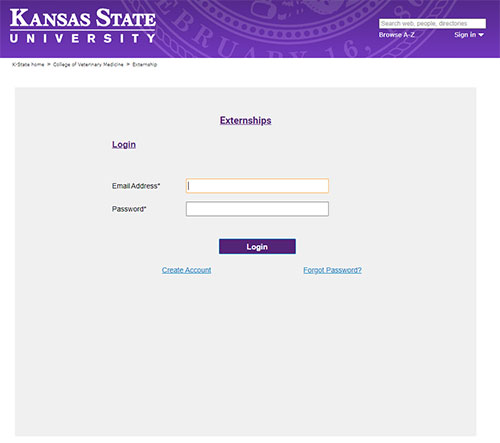
A new tool at the Kansas State University College of Veterinary Medicine will make it easier for veterinary practices and related pet health companies to connect with veterinary students who are seeking externship opportunities.
Electronic programmers in the college just completed a project to develop a searchable database that will allow veterinary clinics to maintain a permanent electronic profile and easily update available externship listings for students interested in building their professional experiences and skillsets prior to graduating with their DVM degrees. “Students benefit greatly from externship experiences in different markets and specialty areas,” explained Dr. Bonnie Rush, dean of the veterinary college. “These experiences help graduates standout when they are searching for permanent positions upon earning their Doctor of Veterinary Medicine degree. We appreciate the commitment and generosity of externship mentors for their contributions to the professional growth of the next generation of the veterinarians.” A two-week externship provides professional students with an opportunity to work alongside specialists, researchers, or veterinarians working unique areas of veterinary medical practice. Students can engage in as much of a role in daily activities at the facility as the practitioner deems appropriate. Externship experiences may represent reinforcement (duplication) of a core clinical rotation or an area of clinical expertise not available in our training program. The profile feature on the CVM database allows veterinary clinics to describe and promote their practice-specific services and the types of educational training opportunities that are available. Veterinary students interested in applying for externships are required to obtain approval from the college prior to participating in an externship. More information is posted at the Externship landing page.
Regular features
Alumni Events, Development and Continuing Education
 The Veterinary Medical Alumni Association organizes alumni receptions at several of the national annual conferences plus continuing education events and more. This month's section includes the monthly listings of recently departed alumni and links to their obituaries, plus a new link for submitting nominations for Alumni Recognition Awards.
Dr. Bill Connelly develops new anesthetic product
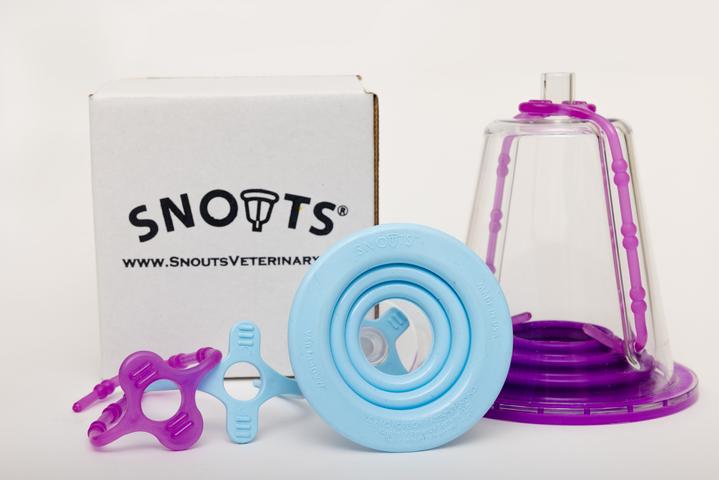
Dr. Bill Connelly, DVM 1980, has launched a new product called "Snouts®," which Dr. Connelly claims is designed to be a quick and easy way to hold any anesthesia mask. The product is also intended to be easy to disinfect and store. According to Dr. Connelly, there was a need to redo and improve anesthesia mask technology that has not been updated in several decades. Read more about the product here.
Check out the new alumni Facebook group!
For those interested in connecting with other alumni and staying in the loop on news and updates, see the new K-State CVM Alumni Facebook group. To join, request entry by clicking the "Join Group" button, which can be found here.
83rd Annual Conference for Veterinarians
Due to concerns with COVID-19, this year's Annual Conference will again be held remotely. This year we will be using an application called WHOVA to present the entire conference. This will allow you to watch the sessions live, but will also provide access to the content for 6 weeks after the conference has concluded. You will have the opporutnity to have additional virtual networking experiences during some of our breaks. During our trade show, attendees will have time to visit the different virtual booths, and during scheduled times, there will be representatives in those booths from those organizations and companies.
This year you will have the opportunity to get 18 hours of CE throughout 3 days. If you are not able to watch these live, they will still be available for 6 weeks after the conference has concluded. We will share additional information with how to access those CE's after the conference.
Continue to check back on this website for additional information as it becomes available.
18 hours of CE will be offered during the conference. You will also receive access to all lectures presented during Annual Conference to watch for free for 6 weeks after the conference has concluded.
Registration information is now available.
Submit nominations for Alumni Recognition Awards online
See our new online nomination form to nominate a fellow alumnus for one of our many annual recognition awards, presented at the national conferences: VMX, WVC, AVMA and the Annual Conference for Veterinarians. See full details at the link below.
https://www.vet.k-state.edu/asp/alumni-awards/awards.aspx .
|
|
|
In Memoriam - Recently Departed Alumni
Dr. Darwin Miles Deets, DVM 1985 Dr. Dale R Hodgson, DVM 1959 Dr. Wallace Dan Houser, DVM 1963
(click highlighted names for obituary) |
|
Questions about Alumni or CE events?Contact:
|
 Tony Ballard
 Sarah Keatley
News Ticker
| More activities and accomplishments in the College of Veterinary Medicine: |
|
Congratulations to Dr. Kara Berke on becoming board certified by the American College of Veteinary Surgeons and to Dr. Leslie Wagner for becoming board certified by the American College of Veterinary Internal Medicine-Large Animal. Congratulations to the new and re-elected CVM faculty senate representatives: Amy Brusk and Dr. Justin Kastner were newly elected and Drs. Mary Lynn Higginbotham, Tom Schermerhorn and Justin Thomason were re-elected. Amy Rankin, Emily Reppert and Brooke Davis received the “Caring for Others Award,” presented by counseling service for their acts of kindness to others. Thank you to all the Clinical Sciences faculty that contributed to 2021 SAVMA Symposium that was hosted virtually by K-State’s College of Veterinary Medicine: Drs. Mike Apley, Marjory Artzer, Mary Bagladi-Swanson, Chris Blevins, James Carpenter, Brad Crauer, Elizabeth Davis, Katie Delph-Miller, Ronnie Elmore, David Eshar, Sara Gardhouse, Jason Grady, Ken Harkin, Mary Lynn Higginbotham, Sam Hocker, Kate KuKanich, Robert Larson, Dylan Lutter, Matt Miesner, Thomas Schermerhorn, Justin Thomason, David Upchurch, Brad White and Doug Winter. Dr. Elizabeth Davis participated in the American Association of Equine Practitioners Virtual Roundtable, serving on the panel on March 10, 2021. This included an interactive discussion to help implement an effective vaccination program to keep clients’ horses safe. Thank you to Drs. Amy Rankin, Jessica Meekins, Jordan Roberts and Kate KuKanich for their presentations and participation in the 38th Annual Frank W. Jordan Seminar on March 21. Drs. Matt DiFazio, David Biller, T. D. Henrikson and Nicky Cassel published, “Application of the “Humanoid” Ventrodorsal Thoracic Radiographic View for improved Cranial Thoracic Assessment,” with Ivis. |
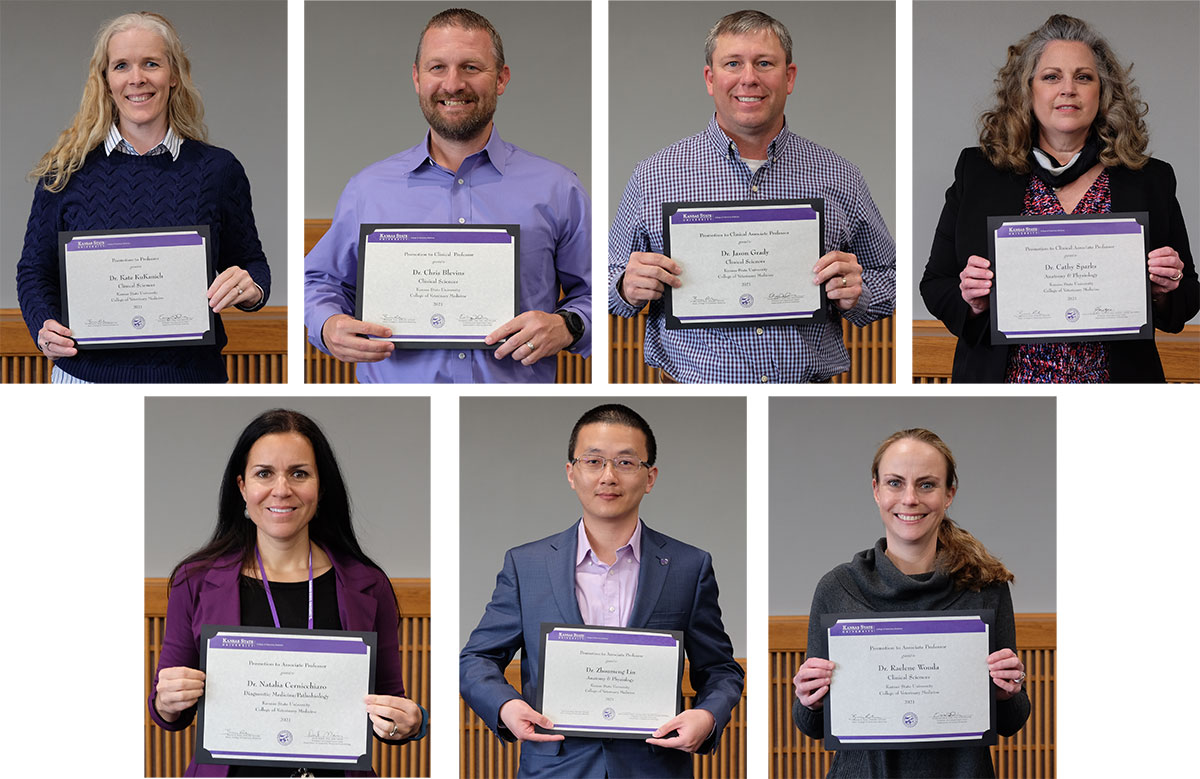 Congratulations to the faculty above on their recent promotions: (Top row, from left) Promotion to Professor: Dr. Kate KuKanich, Clinical Sciences; Promotion to Clinical Professor: Dr. Chris Blevins, Clinical Sciences; Promotion to Clinical Associate Professor, Dr. Jason Grady, Clinical Sciences, and Dr. Cathryn Sparks, Anatomy & Physiology; Promotion to Associate Professor with Tenure: Dr. Natalia Cernicchiaro, Diagnostic Med/Pathobiology; Zhoumeng Lin, Anatomy & Physiology; and Raelene Wouda, Clinical Sciences.
  We have expanded our social channels!
Join the College of Veterinary Medicine on LinkedIn and add us to your profile under education and/or employment to help build and engage our online social community! Follow the LinkedIn page here: www.linkedin.com/company/kstatevetmed
New Arrivals/Recent Departures
Lifelines is published each month by the Marketing and Communications Office at the College of Veterinary Medicine. The editors are Joe Montgomery, jmontgom@vet.k-state.edu, and Piper Brandt, pnbrandt@vet.k-state.edu.