Monthly Newsletter
May - June 2021 - Vol. 16, No. 5 & 6
<April 2021 | July 2021>
Top Stories
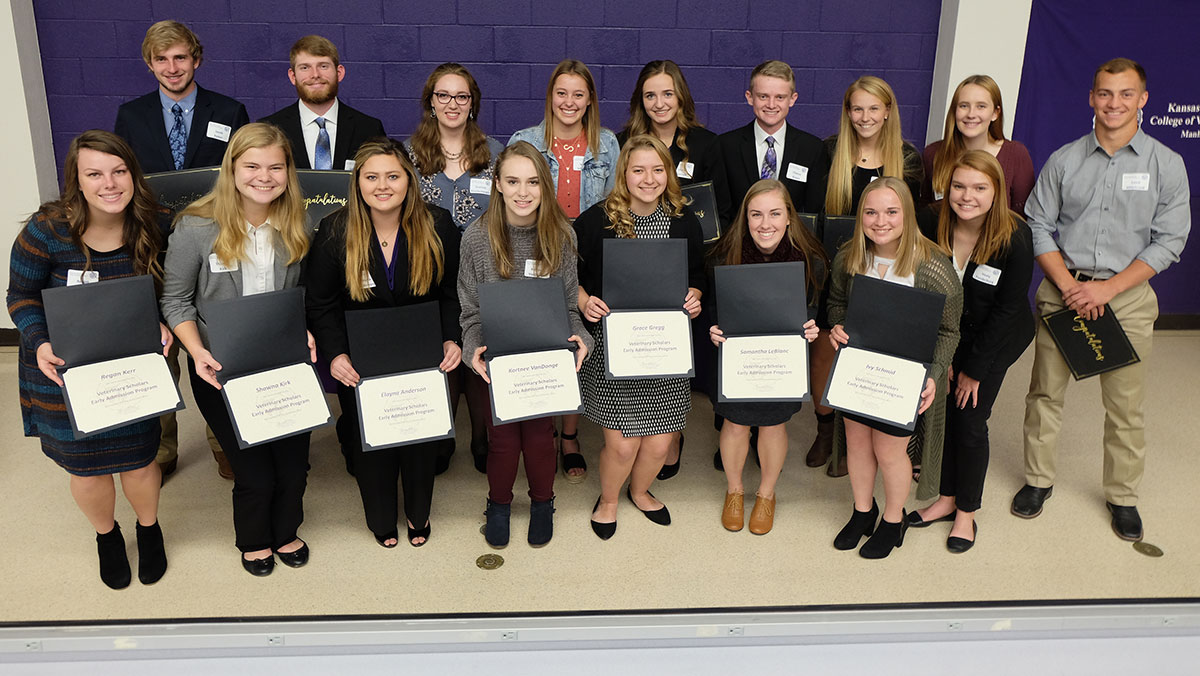
CVM presents scholarships and special awards during annual banquet
The Kansas State University College of Veterinary Medicine hosted its 2021 Senior Banquet on May 19 at the Hilton Garden Inn. The college presented more than $170,000 in scholarship awards to graduating seniors. Special awards were also presented during the banquet for distinguished faculty, house officers and staff.
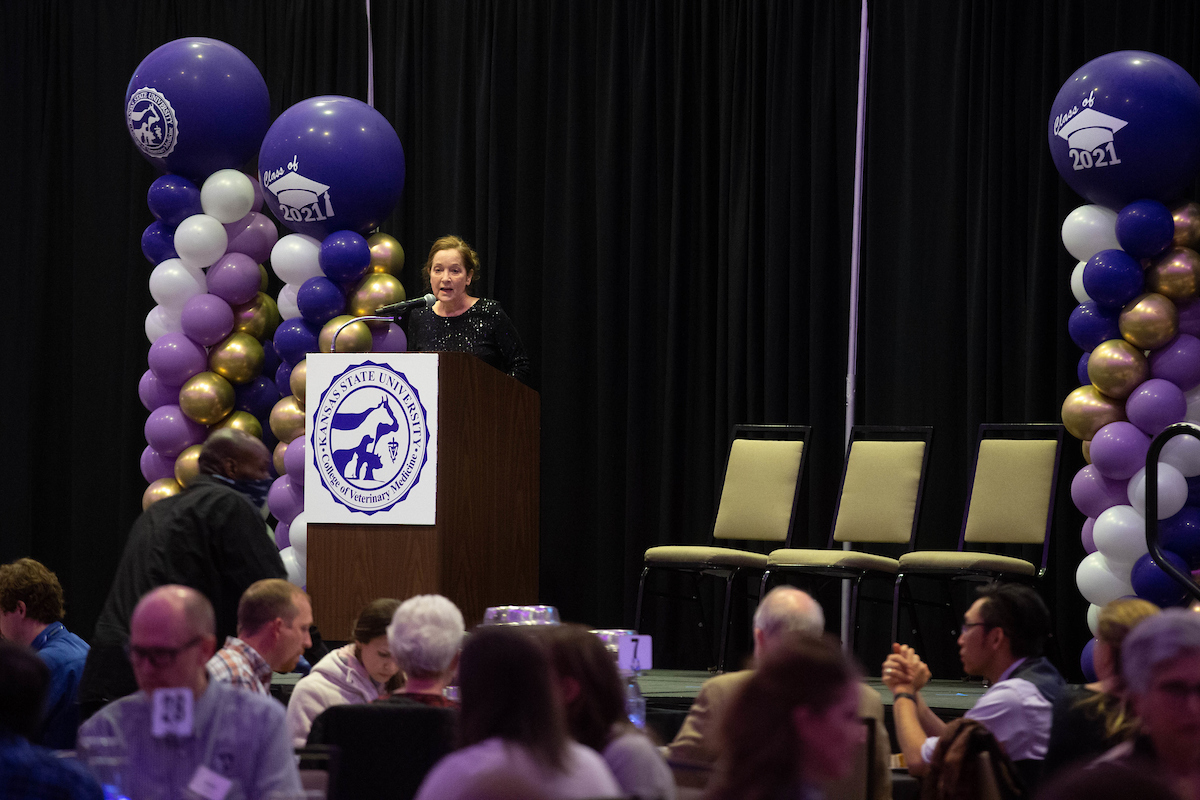
Dr. Bonnie Rush welcomes attendees to the 2021 Senior Banquet.
Activities for the evening commenced with the conferring of a posthumous diploma of veterinary medicine to Dr. Rodney Keith Morgan. Rodney Morgan was in his second-year of veterinary studies at K-State when he passed away in 1974, after a battle with leukemia. Present to receive Dr. Morgan’s degree and regalia were Doris Morgan, his mother; Mitch Morgan, brother; Bonnie Johnson, sister; and nieces Amy Lederer, Jessy Miller, Shelby Langvardt and Taylor Morgan.
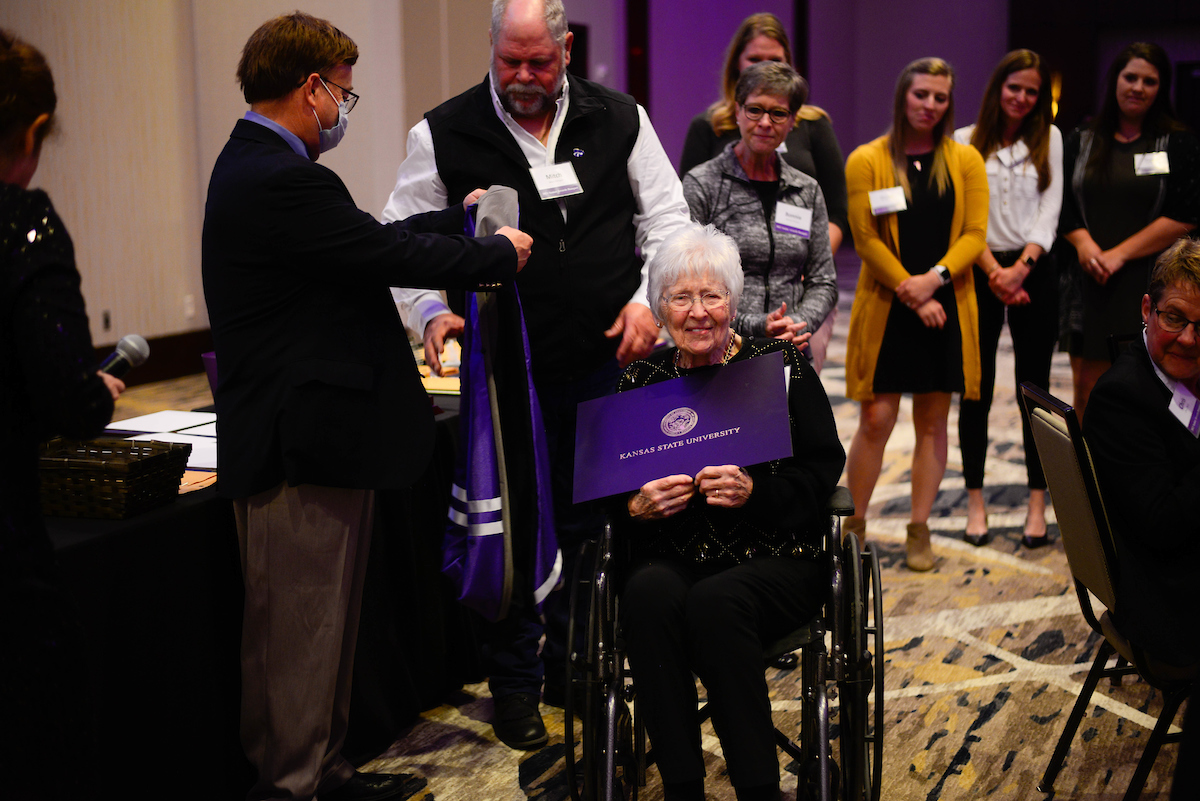
Dr. James Roush presents Dr. Keith Morgan's posthumous degree and regalia to his mother, Doris, and brother, Mitch, along with sister, Bonnie, and nieces.
The graduating Doctor of Veterinary Medicine students of the Class of 2021 were then recognized. Seventy-three awards and scholarships were presented, acknowledging the academic, clinical, leadership and professional achievements of the class.
“After a challenging year for students, faculty and staff, this was a wonderful evening where everyone could focus on academic accomplishments,” said Dr. Bonnie Rush, dean of the college. “The new graduates demonstrated commitment, sacrifice and discipline while completing their clinical training program to ensure a safe learning environment for everyone. I’m confident they are well-prepared to succeed as the next generation of veterinarians. We are so proud of the Class of 2021.”
The awards included: the Alvin A. Lidolph Award presented to the highest achieving student in the fourth year of the professional curriculum, Abby Ostronic; the Merck Veterinary Awards presented to students on the honor roll, Carson Campbell, Emily Davis, Danielle Goering, Jared Heiman, Meghan Lancaster, Abby Ostronic, Ashley Russo, Kathryn Ryan, Sydni Schaper and Bailey Wright; the Kind Touch Awards presented to two students demonstrating exceptional abilities in relating to clients and patients, Skylar Koll and Taylor Williams; the Pet Tribute Student Awards presented specifically to students having demonstrated compassion and professionalism in support of clients who have suffered the loss of a pet: Shannon Kellish, Savannah Miller, Ashley Russo, Cameron Sutherland, Brianna Thorne, Rebecca Tomasek and Conor Williams; and the Dr. Richard and Pam DeBowes Professional Leadership Award presented to the class president, Joshuah Klutzke.
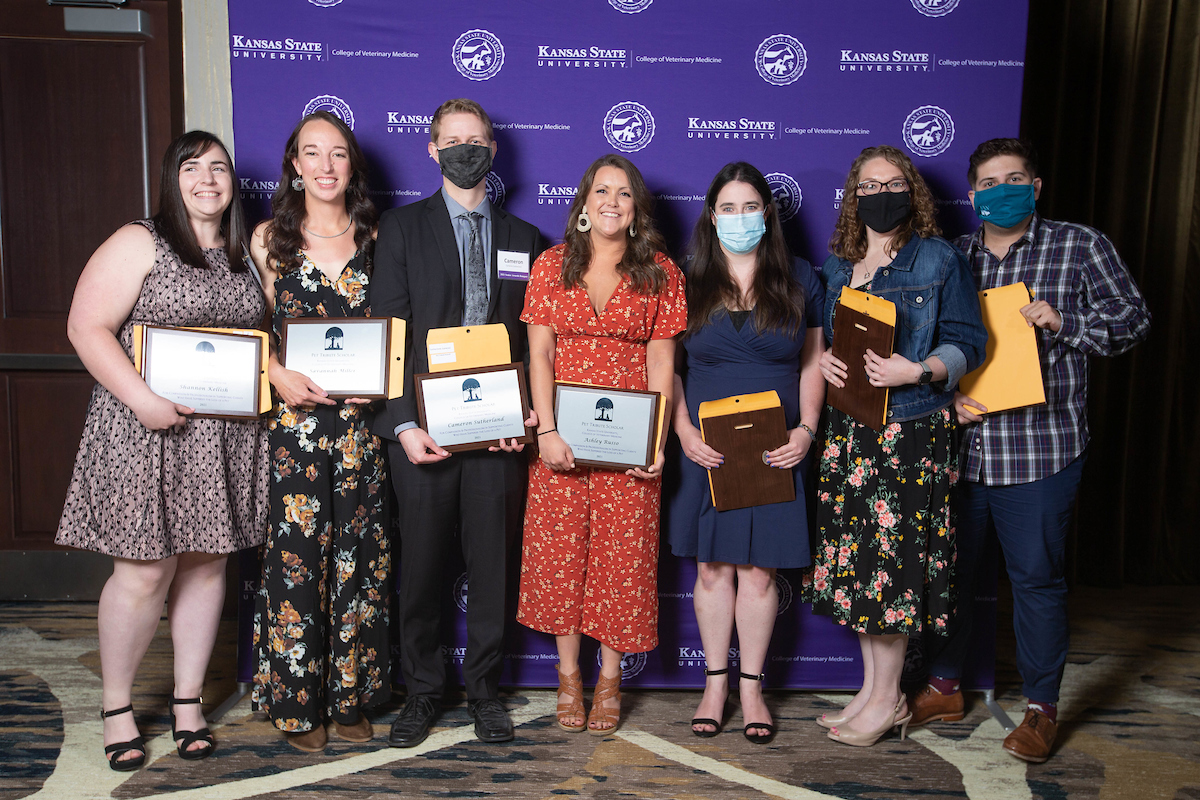
(Left to right) Recipients of the Pet Tribute Student Award were Shannon Kellish, Savannah Miller, Cameron Sutherland, Ashley Russo, Brianna Thorne and Conor Williams.
Also distinguished were graduating students who are serving, or are veterans of, the United States military: 2nd Lt. Danielle Goering; ex-member of the US Air Force, Patrick Snyder; and 2018 recipient of the US Army Health Professions Scholarship, Bridgette Wilson.
The Pet Tribute Faculty Award provides the senior students with an opportunity to honor a faculty member who distinguishes themselves through exceptional role modelling as a compassionate caregiver and healthcare professional. This year’s senior class voted for Dr. Sara Gardhouse, assistant professor in the Department of Clinical Sciences and diplomate of the American College of Zoological Medicine.
House officers and staff, who have provided guidance and support for the students during their clinical year, were also recognized at the event. The recipients of the Pet Tribute House Officer and Staff Awards, Dr. Abby McKisson, Dr. Oscar Chavez Zamora and Mr. Seth Brunner, were selected by the senior class, having demonstrated excellence in teaching, clinical service, clinical proficiency and professionalism.
Two major faculty annual faculty awards were also presented during the festivities. Dr. Justin Thomason, clinical associate professor in cardiology, was selected as the recipient of the 2021 Zoetis Distinguished Veterinary Teaching Award. Since 1963, the Zoetis Distinguished Veterinary Teaching Award has been presented at each of the U.S. veterinary colleges to an outstanding teacher who advances the veterinary profession by inspiring students to their highest levels of achievement and professionalism.
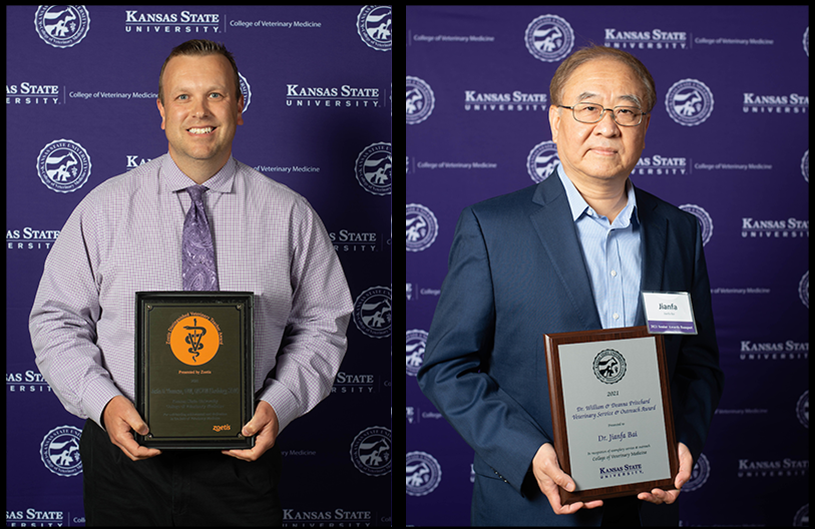
Drs. Justin Thomas and Jianfa Bai receive the Zoetis Distinguished Veterinary Teaching Award and Pritchard Award, respectively, for their outstanding accomplishments.
The Dr. William and Deanna Pritchard Veterinary Service and Outreach Award was established in 2012 to emphasize the importance of service and outreach in the veterinary profession. Dr. Pritchard, who earned his DVM at K-State in 1946, was a professor and dean emeritus of the College of Veterinary Medicine at the University of California at Davis. This year’s recipient of the Pritchard Award is Dr. Jianfa Bai, professor of diagnostic medicine and pathobiology and director of molecular research and development for the Kansas State Veterinary Diagnostic Laboratory.
The DVM Class of 2021 graduated Friday, May 14 during commencement exercises at Bill Snyder Family Stadium. Visit this site for a full list of all the scholarships that were presented during the Senior Banquet.
KSVDL exercises readiness for African swine fever outbreak
On May 20, members of the Kansas State Veterinary Diagnostic Laboratory, or KSVDL, along with the Kansas Department of Agriculture, the Biosecurity Research Institute and many other partners across campus, the state of Kansas and the National Animal Health Laboratory Network took part in a tabletop exercise focused on laboratory activities during the various stages of a simulated outbreak of African swine fever.
The exercise was made possible by a funded proposal as part of the 2020 National Animal Health Laboratory Network, or NAHLN, Funding Opportunity under Section 12101 of the 2018 Farm Bill. The entire proposal encompasses this table-top event along with a functional exercise to follow in early 2022 and the completion of an after-action report that can be utilized by the entire NAHLN network to advance preparedness for an African swine fever outbreak in the United States. The exercises are being written and facilitated by the National Agricultural Biosecurity Center at Kansas State University. As a Tier 1 member of the NAHLN network, the KSVDL serves to provide early detection, rapid response, and appropriate recovery from high-consequence animal diseases, such as African swine fever. While KSVDL has participated in many foreign animal disease exercises sponsored by other regulatory partners, this was the first to focus primarily on the activities of the laboratory itself. The functional exercise will involve actual testing of mock samples and will stress communication with state and federal partners at the Kansas Department of Agriculture, U.S. Department of Agriculture and NAHLN. To help prepare for these activities, KSVDL has also formed a Foreign Animal Disease Committee that meets regularly to discuss planning and preparedness for possible emerging disease outbreaks, many of which could have a devastating effect on our state and nation's vibrant agricultural economy. For more information, contact Kelli Almes, KSVDL foreign animal disease/outbreak section head, at 785-532-3995 or kalmes@vet.k-state.edu.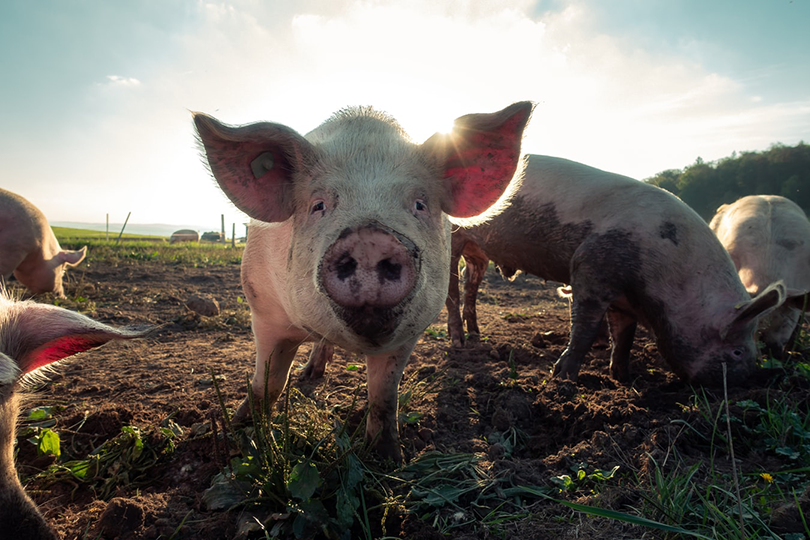
Diseases like African swine fever are costly and affect swine producers across the country.
Shelter Medicine program navigates safely through pandemic challenges
For the last six years, a large purple and white trailer has become a common site on highways and roadways in Northeast Kansas. And while the first five years were mostly smooth sailing, the global coronavirus pandemic effectively presented a number of metaphorical road hazards and obstacles.
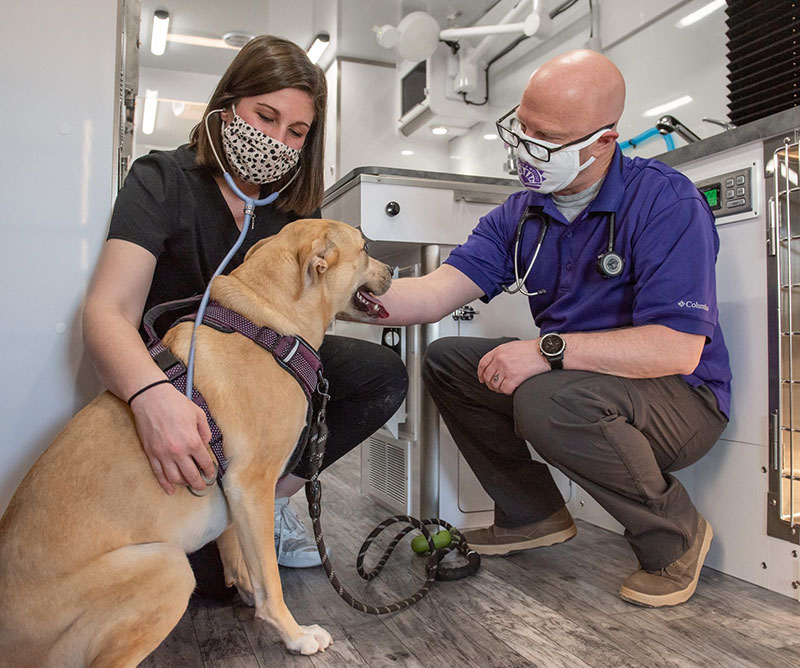
Dr. Haylek Barkoviak, shelter medicine intern, and Dr. Brad Crauer, associate clinical professor, examine a dog in the new Community Outreach Vehicle, also called Wellness on Wheels, or WOW.
“The totally unprecedented nature of providing hands-on education in an outreach program during a pandemic has been challenging,” said Dr. Brad Crauer, an associate clinical professor in the College of Veterinary Medicine at Kansas State University. “Shelter Med was the first service to shut down. We felt the conservation of personal protective equipment (PPE) and surgical supplies was warranted given the uncertainty early in the outbreak. We were also one of the first services back out in the field and did so with purpose and process in place to keep all stakeholders safe.”
Dr. Elizabeth Davis, head of the Department of Clinical Sciences, explained that in March 2020, all clinical rotations for fourth-year veterinary students remained in-person and were conducted at regular numbers of three students per rotation.
“From March 30 through May 11, 2020 -- along with other services -- rotations were remote, but were still held with active learning every day,” Dr. Davis said. “In regard to the graduating class of 2021, the first rotation was delayed to begin until May 26, with other in-person rotations, and then never looked back. Rotations started on May 26, 2020 with in-person activities and the class of 2021 had 90 students participate on the shelter medicine rotation. It remains the No. 1-ranked clinical rotation at the K-State College of Veterinary Medicine.”
Since first hitting the road on its maiden trip May 9, 2015, the K-State Mobile Surgery Unit has been used to help dozens of animal shelters and community organizations save on veterinary care costs and has drawn attention to the plight of homeless animals. The Mobile Surgery Unit has spent approximately 1,550 days and over 200,000 miles on the road over the last six years to reach the milestone of 28,000 surgeries. For each trip, students packed and loaded daily supplies in the 32-foot trailer, which sports the university's Powercat logo and wordmark, plus the slogan "Future Vets Helping Future Pets."
“Shelter Med is an outreach program providing surgical and medical services on site at partner shelters,” Dr. Crauer explained. “When we rebooted the program after being offline for six weeks, it was very important that we not put our students or the people we serve at risk. All students (and faculty/staff) must be symptom free and not have any known exposure. We recognized there was some risk but have worked very hard to ensure the risk was low for all that participated. We occasionally canceled trips in compliance with COVID-19 traceback and quarantine guidelines.”
Dr. Crauer noted significant changes in procedures after the onset of the pandemic.
“Pre-COVID, students would meet with shelter leadership, tour facilities and eat lunch on site,” Dr. Crauer said. “All of those activities were discontinued until recently. With our outreach vaccine/microchip clinics the partner organization provided ‘Pet runners’ who would interface with the client. This minimized any student/public contact and the potential for disease propagation in either direction.”
Dr. Crauer noted that the partner programs and animal shelters have worked together on developing special safety protocols.
“Just as our students/faculty/staff assess their health risk/situation each day, we ask our shelter partners to do the same,” Dr. Crauer said. “They are instructed to report any illness or exposure prior to our departure for their facility. Shelter leadership, staff and volunteers have been very willing to participate.”
Dr. Crauer said initially not all of the partner organizations were willing to restart their programs.
“Some organizations did not shut down at all while others discontinued services altogether and were much more conservative on reopening,” Dr. Crauer recalled. “Just as we expected our shelter partners to respect our requirements for visits, we also had to accommodate those who were even more cautious than we were. That the process and communication were in place to properly navigate these outbreak situations shows that our system works. The K-State Shelter Med team has consulted with a number of other academic programs and animal welfare organizations helping them ‘reboot’ and begin to get back to normal.”
Dr. Crauer said the shelter medicine program worked back up to 14 active partner organizations through the pandemic and that surgical procedures surpassed 4,200 on the year, which averages approximately 40 procedures per student, per rotation.
In addition to the Mobile Surgery Unit, the Shelter Medicine program also recently acquired a Community Outreach Vehicle called “Wellness on Wheels,” or WOW. The program successfully completed its first trip on March 13 after more than two years of fundraising and production. The vehicle was used during a wellness clinic at the Metro Lutheran Ministry Mission in Kansas City, Missouri, in partnership with the Community Veterinary Outreach (CVO) program where 25 patients from 18 different clients were served.
With the pandemic restrictions recently being lifted, Dr. Crauer hopes eventually have the shelter medicine program moving at full speed once again.
“It was so important to keep these outreach-based programs in place through the pandemic to continue to serve those in need and get our students valuable experience,” Dr. Crauer said. “I’m very proud of the education we have been able to provide, the hands-on experience for our students performed as outreach service to those in need.”
More Headlines
Vet Med ROCKS resumes holding in-person day camps for youth
Vet Med ROCKS, which stands for Recruitment and Outreach Club at Kansas State University and is a registered departmental student organization, is hosting a series of in-person and virtual day camps for youth this summer. The Vet Med ROCKS summer camp will take place Aug. 1-4.
"I am so excited to be planning an in-person experience for our campers this year," said Bethany Esser, a third-year veterinary student and summer camp chair for Vet Med ROCKS. "We look forward to having many knowledgeable clinicians and students speaking on a variety of preventive medicine topics. I am also excited that we will be offering several hands-on experiences with live animals. My goal is to provide a fun and educational experience for young people interested in the field of veterinary medicine. We look forward to meeting our campers in early August."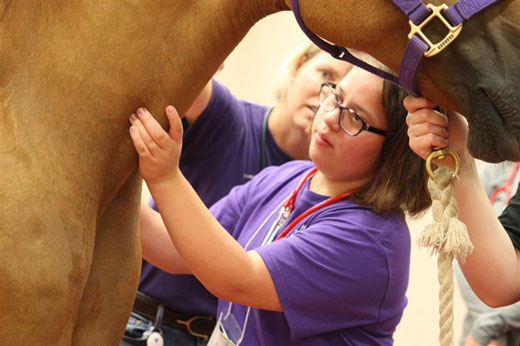
Callie Rost, the K-State College of Veterinary Medicine associate dean for admissions, said last year's virtual Vet Med ROCKS campus attracted more than 500 virtual campers.
"We thought it very valuable to offer this opportunity again," Rost said. The virtual Vet Med ROCKS camp will host campers from anywhere across the country and allow them to engage with the K-State College of Veterinary Medicine, expose them to the profession and learn about how veterinarians take care of animals."
Aug. 1 will be a virtual day of presentations and at-home activities for high school and college students. These campers will then attend in-person Aug. 2 for hands-on labs with faculty and vet med student camp counselors throughout the day. Aug. 3 will be an in-person camp for middle school students entering sixth through eighth grades and Aug. 4 is an in-person camp for grade school students entering the fourth and fifth grades.
Those who cannot attend either of these camps in person can attend presentations virtually in the morning. Morning presentations and hands-on labs in the afternoon will be conducted for campers attending on campus.
Registration is now open vet.k-state.edu/admissions/rocks. Scholarships are available for each camp session.
DMP provides advanced training for graduate students through stakeholder partnerships

Kansas State University graduate students are getting advanced training and are making beneficial connections with industry and government partners through the Department of Diagnostic Medicine/Pathobiology in the College of Veterinary Medicine.
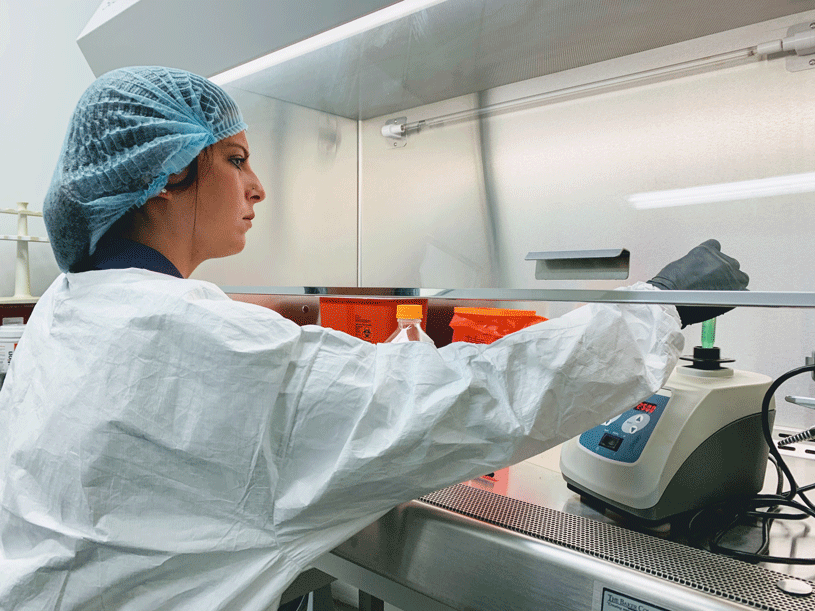
Diana Dewsbury, who is pursuing her doctorate, contributes to research at the Veterinary and Biomedical Research Center Inc., or VBRC.
“When faculty and graduate students work directly with external partners in public and private sectors, their applied research is more relevant and impactful,” said Dr. David Renter, associate head of the department. “These collaborations also lead to better graduate program experiences for our students, and pathobiology program graduates with a more customized set of skills, abilities, and knowledge that are directly aligned with stakeholders needs.”
Dr. Renter said an established beef industry partnership has led to an innovative program designed to develop hands‐on skills that enable top quality research and science‐based health and production management decisions.
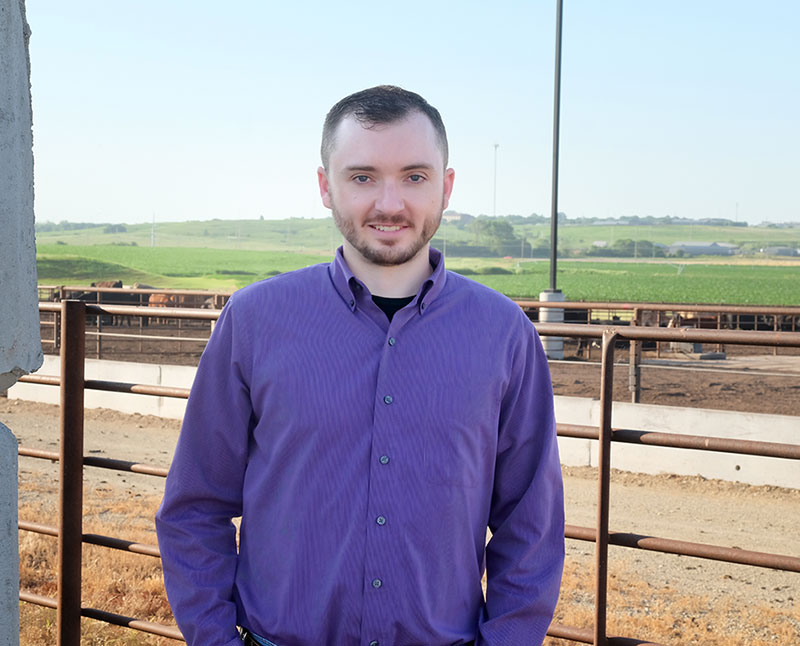
Lucas Horton works in the field to study beef production systems research.
Lucas Horton, a doctoral student in the pathobiology program, is receiving advanced training in epidemiology, research methods, and economics, and regularly works “in the field” on commercial beef production systems research with Dr. Brandon Depenbusch, vice president of cattle operations at Innovative Livestock Services (ILS), which Dr. Renter describes as one of largest and most innovative cattle feeding organizations in the Midwest.
“I think many past and present students would be envious of this opportunity presented to Lucas,” Dr. Depenbusch said. “This program offers a unique balance of applied field research with a first-class education. Our company benefits from having access to a very talented student to assist with in-house research trials and we get the opportunity to assist in the development of the next generation of researchers.”
Although Horton is just one year into his program, Dr. Renter said he has already contributed to projects addressing animal well-being, antimicrobial use, beef carcass quality, and production economics.
“Engagement with private industry and government organizations is integral to our land-grant mission as it enables us to serve the research and training needs of Kansas, the nation and the international community,” Dr. Renter added. “Many of our graduate students are ultimately employed by government organizations or private industry. Working directly with these stakeholders during their graduate programs can provide benefits for the student, faculty and stakeholders.”
Diana Dewsbury is another student who is pursuing a doctorate while working directly with a private-sector partner. In addition to her academic training under her advisor Dr. Natalia Cernicchiaro, Diana regularly contributes to research at the Veterinary and Biomedical Research Center Inc., or VBRC.
“Working at VBRC has been a great learning experience and opportunity to collaborate with many different companies while gaining exposure to working with a variety of animal species, different study designs, and types of research studies,” Dewsbury said, citing good laboratory practices, good clinical practices, novel pilot work and challenge studies as examples. “After completing a master’s degree and working in industry for a few years, my current program provides unique practical experience and opportunity to be involved in study design, protocol development, live-phase animal research, statistical analysis, and reporting of study results.”
Dewsbury said that receiving top-notch academic training paired with opportunities to be involved in current animal health research in both academic and commercial industry settings is a unique opportunity that has been invaluable to her career and personal development.
“In addition to working with various sectors of private industry, our students and faculty also frequently collaborate with state and federal government organizations,” Dr. Renter said.
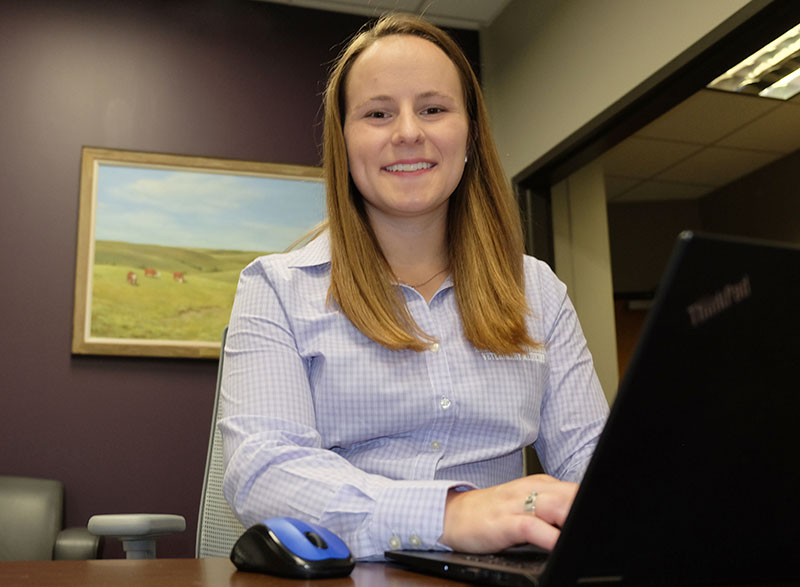
MaRyka Smith studied under Dr. Mike Sanderson on animal disease traceability.
MaRyka Smith, a concurrent Doctor of Veterinary Medicine/doctoral student, and her adviser, Dr. Mike Sanderson, are working with the Animal Disease Traceability group at the USDA’s Center for Epidemiology and Animal Health. Their collaborative work aims to help prepare plans for addressing a potential outbreak of food and mouth disease (FMD) in the United States. They will determine the impact of improved cattle traceability for FMD response and how to optimize resources for enhanced traceability.
“Working with our collaborators at the USDA has allowed me to not only to be involved in research that benefits animal health, but also to get an inside look at potential career paths outside of academia and industry,” Smith said.
Dr. Sanderson added, “The funding from CEAH allows us to do important work that will have a positive impact on agriculture and animal health policy decisions.”
“These students and others like them are having extremely important positive impacts on real-world problems,” Dr. Renter said. “Through their unique experiences and training, they will be well-prepared to address the future needs of our stakeholders.”
Veterinary student captures second-place for history essay on Scrapie
Conrad S. Schelkopf, class of 2024, received second place in the Smithcors Veterinary History Essay Contest, for his essay entitled, "Scrapie: A Brief History of the First Prion Disease." Conrad will receive a cash prize and an opportunity to have his essay published in the Veterinary Heritage Journal.
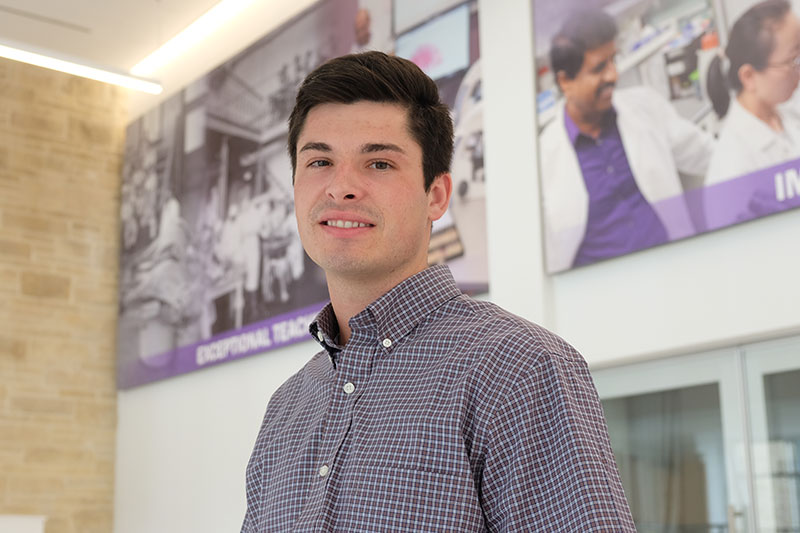
Conrad Schelkopf
Conrad is a concurrent DVM/Ph.D. student from Geneva, Nebraska. He is currently working on Ph.D. research this summer focused on food animal diagnostics and therapeutics emphasizing antimicrobial stewardship under the leadership of co-advisers: Drs. Mike Apley and Brian Lubbers.
“As the title of my essay implies, it focuses on the history of scrapie in sheep by touching upon its origin, discovery of disease transmission, introduction into the United States, discovery of the prion and link to other transmissible spongiform encephalopathy (TSE) diseases, such as Creutzfeldt-Jakob disease (CJD) in humans and bovine spongiform encephalopathy (BSE) in cattle, and the outlook for scrapie in present day,” Conrad explained. “The essay highlights prominent events, scientists and veterinarians who played an instrumental role in the discovery and characterization of scrapie.”
Growing up around livestock, especially sheep, Conrad said he found himself constantly hearing about scrapie with little idea of what this disease manifested as and why there was such urgency to keep sheep flocks free from this disease.
“That got me interested in wanting to know more about how scrapie came to be such a well-known disease in the livestock industry,” Conrad said. “Scrapie, as a prion disease, is linked to other TSE diseases that span across multiple species making this disease's impact far reaching.”
Conrad’s essay was primarily completed during Dr. Howard Erickson's History of Veterinary Medicine elective course.
“Most of the sources in the essay stemmed from peer-reviewed journals,” Conrad said. “I conducted a literature review and then pieced together the important topics into my essay. I think understanding the history of your profession including the diseases, people and events is instrumental in becoming a well-rounded and knowledgeable veterinarian. History excites me as it's a chance to learn from the past to improve the future. I very much enjoyed the opportunity to dig deeper into the history of a livestock disease that interests me.”
Dr. Justin Kastner connects students with veterinary history of food trade
Students in Dr. Justin Kastner’s course on Globalization, Cooperation, and the Food Trade (DMP/VDMP 888), recently had a chance to connect with some “living history.” Thanks to online technology, the students were introduced to Jacqueline Williams, an accomplished London-based documentary script-writer who happens to be the great-granddaughter of Professor William Williams, who was involved in 19th-century transatlantic trade disputes over contagious bovine pleuro-pneumonia.
“As a graduate student, I studied the history of food safety and animal disease-related trade disputes in the late 19th century (1850-1900),” explained Dr. Kastner, associate professor in diagnostic medicine and pathobiology. “One of these disputes regarding the cattle disease contagious bovine pleuro-pneumonia, or CBPP, led me to the scientific and diplomatic wranglings between British and American trade officials, politicians, and, significantly, veterinarians.”
One of those veterinarians was William Williams, who Dr. Kastner describes as a “strange bedfellow” of sorts for the U.S. in that he was a fiery Welshman who eventually was the principal (dean) of a veterinary college in Edinburgh, Scotland.
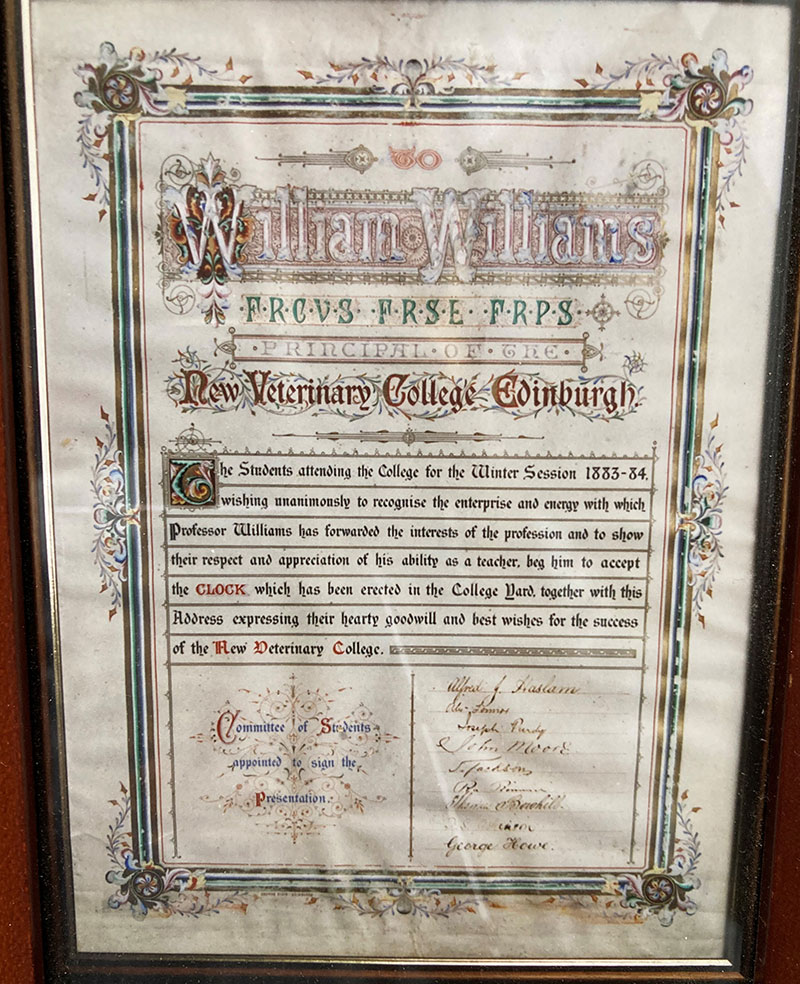 “I love history, and I was utterly fascinated by the life and career of William Williams,” Dr. Kastner said. “Then, serendipitously, I was reading an article some years later (after I joined the faculty in DMP) and noticed a memoir on Williams written by Jacqueline Williams. I found her email address, emailed her, and from that moment hatched a friendship that eventually led to me meeting her in London’s Victoria rail station in April 2008 while I was on a research trip. She and my wife and kids have corresponded over the years and, in 2018, my whole family was able to meet her.”
Dr. Kastner said he uses historical narratives, including the writings of veterinarians, to illustrate the principles that, both in the 19th century and the 21st century, are operative in scientific trade diplomacy. While it wouldn’t be possible to speak with William Williams, the next best thing is visiting with his great-granddaughter Jacqueline.
“This was an informal and interactive session and the students had several thoughtful questions for Jacqueline during our Zoom meeting,” Dr. Kastner said. “She shared some background about William Williams's life from childhood, his apprenticeship in Lancashire, adventures in the gold fields of Australia, and drama-filled time in Edinburgh, where he ended up building his own veterinary college (and where he was based at the time of the 1879 trade dispute eruption!). She also shared a bit about his tenure as president of the Royal College of Veterinary Surgeons (RCVS), and a visit to Jamaica with Jacqueline's grandfather, as his secretary, to investigate an outbreak of tick fever.”
“It was valuable learning about the very beginnings of food security on a nearly global scale,” said Karen Hood, third-year veterinary student. “Shipping food (whether the live animals or their products) from the US to Europe was an industry that had to rapidly change in response to new challenges, such as animal disease. It was also interesting to learn about the foundations of veterinary medicine and how it connected to food trade across the Atlantic Ocean.”
SIDEBAR: University Honors Program recognizes Dr. Justin Kastner
The University Honors Program recently presented its inaugural 2021 Teaching and Mentoring Awards. This year’s winners are Justin Kastner, associate professor of diagnostic medicine and pathobiology in the College of Veterinary Medicine; and Sim Jun, assistant professor of social work in the College of Arts and Sciences.
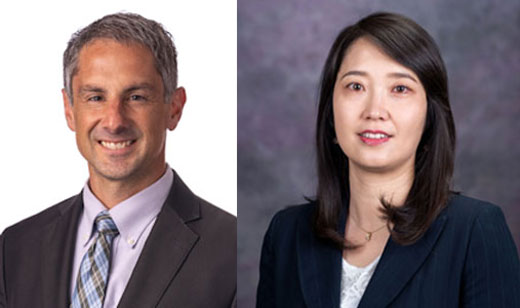
Dr. Justin Kastner in the CVM and Sim Jun from the College of Arts and Sciences were recognized this year by the University Honors Program.
The University Honors Program presents the awards annually to two faculty or staff members who have demonstrated outstanding teaching and mentorship to the students in the program. Recipients of these awards are nominated by current University Honors Program students and then selected by the awards committee.
Dr. Kastner was cited for being a consistent advocate for multidisciplinary thinking and interdisciplinary scholarship, as well as an active participant in the UHP. He was nominated for this award as the instructor of the UHP 189: Honors First-Year Seminar section titled “Public Health in the Age of Sherlock Holmes.” The nomination materials described how his engaging and diverse teaching style led to a learning environment that was informative and captivating in which every student, whether in person or on zoom, was engaged in discussion. Dr. Kastner is described as a professor and mentor that enhances the first-year experience, teaches students to make interdisciplinary connections, and encourages them to explore new intellectual pursuits. In doing so, Dr. Kastner has enhanced the educational experience in the University Honors Program.
Regular features
Alumni Events, Development and Continuing Education
 The Veterinary Medical Alumni Association organizes alumni receptions at several of the national annual conferences plus continuing education events and more. This month's section includes the monthly listings of recently departed alumni and links to their obituaries, plus a new link for submitting nominations for Alumni Recognition Awards.
Alumni Reunion Weekend to return in the fall
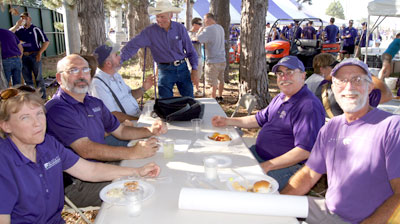
The Alumni Reunion Weekend for classes who should have met in 2020, in addition to 2021, have been scheduled for Sept. 25, 2021. The itinerary includes a Wildcat football watch party in the new Boehringer Ingelheim Auditorium and a Scholarship Golf Tournament at Colbert Hills. More information about the reunions, including a link to registration, can be found here.
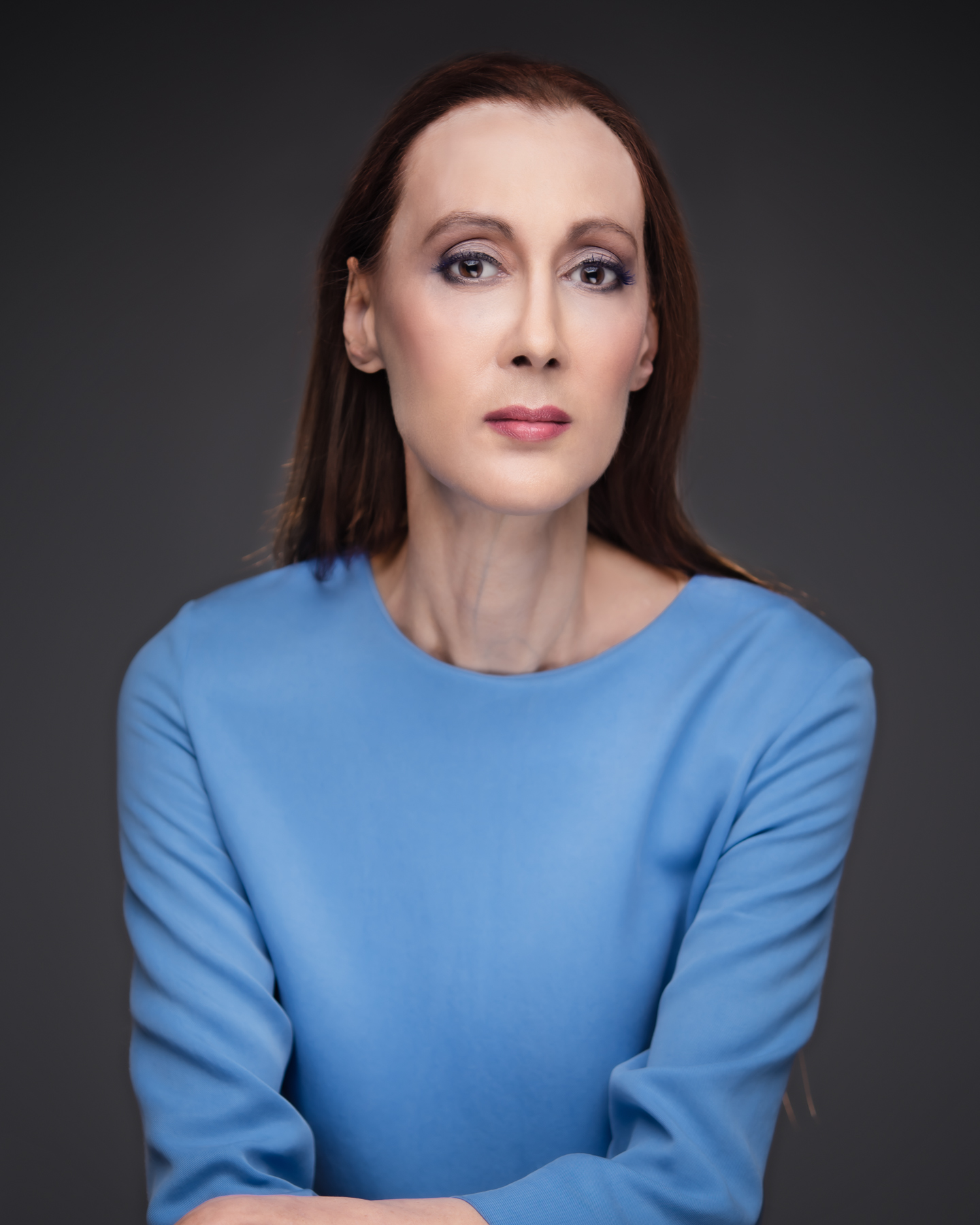
A former resident at the K-State Veterinary Health Center, Dr. Alexandra Winter, was recently appointed to be editor-in-chief of the Merck Veterinary Manual. Dr. Winter came from Sydney, Australia to undertake her equine internship at Kansas State in July 1991. While based in the equine section, she also spent considerable time rotating through the section of anesthesiology, learning from Drs. David Hodgson and Rose McMurphy. Her intern seminar was titled “Use of Closed-Circuit Liquid Injection Anesthesia in Horses.” She was subsequently invited to undertake graduate study in anesthesiology under the mentorship of Dr. Robin Gleed at Cornell University.
Check out the new alumni Facebook group!
For those interested in connecting with other alumni and staying in the loop on news and updates, see the new K-State CVM Alumni Facebook group. To join, request entry by clicking the "Join Group" button, which can be found here.
Submit nominations for Alumni Recognition Awards online
See our new online nomination form to nominate a fellow alumnus for one of our many annual recognition awards, presented at the national conferences: VMX, WVC, AVMA and the Annual Conference for Veterinarians. See full details at the link below.
|
|
|
In Memoriam - Recently Departed Alumni
Dr. Leighton E. Fairbairn, DVM 1953
(click highlighted names for obituary) |
|
Questions about Alumni or CE events?Contact:
|
 Tony Ballard
 Sarah Keatley
News Ticker
| More activities and accomplishments in the College of Veterinary Medicine: |
Watch this year's Commencement Exercises OnlineWe congratulate the class of 2021 in completing their Doctor of Veterinary Medicine degree. Commencement was held Friday, May 14, at Bill Snyder Family Stadium and was livestreamed online. You can also see this year's White Coat CeremonyThe annual White Coat Ceremony (held Friday May 7) celebrates the transition of third-year veterinary students from their preclinical education to their senior year clinical rotations within the teaching hospital at K-State, the Veterinary Health Center. Thomas Schermerhorn provided an expert peer review of the 2020 Endocrinology Request for Proposals for the American Kennel Club Canine Health Foundation (CHF). The CHF has awarded more than $60 million in research grants and canine health projects to advance the health of dogs. Drs. Maria Jugan and Sarah Schneider received $29,815 from the Winn Feline Foundation for their study, “Glucagon-like peptide 2 in cats with inflammatory bowel disease.” Drs. Maria Jugan and Brandon Plattner received $26,470 as a sub-award from Ohio State University as part of the Winn Feline Foundation award for their project, “Impact of iron deficiency on short-term response to treatment in cats with inflammatory bowel disease.” Drs. Brad White, David Amrine and Bob Larson received $209,575 from the Foundation for Food and Agriculture Research plus $217,693 third party matching funds for their project, “Development of Bovine respiratory disease predictive models to guide metaphylaxis administration and comparisons with current standards of care in multiple feeding organizations.” Drs. Abbie Viscardi, Mike Kleinhenz and Hans Coetzee received $22,435 in funding from the American Association of Bovine Practitioners for their study, “Evaluating the efficacy of two local anesthetic options to reduce pain in calves after cautery dehorning.” Dr. Sara Gardhouse spoke at the 2021 Student AVMA Symposium regarding “Quality of Life Assessment in Exotics Pets,” which led to an article written for the JAVMA News on May 15. Dr. Megan Niederwerder's research on the pig microbiome was featured in a story in Veterinary Advantage online: "The Future Of PRRS Defense: A Thriving Microbiome." On May 15, the Shelter Medicine Community Outreach Vehicle, WOW (Wellness on Wheels), partnered with Community Veterinary Outreach and Street Medicine KC for a One Health Clinic. The target clientele were residents challenged with access to care barriers. The clinic served 16 patients from 14 different clients by providing wellness exams, vaccinations and three spay/neuter surgeries. Dr. Mike Kleinhenz presented, “Plasma concentrations of eleven cannabinoids in cattle following oral administration of industrial hemp (Cannabis sativa),” at the 2021 Hemp Products & Animal Health Conference at the University of Tennessee on May 19. The Johnson Cancer Research Center has selected 14 graduate students to receive Cancer Research Awards to support their summer research endeavors. One of these students is Deepa Upreti, doctoral student in physiology, mentored by Dr. Masaaki Tamura, professor of anatomy and physiology. Graduate Cancer Research Awards are made on a competitive basis to provide outstanding graduate students the opportunity to conduct their cancer research and publishing full-time during the summer without the interruption of classes. Dr. Susan Hettenbach's article, SARS-CoV-2 failure to infect or replicate in mosquitoes: an extreme challenge, was one of the top 100 downloaded papers for Scientific Reports in 2020. Dr. Kate KuKanich received $20,000 in funding from Boehringer Ingelheim for the 2021 Veterinary Research Scholars Program (VRSP). With matching funds from an NIH T35 grant, the program has received $119,080 in total. Dr. Sarah Kaufman presented, “Veterinary Dental Case Studies” for the K-State Olathe Careers and Cases in Veterinary Medicine lecture series on April 14. The K-State Shelter Medicine Program was able to return to the Santee Sioux Reservation for their bi-annual trip on April 16 for a wellness/surgery clinic. They saw over 100 patients for wellness exams/vaccines and performed 50 spay/neuter procedures. Drs. Shaun Huser, Leslie Weaver and Bryan Weaver provided their services as event veterinarians to the inaugural Aggieville Showdown held on April 17. More than 200 participants competed at the Riley County Fairgrounds with the top competitors showing off their cattle in Aggieville. Dr. Sue Nelson was interviewed for the April 22 K-State Today article, “K-State veterinarian shares facts to prevent heartworm disease in pets.” April 24 was National Prescription Drug Tack-Back Day. This day provided the community with an opportunity to properly dispose of unused or expired medications. Dr. Kate KuKanich has created a website, https://www.ksvhc.org/med-disposal.html, to provide information on the risks of potential prescription drug abuse as well as the risk for accidental ingestion by children and pets and how to safely dispose of unused or expired medications in Riley County. The Department of Clinical Sciences has launched a new searchable database for veterinary clinics and fourth-year students to connect for externship experiences. The database allows the veterinary clinics to describe and promote their practices’ services and types of educational opportunities for veterinary students and easily update their information. Veterinary students can then search the database to find a clinic that matches with the type of experience they are wanting to gain. Thank you to Kate Drew and the IT group for their hard work on this project! The Spring 2021 issue of Seek Magazine featured an article on the Shelter Medicine program. Dr. Sue Nelson was interviewed by KSNT news for a segment called, “Experts explain how to keep dogs safe at bark parks, doggy daycares.” https://www.ksnt.com/news/local-news/experts-explain-how-to-keep-dogs-safe-at-bark-parks-doggy-daycares/amp/ Drs. James Carpenter and Tess Rooney took the Advanced Zoological/Wildlife Medicine elective students to the Rolling Hill’s Zoo in Salina where Dr. Danelle Okeson, zoo veterinarian and KSU CVM alumna, provided tours of the veterinary hospital and the captive collection of zoo animals plus a tour of the zoo’s natural history museum. The students also helped immobilize, examine and treat a white-nosed coati and received an overview of the care of white rhinos. |
 Join the College of Veterinary Medicine on LinkedIn and add us to your profile under education and/or employment to help build and engage our online social community! Follow the LinkedIn page here: www.linkedin.com/company/kstatevetmed
New Arrivals/Recent Departures
Lifelines is published each month by the Marketing and Communications Office at the College of Veterinary Medicine. The editors are Joe Montgomery, jmontgom@vet.k-state.edu, and Piper Brandt, pnbrandt@vet.k-state.edu.