
Monthly Newsletter
February 2022 - Vol. 17, No. 2
<January 2022 | March 2022>
Top Stories
Hodes family invests in naming the deanship of the College of Veterinary Medicine

Dr. Steve and Colleen Hodes, Andover, Kansas, have given a gift to name the deanship in Kansas State University’s College of Veterinary Medicine. This is the third named deanship at K-State and the fourth deanship named of all 33 American Veterinary Medical Association accredited Colleges of Veterinary Medicine.
The Hodeses’ gift to name the Hodes Family Deanship in the College of Veterinary Medicine is transformational for the college and future veterinarians. One key initiative it will support is to provide veterinary students with business education, investing in their success as veterinary practice owners. “Dr. Steve Hodes is a roll-up-your-sleeves, can-do veterinarian with a boundless work ethic. He attained prominent success in business and demonstrates unmatched commitment to mentoring prospective veterinarians,” said Dr. Bonnie Rush, dean of the College of Veterinary Medicine. “This gift advances our goals in business education/entrepreneurship and transforms our ability to produce practice-ready veterinarians. The College of Veterinary Medicine recognizes the tremendous responsibility to honor this gift in the image inspired by Dr. and Mrs. Hodes.” Dr. Steve Hodes graduated from K-State’s College of Veterinary Medicine in 1979. Colleen Hodes earned her physical education degree from K-State in 1978. They both serve on the KSU Foundation Board of Trustees. Soon after graduating from K-State, Dr. Hodes established the Hodes Veterinary Group and Mobile Veterinary Service in Mine Hill, New Jersey, which grew into a practice with eight veterinarians serving both large and small animals. In 2005, Dr. Hodes received the Alumni Recognition Award from the Kansas State University College of Veterinary Medicine. The award recognized his time and effort devoted to advancing veterinary medicine, and for being an exemplary role model for future veterinarians. The Hodeses have been generous donors to the college, creating a professorship in small animal medicine in 2014, investing in the Equine Performance Testing Center, and providing valuable mentoring to countless veterinary students. “Kansas State University offered me the opportunity to be a veterinarian. This career has been and continues to be extraordinary. I truly have never gone to a ‘day of work,’” said Dr. Hodes. “Dr. Rush told me that business management will be offered to veterinary students. This is so important as we want those students, as their career evolves at taking care of animals, to simultaneously be providing a great life and future for their families and coworkers. My entire family has benefited from my career and participated in it, so as a family, we are happy to make this investment in K-State’s College of Veterinary Medicine.” The Hodeses’ passion for K-State and the veterinary profession extended to their children. Two of their three children attended K-State. Their son, Dr. Brian Hodes, and daughter-in-law, Dr. Jessica (Harrison) Hodes, both received their veterinary degrees from K-State in 2011. The Hodes’ daughter, Alexa Hodes Hewitt, earned her journalism and mass communications degree from K-State in 2010. Alexa’s husband, Matthew Hewitt, graduated from K-State in 2009 with degrees in accounting and finance. Their son, Tim Hodes, studied business at the University of Michigan, and his wife Kari Friedlander Hodes went to Indiana University. The K-State College of Veterinary Medicine will host a dedication event to celebrate this tremendous gift on Wednesday, April 6, at the Boehringer Ingelheim Animal Health Auditorium located between the Veterinary Health Center in Mosier Hall and the College of Veterinary Medicine in Trotter Hall. The occasion will feature Dr. Steve and Colleen Hodes, the College of Veterinary Medicine Hodes Family Dean Dr. Bonnie Rush, and other campus leaders. The event will be open to the public. The specific time and details will be released at a later date. As Kansas State University’s strategic partner for philanthropy, the KSU Foundation inspires and guides philanthropy toward university priorities to boldly advance K-State family. Visit www.ksufoundation.org for more information.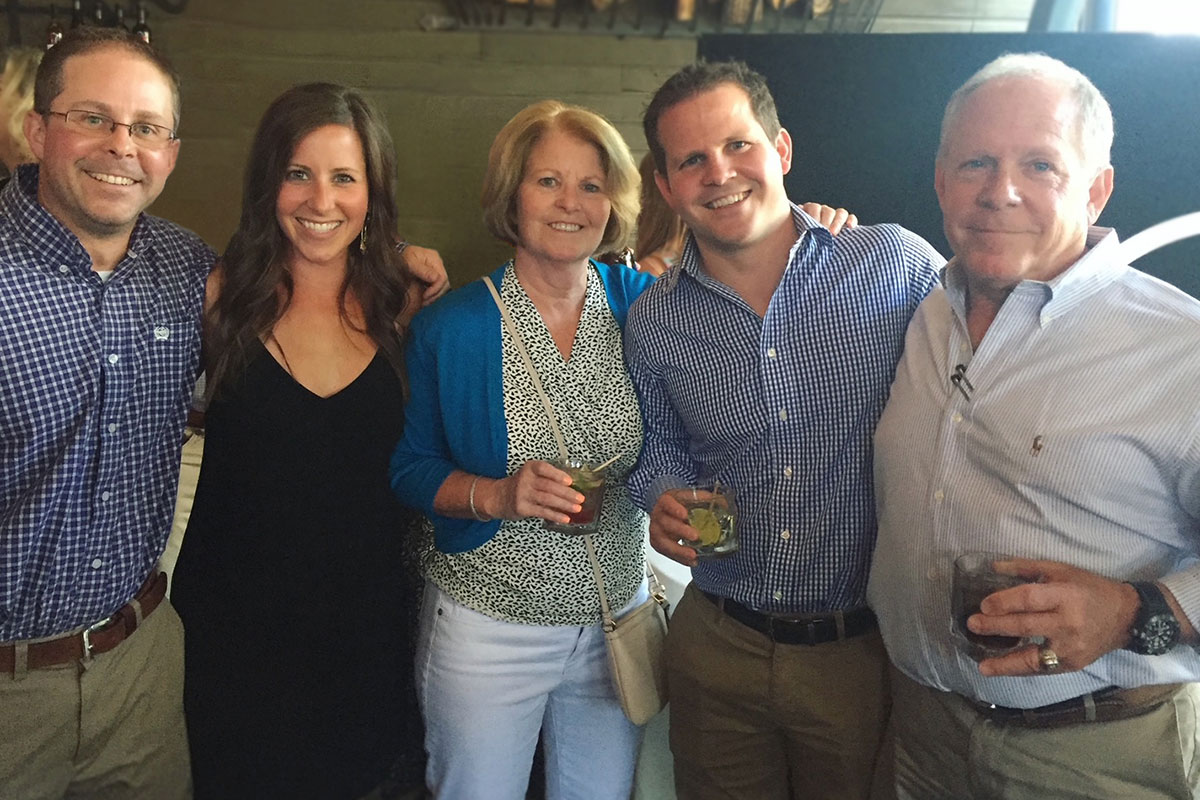
The Hodes family (from left): Dr. Brian Hodes (DVM class of 2011), Alexa Hodes Hewitt, Colleen Hodes, Tim Hodes and Dr. Steve Hodes (DVM class of 1979).
BRI researchers receive international award in biomedicine
Three researchers from Kansas State University have received the BIAL Award in Biomedicine for a publication focused on mRNA technology, which is now used in the two vaccines approved by the Food and Drug Administration to prevent COVID-19.
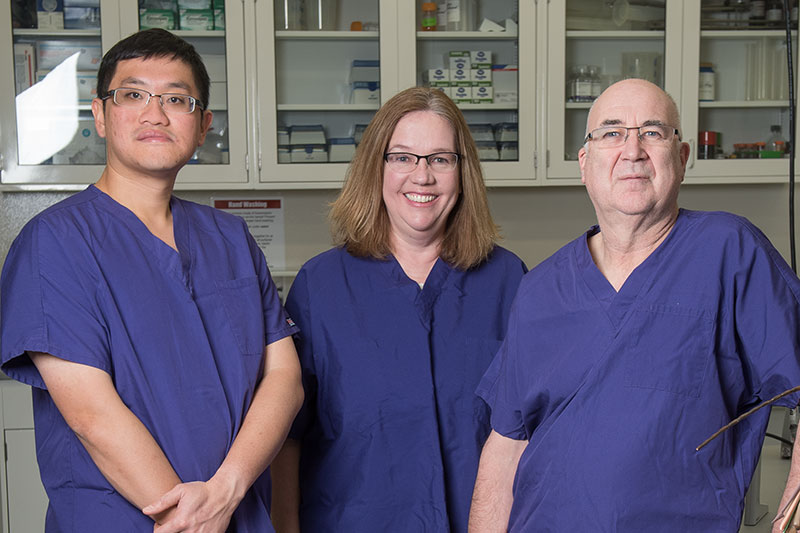
Drs. Scott Huang, Dana Vanlandingham and Stephen Higgs earned recognition as part of 36-person team of researchers whose work was selected for the BIAL Award in Biomedicine, representing the most important research reports "in the last 10 years in biomedicine."
The award recognizes the work of a team including Dr. Stephen Higgs, associate vice president for research and director of the Biosecurity Research Institute; and Dr. Yan-Jang "Scott" Huang, research assistant professor of arbovirology and Dr. Dana Vanlandingham, professor of arbovirology, both in the College of Veterinary Medicine at K-State. The team was comprised of 36 co-authors, including researchers from Duke University, Harvard Medical School, National Institutes of Health and several private companies.
"It is a tremendous honor for the three of us at K-State to share this award that exemplifies the power and importance of collaborative research by so many researchers at so many institutes," Dr. Higgs said. "We are indebted to the BIAL Foundation and to Drew Weissman who spearheaded the innovative research and assembled the team."
The winning work was chosen from 47 papers nominated among the most important research reports in the last 10 years in biomedicine. Applications included basic research studies, clinical trials, work in neurodegenerative disorders, cancer and infectious diseases. The award is worth $339,522 and aims to distinguish a work in biomedicine of exceptional quality and scientific relevance.
The award recognizes an important breakthrough of a technology for vaccine creation, published in Nature in 2017 in the research report "Zika virus protection by a single low-dose nucleoside-modified mRNA vaccination." The paper describes the complex work to engineer an mRNA vaccine to treat a disease and demonstrates its efficacy.
While traditional vaccines often use a modified virus to provoke a reaction in the immune system, the technology investigated by the award-winning team uses a synthetic mRNA to allow the body to prepare itself against the disease. To do so, it uses an mRNA that makes the body’s own cells synthesize a viral protein that stimulates the body's immune response.
The pandemic caused by SARS-CoV-2 has accelerated research in this area, but this work paves the way for a new generation of vaccines with the potential to revolutionize the treatment of many diseases.
"This work by Drs. Higgs, Vanlandingham, Huang and their colleagues represents an incredible achievement in the biomedical field," said David Rosowsky, vice president for research. "This research was possible, in part, due to the unique laboratories and expertise at the Biosecurity Research Institute, a premier research facility at Kansas State University. I congratulate our colleagues on this latest international recognition and look forward to their continued discoveries and scientific contributions as members of K-State's distinguished faculty."
CEEZAD research helps protect zoo animals from SARS-CoV-2 spread
Testing done by Kansas State University's Center of Excellence for Emerging and Zoonotic Animal Diseases is helping protect more than 100 mammalian species of animals in zoos around the world from SARS-CoV-2 infections.
Dr. Juergen Richt director of K-State’s Center for Excellence For Emerging and Zoonotic Animal Diseases and the Regents distinguished professor in the university's College of Veterinary Medicine, recently tested an animal vaccine for safety and efficacy against SARS-CoV-2. Zoo animals are receiving the experimental vaccine developed by leading animal health company Zoetis. The U.S. Department of Agriculture authorized use of the experimental vaccine on a case-by-case basis to help protect mammals living in zoos. Zoetis has donated the vaccine to the zoos, which have been using it since summer 2021.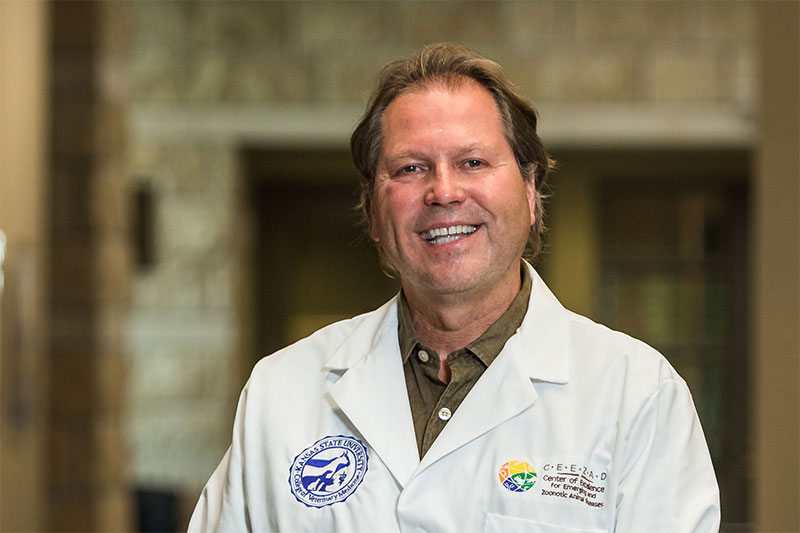
A team at K-State's Center of Excellence For Emerging and Zoonotic Animal Diseases, or CEEZAD, led by Jürgen A. Richt, tested the vaccine for safety and efficacy against SARS-CoV-2 infection. Richt is director of CEEZAD and the Regents distinguished professor in the university's College of Veterinary Medicine.
"This developmental work on a COVID-19 vaccine for animals is an important step to protect susceptible animal species against SARS CoV-2 because research has shown that SARS-CoV-2 can be a threat to segments of the pet, wildlife and zoo animal populations," Richt said. "We know that domestic and large cats and many zoo animals are highly susceptible to SARS-CoV-2, probably acquiring the virus from their handlers."
Zoetis initially began its work on a COVID vaccine for animals in February 2020 when the first dog was confirmed to be infected with SARS-CoV-2 in Hong Kong. Global animal health authorities have thus far determined there is no need for a COVID vaccine for household pets.
Richt said doing these studies was both a great opportunity and a serious responsibility.
"These types of vaccines can be of significant assistance in combating the disease and the spread of the SARS-CoV-2 among susceptible animal populations, including endangered animal species," Richt said. "Members of my laboratory were delighted to be given the opportunity to play such an important role in the evaluation of this vaccine and contribute to saving endangered animals worldwide."
Vaccine testing at K-State took place at the university's Biosecurity Research Institute, a biocontainment research and education facility.
More Headlines
K-State physiology graduate joins national list of Young Scholars

A former CVM graduate student, Dr. Miriam Martin, was recently selected for the Animal Science Young Scholars Award by the American Society of Animal Science (ASAS) Midwest. Dr. Martin, who graduated with a Ph.D. in physiology in December, was one of three K-State students chosen for the award this year and one of nine awardees overall.
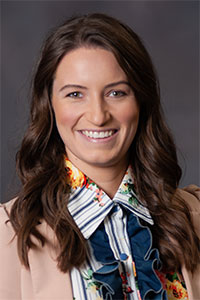
The other K-Staters are in the College of Agriculture. Dr. Martin was nominated for the award by her mentor, Dr. Hans Coetzee, head of the Department of Anatomy and Physiology.
Dr. Martin is now the operations manager for Progressive Beef in Great Bend, Kansas. She will give a presentation on her research work at the annual ASAS Midwest meeting in March: “Investigation of Pain and Analgesic Strategies in Cattle Undergoing Painful Husbandry Procedures and Disease Conditions.”
“The opportunity to present research findings from multiple studies throughout my PhD program is unique,” Dr. Martin said. “Getting to share more meaningful results that we have seen repeatedly over time and discuss the future of pain and animal well-being research is a great opportunity. In my current role, I take a very applied approach to using science to better care for cattle at feedyards.”
“Miriam has an impressive background in animal welfare science having earned her master’s degree from Dr. Temple Grandin at Colorado State University,” Dr. Coetzee said. “Miriam’s Ph.D. program focused on advancing animal welfare through the use of analgesic drugs to mitigate the negative effects of painful livestock management procedures, such as dehorning and castration, on cattle health and production. Completion of this work will have the dual benefit of reducing animal suffering while also addressing consumer concerns about animal welfare, thus advancing agricultural sustainability.”
The purpose of the Young Scholars program is to recognize and feature the research accomplishments of recent Ph.D. graduates or current Ph.D. students in the advanced stages of their program (i.e. within 12 months of degree completion). This program provides promising scholars within the ASAS Midwest Section opportunities to present timely research findings to an audience of academic and industry professionals in a forum that allows in-depth discussion of contemporary research techniques and findings.
Invited participants are asked to give a 30-minute presentation at the ASAS Midwest Section meeting. Inclusion of such presentations bolsters the quality and scope of graduate student research that is reported at the ASAS Midwest Section meeting and allows our association to highlight the next generation of scientists who will be serving the Society in the future.
The intent of the Young Scholars Program is to recognize accomplishments of students in many disciplines through an invited presentation format; it is not intended as a competition.
Membership in ASAS Midwest is open to individuals, organizations, or firms interested in research and application, instruction, or extension in animal science or associated with the production, processing, marketing, or distribution of livestock and livestock products.
College of Veterinary Medicine to host Phi Zeta Research Day
The College of Veterinary Medicine and Sigma Chapter of the Phi Zeta Veterinary Honors Society invites the university community to attend its annual Research Day, from noon to 6:30 p.m. Tuesday, March 1.
The afternoon will continue with oral abstract presentations by undergraduate, graduate and postgraduate researchers affiliated with the college. A formal poster session will occur between 2:30 and 3:30 p.m. Evening refreshments will be served at 5 p.m., followed by the recognition and awards ceremony. Phi Zeta Research Day is an opportunity to gain insight into the breadth and impact of the research taking place at the College of Veterinary Medicine, as well as meet with the researchers themselves. Read more information and see a schedule of events on the Sigma Chapter of Phi Zeta's website.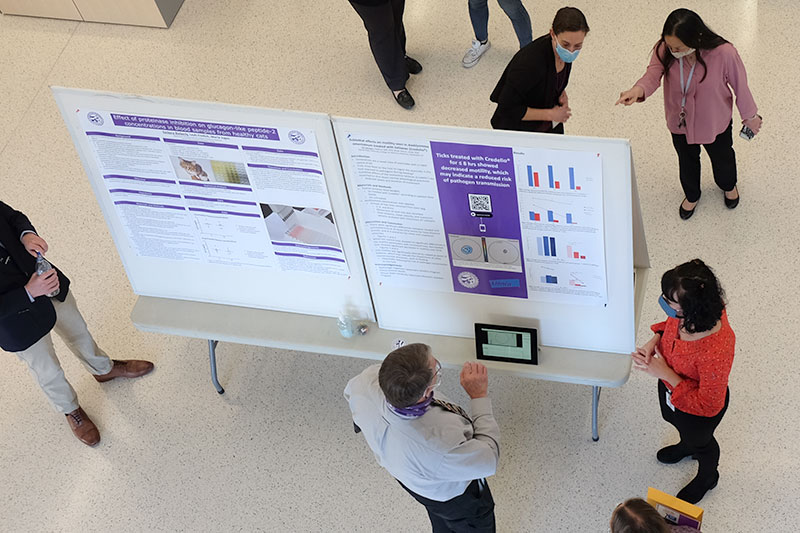
Students explain their research posters during the Annual Phi Zeta Research Day in 2021. This year's event will feature posters and oral presentations during the day.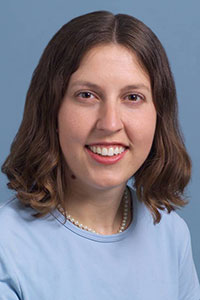 The event will start with lunch and a keynote address at noon by Dr. Sara Thomasy (shown at left), professor in the surgical and radiological sciences department in the School of Veterinary Medicine at the University of California, Davis. The title of the lecture is "Novel treatments for corneal endothelial disease." Thomasy is a core scientist at the California National Primate Research Center and co-runs a large, interdisciplinary vision science laboratory with Christopher Murphy and Paul Russell. Her research interests include large animal models for anterior segment disease and corneal wound healing.
Beef cattle experts offer advice on how to prepare for spring and summer grazing in a drought
By Lisa Moser
Just as the mail carrier delivers the letters in all types of weather, so too must beef producers be able to respond to the climate impacts on the herd. With the low amounts of moisture that Kansas has experienced in the fall and winter, the experts at Kansas State University’s Beef Cattle Institute said now is the time to be thinking about management strategies for a drought, on a recent Cattle Chat podcast discussion.
“We’ve had a really dry fall and winter, so some folks are getting concerned about drought and making a plan for how to deal with it,” said Dr. Brad White, veterinarian. Nutritionist Phillip Lancaster advised producers to evaluate their feed resources by looking at what they have on hand as well as the forages they will have access to. “You might want to consider planting drought-tolerant crops that can be used for grazing or look for alternative pastures before other people try to secure them,” Lancaster said. Agricultural economist Dustin Pendell said as producers evaluate the pastures, they must also consider the costs associated with water and fencing when grazing cropland or using alternate pastures. Along with the feed concerns, veterinarian Dr. Brian Lubbers advised producers to look at ways to decrease grazing pressure by culling open cows or even managing them in a dry lot. “Think about making those culling decisions earlier as well as managing the feed differently by putting the cattle in a dry lot as a last option,” Dr. Lubbers said. “From a biosecurity standpoint, it is better to maintain those cattle in a dry lot on the same operation rather than outsourcing them to another herd.” Dr. Lubbers also suggested the option of moving from natural service breeding to timed artificial insemination to get the cattle moved to a tighter calving window. The experts agree that many of these options have short-term and long-term financial implications. “If everyone is buying more hay or selling off cull cows at the same time, it will have implications for the short-term bottom line,” Pendell said. He added: “Along with the short-term effects, producers really need to think through how those culling decisions will impact the herd 2-3 years in the future when prices for replacement heifers may be higher because of the increased demand for them.” The amount of moisture the grasses get in the spring may influence weaning dates, said the experts. “Early weaning of the calves will reduce the grazing pressure because non-lactating cows consume 20-30% less feed per day than lactating females,” Lancaster said. Lubbers said there are health implications for the calves with early weaning that producers need to be aware of when making that choice. “Younger calves require a softer weaning or there could be some extreme health challenges that follow,” Lubbers said. To hear the full discussion, listen to the Cattle Chat podcast online.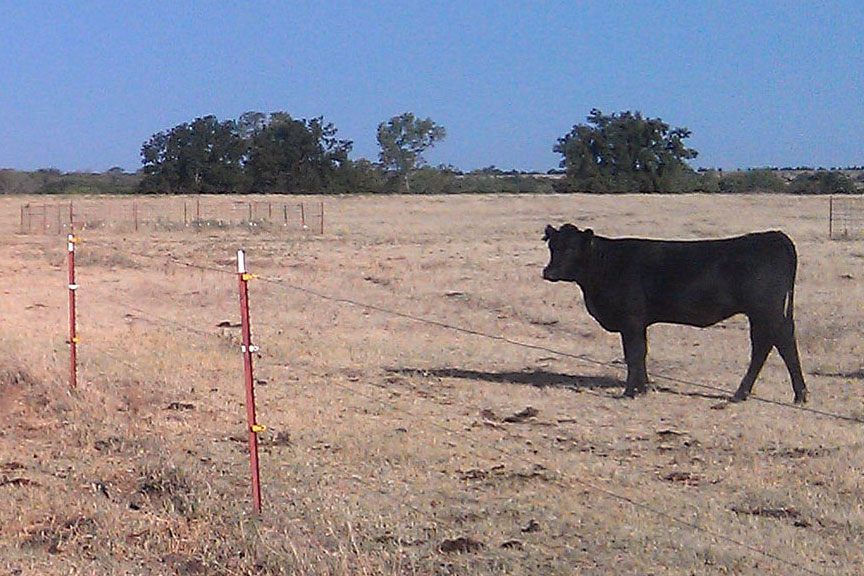 Planning ahead can lessen the impacts of drought on the beef herd.
Regular features
Alumni Events, Development and Continuing Education
 The Veterinary Medical Alumni Association organizes alumni receptions at several of the national annual conferences plus continuing education events and more. This month's section includes the monthly listings of recently departed alumni and links to their obituaries, plus a new link for submitting nominations for Alumni Recognition Awards.
Alumni Updates
VMAA to honor Dr. H. Allan Hallman with alumni recognition award at WVC
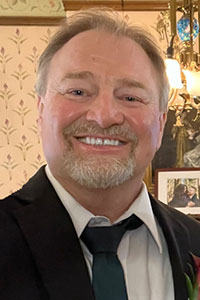 Dr. H. Allan Hallman, Star Valley, Arizona, has been selected by the Kansas State University College of Veterinary Medicine and its Veterinary Medical Alumni Association to receive a 2022 Alumni Recognition Award. The award is presented March 6 in conjunction with the Western Veterinary Conference in Las Vegas in recognition of his career in veterinary medicine and for having served as an exemplary role model for future alumni in a professional and community setting.
Dr. Hallman did his undergraduate work at the University of Wyoming. He received his Doctor of Veterinary Medicine from Kansas State University in 1985. Dr. Hallman opened Star Valley Veterinary Clinic in May of 1985.
New Alumni Biography Videos added to website
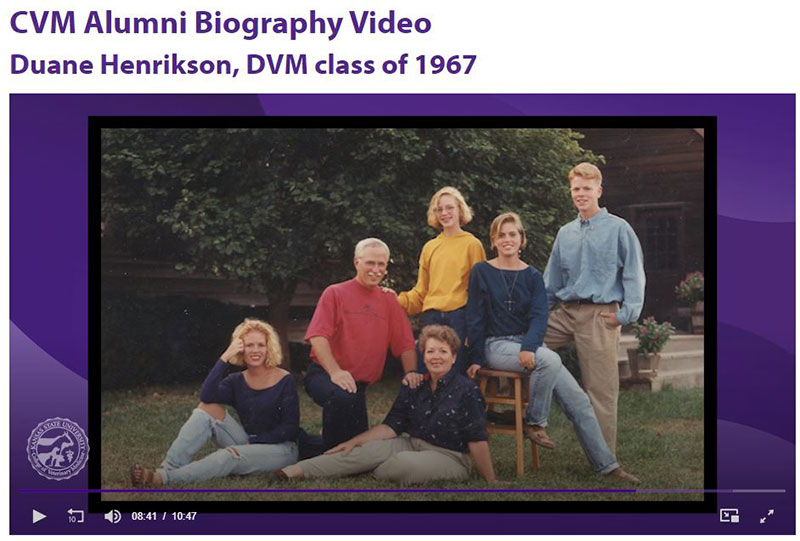
The Alumni Biography Video team at the College of Veterinary Medicine has been very diligent in the last few months, adding several new video biographies to the website. Look for the "new" sign next to the latest uploads.
Thanks to Scott Morrill, Kelsey Reith, Kent Nelson and Sharon Greene for all their hard work in reaching out to our golden alumni, scheduling interviews, collecting memorable photos and editing the interviews for publication.
We hope you enjoy the videos and look forward to arranging future interviews of our Extraordinary Graduates with 40 years of experience or more. The concept is to share the stories of their lives and careers in the hope of creating an enduring legacy and to inspire future generations of veterinary students. If you are interested in taking part in this exciting and meaningful project, please contact alumni@vet.k-state.edu.
Upcoming CE Opportunities and Reunion Events
Horse Care 101Virtual Conference Frank W. Jordan SeminarSaturday, March 26, 2022 Oxbow Small Mammal SymposiumSunday, April 3, 2022 ReunionsSaturday, June 4, 2022 2022 Annual Conference for VeterinariansSunday, June 5 - Tuesday, June 7, 2022 27th Annual Scholarship Golf TournamentMonday, June 6, 2022 |
|
Submit nominations for Alumni Recognition Awards onlineSee our new online nomination form to nominate a fellow alumnus for one of our many annual recognition awards, presented at the national conferences: VMX, WVC, AVMA and the Annual Conference for Veterinarians. See full details at the link below. |
|
In Memoriam - Recently Departed Alumni
Dr. Kenneth E. Taylor, DVM 1946 Dr. Howard Gill, DVM 1952 Dr. Arthur W. Gillum, DVM 1960 Dr. Thomas W. Swerczek, DVM 1964 Dr. Tommy L. Mah, DVM 1981 (click highlighted names for obituary) |
Questions about Alumni or CE events?Contact:
|
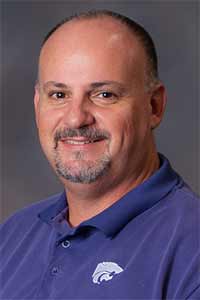 Tony Ballard
 Sarah Keatley
News Ticker
|
More activities and accomplishments in the College of Veterinary Medicine: |
|||
|
Congratulations to Dr. Emily Reppert, the new president elect for the Phi Zeta Sigma Chapter! Dr. Reppert will serve in the role through the end of the Spring 2022 semester, then she will assume the role of president of the chapter for the 2022-2023 academic year. The continuing education event Horse Care 101, was provided virtually this year. Equine faculty member, Dr. Dylan Lutter, provided a session called, “An Integrative Approach to Managing Lameness and Regaining Soundness.” Dr. Judy Klimek also provided a session, "Assessment Criteria to Know Your Horse." Three other sessions were provided by outside experts. Video are posted at the Horse Care 101 link. Dr. Katie Delph Miller presented at the Veterinary Meeting & Expo 2022 in Orlando, Florida, in January. She gave four presentations: Equine kidney and liver disease: case discussions, Hepatic toxins in horses, Hepatic lipidosis in equids, and Theiler’s disease: an update. Drs. Mary Lynn Higginbotham and Gabrielle Rands received $41,611 from Hill’s Pet Nutrition for their collaborative investigation, “Evaluate a highly palatable, new food in dogs with different types of malignant cancer that are currently undergoing any conventional anti-cancer therapy.” Dr. Kate KuKanich received $20,000 sponsored by Boehringer Ingelheim for the 2022 Boehringer Ingelheim Veterinary Scholars Program (BIVSP), this student will serve as a member of the KSU CVM VRSP in 2022. Dr. Justin Thomason received $3,000 from CEVA Animal Health LLC. for his study, “Owner perceived quality of life and monetary value of combination therapy (spironolactone and benazepril hydrochloride) compared to conventional therapy (enalapril / benazepril and spironolactone alone) in dogs with progressive myxomatous mitral valve disease. |
|||
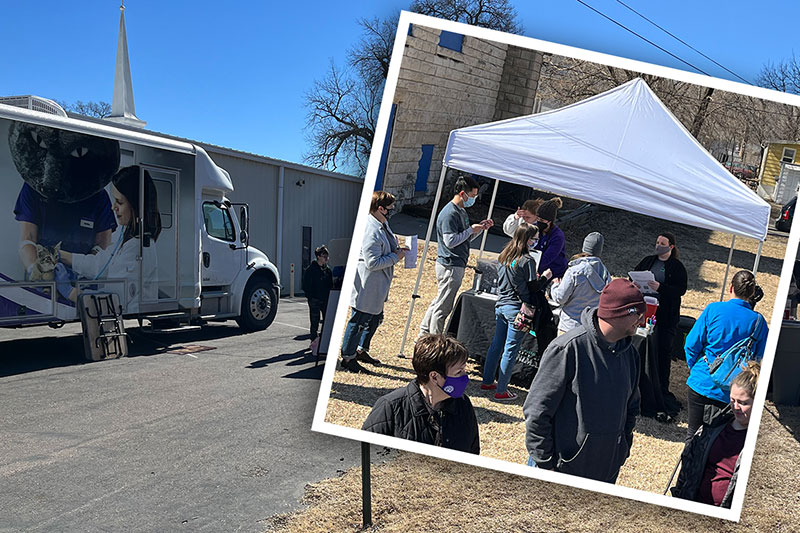
Shelter Medicine team partners with T. Russell Reitz Animal Shelter and others at local community eventMore than 400 dogs and cats receive free vaccines & microchips
Drs. Brad Crauer and Hayley Barkoviak drove the K-State Wellness on Wheels (WOW) vehicle to the Douglass Center in Manhattan this February to help the T. Russel Reitz Animal Shelter (TRR), city of Manhattan and PetCo in an event to to provide routine vaccines, microchips and city licensing for local owners of cats and dogs. "Our goal is to work with TRR to make this a monthly event rotating through two to three different locations," Dr. Crauer said. "It will coincide with our community outreach rotation and will include a significant student involvement in the future." Reports after the event said that more 400 cats and dogs were brought in. The city has another event planned in April at the Wefald Pavilion in City Park. |
|||
|
|
|||
K-State CVM hosts pre-veterinary student symposium in MarchThe Kansas State University College of Veterinary Medicine is honored to be selected as the host school for the American Pre-Veterinary Medical Association — APVMA 2022 Symposium. The symposium will include keynote speakers Dr. Temple Grandin and Dr. David Franz, a 1970 K-State DVM alumnus, along with intriguing wet labs and social events. Participants will have the opportunity to interact with attendees, exhibitors and speakers from all over the world. |
|||
|
|
|||
VetMed Rocks Summer Day Camps 2022
Save the Date - July 31 - August 3 Vet Med ROCKS camp will consist of daylong activities at Kansas State University College of Veterinary Medicine!
In-person camps will be held at the Kansas State University College of Veterinary Medicine in Manhattan, Kansas. |
|||
|
|
|||
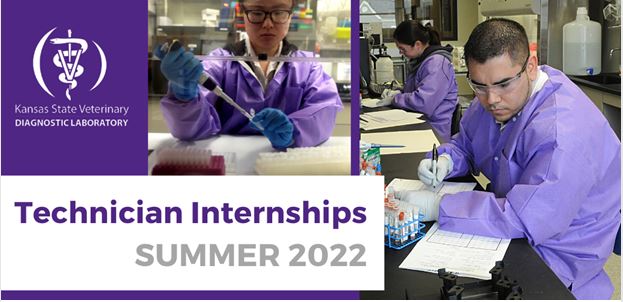
Technician Internships offered at KSVDL for Summer 2022
Do you have students looking to gain more experience in veterinary diagnostic medicine or explore career options? The Kansas State Veterinary Diagnostic Laboratory (KSVDL) is offering multiple paid technician internships for Summer 2022. This competitive program offers individuals the opportunity to gain experience and training within the KSVDL, as well as observe career possibilities in our laboratories first-hand. The technician internships are open to both students and non-students. This includes individuals enrolled in universities, community colleges, certificate programs and technical schools as well as recent graduates and individuals looking to expand their career options. To apply, please submit the following items with the subject line: Summer Internship Opportunities at KSVDL
Applications must be submitted to:
Review of applications will begin April 1 in anticipation of an early June start date. |
|||
|
|
|||
K-State Olathe announces animal health professional development seriesIncludes pharmacovigilance, roadmap to market and other topics Kansas State University Olathe is announcing its 2022 offerings in its animal health professional development series. It consists of six workshops and two seminars. See full announcement here. |
 Join the College of Veterinary Medicine on LinkedIn and add us to your profile under education and/or employment to help build and engage our online social community! Follow the LinkedIn page here: www.linkedin.com/company/kstatevetmed
New Arrivals/Recent Departures
Lifelines is published each month by the Marketing and Communications Office at the College of Veterinary Medicine. The editors are Joe Montgomery, jmontgom@vet.k-state.edu, and Piper Brandt, pnbrandt@vet.k-state.edu.