
Monthly Newsletter
March 2022 - Vol. 17, No. 3
Top Stories
Phi Zeta Research Day puts the spotlight on student presentations
Phi Zeta Research Day represents an opportunity for the College of Veterinary Medicine community to come together and share the latest research in all fields of basic, applied and clinical sciences.
Celebrated March 1, this year's event continued with last year's hybrid format and combined in-person attendance with a virtual component. The event is organized by the Sigma Chapter of the Society of Phi Zeta, a professional honors society whose name is based on the Latin word philozoi, which means "love for animals." The chapter's mission is to recognize and promote excellence in academic scholarship and research that improves the health and welfare of animals. Phi Zeta Research Day began with a virtual keynote address by Sara Thomasy, professor in the surgical and radiological sciences department in the School of Veterinary Medicine at the University of California, Davis. Thomasy is a core scientist at the California National Primate Research Center and co-runs a large, interdisciplinary vision science laboratory with Christopher Murphy and Paul Russell. Her keynote address was titled "Novel treatments for corneal endothelial disease." "Dr. Thomasy delivered a fascinating presentation on corneal endothelial disease that highlighted cutting-edge medical and surgical treatment options currently available in both veterinary and human medicine," said Dr. Jessica Meekins, associate professor in ophthalmology and president of Phi Zeta. "The audience was captivated, and we were truly honored to host such a talented researcher and clinician as our keynote speaker." The keynote was followed by oral research presentations, and a poster session by veterinary, graduate and postgraduate researchers within the College of Veterinary Medicine. Evening refreshments and a recognition and awards ceremony followed. Award and scholarship recipients awarded at Phi Zeta Research Day included: Basic Science — oral presentations Applied/Clinical Science, Small animal/exotics — oral presentations Applied/Clinical Science, Large Animals — oral presentations Basic Science — poster presentations Applied/Clinical Science — poster presentations Benjamin and Catherine Kurz Research Scholarship: Jingwen Peng, third-year veterinary student. Miller Pathology Scholarship Award: Zixuan Wang, fourth-year veterinary student. A.S.R. Ganta Graduate Award: Pratiksha Khanal, doctoral student in pathobiology. A.S.R. Ganta Veterinary Student Award: Cheyenne Brown and Shanice Harris, fourth-year veterinary students. Dr. Harish C. and Ved K. Minocha Scholarship: Theresa Quintana and Cheyenne Brunkow, master’s students in public health, and Huldah Sang, doctoral student in pathobiology. Zoetis Research Award for Excellence in Research by a Faculty Member: Dr. Waithaka Mwangi, professor in diagnostic medicine and pathobiology. See more pictures posted at the Phi Zeta Awards page. 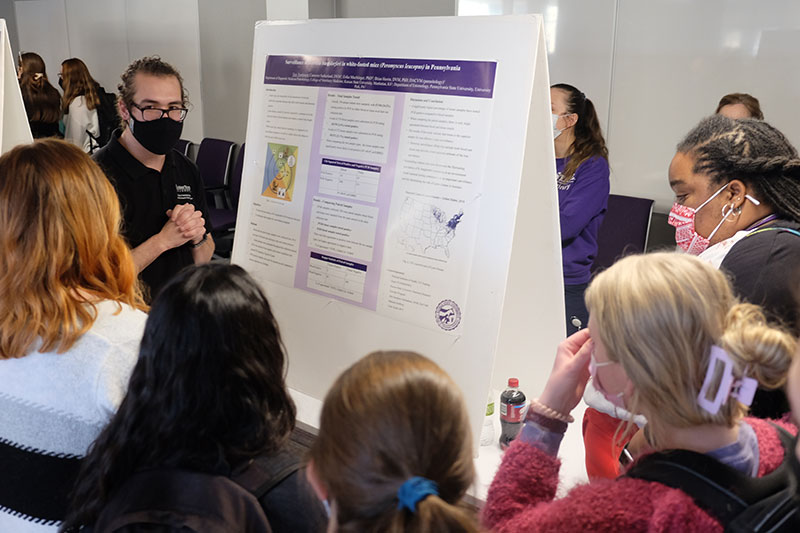
Trey Tomlinson, third-year veterinary student, explains his research work on the project, "Surveillance of Borrelia burgdorferi in white-footed mice (Peromyscus leucopus) in Pennsylvania" during Phi Zeta Research Day. He ended up being selected for the first-place award for a basic science poster.
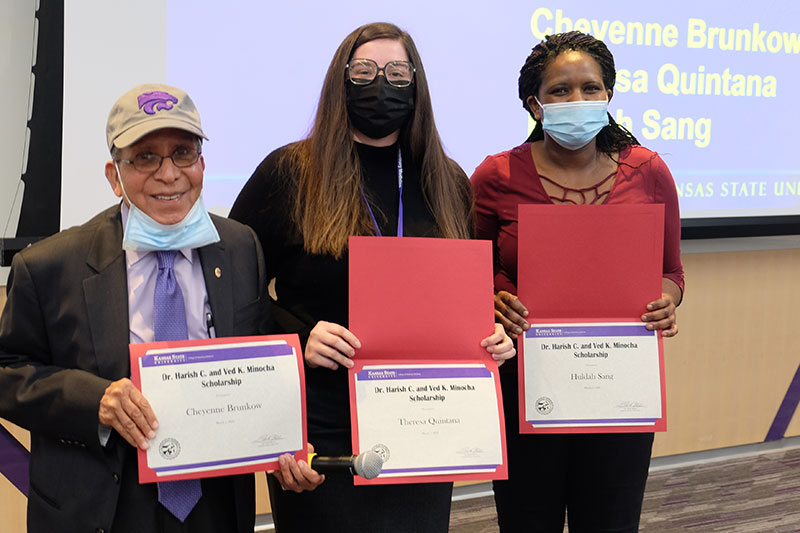
Dr. Harish Minocha presents scholarships to two of this year's recipients: Theresa Quintana and Huldah Sang. Cheyenne Brunkow was unable to attend.
Summer programs encourage Native, Indigenous, tribal and rural Kansas students to experience veterinary medicine
For the second year, the College of Veterinary Medicine at Kansas State University offers two summer opportunities for future veterinarians: SPARK, the Summer Program for Aspiring Rural Kansas veterinarians, and SPRINTS, the Specialized Programs for the Recruitment of Indigenous, Native and Tribal Students initiative.
SPARK creates direct and purposeful connections between aspiring veterinarians and veterinary practices in rural communities throughout Kansas. The daylong immersive experience provides participants with the opportunity to shadow veterinarians in rural communities in order to gain exposure to the demands and rewards of rural veterinary practice. The goal of the program is to generate long-term interest in a career in rural veterinary medicine. Additionally, SPARK participants will engage in consultation sessions to learn how to create a competitive application for a selective Doctor of Veterinary Medicine program. The deadline to apply for both programs is Friday, May 6. Questions about these programs can be directed to admit@vet.k-state.edu.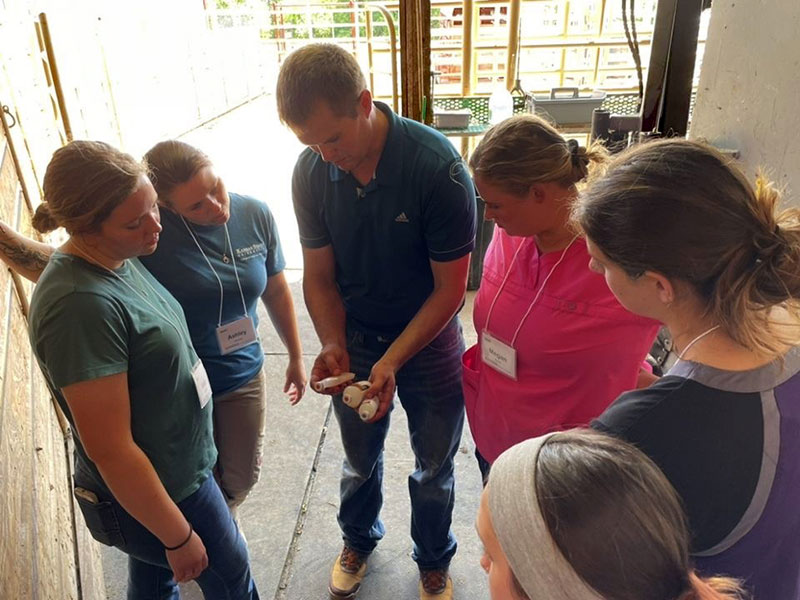
Veterinarian Dr. Brady Luke, DVM class of 2014, at Solomon Valley Veterinary Hospital in Beloit shows prospective veterinary students in the SPARK program a few items typically used in the field by cattle veterinarians.
Ideal applicants for the SPARK program are those who intend to apply for admission to a Doctor of Veterinary Medicine program during the 2022-2023 application cycle and are within five years of attaining a veterinary medicine degree; however, applicants outside of that criteria are welcome to apply as well. To apply, go to kstate.qualtrics.com/jfe/form/SV_3CVGJQyBuMKIrd4.
The SPRINTS initiative provides opportunities for high school and college students who identify as tribal, Native American or Indigenous to gain exposure to veterinary medicine as a potential career path. The initiative encompasses many opportunities for participants, including sponsorships for registration, travel and lodging costs to attend Vet Med ROCKS, an annual summer camp hosted by K-State's College of Veterinary Medicine. SPRINTS participants will also receive a faculty and student mentor in the college to help prepare for and apply to Doctor of Veterinary Medicine programs. Additionally, participants will receive tailored consultations from admissions staff about the application process and fee waivers for their application to K-State's Doctor of Veterinary Medicine program.
Ideal applicants for the SPRINTS initiative are high school and undergraduate college students, at least 18 years of age, who identify as Indigenous, Native American or tribal, and with a desire to learn more about careers in veterinary medicine. To apply, go to kstate.qualtrics.com/jfe/form/SV_cGZJAV5Vvv3SmEK.
Plattner and Doty recipients of new Marler professorships
 Faculty members in the colleges of Veterinary Medicine and Health and Human Sciences are recipients of two new professorships established by former K-State College of Veterinary Medicine Dean Ronald Marler.
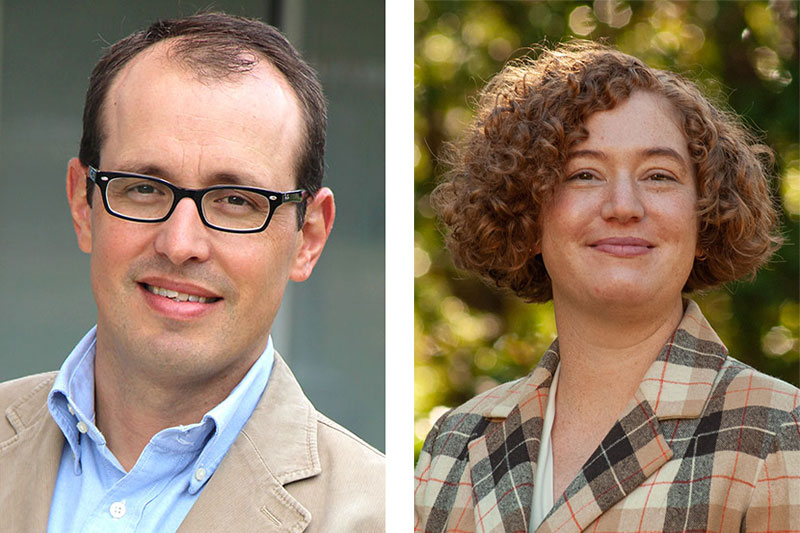
Dr. Brandon Plattner, in the CVM (left), and Kelsie Doty, professor in fashion studies at K-State, are the new recipients of two new professorships created by former CVM Dean Dr. Ron Marler.
Dr. Brandon Plattner, associate professor of anatomic pathology in the College of Veterinary Medicine, is the inaugural recipient of the Ronald J. Marler Veterinary Pathology Professorship. Kelsie Doty, assistant professor of fashion studies in the College of Health and Human Sciences, is the inaugural recipient of the Verna Sullivan-Marler Professor in Fashion Studies.
Dr. Marler received his bachelor's degree in 1971 and Doctor of Veterinary Medicine degree in 1973, both from K-State. Dr. Marler joined the U.S. Army Veterinary Corps as a captain and subsequently returned to K-State to complete a doctorate in veterinary pathology in 1978. Dr. Marler served as the dean of the College of Veterinary Medicine from 1994 to 1997. Recognized for expertise in drug development and pharmaceutical pathology and toxicology, Dr. Marler is board certified by the American College of Veterinary Pathologists and American Board of Toxicology.
The recipient of the veterinary pathology professorship must be a professor in the diagnostic medicine/pathobiology department; be a diplomate of the American College of Veterinary Pathologists; and be someone who has a high impact on veterinary students, pathology residents and/or graduate students through teaching veterinary pathology, mentoring and conducting diagnostic service.
Dr. Plattner earned a bachelor's degree in 2000 and his Doctor of Veterinary Medicine degree in 2002 from Kansas State University. He completed a doctorate in veterinary pathology at Iowa State University, and became certified by the American College of Veterinary Pathologists in 2010. He provides service in diagnostic anatomic pathology for the Kansas State Veterinary Diagnostic Laboratory and teaches systemic pathology, and coordinates the fourth-year veterinary student diagnostic medicine rotation. Dr. Plattner also is heavily involved with training anatomic pathology residents, and serves as the residency coordinator.
"Dr. Plattner is committed to training veterinary students, graduate students and pathology residents," said Bonnie Rush, Hodes family dean of the College of Veterinary Medicine. "We thank Dr. Marler for his service to the college, profession and country. We are grateful for this thoughtful and generous gift to recognize an exceptional faculty member and congratulate Dr. Plattner on this prestigious honor."
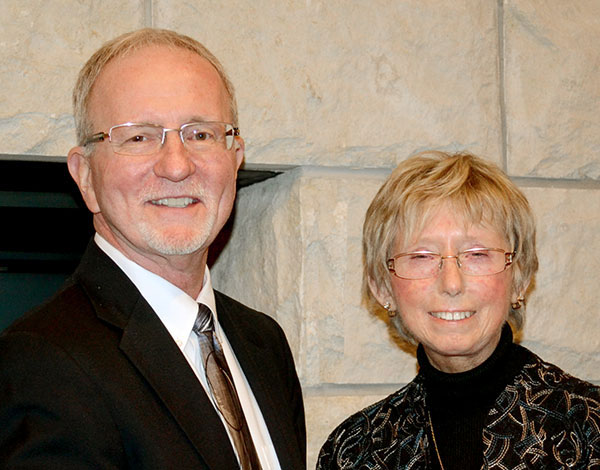
Dr. Ronald Marler and his wife Verna attend an alumni reception at K-State (file photo from 2013).
The recipient of the fashion studies professorship should be an outstanding teacher in the interior design and fashion studies department whose predominate research efforts are in the scholarship of teaching and learning. The professorship honors Verna Sullivan-Marler, who earned a bachelor's degree in interior design at K-State in 1971. She died in March 2021.
Doty earned a bachelor's degree in apparel and textiles with a specialization in apparel design and production in 2013 and a master's degree in apparel and textiles with an emphasis in design in 2015, both from K-State. She completed a doctorate in apparel design from Cornell University in 2020. Doty teaches courses in textiles, fashion aesthetics, apparel production, textile evaluation and computer technologies for merchandising in the interior design and fashion studies department. Her research program considers the intersections of sustainability, fashion supply chains, and communities, approached from a multidisciplinary perspective. She uses qualitative research methods alongside creative design practice to explore sustainable approaches to fashion and textile design.
"Dr. Doty is a highly valued faculty member in our interior design and fashion studies department and is a worthy recipient of this professorship," said Craig Harms, interim Betty L. Tointon dean of the college. "She is a creative and innovative teacher who connects fashion industry learning to societal needs and relates well with her students. We are very appreciative of the generosity of Dr. Marler for the Verna Sullivan-Marler Professorship in Fashion Studies."
More Headlines
K-State student receives David A. Schoneweis Scholarship at AASV Annual Meeting
Random Bolda, a second-year student at Kansas State University’s College of Veterinary Medicine, was awarded the David A. Schoneweis Scholarship during the American Association of Swine Veterinarians Annual Meeting held in Indianapolis, Indiana.
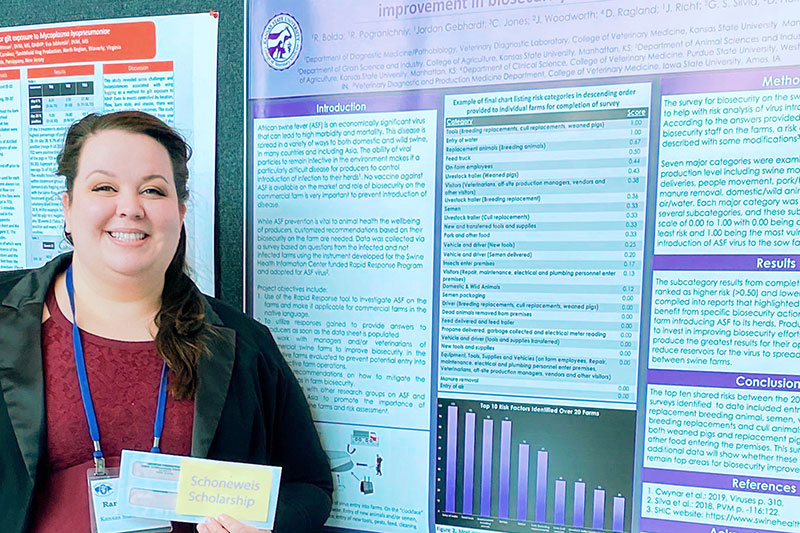
Second-year Rahyne Bolda presents her research, “Identifying pathways of entry of African swine fever virus into sow farms and potential improvement in biosecurity to prevent viral entry,” during the AASV Student Poster Session in Indianapolis. She was selected as the recipient of the David A. Schoneweis Scholarship this year.
The children of the late Dr. David Schoneweis established a scholarship in his memory to benefit swine-interested students from Kansas State University and Oklahoma State University. The $1,000 scholarship is awarded to a student or students from K-State or Oklahoma State who participate in the student oral or poster presentations during the AASV Annual Meeting, based upon a selection rubric prepared with the oversight and approval of the Schoneweis family.
Rahyne presented her research, “Identifying pathways of entry of African swine fever virus into sow farms and potential improvement in biosecurity to prevent viral entry,” during the AASV Student Poster Session. She was one of 21 students presenting a poster.
Dr. Schoneweis was born in Clay Center, Kansas and earned his doctor of veterinary medicine from Kansas State University in 1956. He served two years in the Army Veterinary Corps before teaching clinical sciences at Oklahoma State University for six years. After two years in private practice in Lawrence, Kansas, he joined the K-State College of Veterinary Medicine faculty in 1966, where he received his master's degree in surgery and medicine in 1971 and taught food animal medicine for 30 years. Dr. Schoneweis was a charter member of the American Association of Swine Practitioners (AASP) and served on the association's board of directors in the late 1970s and early 1980s. In 1997, he received the AASP Meritorious Service Award for his lifetime of support for the association and in recognition of his work with students as a professor of food animal medicine at K-State and Oklahoma State.
Thankful for the scholarship, Rahyne said, “I am both thrilled and honored to have been selected for this scholarship. It is a privilege for my work to be acknowledged and my deepest thanks to the family of Dr. David Schoneweis.”
CVM hosts pre-veterinary students, Temple Grandin at national symposium
The Kansas State University College of Veterinary Medicine, along with the KSU Pre-Veterinary Club and the Veterinary Voyagers, hosted these students for the annual symposium of the American Pre-Veterinary Medical Association, or APVMA, March 11-12.
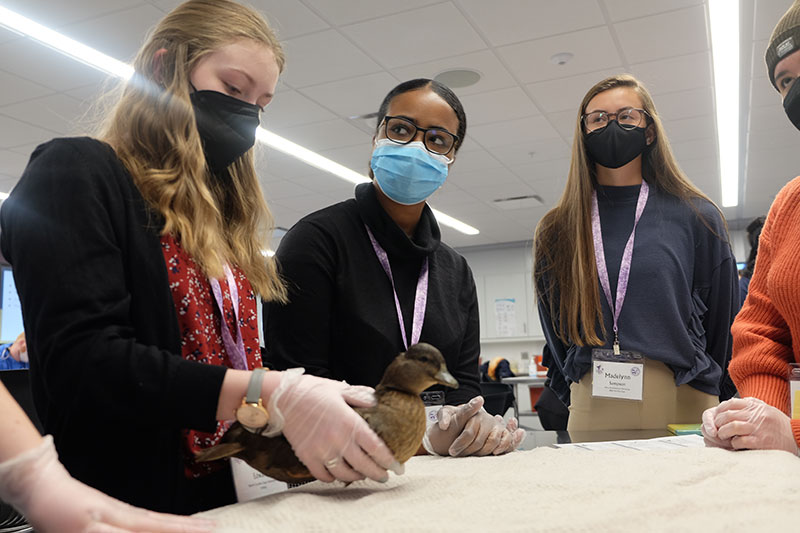
Pre-veterinary student enjoy several hands-on opportunities, such as learning how to handle exotic pets.
K-State last hosted the symposium in 2002, and previously in 1987 and 1996.
The two-day event included 50 lectures and 21 labs, the latter offering a variety of hands-on activities for the students in several newly renovated labs and learning spaces in the college.
The symposium opened with a welcome from Bonnie Rush, Hodes family dean of the College of Veterinary Medicine, and a keynote presentation by David Franz, a 1970 graduate from the veterinary college, who shared his career path after college, which included stints in private practice, the military, leadership of the U.S. Army Medical Research Institute of Infectious Diseases, volunteer work and much more.
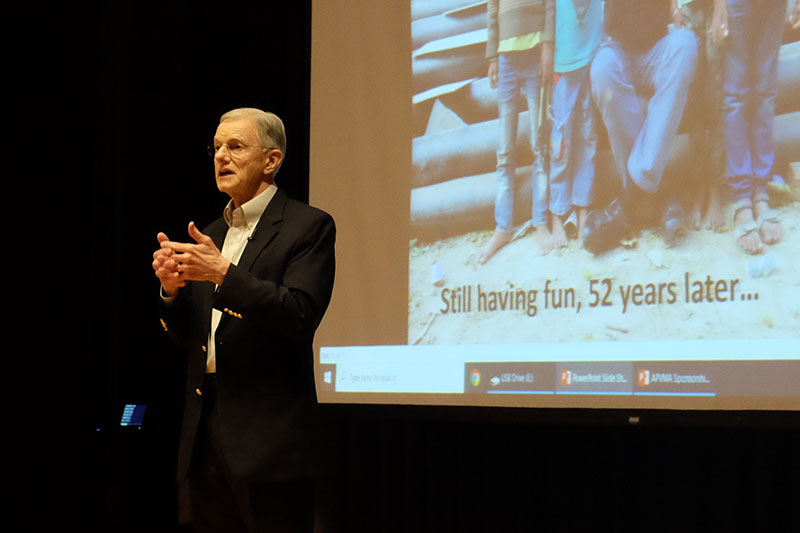
Dr. David Franz, DVM class of 1970, answers questions at the end of his keynote presentation on the first night of the APVMA Symposium, hosted in the K-State Student Union. Wet labs were held at the veterinary college.
“The APVMA Symposium is an event we have been planning for over a year,” said Callie Rost, assistant dean for admissions. “We are very fortunate it worked out to host an in-person symposium and enthusiastically welcomed pre-veterinary students from across the country to the K-State campus.”
Rost said the College of Veterinary Medicine has unique features they were able to highlight with attendees and pre-vet advisers.
“The faculty and students of K-State, including several from other academic colleges, created outstanding lectures and labs to allow attendees to gain hands-on experience and explore the many interesting opportunities in veterinary medicine and at the K-State College of Veterinary Medicine,” Rost said.
The second day was highlighted by a keynote presentation by Temple Grandin, a well-known animal behavior scientist and autism self-advocate, who stressed the importance of reducing fear for animals, particularly in cattle where she has spent the majority of her career. She is currently a faculty member in the College of Agricultural Sciences at Colorado State University.
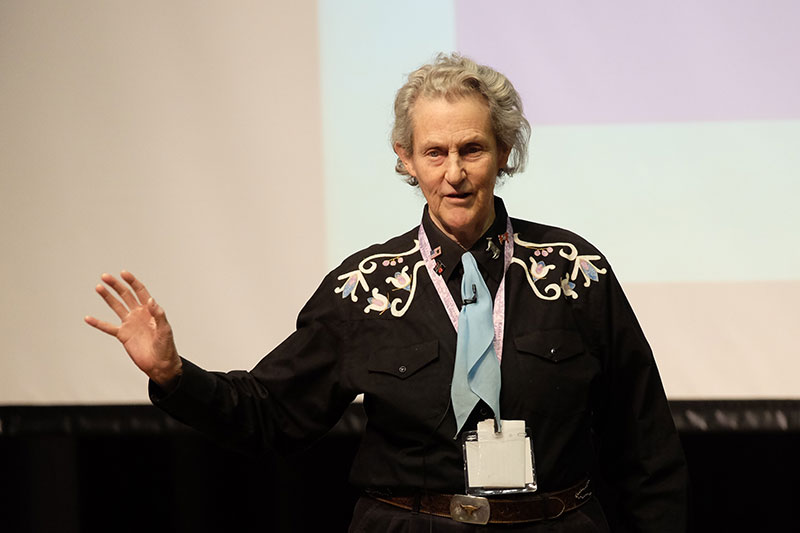
Well-known animal behavior scientist and autism self-advocate Temple Grandin tells students to try to think like animals do in order to understand how to treat them with reduced levels of fear and stress.
“That was a good and knowledgeable lecture,” said Cherish Hillman, a student at Tuskegee University. ”She showed us about behavioral information, like calming down animals, and how it takes about 20-30 minutes to calm down cattle when they show signs of fear.”
Hillman said she really enjoyed “Cuddles with Canines,” a service project where students could donate $1 for 10 minutes of cuddle time with puppies from the Riley County Humane Society. The service project raised $330 with the help of volunteers from the humane society, and all donations will go directly to animals in need.
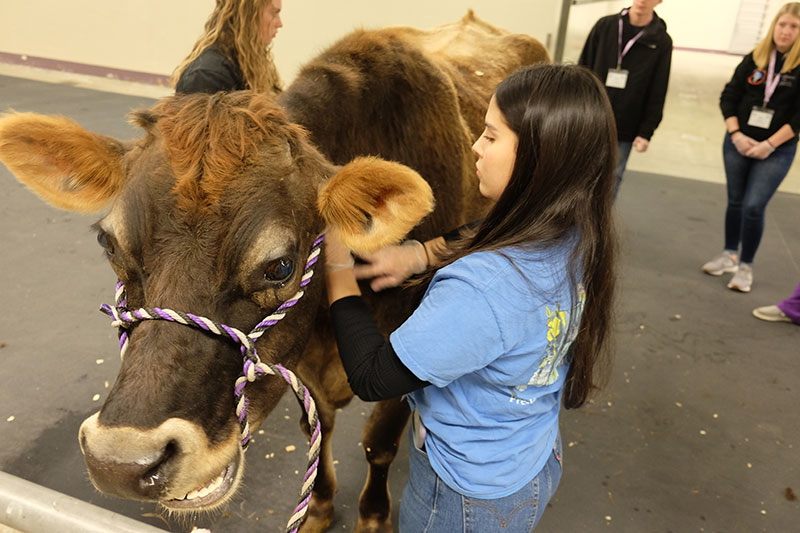
One of the wet labs allows pre-veterinary students a chance to interact with some of the live animals maintained in the veterinary college. The symposium attracted 348 in-person attendees to the K-State campus and veterinary college.
In addition to the students who attended in person, there were 80 virtual attendees. Those who attended in person were offered opportunities to connect with 20 sponsors and exhibitors.
Drs. Richt and Valent named to inaugural BRI endowed professorships

Dr. Jürgen Richt, the Regents distinguished professor in the College of Veterinary Medicine, and Barbara Valent, university distinguished professor in the College of Agriculture, are receiving Kansas State University's first Biosecurity Research Institute endowed professorships.
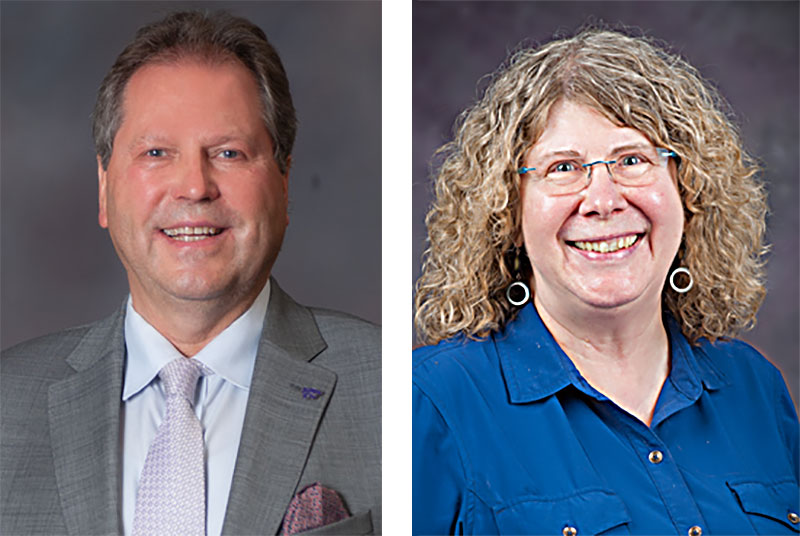
Drs. Juergen Richt, from the CVM, and Barbara Valent, from plant pathology, are the inaugural recipient of K-State's BRI Professorship.
The professorships were established through a gift by Marty Vanier and her late husband Bob Krause for faculty members who are or will be performing a significant portion of their scholarly work at the Biosecurity Research Institute, or BRI. Nominees must also have demonstrated global research impact in their fields.
"The BRI endowed professorships allow us to both leverage and extend our unique assets and scientific leadership in biosecurity and biodefense research," said David Rosowsky, K-State vice president for research. "Drs. Valent and Richt are spectacular examples of our human assets, both eminent scholars and both internationally renowned in their respective fields. We are proud to recognize them with these inaugural BRI endowed professorships and are grateful to Marty and Bob for their vision and generosity."
Valent, who is also a member of the National Academy of Sciences, has worked on understanding blast disease for more than 40 years. In the last decade, her work has focused on wheat blast, a dangerous new disease in which the fungus is capable of taking out entire wheat fields. Valent has led a research team that is driving the world's most comprehensive studies on wheat blast to keep it out of the U.S.
"Combating emerging transboundary pathogens of food crop plants requires discovery of genetic resistance as well as the development of diagnostics and management tools to control the disease where it occurs and keep it from invading new areas," Valent said. "Our research on the high consequence wheat blast disease is helping to control this disease in other parts of the world before it reaches the U.S. This research would not have been possible at K-State without the specialized plant biocontainment laboratories in the BRI. "
Valent said this professorship would enable her to add equipment and new students for BRI research on wheat blast variability mechanisms that inform and enhance biosecurity plans to defeat the dangerous pathogen.
"Barbara's work is truly transformative, both in terms of increasing the basic understanding of plants and how to save wheat and rice yields worldwide," said Ernie Minton, dean of the College of Agriculture. "It is quite appropriate for Barbara to be honored with an inaugural BRI endowed professorship as it was in the BRI that she and her team of scientists were the first to discover a resistance gene called 2NS for wheat blast disease."
Dr. Richt investigates zoonotic, emerging and transboundary diseases of livestock, focusing mainly on viral diseases. His work has led to strategies to identify, control and/or eradicate pathogens with significant impact on veterinary medicine, human health and food security. His recent work focuses on the establishment of preclinical animal models for SARS-CoV-2 to evaluate the efficacy of vaccines and therapeutics for COVID-19.
"We are delighted for Dr. Jürgen Richt to be selected as one of the two inaugural BRI professors," said Bonnie Rush, Hodes family dean of the College of Veterinary Medicine. "He is a leader in containment research, directing two major emerging infectious disease centers at K-State. In 2020, Dr. Richt redirected his work to strengthen our understanding of the pathophysiology and disease transmission of COVID-19. The BRI professorship will further enable Dr. Richt to perform the advanced, high-containment research that is essential for protecting and enhancing human and animal health on a global scale."
Both researchers are able to work on high-consequence pathogens in the BRI because of its biosafety level-3 and biosafety level-3 agriculture laboratories.
"Being selected among the first recipients of this award is deeply meaningful because of the reputation of the BRI and its staff within the scientific community," Dr. Richt said. "Existence of the BRI first and foremost demonstrates Kansas State University's tangible commitment to the food animal health science in particular, to the sciences in general and most broadly to the concept of critical-needs research."
The Biosecurity Research Institute at Pat Roberts Hall on the K-State Manhattan campus is a unique biocontainment research and education facility that has helped K-State become a national leader in biodefense research. The BRI is the home of comprehensive infectious disease research to address threats to plant, animal and human health, including foodborne pathogens.
Diagnostic team analyzes marijuana toxicity levels in donkeys
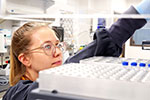
The increased prevalence of marijuana use for medicinal purposes in humans has inadvertently increased the potential risk of ingestion by pets and other animals. Scientists at the Kansas State Veterinary Diagnostic Laboratory, or KSVDL, recently published toxicity findings on a pair of donkeys that were fed with cannabis buds.
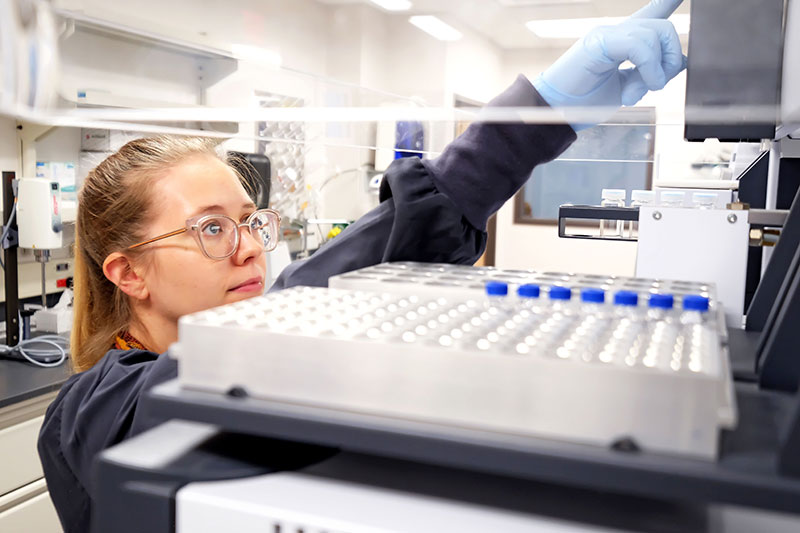
Dr. Alyson Fitzgerald works in the Toxicology Lab when she was a veterinary student (file photo). She is the lead author on a research article measuring toxicity levels of marijuana in blood samples from a pair of donkeys that were fed cannabis.
“Marijuana toxicosis is typically seen by companion animal veterinarians,” said Dr. Alyson Fitzgerald, who completed her Doctor of Veterinary Medicine degree at Kansas State University in 2021. Now an associate veterinarian at Wheat Ridge Animal Hospital in Colorado, her write-up on the case study involving the donkeys was just published in January in the Journal of Veterinary Diagnostic Investigation.
“With increased marijuana availability there is a greater potential for toxicosis in other species,” Dr. Fitzgerald said. “In our study, we described a case of suspected marijuana toxicosis in a female and a male American Mammoth donkey. Both cases were presented to their local veterinarian because of depression and lethargy.”
According information provided by the donkeys’ primary care veterinarian, the cannabis was legally grown on the donkey owner’s property for human consumption and hand-fed to the animals. The herd manager stated that clinical signs of slight lethargy were first noted 24 to 36 hours after consumption. Other reported symptoms included mild colic, tachycardia and inappetence.
The team at the KSVDL consisting of Drs. Geraldine Magnin, Steve Ensley and Fitzgerald (who was then a fourth-year veterinary student) measured plasma cannabinoid concentrations using a novel high-performance liquid chromatography–tandem mass spectrometry (HPLC-MS/MS) method. A sample was also sent to the Animal Health Diagnostic Center at Cornell University for the determination and quantitation of THC and CBD using its novel HPLC-MS/MS detection method.
“Both donkeys recovered uneventfully within 24 hours of peak effects,” Dr. Fitzgerald noted. “Lethal toxicity of marijuana is rare in veterinary species, but utilizing a cannabinoid screening assay in collaboration with a veterinary diagnostic laboratory may be useful when an equine practitioner suspects marijuana toxicosis in a patient.”
The toxicology laboratory at the KSVDL recently obtained a four-year grant through the Veterinary Laboratory Investigation and Response Network, or Vet-LIRN, to support cannabinoid screening in animal specimens.
“There is an interest in this screen for diagnostic purposes when an animal is intoxicated by cannabis products, as the medical and recreational legalization of cannabinoids product across the US has increased [from delta tetrahydrocannabinol derivatives],” explained Dr. Magnin, a research assistant professor in the Department of Anatomy and Physiology at K-State. “There is also a need to understand better the pharmacokinetic of phytocannabinoids and residues in animal tissues because of the increase in utilizing byproducts of industrial hemp as a feed source for livestock.”
The full journal article, “Marijuana toxicosis in 2 donkeys,” is available online.
Make arrangements for pets in family emergency plans
Severe weather season is approaching and Dr. Susan Nelson, veterinarian and clinical professor at the Veterinary Health Center, says to include pets in your family emergency preparedness plans.
"Pets should never be left at home during an emergency evacuation," Dr. Nelson said. "Creating a disaster plan for your pet entails the same steps taken to make your family plan." Dr. Nelson recommends the following when formulating your preparedness plans: "If you do need to leave your home, be aware that not all public shelters or hotels, relatives or friends will allow pets, so have several alternatives," Dr. Nelson said. "You should also have contact numbers for hotels/boarding facilities, relatives and your veterinarian in your kit that are stored in a water-proof bag." Include a pet first-aid kit and first-aid guidebook. Have food sources ready, such as pop-top cans or small bags of dry food, as well as bottles of water to use for drinking or taking medications. Nelson recommends at least two weeks' worth of medications in your pet evacuation kit and one week of food and water. Rotate all items every few months for freshness. Pack photocopies or a USB of medical records in water-proof bags, as well as pictures of you with your pet to provide proof of ownership should you become separated. Make sure your pet has some type of identification — collar and tags and/or a microchip — and the information is kept up to date. Additional items to include are clean-up supplies, a flashlight, collapsible bowls, spoon, leash, litter and litter box, and small familiar items, such as toys or a blanket, which may help to reduce the stress on your pet. Consider using a buddy system with neighbors in case you are not home to evacuate your pet and place a rescue alert sticker on your front window, which indicates how many pets you have inside in case an in-home rescue is necessary. "If you do evacuate with your pets and have time, write 'EVACUATED' across the sticker on the window," Dr. Nelson said. "Know where your emergency kit is for quick access and see how long it takes to get everyone together and out of the house," Nelson said. "Nobody wants to encounter a disaster, but being prepared will help mitigate some of the stress that can be experienced by you and your pets." Dr. Nelson said that while many of these tips are relevant to other pets besides cats and dogs, more specific needs for birds, exotic pets, pocket pets, horses and livestock must be considered as well. For more information on how to prepare for animals for severe weather and other disasters, including these other species, she suggests checking out these websites:
Regular features
Alumni Events, Development and Continuing Education
 The Veterinary Medical Alumni Association organizes alumni receptions at several of the national annual conferences plus continuing education events and more. This month's section includes the monthly listings of recently departed alumni and links to their obituaries, plus a new link for submitting nominations for Alumni Recognition Awards.
Alumni Updates
In the Headlines
Recent news stories about CVM alumni:
Dr. Robert Cope, DVM class of 1975
Lemhi County veterinarian an asset to ranchers for more than four decades
Dr. Roger Dudley, DVM class of 1990
Deputy state veterinarian promoted to top job in Nebraska
Dr. Matthew Edson, DVM class of 2011
A first for New Jersey: Rowan University to establish School of Veterinary Medicine
Dr. Kate Whitsel, DVM class of 2017
Clemson Paw Partners names veterinarian
Upcoming CE Opportunities and Reunion Events
Horse Care 101Virtual Conference Frank W. Jordan SeminarSaturday, March 26, 2022 Oxbow Small Mammal SymposiumSunday, April 3, 2022 ReunionsSaturday, June 4, 2022 2022 Annual Conference for VeterinariansSunday, June 5 - Tuesday, June 7, 2022 27th Annual Scholarship Golf TournamentMonday, June 6, 2022 |
|
Submit nominations for Alumni Recognition Awards onlineSee our new online nomination form to nominate a fellow alumnus for one of our many annual recognition awards, presented at the national conferences: VMX, WVC, AVMA and the Annual Conference for Veterinarians. See full details at the link below. |
|
In Memoriam - Recently Departed Alumni
Dr. Richard J. Cortesi, DVM 1967 Dr. F. T. Satalowich, DVM 1961 Dr. Dewey Frederick Gillett, DVM 1963 Dr. Emma Katherine Smith, DVM 1965 Dr. Max R.Russell, DVM 1970 Dr. Nicholas Patrick Schroeder, DVM 1970 Dr. Darrel Lloyd Smith, DVM 1976 Dr. Stephen H. White, DVM 1985 Dr. Christopher Paul Potanas, DVM 2010 (click highlighted names for obituary) |
Questions about Alumni or CE events?Contact:
|
 Tony Ballard
 Sarah Keatley
News Ticker
|
More activities and accomplishments in the College of Veterinary Medicine: |
|
Drs. Warren Beard, Chris Blevins, Leslie Weaver, Pearce Sloan and Maria Granello along with several fourth-year veterinary students, served as the veterinarians for the 2022 KSU Rodeo event Feb. 18-20. Dr. Mike Apley attended the 2022 National Cattlemen’s Beef Association Convention in Houston Feb/ 1-3 where he also chaired the Task Torce on Antimicrobial Resistance Policy. Dr. Robert Larson also attended the 2022 National Cattlemen’s Beef Association Convention and met with the Cattle Health and Well-Being Committee and participated in the Beef Cattle Herd section. Dr. Brad White presented at the American Associate of Bovine Practitioners Recent Grad Conference on Feb. 19 in New Orleans. He presented, “Different Animal Identification Methods and its Application in an Infectious Disease Outbreak.” Dr. Brad Crauer was the guest on "The Abundant Bean" podcast for a segment called, "Running a Phenomenal Veterinary Practice,” on Feb. 22. Dr. Mike Apley presented at the 53rd American Association of Swine Veterinarians Annual Meeting Feb. 26-28, in Indianapolis. He presented, “Pivot points for antimicrobial decisions in swine, Making sense of antimicrobial susceptibility testing in swine, and What is in the antimicrobial pipeline?” Dr. Chris Blevins co-instructed seven lectures and two labs (one cadaver, one live horse) with Dr. Bruce Whittle (MU) for the American Association of Equine Practitioners Dental Workshops held at Utah State University Feb. 25-27. Lecture titles included: Equine Dentistry Intro and Goals, Dental Structure and Eruption Schedule, Stomatognathic System, Equine Oral Examination, Equine Dental Disease, Restraint and Sedation and Floating Techniques. |
VetMed Rocks Summer Day Camps 2022
Save the Date - July 31 - August 3 Vet Med ROCKS camp will consist of daylong activities at Kansas State University College of Veterinary Medicine!
In-person camps will be held at the Kansas State University College of Veterinary Medicine in Manhattan, Kansas. |
|
|
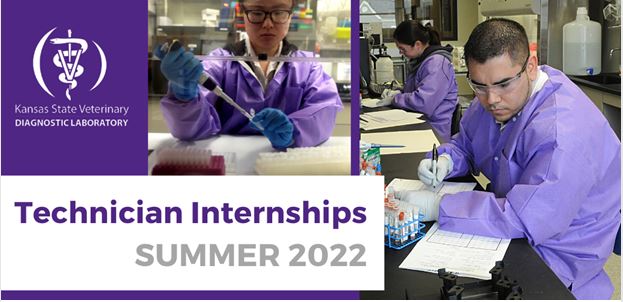
Technician Internships offered at KSVDL for Summer 2022
Do you have students looking to gain more experience in veterinary diagnostic medicine or explore career options? The Kansas State Veterinary Diagnostic Laboratory (KSVDL) is offering multiple paid technician internships for Summer 2022. This competitive program offers individuals the opportunity to gain experience and training within the KSVDL, as well as observe career possibilities in our laboratories first-hand. The technician internships are open to both students and non-students. This includes individuals enrolled in universities, community colleges, certificate programs and technical schools as well as recent graduates and individuals looking to expand their career options. To apply, please submit the following items with the subject line: Summer Internship Opportunities at KSVDL
Applications must be submitted to: Dr. Barbara Lutjemeier Dr. Gregg Hanzlicek Kristina Wyatt Review of applications will begin April 1 in anticipation of an early June start date. |
New Arrivals/Recent Departures
Lifelines is published each month by the Marketing and Communications Office at the College of Veterinary Medicine. The editors are Joe Montgomery, jmontgom@vet.k-state.edu, and Piper Brandt, pnbrandt@vet.k-state.edu.