
Monthly Newsletter
January 2022 - Vol. 17, No. 1
<December 2021 | February 2022>
Top Stories
CVM team collaborates to improve COVID-19 vaccine stability
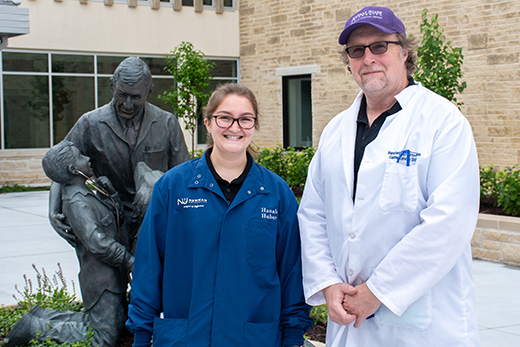
Researchers at Kansas State University in the College of Veterinary Medicine are expanding on an industry partnership to increase stability in mRNA vaccines — including those against COVID-19 — during transport and storage.
Dr. Robert DeLong, right, associate professor at the Nanotechnology Innovation Center of Kansas State, mentors second-year veterinary medicine student Hanah Huber this past summer for a research project. Dr. DeLong and other K-State researchers are part of a research collaboration with Tonix Pharmaceuticals that seeks to increase stability of mRNA vaccines, including those for COVID-19.. The agreement, coordinated by K-State Innovation Partners, is an exclusive license and option agreement and research collaboration with Tonix Pharmaceuticals. Through the partnership, researchers will develop zinc nanoparticle, or ZNP, mRNA vaccines that replace the lipid nanoparticle, or LNP, technology in current COVID-19 vaccines. The new zinc nanoparticle technology confers increased stability to mRNA vaccines over a wide range of temperatures in model systems. The temperature-sensitive nature of zinc nanoparticle mRNA formulations limit vaccine shipping and storage to ultralow temperatures, which limits rapid global deployment. Under the research agreement, K-State will advance preclinical development of a new zinc nanoparticle mRNA vaccine to protect against COVID-19 based on the spike protein from SARS-CoV-2. "The LNP technology of current mRNA COVID-19 vaccines limits our ability to deploy these vaccines in many parts of the world," said Dr. Robert DeLong, associate professor at the Nanotechnology Innovation Center of Kansas State. "The technology we have developed uses zinc to replace LNPs and results in more temperature stable mRNA vaccines." Dr. DeLong said that zinc nanoparticles, unlike lipid nanoparticles, are stable over a range of temperatures, including room temperature. Eliminating the need for lipid nanoparticles in mRNA vaccines could speed deployment of new vaccines and make them more available globally. At scale, zinc nanoparticle-based mRNA vaccines may also be less expensive to manufacture. Dr. DeLong will lead the vaccine research, along with colleagues Dr. Waithaka Mwangi, professor of diagnostic pathobiology, and Dr. Juergen Richt, director of the Center of Excellence for Emerging and Zoonotic Animal Diseases and director of Center on Emerging and Zoonotic Infectious Diseases.
"Our goal in utilizing a new mRNA formulation technology is to vaccinate people all over the world to save lives globally and reduce the emergence of variants of COVID-19 that can evade vaccine immunity," Dr. Mwangi said.
According to the Center for Disease Control and the Food and Drug Administration, the mRNA vaccines developed by Pfizer/BioNTech and Moderna based on lipid nanoparticles have been shown to prevent COVID-19 for up to six months after two doses and for longer with a booster. Because of the limitations of lipid nanoparticle technology, these mRNA vaccines require ultra-cold storage and transport because they are unstable at room temperature or even in standard refrigerators or freezers.
"The Pfizer/BioNTech and Moderna vaccines against COVID-19 have shown that mRNA technology is rapidly deployable and is likely to be one of the first lines of defense for future pandemics," said Seth Lederman, M.D., chief executive officer of Tonix. "The ZNP technology invented and developed by scientists at K-State has the potential to make mRNA vaccines that are free from LNPs, which could improve the stability of mRNA vaccines at room temperature and facilitate their deployment in places without ultra-cold chain supply systems."
Kansas State Veterinary Diagnostic Laboratory exercises readiness for African swine fever outbreak
On Jan. 24-25, the Kansas State Veterinary Diagnostic Laboratory, or KSVDL, and the Biosecurity Research Institute, or BRI, conducted a functional, collaborate exercise focusing on surge capacity testing for African swine fever.
Diseases like African swine fever are costly and affect swine producers across the country. A previous tabletop exercise on the same topic occurred on May 20, 2021, with members of the KSVDL, the Kansas Department of Agriculture — Division of Animal Health, the BRI and multiple other partners across campus, the state of Kansas and the U.S. Department of Agriculture National Animal Health Laboratory Network, or NAHLN. These exercises were made possible by a funded proposal as part of the 2020 National Animal Health Laboratory Network Funding Opportunity under Section 12101 of the Agriculture Improvement Act of 2018 — the 2018 Farm Bill. The entire proposal encompasses the tabletop event, functional exercise, and completion of an after-action report that can be utilized by the entire NAHLN network in order to advance preparedness for an African swine fever outbreak in the United States. The exercises are being written and facilitated by the National Agricultural Biosecurity Center at Kansas State University. As a Tier 1 member of the NAHLN network, the KSVDL serves to provide early detection, rapid response, and appropriate recovery from high-consequence animal diseases, such as African swine fever. While KSVDL has participated in many foreign animal disease exercises sponsored by other regulatory partners, this is the first to focus primarily on the activities of the laboratory itself and the functional exercise will involve actual testing of mock samples. To help prepare for these activities, KSVDL has also formed a Foreign Animal Disease Committee that meets regularly to discuss planning and preparedness for possible emerging disease outbreaks, many of which could have a devastating effect on our state and nation’s vibrant agricultural economy. "The NABC is pleased to assist this USDA NAHLN effort in preparing for potential high-consequence animal disease threats," said Marty Vanier, director of the National Agricultural Biosecurity Center. The lessons learned in these exercises will help stakeholders prepare and respond to disease outbreaks and will allow partners to enhance continuity of business and operational resilience." As facilitator, NABC contributes to strategic development for biosecurity, preparedness, and readiness. This exercise is part of a series of projects building on the recognition of NABC as a prominent research center that enhances and promotes multidisciplinary collaboration amongst government, industry and academic partners. "NABC’s expertise in assessing food and agro-security systems threats and vulnerabilities readily lends itself to campus priorities of enhancing emergency management and risk planning processes," said Elliot Young, K-State risk and compliance officer. This project demonstrates the productivity, practicality and innovation NABC delivers in pursuit of the university's land-grant mission focusing on health security, foods systems, and public health initiatives. For more information, contact Kelli Almes, KSVDL foreign animal disease/outbreak section head, at 785-532-3995 or kalmes@vet.k-state.edu.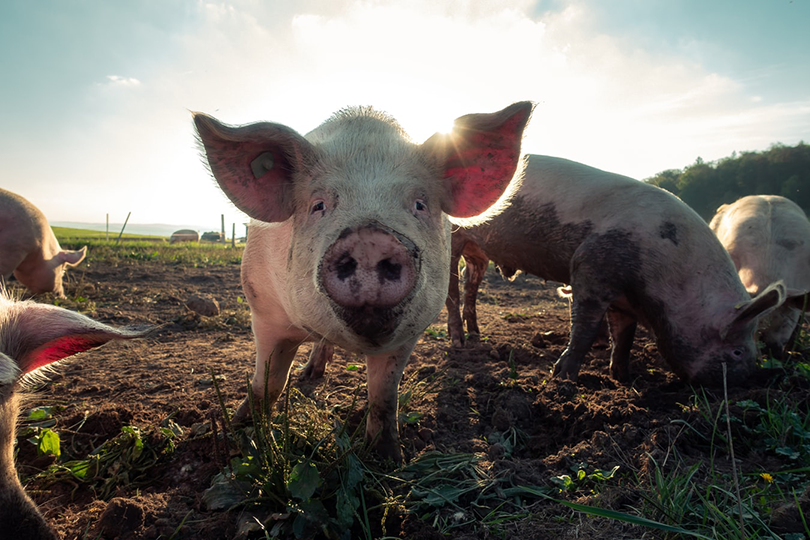
K-State recognizes third-year veterinary student for diversity efforts
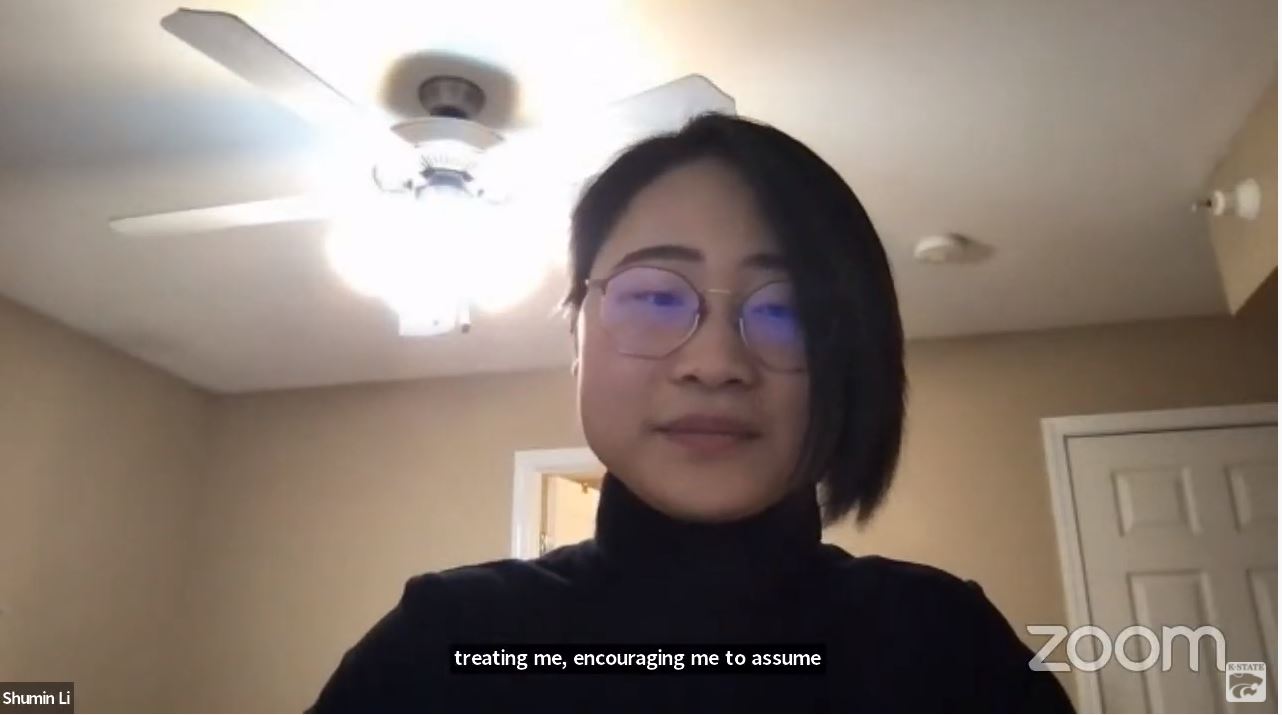
Shumin Li, third-year veterinary medicine student, is one of two individuals being honored as recipients of the Commerce Bank and W.T. Kemper Foundation Presidential awards for diversity excellence at a virtual reception Jan. 25.
Dr. Callie Rost (left), associate dean for admissions, introduces Shumin Li during the Zoom ceremony and explains why she was nominated for the Commerce Bank and W.T. Kemper Foundation Presidential Student Award for Distinguished Services in Enhancing Multiculturalism. Marianne Korten, professor of mathematics in the College of Arts and Sciences, received the Commerce Bank and W.T. Kemper Foundation Presidential Faculty and Staff Award for Distinguished Services to Historically Under-Represented Minority Students, and Li received the Commerce Bank and W.T. Kemper Foundation Presidential Student Award for Distinguished Services in Enhancing Multiculturalism. Li is the founder of Veterinarians for One Inclusive Community for Empowerment, or VOICE K-State, and served as president from 2019-2021. She also served as the student representative to the College of Veterinary Medicine's Multicultural Perspectives and Initiatives Committee and brought awareness to many important issues inspiring action from the committee. She partnered with K-State Minorities in Agriculture, Natural Resources and Related Sciences, or MANRRS, to coordinate guest speakers for an Intercultural and Inclusion Lunch and Learn, including a nationally recognized expert, Lisa Greenhill, senior director for institutional research and diversity for the American Association of Veterinary Medical Colleges. According to one of Li's recommendation letters, "K-State CVM is fortunate Shumin Li is part of the DVM program. By providing leadership, demonstrating inclusive actions and creating educational opportunities, Shumin has contributed toward the belonging of our entire campus community and her work is sincerely appreciated." See video from the awards presentation here: 2021 Commerce Bank Presidential Awards for Diversity | MLK Observance Week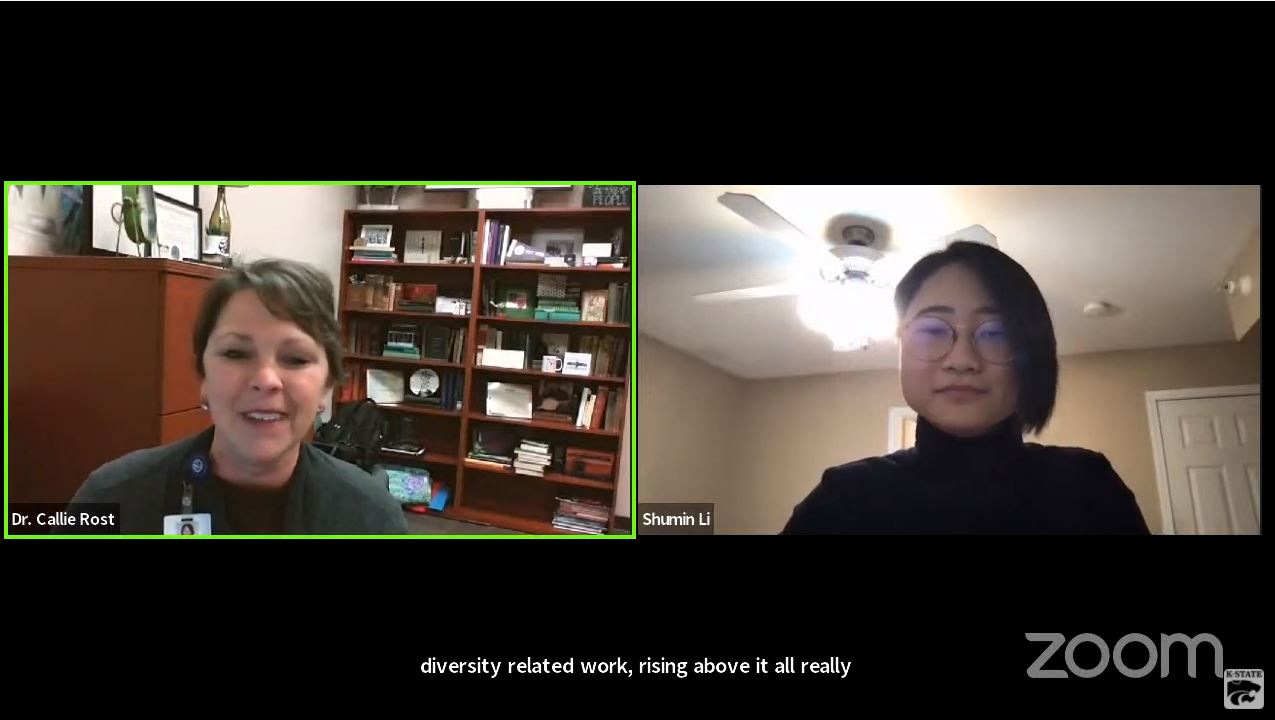
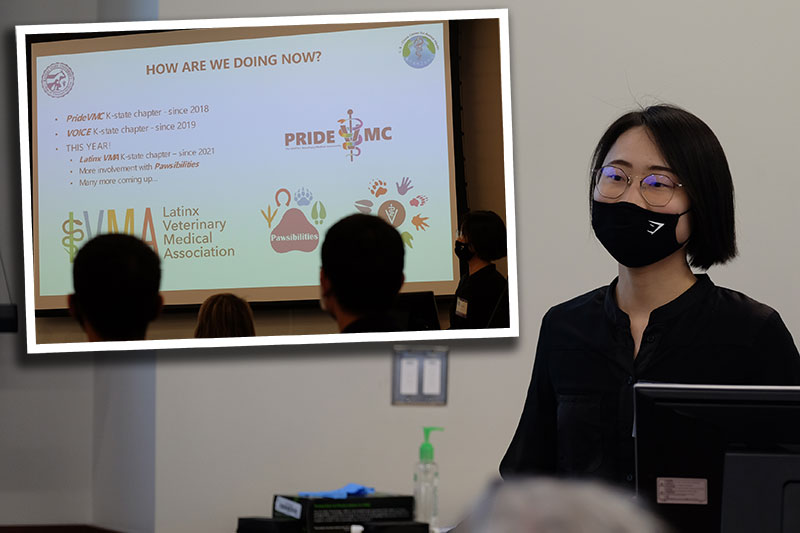
Shumin gives an updates on her school activities during the homeceoming for the US-China Joint DVM Program held at K-State in August 2021.
More Headlines
Veterinary student among group of 27 campuswide chosen for cancer research training award

The Johnson Cancer Research Center at Kansas State University recently selected 27 undergraduate students for its Cancer Research Award program, which provides faculty-mentored research training and monetary awards. Among this group was a a second-year veterinary student, Grace Calo, and an undergraduate student, Morgan Phillips, who both mentor under Dr. Masaaki Tamura, professor in anatomy and physiology.
The program encourages students to get involved in research early on and consider careers in cancer research and medicine. Any undergraduate interested in doing cancer-relevant research is eligible to apply, including non-STEM majors. Awardees receive $1,500 and faculty mentors receive $1,000 per student for research expenses. The funding allows students to devote more time to research and less to non-academic jobs. "This award allows me to further focus on my research and school work without having to stress nearly as much about financials," said Davanté Hammer, senior in microbiology and pre-medicine. "Being able to focus on research allows me to learn more about useful lab techniques, the role research plays in our understanding of science, and its role in health care." The Johnson Cancer Research Center, in the College of Arts and Sciences, supports the cancer research and training of its faculty members, undergraduate and graduate students and postdoctoral fellows. All programs are funded through private donations. "This opportunity allows students to apply what they’re learning in classes to real-life research problems and engages them in their education, a critical factor for success," said Sherry Fleming, the center's director and a professor of biology. "These are some of the university's — and the state's — most outstanding students, working closely with excellent faculty on projects to combat cancer." Grace Calo: "Oral administration of euglena water extract increases IgA cell number in MALT which may help attenuating lung tumor growth" Morgan Phillips: "Study of the effect of a newly designed inhibitory peptide for CTLA-4 on NK cell activation and function and its effect on lung carcinoma cell growth" "This award is very important to me because I have had several relatives pass away of lung cancer and getting the opportunity to contribute to research on it is very meaningful to me," Grace said. "This award also gives me the financial support to follow through with my project."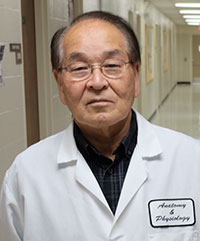 The awardees will be recognized at a banquet in the spring, attended by their families, university faculty and administrators, and donors who make the awards possible. Below are two projects being conducted under the mentorsguo of Dr. Tamura, who is shown at right.
KSVDL's Dr. Gregg Hanzlicek reviews steps for cattle producers before and after calving
By Shelby Varner

Kansas State University veterinarian Dr. Gregg Hanzlicek said being prepared ahead of calving season is the best way for producers to assure they will bring home the newborn calves successfully.
“We're approaching the end of the second trimester and moving into the third trimester which means the metabolic demands of that cow or heifer are going to increase tremendously,” Dr. Hanzlicek said. “We’re far enough away from calving that we can add condition to these cows and heifers without (creating) an economic burden,” he said. “It really comes down to having a formulated ration that is balanced for protein and energy.” Intervening at an appropriate time is important. “If we intervene too early and the cow or heifer is not dilated, we can injure the tissues and hurt the calf,” Dr. Hanzlicek said. “If we intervene too late, a lot of times that’s when we end up with stillborn calves.” “Colostrum-based powders are the best way to go, and I would recommend that every producer have one or two bags of powder replacer on hand during the calving season,” Dr. Hanzlicek said.
Following calving, the calf should be up and nursing within two hours.
A key to having a successful calving and production season is for cows and heifers to be in the appropriate body condition, which according to Dr. Hanzlicek is a score of 5-7. He said he has seen many cattle in the 3-4 range in the past few months.
For those wanting to add scour vaccines to their prevention program, “it’s time to decide what vaccine they are going to use,” Dr. Hanzlicek said. “Look at the label and schedule on the calendar when they need to start vaccinating the cows and heifers.”
Dr. Hanzlicek said heifers will require two doses of the scours vaccine, while cows need one. The timing of those vaccines is “very, very important,” he said.
Also, Dr. Hanzlicek recommends establishing a clean calving area to help reduce the risk of scours. “There’s two major risk factors for scours,” he said. “One is the lack of colostrum consumption. The other is a contaminated environment that the babies are born into.”
Dr. Hanzlicek recommends having a location to move the pairs off the calving area to keep the calving facility less contaminated with the scour organisms.
Getting the calf here safely is another factor to consider, "Most operations are going to have to help at least one animal during the calving season,” Dr. Hanzlicek said. The last national survey indicated that 1 of every 100 heifers and 2 of every 100 adult cows will need assistance.
Being prepared to pull a calf is important. Dr. Hanzlicek said producers should have the following items on hand:
According to Dr. Hanzlicek, once a cow has reached the second stage of labor, they should give birth within 30 minutes. A heifer should calve within an hour. Second stage labor is when the heifer or cow can be observed experiencing uterine contractions, or the water-bag or calf’s feet are visible.
If assistance from the producer is needed, and they are unable to extract the calf within 15 minutes, then help – either a veterinarian or someone with more experience -- should be called.
Following calving, the calf should be up and nursing within two hours, Dr. Hanzlicek said. If not, a colostrum replacer can be given to help get the calf started.
Frontier students re-enact microbiological mystery in Council Grove
Parts of story reprinted with permission from the Council Grove Republican

A group of students hit the road this past fall in an effort to solve a great public health mystery. Dr. Justin Kastner, associate professor in diagnostic medicine and pathobiology, played a leading part while the community of Council Grove, Kansas, served as the backdrop for an unique re-enactment exercise.
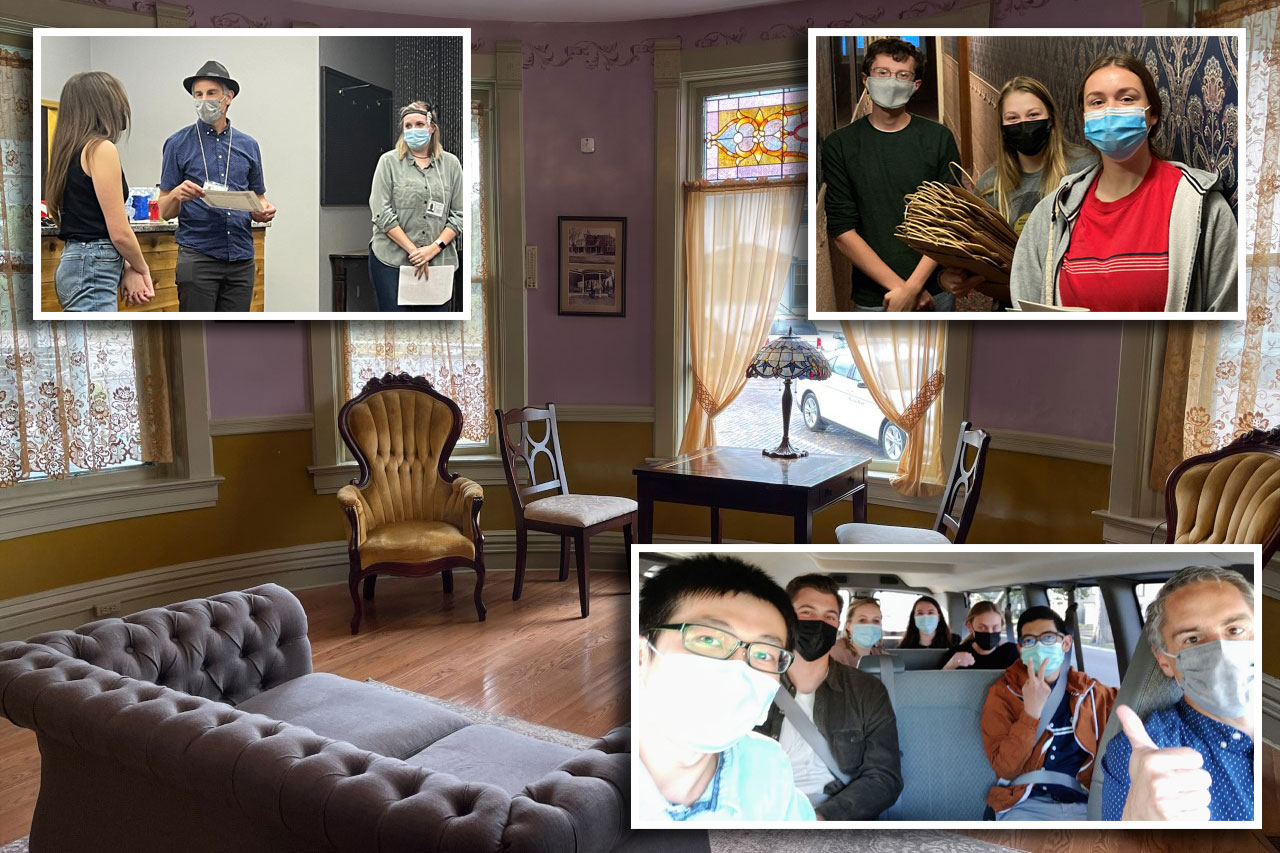
The Cottage House (background) in Council Grove served as the primary location for a Frontier Field Trip. Top left inset: Dr. Justin Kastner, in the role of T.K. Monro (coroner) presents a death certificate to masters student Emma Uridge who played the role of Mrs. Mary Waugh Dixon, a woman on vacation with her husband, while K-State alumna Mackenzie Gibbs stands by in the role of narrator. Top right: Chris Carter, Alexis Justice and Kate Lewis start preparations for the re-enactment exercise. Bottom right: Dr. Kasnter gives the thumbs up as the road trip begins. (Photos by Kaitlyn Rhine and Dr. Justin Kastner)
Dr. Kastner gathered a group of 17 students in food science and public health for the 37th Frontier Field Trip, titled “An overnight microbial mystery.” The participants spent the night at a historic location.
“We selected Council Grove due to its iconic and memorable Cottage House hotel,” said Dr. Justin Kastner. “As part of a separate trip to Council Grove in August, I stayed at the hotel and, while I was there, thought to myself, ‘This hotel sure has the feel of the boardgame Clue!’ Then I recalled that 2022 is the 100-year anniversary of a major botulism outbreak that took place at a Scotland-based hotel, and I thought to myself, this is the perfect place to have a Frontier Field Trip to ‘re-imagine’ what happened almost 100 years ago.”
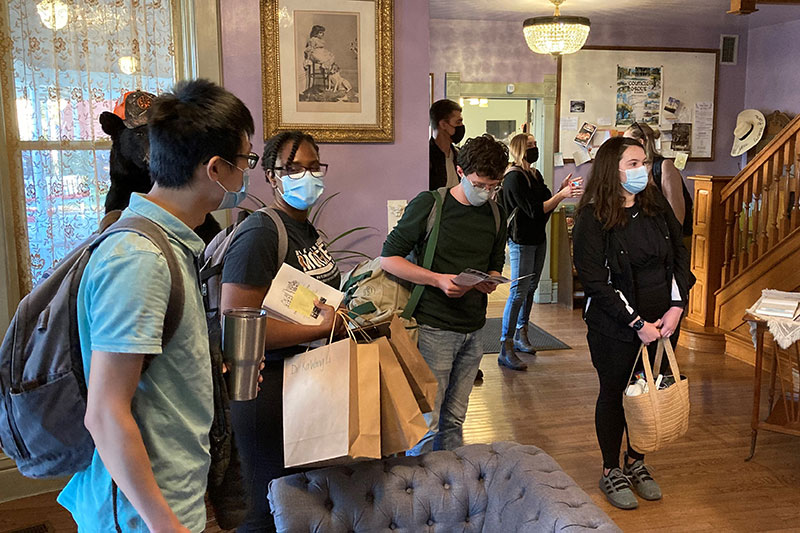
Frontier students tour the Cottage House in Council Grove while preparing to re-enact the historic botulism outbreak that took place in Scotland's Loch Maree Hotel in 1922. (Photo by Dr. Kastner)
Dr. Kastner created the model for Frontier Field Trips in 2004 with an academic colleague, Dr. Jason Ackleson. The field trips help students experience global issues in a workshop-based format where they received skill-development coaching.
For this trip, each student was assigned a historical person to research and re-enact, all connected with a botulism outbreak at the Loch Maree Hotel in Scotland in August 1922.
“Council Grove provided a picturesque setting for myself and other K-State students to re-imagine this outbreak,” said Kate Lewis, a pre-veterinary student attending the field trip. “Overall, from my experience on the trip, I was able to further my understanding of the risks of foodborne illnesses and connect with other students that were interested in public health.”
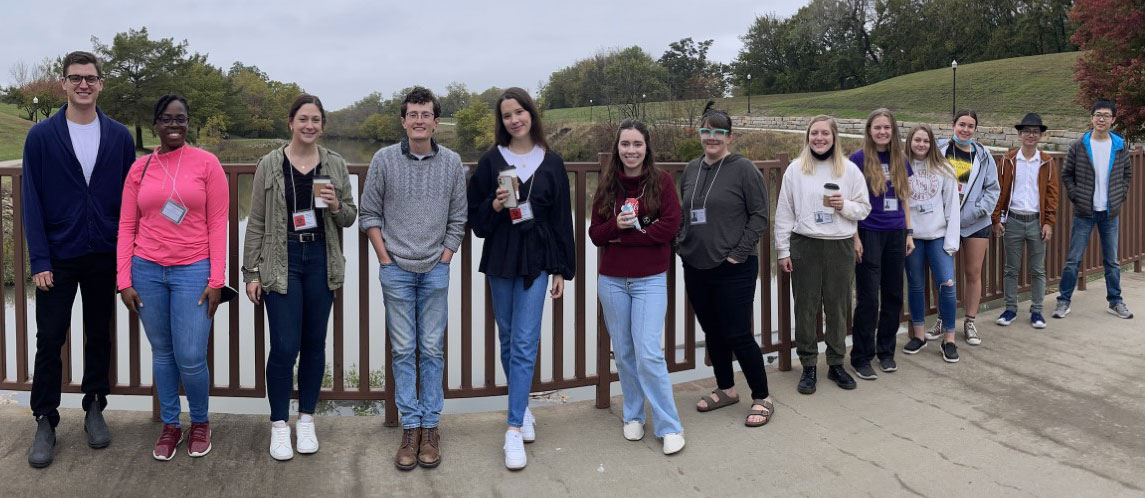
Students had an opportunity tour other parts of Council Grove, including the riverwalk and footbridge over the Neosho River. From left: Peter Maier, Del’Sha Roberts, Cheyenne Brunkow, Chris Carter, Emma Uridge, Danielle Preskitt Muir, Emily Kohlhepp, Karsen Deweese, Lucy Fischer, Alexis Justice, Kate Lewis, Vannith Hay and Dr. KaWang Li. (Photo by Kaitlyn Rhine)
Participants – Cast of Characters
Mackenzie Mayo-Gibbons, narrator – as herself
John Stewart (70), a yarn-and-cloth business owner from Glasgow, Scotland – played by Chris Carter, senior in public health and microbiology
William Vickers Dixon (60), Chief Inspector of Technical Inspection for Ireland (Dublin) – played by Alexis Justice, junior in animal sciences and industry
Mrs. Mary Waugh Dixon (56), wife of William, also from Dublin, Ireland – played by Emma Uridge, Master of Public Health (MPH) student
John Bertrum Talbot (22), a young Oxford graduate – played by Kate Lewis, junior in animal sciences and industry
Edward Gordon Williams (66), a gentleman on holiday (vacation) – played by Cheyenne Brunkow, MPH student
Mrs. Rosamund Sophie Porter Anderson (45), wife of a military Major – played by Kaity Rhine, sophomore animal sciences and industry and pre-veterinary medicine
Kenneth Maclennan (35), a ghillie (boatman) who did not stay at the Loch Maree Hotel – played by Danielle Preskitt Muir, Ph.D. student in security studies
John Mackenzie (40), a ghillie (boatman) who did not stay at the Loch Maree Hotel – played by Del’Sha Roberts, MPH student
Dr. Carnegie Dickson, a physician from London – played by Karsen Deweese, senior in public health, global health, medicine and soc.
Dr. William Maclean, a local Medical Officer of Health – played by Lucy Fischer, senior in animal sciences and industry
Dr. Brodie, a school medical officer from Dingwall, Scotland – played by Emily Kohlhepp, masters student in prof. sci. applied biosciences and food science
Bruce White, B.Sc., a microbiologist in the bacteriological laboratory of the Pathology Department of the University of Bristol – played by Vannith Hay, masters student in food science
Alexander Robertson (44), the owner of the Loch Maree Hotel Owner – played by Dr. Ka Wang Li, postdoctoral fellow in animal sciences & industry
Miss Jessie Finlayson (72), chef for the Loch Maree Hotel – played by Erin Manville, masters student in food science
Dr. William W. N. Knox, a local investigator/physician who treated patients – played by Peter Maier, Graduate Masters Public Health-M
Dr. Cox, a physician/investigator from Preston who treated patients – played by Ron Orchard, fourth-year veterinary student (Ron was unable to attend the trip due to obligations at the VHC)
T.K. Monro, MD, Professor of Medicine at the University of Glasgow, and coroner – played by Dr. Justin Kastner
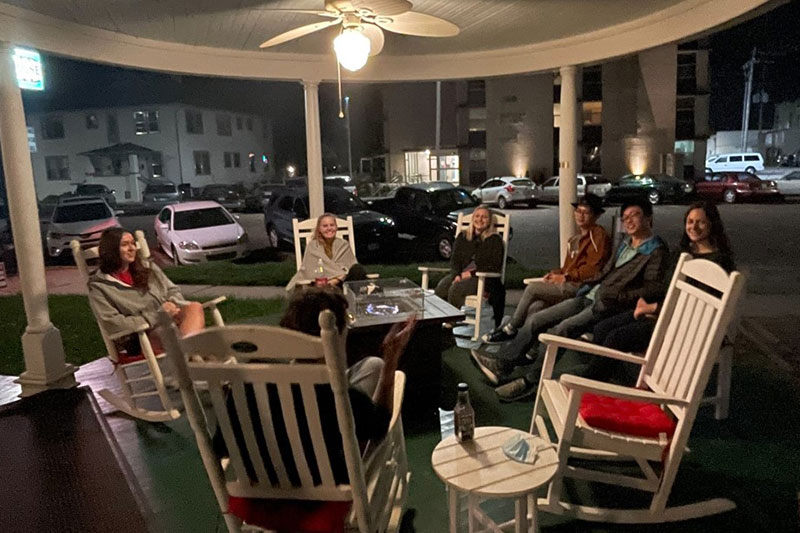
After the main discussion of the first night, students gathered outside of the hotel to discuss takeaways, as well as current events, and how they tie into what was being talked about on the field trip.
Regular features
Alumni Events, Development and Continuing Education
 The Veterinary Medical Alumni Association organizes alumni receptions at several of the national annual conferences plus continuing education events and more. This month's section includes the monthly listings of recently departed alumni and links to their obituaries, plus a new link for submitting nominations for Alumni Recognition Awards.
Alumni Updates
Dr. James Kenyon publishes a new book about cats
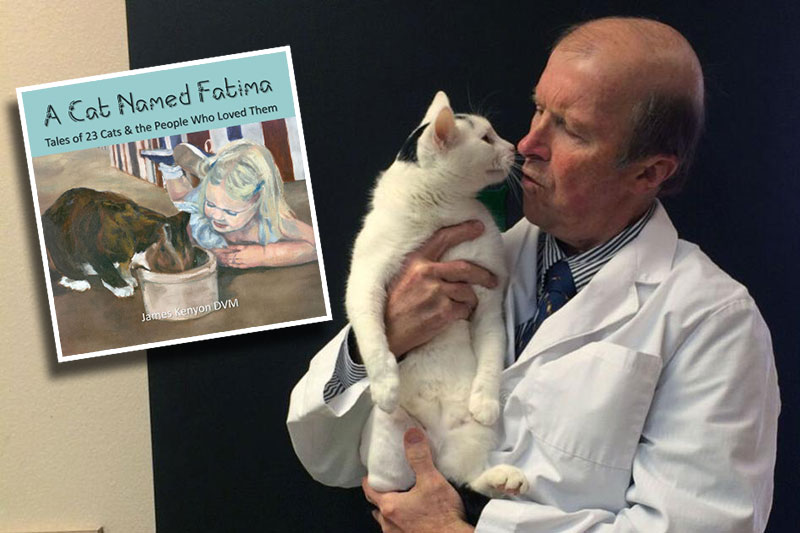
A recent note from Dr. James Kenyon, DVM class of 1975 read, "A much-awaited book about cats and their owners has been released: A Cat Named Fatima: Tales of 23 Cats & the People Who Loved Them." For anyone who is interested, it is listed online through Meadowlark Books, Amazon, Barnes and Noble, or at jamesrkenyon.com (Autographed and includes taxes and shipping). "Not since TS Eliot's Old Possum's Book of Practical Cats has poetry told the story of these 23 cats," Dr. Kenyon wrote.
Submit nominations for Alumni Recognition Awards onlineSee our new online nomination form to nominate a fellow alumnus for one of our many annual recognition awards, presented at the national conferences: VMX, WVC, AVMA and the Annual Conference for Veterinarians. See full details at the link below. |
|
In Memoriam - Recently Departed Alumni
Dr. Byron Lee Wilson, DVM 1967 Thomas E. Nightingale, PhD 1971 Dr. Gerald D. Hanneman, DVM 1961 Dr. Lewis Hugh Brogan, DVM 1968 Dr. Duane Edward Cole, DVM 1962 Dr. Laura M. Makepeace, DVM 1989 Dr. Bernard C. Zecha, DVM 1959 (click highlighted names for obituary) |
Questions about Alumni or CE events?Contact:
|
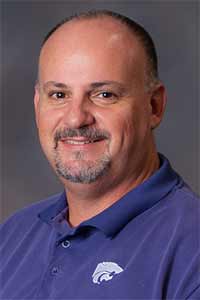 Tony Ballard
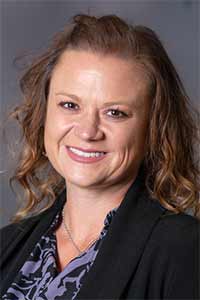 Sarah Keatley
News Ticker
|
More activities and accomplishments in the College of Veterinary Medicine: |
|
Welcome to Dr. Anamarie Weber, urgent care clinician, who started on Feb. 14. February is Pet Dental Health Month and Dr. Marjory Artzer, dentistry and primary care clinician, shared some tips on dental care that is often overlooked. Tips were posted on the VHC website as well as Facebook. She also shared information on the KMAN morning talking show, In Focus. Drs. Mike Apley (PI), David Amrine and Dustin Pendell received $350,000 in funding from Foundation for Food and Agriculture Research for their project, “Antimicrobial Use Monitoring and Benchmarking in U.S. Feedyards.” Dr. James W. Carpenter (PI), and co-investigators Drs. Mike Kleinhenz, Geraldine Magnin and Thomas Tully, Jr. (LSU) received $8,190 in funding from CannaCompanion for their study, “Pharmacokinetics of Cannabinoids Administered Orally with and without Food in Hispaniolan Amazon Parrots (Amazona ventralis).” Dr. Will Whitehouse received $123,603 in funding from Nestle Purina PetCare Global Resources, Inc. for his study, “Targeted metabolomics, circulating biomarkers, DNA, and microbiome assessments in cats with and without chronic kidney disease.” Drs. Warren Beard, Chris Blevins, Leslie Weaver, Pearce Sloan and Maria Granello along with several fourth-year veterinary students, served as the veterinarians for the 2022 KSU Rodeo event Feb. 18-20. Dr. Mike Apley attended the 2022 National Cattlemen’s Beef Association Convention in Houston, TX Feb. 1-3, where he also chaired the Task Torce on Antimicrobial Resistance Policy. Dr. Robert Larson attended the 2022 National Cattlemen’s Beef Association Convention in Houston, TX Feb. 1-3, where he attended the Cattle Health & Well-Being Committee meeting and participated in the Beef Cattle Herd section. Dr. Brad White presented at the American Associate of Bovine Practitioners Recent Grad Conference on Feb. 19 in New Orleans, LA. He presented, “Different Animal Identification Methods and its Application in an Infectious Disease Outbreak.” Dr. Brad Crauer was the guest on The Abundant Bean podcast for a segment called, "Running a Phenomenal Veterinary Practice,” on Feb. 22. Dr. Mike Apley presented at the 53rd American Association of Swine Veterinarians Annual Meeting Feb. 26-28, in Indianapolis, IN. He presented, “Pivot points for antimicrobial decisions in swine, Making sense of antimicrobial susceptibility testing in swine, and What is in the antimicrobial pipeline?” Dr. Chris Blevins co-instructed seven lectures and two labs (one cadaver, one live horse) with Dr. Bruce Whittle (MU) for the American Association of Equine Practitioners Dental Workshops held at Utah State University Feb. 25-27. Lecture titles:
|
Staff Spotlight: Lance Noll
Lance is an avid turkey and white-tail hunter. He also enjoys fishing for trout. A fun fact about Lance: “My wife, two daughters and myself are working feverishly to finish construction on a chicken coop for our 14 hen chicks that are quickly outgrowing their brooder.” |

 Join the College of Veterinary Medicine on LinkedIn and add us to your profile under education and/or employment to help build and engage our online social community! Follow the LinkedIn page here: www.linkedin.com/company/kstatevetmed
New Arrivals/Recent Departures
Welcome to:
Chase Minihan, Vet Med Support Services, Facility Maintenance Coord
Brent Allen Comp, Vet Med Support Services, IT Administrator
Jonathan Hampton, Veterinary Health Center, Veterinary Assistant
Jeremy McDiffett, Vet Med Support Services, Program & Progect Director III
Regan Steele, Veterinary Health Center, Project/Program Manager
Ignacio Fernandez Sainz, Diagnostic Medicine/Pathobiology, Research Associate
Tonia Gilliam, Veterinary Health Center, Veterinary Assistant
Andrea Meyer, Veterinary Diagnostic Lab, Animal Medical Technologist
Kaitlin Haase, Diagnostic Medicine/Pathobiology, Research Aide
Becky Menefee, Veterinary Health Center, Pharmacy Tech
Scott Fritz, Veterinary Diagnostic Lab, Fellow (Post Doc)
Taylor Richter, Associate Dean of Academic Programs, Student Programs Specialist
Farewell to:
Jessica Troutman, Veterinary Health Center, Veterinary Assistant
Benjamin Crossno, Veterinary Diagnostic Laboratory, Animal Medical Technologist
Tippawan Anantatat, Diagnostic Medicine/Pathobiology, Research Assistant
Lifelines is published each month by the Marketing and Communications Office at the College of Veterinary Medicine. The editor is Joe Montgomery, jmontgom@vet.k-state.edu, and Piper Brandt, pnbrandt@vet.k-state.edu.