
Monthly Newsletter
November 2021 - Vol. 16, No. 11
<October 2021 | December 2021>
Top Stories
College presents annual teaching awards
Three faculty members have been recognized for preclinical teaching excellence in the College of Veterinary Medicine. Drs. Pradeep Malreddy, Lisa Pohlman and Emily Reppert were each named as the respective top teachers for the first, second and third years of instruction, as voted on by each respective class of students for their teaching efforts in the 2020-2021 school year.
“Drs. Malreddy, Pohlman and Reppert are all excellent and engaged teachers, completely immersed in their classrooms and who also spend a great deal of their personal time to provide additional instruction for our students,” said Dr. James Roush, associate dean for academic programs and student success. “It is fitting that these deserving instructors were recognized with awards that are chosen by the students they instructed during the previous year.” “Thank you, class of 2024, you are a great class!” Dr. Malreddy said, addressing those students who voted for him. “You represent the best of the best and the future of this noble profession. It's my honor and privilege to help facilitate your learning in the first year DVM curriculum. May the force be always with you!” “I am passionate about teaching; working with students is so rewarding and such a valuable contribution to the field of veterinary medicine,” Dr. Pohlman said. “One of the reasons it is so rewarding is that we must work collectively to overcome challenges. Certainly, the limits on interaction imposed by COVID mitigation posed unprecedented challenges and I feel privileged to have been able to work with the class of 2023 because of their dedication to learning and collaborative spirit. Thank you for this award; it is an honor to work with such committed students.” “I am humbled by this award,” Dr. Reppert said. “Teaching is a team sport and not possible without the support of the amazing people I get to work with every day. I am so proud of all our students and am grateful to be a small part of their education. They are wonderful.” 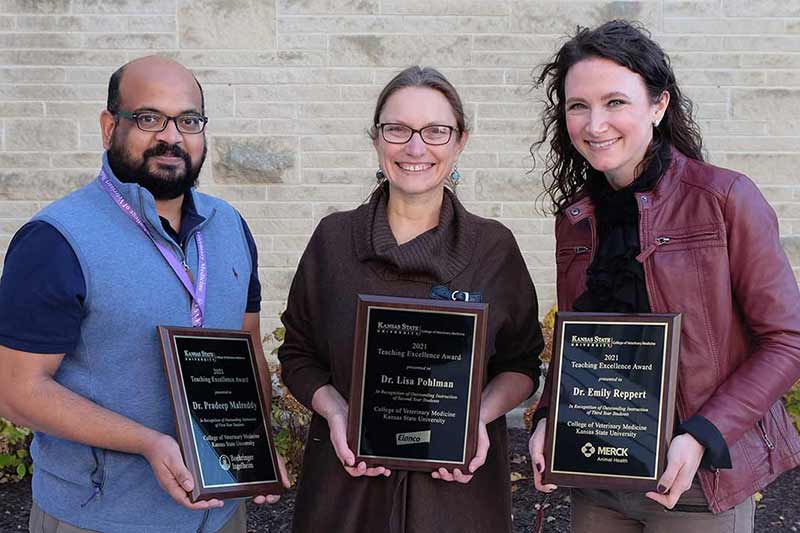
Students in the College of Veterinary Medicine voted for Drs. Pradeep Malreddy, Lisa Pohlman and Emily Reppert as recipients of the college’s 2021 preclinical teaching awards.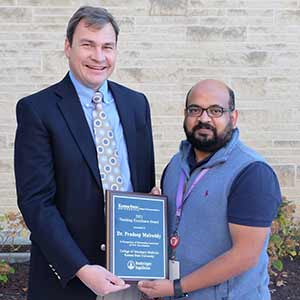 Dr. Malreddy (shown with department head Dr. Hans Coetzee) was presented with the 2021 Boehringer Ingelheim Teaching Excellence in the First Year Award in recognition of outstanding instruction of first-year veterinary students. He received a Bachelor of Veterinary Science degree in India in 2001 and a master’s degree at K-State in 2009. Dr. Malreddy is a clinical assistant professor in the Department of Anatomy and Physiology. He teaches gross anatomy, microanatomy, introduction to research, veterinary neuroscience and veterinary physiology to first-year veterinary students.
 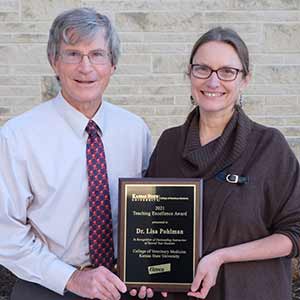 Dr. Pohlman (shown with department head Dr. Derek Mosier) was named recipient of the 2021 Elanco Teaching Excellence Award, which is presented in recognition of outstanding instruction of second-year veterinary students. She won the second-year teaching award in 2017 and the Zoetis Distinguished Teacher award in 2019. Dr. Pohlman received her Doctor of Veterinary Medicine degree in 2001 from the University of Guelph in Canada and a master’s degree in from Auburn University in Alabama in 2007. She is a diplomate of the American College of Veterinary Pathologists, and currently holds the position of associate professor in the Department of Diagnostic Medicine and Pathobiology.
 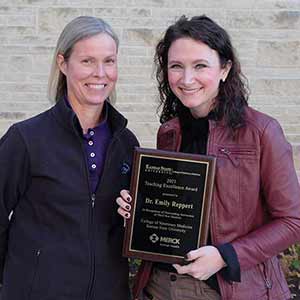 Dr. Reppert (shown at right with Dr. Beth Davis) was chosen as recipient of the 2021 Teaching Excellence in the Third Year Award sponsored by Merck Animal Health. This is the second time she has received this teaching award, previously honored in 2017. Dr. Reppert earned her Doctor of Veterinary Medicine degree in 2010 from Colorado State University and completed a master’s degree and large animal internal medicine residency at Oklahoma State University in 2014. She is a diplomate of the American College of Veterinary Internal Medicine. She currently teaches food animal medicine, surgery and clinical skills to third-year veterinary students.
Rose hits model market with ‘CHAMP’
Veterinary students can now get a leg up on learning clinical skills thanks to a new tool envisioned by Kansas State University's Susan Rose, clinical education technician in the College of Veterinary Medicine, and commercialized with help from K-State Innovation Partners.
After recognizing a need for more accurate and robust models for veterinary teaching, one of Rose's latest models has been transformed into a product called CHAMP: Canine Venipuncture & Injection Trainer. This unique canine hind limb model was refined and produced in collaboration with REMEDY Simulation Group, a Pennsylvania-based company specializing in human/anatomical teaching models. "CHAMP provides an opportunity for many students to learn how to handle needles and syringes properly for the first time," Rose said. "Additionally, it gives them the opportunity to develop muscle memory and hand skills they need to use traditional syringes and needles, butterfly catheters or vacutainers for obtaining blood samples, or how to insert and secure IV catheters." Rose, who sidelines as a wildlife/nature painter and artist in her spare time, began creating models for use in K-State's veterinary courses years ago. The origins of the CHAMP began in March 2018 with her development of prototype model limbs for practicing venipuncture in junior surgery lab. "No hind limb models were on the market for that, so I went to work to create our own," Rose said. "I modeled, molded and then cast limbs that could be used for both lateral canine and feline medical blood draws and subcutaneous injections." In summer 2018, Dr. Ryane Englar, former clinical education coordinator at K-State and current director of veterinary skills development at the University of Arizona, assisted Rose in the search for a company that might be interested in partnering to build a model. She and Rose both saw a need for veterinary models that could hold up to heavy use in a classroom setting. "It's one thing to create a venipuncture task trainer," Dr. Englar said. "It's another for that task trainer to hold up to 110 needle sticks without exsanguination. Model-making is just beginning to take off in the realm of veterinary education — it is still in many ways in its infancy stage — and so there are only a handful of companies that produce these products." After partnering with K-State Innovation Partners to license the model designs in June 2018, Rose came across REMEDY Simulation Group and reached out to see if the company would be interested in entering the growing veterinary model market. After a series of meetings, REMEDY acquired the exclusive rights to two of Rose's models and the development process began. After many more meetings and some production delays caused by the COVID-19 pandemic, the final product was released to the market on Oct. 15 in honor of Vet Tech Week. Dr. Englar contributed feedback, an instruction booklet and a name for the model. She and her students at the University of Arizona did pilot tests of the models in their venipuncture laboratory. The models held up to over 350 needle sticks without a problem. Dr. Shane Lyon, clinical associate professor at K-State, hopes to order the CHAMPs for use in his classes in the future. “Susan is absolutely amazing,” Dr. Lyon said. “The reality of this project is that she has been working on this for years. Susan brings a lot to the clinical skills course. She has decades of experience as a veterinary technician in multiple roles within the College. Just amazing to watch this happen!”"I am hoping schools that do not have the ability to create their own models will invest in CHAMP," Rose said. "These are extremely helpful and valuable tools."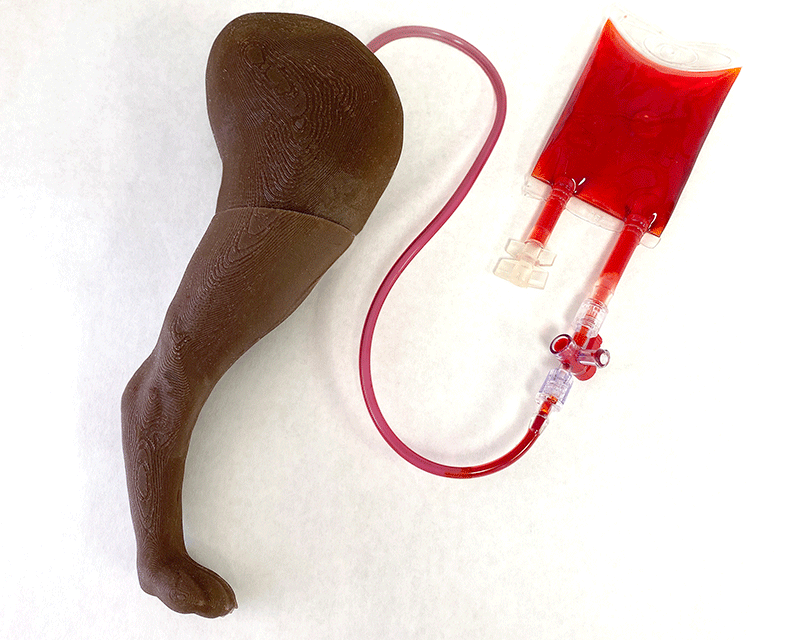
Canine Venipuncture & Injection Trainer was the idea of Kansas State University's Susan Rose, a clinical education technician. It is used in veterinary classrooms to help students learn how to handle needles and syringes properly.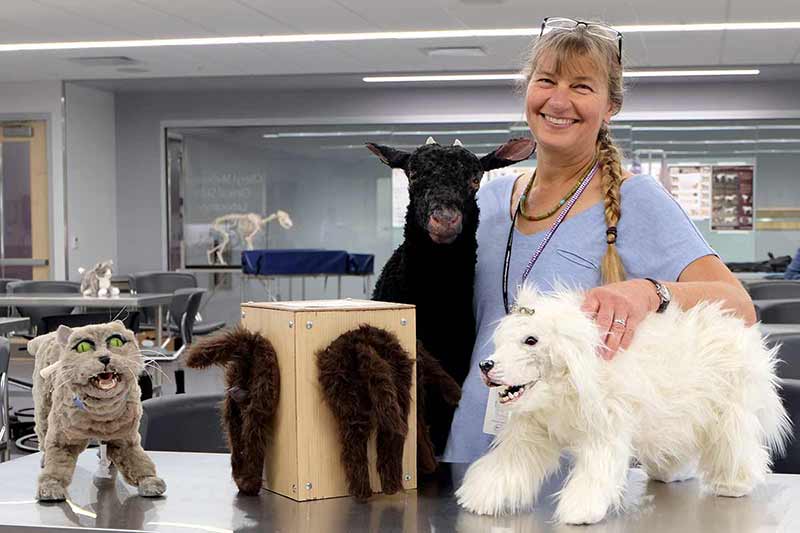
Susan Rose shares some of the other anatomical models she has created and that are used to teach veterinary students specific sets of clinical skills needed in a typical veterinary practice.
CVM appoints Renberg for Doughman professorship

Dr. Walter Renberg, professor and section head for small animal surgery in the Clinical Sciences department has been chosen as the new holder of the Roy and Lucille M. Doughman Professorship.
The recipient of this professorship must be a faculty member in the College of Veterinary Medicine in the field of small animal surgery. Dr. Renberg teaches Topics in Global Veterinary Medicine for second- and third-year veterinary students, Veterinary Surgery I for third-year students, Clinical Small Animal Orthopedic Surgery for fourth-year students and Advanced Topics in Small Animal Surgery for graduate students. He also teaches International Veterinary Study Tours first- and second-year students. He has taught at K-State for 23 years. Dr. Renberg earned his Doctor of Veterinary Medicine from Oklahoma State University in 1992. He held internships at Mississippi State University and Affiliated Veterinary Specialists, Orlando, Florida. He performed his small animal surgery residency at Virginia Tech, where he also earned a master's degree. Dr. Renberg has experience evaluating experimental models of OA development as well as the diagnosis of early hip dysplasia. Additionally, Dr. Renberg has been involved in several studies evaluating treatments for arthritis and control of pain. These studies have led to experience using force plate evaluations. Dr. Renberg has mentored House Officers in projects involving biomechanics and fracture healing. Dr. Renberg also serves as the director of international programs for the College of Veterinary Medicine. He advises the International Veterinary Student Association chapter at K-State and has published articles on international veterinary medicine. Additionally, Dr. Renberg works extensively with the Christian Veterinary Mission and has experience with development work in many countries. "Endowed professorships allow the college to reward and retain talented faculty in key positions," Dean Bonnie Rush said. "Dr. Renberg has demonstrated excellence in mission-critical areas — graduate and professional education, clinical service and research." In addition to this newly appointed professorship, nine other faculty in the College of Veterinary Medicine currently hold endowed professorships or chaired positions: Robert Larson — The Edgar E. and M. Elizabeth Coleman Chair
Mike Sanderson — The W.S. and E.C. Jones Departmental Chair of Clinical Epidemiology
Kenneth Harkin — Steven and Colleen Hodes Professorship in Veterinary Medicine
David Renter — Dr. Robert MacDonald Professorship in Veterinary Medicine
Derek Mosier — Dr. Roy Walter Upham Endowed Professorship
Michael Apley — The Edwin J. Frick Chair
Thomas Schermerhorn — Morgan K. "Al" Jarvis Chair in Veterinary Medicine
Ellyn Mulcahy — James B. Nichols Master of Public Health Professorship
Mary Bagladi-Swanson — Pet Tribute Professorship
More Headlines
Second-year veterinary student receives Tokach Angus Ranch Memorial Scholarship

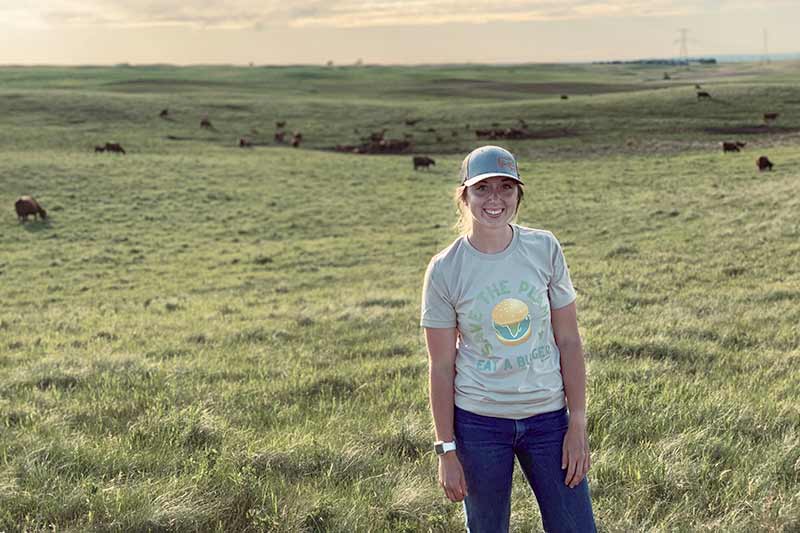
A Kansas State University veterinary student joined a group of 10 students selected for scholarship awards through the North Dakota Stockmen’s Foundation. Second-year student Paige Schmidt, of Medina, North Dakota, received the Tokach Angus Ranch Memorial Scholarship during the North Dakota Stockmen’s Association’s 92nd Annual Convention and Trade Show in Fargo.
The scholarship honors the memory of Richard M. “Dick” Tokach, who was the NDSA president from 1984 to 1986. Paige is currently in her second year at Kansas State University’s College of Veterinary Medicine. She received her bachelor’s degree from the University of Jamestown in biology. After acquiring her doctorate in veterinary medicine, she hopes to become a large-animal veterinary to serve the people and animals of her community and, on a larger scale, the food industry. Throughout high school, she was active in 4-H and the science fair, where she earned a trip to the International Science and Engineering Fair. Paige is currently involved in the bovine and theriogenology club and necropsy team at Kansas State University. She is the daughter of Jason and Serena. Written by Elizabeth Neshem, Communications Director, North Dakota Stockmen’s Association A Kidder County local is steering her way through school and in life as a whole as she chases her dreams of becoming a large-animal veterinarian. Paige Schmidt grew up on a commercial Sim-influence and Red Angus cattle ranch near Crystal Springs. The daughter of Jason and Serena Schmidt and the oldest of four children, she got a firsthand look into her family’s operation. “Throughout my childhood, I was involved in every aspect of the ranch,” Paige said. “I’ve always loved working with the cattle; it’s my favorite thing to do.” Pursuing a lifelong goal Throughout high school, Paige was involved in 4-H, FFA and the NDSA. “I was a bit of science nerd in high school, and I did the science fair every year,” Paige said. “I won the state contest in the animal science category for my project collecting fecal samples from different herds around my area and looking for parasites.” Following her graduation from Kidder County High School in 2016, she went on to play collegiate women’s basketball and pursue a bachelor’s degree in biology at the University of Jamestown. “By winning the State Science Fair in the animal science category, I won a scholarship for the University of Jamestown,” she indicated. “I also received a scholarship to play women’s basketball there. So, it seemed like a good fit for me.” Paige was able to play a collegiate sport, pursue her degree and stay close to home for her undergraduate career. Even with a busy college schedule, she still had her sights set on her childhood dream. “I was really determined to go to vet school,” Paige said. So, with a hard-work mentality that she learned growing up on a ranch, she chose to get things done, excel in school, work hard on the court and complete her veterinary school applications. “I guess every young kid is always like, ‘I’m going to be a vet when I get older,’” Paige said. “But, I truly enjoy the beef industry and I really like school. It has put my intellectual interests together and helped me pursue my passion.” Now, Paige is in her second year at Kansas State University’s College of Veterinary Medicine in Manhattan, Kansas, and her passion has been fueled. “I love it 100 percent,” she said. “I get so excited when I learn. It really just combines everything that I love into one.” She believes that becoming a large-animal veterinarian will help her protect the industry and keep it at the high standard that she has always set it at. Kansas State University has been a good fit for the small-town girl. “Being in the Midwest, there’s a lot of feedlots and cow-calf operations,” she said. Kansas has cattle, amongst so many other aspects of agriculture, so it fits my interests.” The college girl is not only aware of how costly higher education is, but how valuable it will be in the long run. She gives credit to the NDSA and the legislature for work on the Professional Student Exchange Program and the North Dakota Stockmen’s Foundation on its scholarship program. Paige is a recent recipient of the Tokach Angus Ranch Memorial Scholarship. Internship importance This past summer, Paige accepted an internship at Horner Equine in Dawson, under the leadership and skills of Dr. Lindsey Horner, K-State DVM class of 2011. “I worked with Lindsey’s dad, Dr. Arlen Scherbenske, when I worked at the Steele Vet Clinic,” Paige said. He always told me I should look into an internship with Lindsey. She’s a great teacher.” At first, Paige, a die-hard cattle girl had every instinct to look for something beef-related, but she applied for the internship anyway. Always up to try something new, she accepted it. Paige started the internship in May, right during breeding season and the peak of performance-horse appointments. “The internship gave me the chance to experience everything under the sun,” Paige said. “I learned so much and I’m really glad I did it, stepped out of my comfort zone and tried something new.” The experience made Paige’s wheels turn and got her more excited about what lies ahead. She also felt it will help her with the practicality of implementing practices she will be learning later in her education. “It’s a valuable time when you’re an intern, because there’s not a lot of pressure on you,” Paige said. “You’re just there to watch, experience, learn and try.” She credits the veterinarians she has worked who have pushed her to see her talents in her chosen career path. Educating others Paige has always had a passion for the beef industry, but didn’t realize until her collegiate career how misinformed many consumers are about agriculture. “I’ve always known people in the city don’t really understand how we farm and ranch,” Paige explained. “You always tell yourself that you know something, but until you truly experience it, you don’t realize the extent of it.” While she pursued her degree at the University of Jamestown, she got a slight glimpse at the lack of information about ag. ”People still understand agriculture for the most part, because we were still in North Dakota.” But, in her first year at veterinary school in Kansas, Paige got a firsthand look into how oblivious some are about food production. “It was always just common knowledge to me,” Paige said. “So, I decided to share what we do and how we do it.” Now, through social media, she teaches people what her family does to take care of the land and the livestock. “If we’re doing something that I think is educational, I always try to capture it.” Her family has had huge impact on her desire to educate others. “I grew up following my dad [Jason] around the ranch, learning from him,” Paige said. “He is so passionate about the beef industry and protecting our livelihood, it’s inspiring,” she said. Paige believes in fighting for what she believe in and her roots. Stockmen’s ties As a 23-year-old, Paige has 21 years under her belt as an NDSA member. “I just remember growing up going to the convention,” Paige recalled. “My dad was super involved as a director and now past-president and we got to go and have fun while he worked. It is something my family looked forward to.” While Paige has grown up and attended many conventions and a Tomorrow’s Top Hands Beef Leadership Summit, she understands that the association and its events provides connections. “The connections the NDSA provides is something I notice most now,” she said. “Along with the love of our Stockmen’s family, the atmosphere and the people are amazing.” 
Work-hard mentality shoots Schmidt forward
Crystal Springs native navigates veterinary school
Reprinted with permission from North Dakota Stockmen magazine 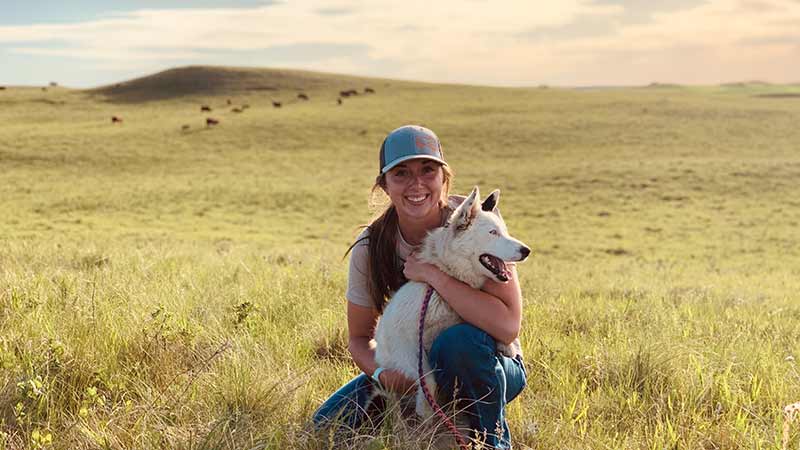
Richard Preston, 'Hot Zone' author, discusses future pandemics
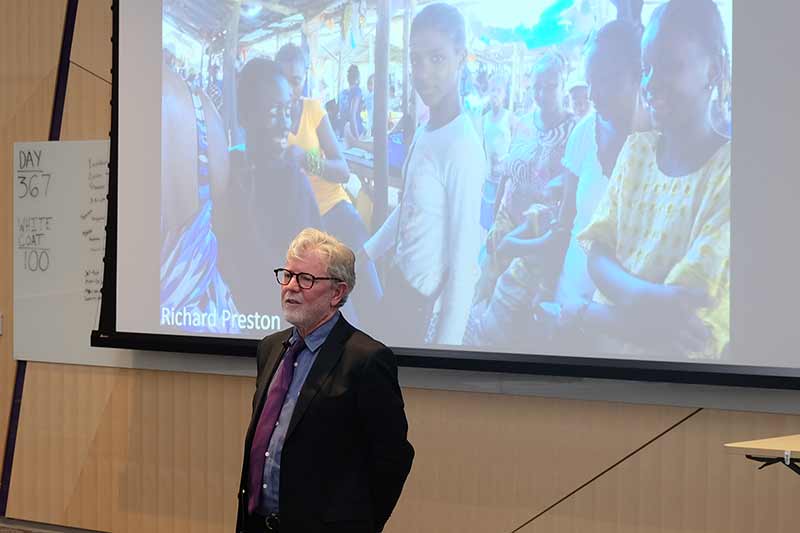
The details of a 1994 bestselling novel "The Hot Zone" inspired a recent television miniseries. The author, Richard Preston, will be featured at Kansas State University to speak about future pandemics.
The talk was held at the College of Veterinary Medicine Nov. 12, in the Boehringer Ingelheim Auditorium. "The Hot Zone" was inspired by the true story of the arrival of Ebola on U.S. soil in 1989 in Reston, Virginia. "The Hot Zone" involves two prominent Kansas State University veterinarians and leaders: Nancy and Jerry Jaax, both Doctor of Veterinary Medicine graduates in 1973 and 1972, respectively. After graduating, the Jaaxes both served in medical defense with the U.S. Army, during which time they became involved in the events depicted in "The Hot Zone." The couple is being honored as recipients of the K-State Alumni Association's Alumni Excellence Award on the evening of Nov. 12. In April 2019, Preston told CNBC news that SARS-Cov-2, the virus that causes COVID-19, "is part of a pattern of emerging viruses. Viruses coming out of the world's ecosystems and finding their way into the human species and then, as we now see, can do incredible damage." "Richard Preston's work is highly relevant today, given the spread of the current pandemic and the zoonotic origins of emerging diseases," said Ron Trewyn, the university's National Bio and Agro-Defense Facility liaison. "His appearance at K-State serves to emphasize both the role of veterinary medicine in public health emergencies and the importance of high-containment research, such as will be conducted at NBAF and is currently ongoing in our Biosecurity Research Institute. We are very excited he is able to visit with us at K-State." Preston is the bestselling author of 10 books, including "The Hot Zone," "The Wild Trees," and his most recent, "Crisis in the Red Zone." Preston's books explore little-known and dramatic worlds of nature, science and the human experience and have been published in more than 35 languages. Preston has taught nonfiction writing at Princeton University and the University of Iowa. The recipient of many awards and honors, including a Special Citation of the FBI, he is the only non-physician to receive the Champion of Prevention Award of the U.S. Centers for Disease Control and Prevention. An asteroid has been named "Preston" in his honor. Asteroid 3792 Preston travels on an unpredictable orbit near Mars and could some day slam into the Earth.
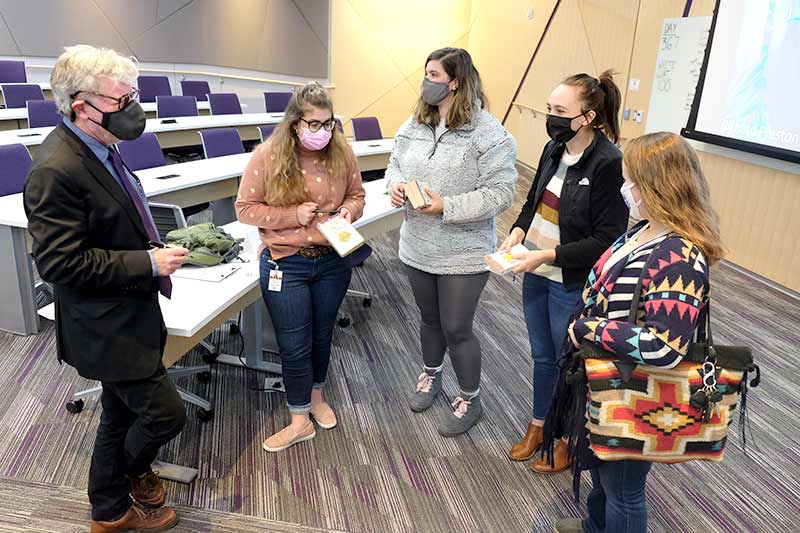
Author Richard Preston answer questions and signs autographs after the lecture. Several students commented about being inspired to study disease control and animal health after reading 'The Hot Zone.' These students already had their own copies of the book.
New $325,000 grant supports first U.S. research project into novel tick disease
Researchers at Kansas State University are the first in the United States to look into methods of keeping a foreign tick-borne livestock disease at bay. The Center of Excellence for Vector-Borne Diseases recently received $250,000 from the U.S. Department of Agriculture and an additional $75,000 from the state of Kansas' National Bio and Agro-Defense Facility Transition Funds.
The new proejct builds upon past research into containing and controlling heartwater disease, which is caused by the tick-transmitted pathogen Ehrlichia ruminantium. Heartwater is deadly to cattle, sheep and goats. Dr. Roman Ganta, professor of diagnostic medicine and center director, and his team recently published results of the first heartwater risk assessment experiments in sheep in the U.S. using several pathogen strains imported from sub-Saharan Africa. The new funding will extend collaborative research to further define pathogenesis and vector competence of ticks native to the U.S.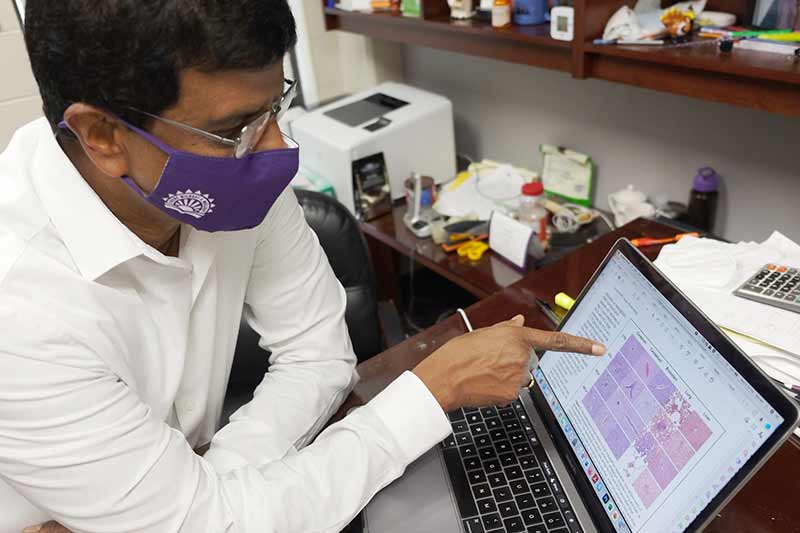
Dr. Roman Ganta and his team received a grant to help protect U.S. livestock from heartwater, a tick-borne disease.
While heartwater originally was identified as a sub-Saharan African disease, it has been established in several Caribbean islands, posing a potential threat to the U.S. cattle industry.
"The possible introduction of heartwater from the Caribbean and through imported exotic foreign animals from Africa is a major concern to the US food animal industry," Dr. Ganta said. "The USDA-estimated cost of heartwater could be as high as $2.3 billion in losses to the U.S. economy."
The disease is characterized by fever, labored breathing, coughing, neurological signs, hydrothorax, ascites and edema of the lungs. High mortality rates up to 90% can occur in livestock if introduced into a non-endemic area, such as to the mainland U.S.
"Despite its enormous importance, effective means of diagnosing and controlling the disease are not available," Dr. Ganta said. "Currently, there are no approved diagnostic tests or vaccines for heartwater disease in the U.S. The far-reaching goals of our heartwater research are to develop rapid diagnostics and a vaccine."
The project will be the first to have strategic collaborations with the USDA and NBAF. Among its goals are to establish future collaborations with researchers in the Caribbean and Africa. Developing better methods of controlling heartwater will be critical in improving food animal health and the economies in sub-Saharan Africa and parts of the Caribbean where the disease is widespread.
The Center of Excellence for Vector Borne-Diseases is an interdisciplinary research center focused on pathogenesis, surveillance and prevention of tick-borne diseases and other vector-borne diseases of significant importance to animal and human health. The goals of the center are to prepare Kansas State University for building a strong program on vector-borne diseases, developing a network to build collaborative research involving scientists from the university with other academic institutions from the U.S. and abroad, training a new generation of scientists with expertise on vector-borne diseases, and developing additional resources.
BCI experts offer advice for cold weather concerns
A high percentage of the U.S. beef herd resides in areas of the country where moderately to extremely cold winter temperatures are common. By planning for winter weather, ranchers can avoid being caught off-guard by extreme events and can manage the typical winter conditions so that cattle do not have to continually utilize body fat as an energy source to keep warm – leading to excessive loss of body condition.
Situations that are most likely to cause cold stress are: cattle with thin fat cover and short hair coats (due to movement from a warmer environment to a colder environment; or extremely cold temperatures early in the fall/winter season), cattle with wet hides, or high wind speed accompanying cold temperatures. Wind chill is a better predictor of cold stress than temperature alone because cold wind draws heat away more quickly than still air at the same temperature. Wet or mud-caked hair losses its ability to insulate the animal and a wet winter hair coat only provides as much protection from the cold as a typical summer hair coat. If cold wind is combined with a wet hair coat (as can occur during a winter storm), the effects can be very profound. Adult cattle with a dry hair coat, adequate body condition, and abundant, adequate-quality forage can withstand most winter situations, especially if they have the ability to find protection from wind and have been exposed to moderately cold condition for several weeks which allows them to acclimate by growing a thick winter hair coat and increasing feed intake. As temperatures drop, cattle increase heat production which means that the number of calories they need for maintenance increases. This increase is met by consuming more feed and moving it through the digestive tract faster, but the cost of this faster movement is that feed is not digested as fully. The effect of needing increased calories for maintenance at the same time that feed digestibility is decreasing means that if cows do not have access to plenty of digestible feed, they will have to “burn” body fat as a calorie source. Another factor that can limit feed intake in winter conditions is if water sources are frozen or unavailable. If feed intake cannot keep up with energy demands, and body fat is mobilized to meet energy demands, then the cows will have less fat insulation and will be more susceptible to cold temperatures – causing a viscous cycle that can lead to cold stress and even more weight loss. Cold weather brings a special concern with bulls because of the potential to have frostbite damage to the scrotum and testicles. It is very important that bulls have protection from the wind and adequate bedding if they are housed on concrete or dirt. Cold temperatures have the greatest potential to cause serious problems in young calves, particularly calves in the first day of life. Because calves are born wet, have thin skin and very little body fat, they lose body heat very rapidly and if they are not able to become dry, can quickly become severely cold stressed. Contact with snow or wet ground will increase the amount of time that a calf stays wet and in danger. Body temperature of newborn calves can drop to dangerously low levels in 3 hours or less. Calves are born with a body temperature of about 100˚F. When exposed to a cold environment, calves are able to produce heat in two ways, shivering and the heat production of brown fat (fat that surrounds the kidneys of a new-born) and they can conserve heat by reducing blood flow to the body surface and extremities (feet, ears, etc.). In early stages of cold exposure, calves will shiver vigorously and have a fast heart rate and breathing rate. If that does not keep the body temperature up, the calf’s body sends less blood to feet, ears, and nose in an effort to minimize heat loss. Severe cold stress occurs when the body temperature drops below 94˚F. At this temperature, the brain and other organs are affected and the calf becomes depressed, unable to rise, unwilling to suckle, and will temporarily lose the ability to shiver. The good news is that if the calf can be warmed-up and its body temperature can begin to rise, the shivering response will return and the core body temperature will slowly increase. During periods of cold or wet weather, newborn calves (less than 1 to 2 days of age) should be checked every few hours with a thermometer and any calf with a below-normal temperature, even if it appears OK, should be warmed. Calves suffering from cold stress must be warmed so that body temperature can rise above 100˚F. If body temperature has not dropped too far, putting the calf in the cab of a pickup out of the wind and rain or snow will warm the calf. In more severe cases the calves can be placed in warm water, specially designed warming boxes, or near a heat source such as an electric blanket, heat lamp, or hot water bottles. To avoid skin burns, the heat source should not exceed 108˚F. In addition to an external heat source, cold-stressed calves should be fed warm colostrum, milk, or electrolyte fluid with an energy source using an esophageal feeder. Prevention of cold stress involves management to ensure that calves can be born in a short period of time and both the calf and dam can stand shortly after calving so that they can bond and the calf can begin suckling. Anything that prolongs calving or reduces the chance that a calf will suckle soon after birth should be addressed by management changes. Calving difficulties are minimized by proper heifer development, proper bull selection for calving ease, and proper nutrition so that heifers and cows calve in a body condition score of 5 to 6 on a 9-point scale. Cows with large teats or that are not attentive mothers should be culled. Use of pasture as the primary forage source during calving encourages cows to keep spread apart and minimizes development of muddy areas. If the herd forage plan includes feeding hay, consider feeding hay in early to mid-gestation and saving stockpiled pasture for the calving season. If supplemental hay and grain are fed during calving, these should be provided at locations that are separate and distant from water sources and windbreaks. I discourage the use of bale rings in calving and nursery pastures and suggest that if using large round bales, they be unrolled and the feeding area changed with each feeding. Unrolled bales will have greater hay waste, but reduced chance for mud caused by concentrating the herd into small feeding areas, and unrolled hay provides bedding for newborn calves so that they are not in direct contact with the ground. In addition to monitoring the weather forecast for severe winter weather events and to be alerted to times when additional feed is needed, minimizing the effects of cold temperatures on newborn calves involves planning ahead and considering calf comfort and protection when making heifer development, bull selection, nutrition, and pasture management decisions. Making sure that cows will have adequate access to forage and water even in situations with significant snow cover is necessary to provide sufficient calories to maintain body fat and heat production. And, protecting the cowherd (and bulls) from winter wind and providing bedding if on concrete or mud/dirt will minimize the effects of severe weather.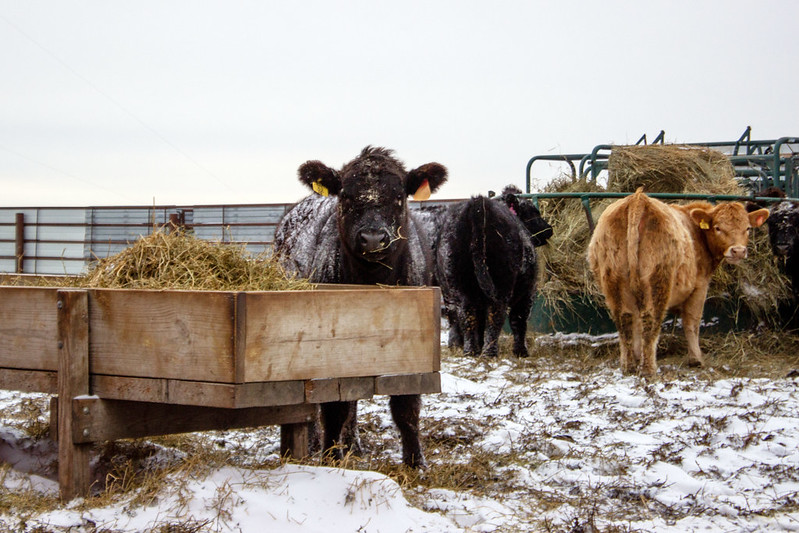
Cold weather brings several concerns to ranchers, but with the right preparation, herds can be kept safe.
Regular features
Alumni Events, Development and Continuing Education
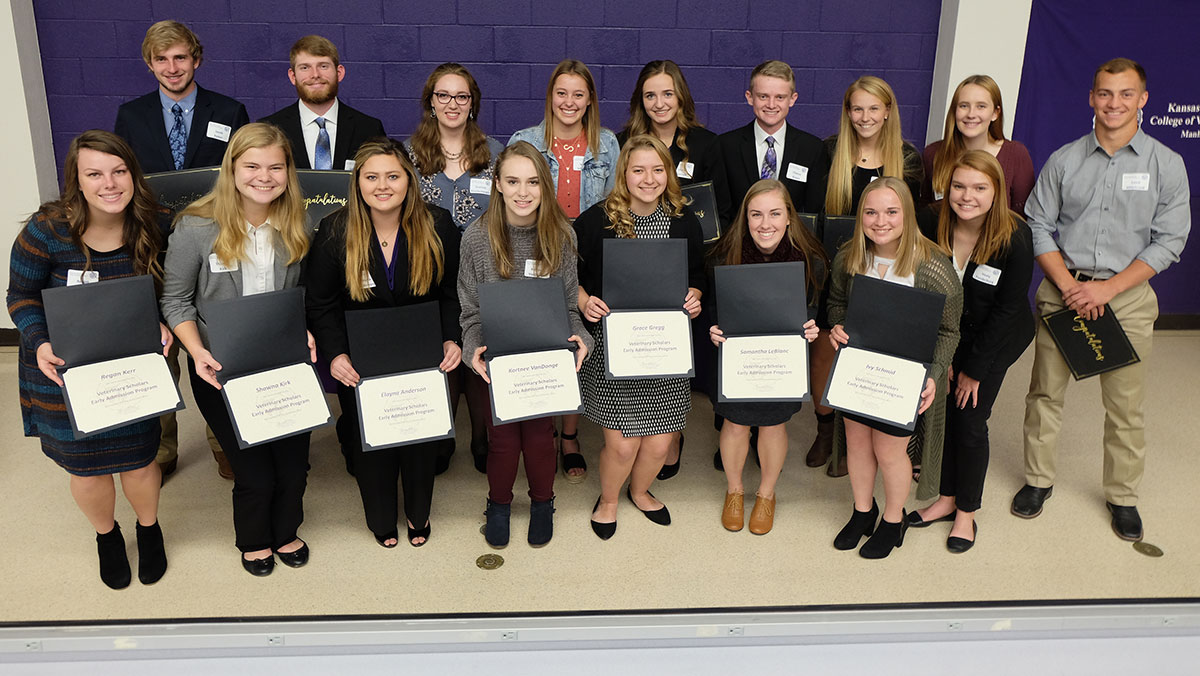
 The Veterinary Medical Alumni Association organizes alumni receptions at several of the national annual conferences plus continuing education events and more. This month's section includes the monthly listings of recently departed alumni and links to their obituaries, plus a new link for submitting nominations for Alumni Recognition Awards.
Continuing Education Opportunity
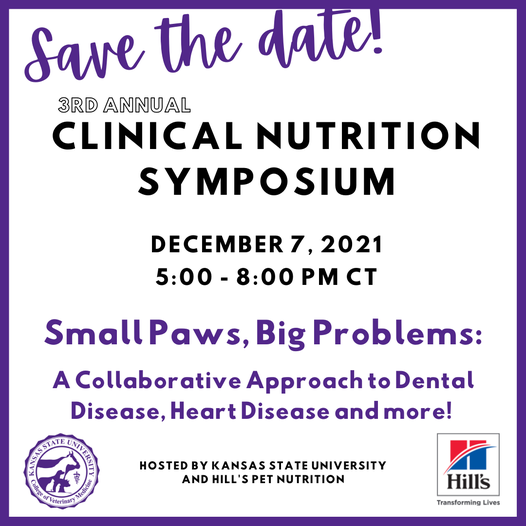
See more at the CE Conferences page at our website
Alumni Updates
Dr. Arnold Nagely, DVM 1968, was recently featured in a news story that recognized his service in the US Air Force: "Caring for sentry guard dogs in military unforgettable experience for veterinarian."
Submit nominations for Alumni Recognition Awards onlineSee our new online nomination form to nominate a fellow alumnus for one of our many annual recognition awards, presented at the national conferences: VMX, WVC, AVMA and the Annual Conference for Veterinarians. See full details at the link below. |
|
In Memoriam - Recently Departed Alumni
Dr. Stephen J. Aberle, DVM 1969 Gordon Max Mickelson, DVM 1982 Dr. Anne Michaux Scully, DVM 1961
(click highlighted names for obituary) |
Questions about Alumni or CE events?Contact:
|
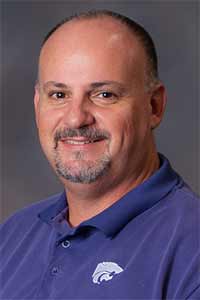 Tony Ballard
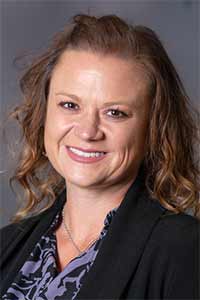 Sarah Keatley
News Ticker
| More activities and accomplishments in the College of Veterinary Medicine: |
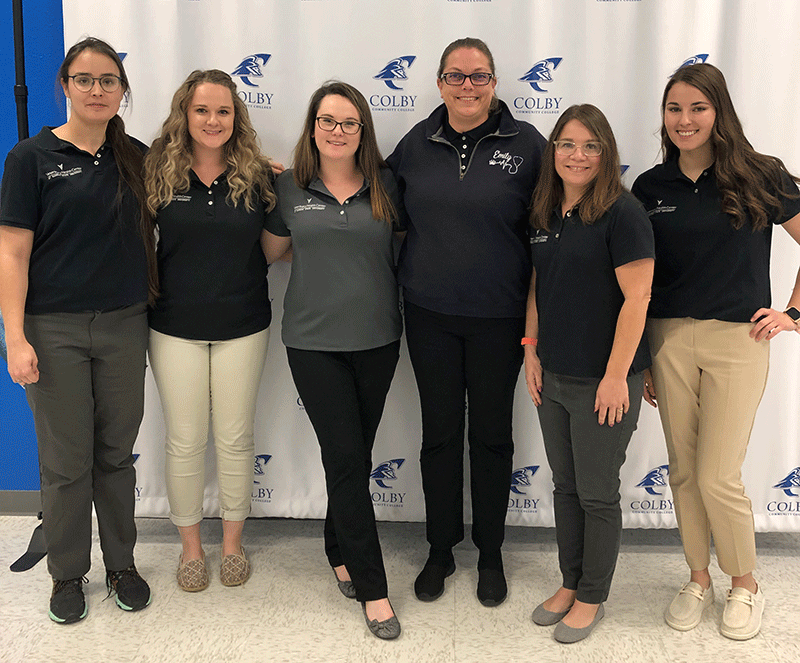
Six veterinary nurses attended Colby's 50th Veterinary Nurses Conference on Oct. 22. Each presented a seminar in their specialty and promoted the Nurse Intern Program. (From left to right) Amber Melton, RVT Exotic and Zoological Medicine; Hannah Smiley, RVT Nurse Intern; Brooke Neiberger, RVT Oncology; Emily Conner, RVT Equine; Christine Hackworth, RVT Outreach Program Coordinator; and Raycelon Kuntz, RVT Nurse Intern. |
|
Dr. Megan Niederwerder was an invited speaker at the Alternatives to Veterinary Antimicrobials (AVANT) Workshop on Regulatory Issues in Phage Therapy and FMT in Animals at the University of Copenhagen in Denmark on Oct. 17. The title of her talk was “Use of FMT for control of viral diseases of swine.” She was also an invited speaker and panelist for the Kemin Intestinal Health Conference, a Global Digital Event held by the Animal Nutrition & Health Division of Kemin Europe on Sept. 16-17. The title of her talk was “Successful measures to control African swine fever.” The Dr. Jane A. Westfall Graduate Fellowship for Women was awarded to Deepa Upreti during the Anatomy and Physiology seminar on Oct. 26. This fellowship provides financial assistance to female graduate students in the A&P department. Deepa is a graduate research assistant working with Dr. Masaaki Tamura. The fourth-year Shelter Medicine rotation hit 30,000 surgeries on Oct. 4! The American Association of Bovine Practitioners 54th Annual Conference was held in Salt Lake City, UT on Oct. 7-9. Several CS faculty members attend and presented:
Dr. Mike Kleinhenz presented, “Development of Standard Operating Procedures for Pressure Mat Analysis in Food Animal,” in the virtual 3rd Annual Pain in Animals Workshop (PAW) on Oct. 14-15. The focus of this year’s workshop was on Gait Analysis and Accelerometers. Dr. Susan Nelson presented, “Those Creepy Crawly Parasites that Affect Cats and Dogs,” at the K-State Olathe Careers and Cases in Veterinary Medicine lecture series on Oct. 20. Dr. Steve Ensley spoke about Harmful Algae Blooms Nov. 3 at K-State Olathe for One Health Day. Dr. Chris Blevins performed USEF Drug and Medication Testing at the United States National Arabian and Half-Arabian Championship Horse Show on Oct. 25-30. Dr. Anne Lovett, Livestock Services resident, presented a portion of her master’s research project, “Acute anaplasmosis reduces breeding soundness in experimentally infected beef bulls,” at the Kansas State University poster competition held at K-State on Oct. 27 and won her section! She will travel to Topeka in February to represent K-State during the Capitol Graduate Research Summit . Dr. Emily Reppert, associate professor of Livestock Services, is Dr. Lovett’s mentor. |
|
|
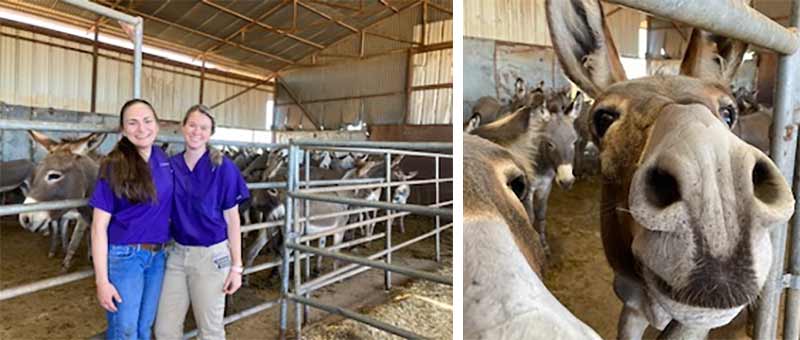
 Join the College of Veterinary Medicine on LinkedIn and add us to your profile under education and/or employment to help build and engage our online social community! Follow the LinkedIn page here: www.linkedin.com/company/kstatevetmed
New Arrivals/Recent Departures
Lifelines is published each month by the Marketing and Communications Office at the College of Veterinary Medicine. The editors are Joe Montgomery, jmontgom@vet.k-state.edu, and Piper Brandt, pnbrandt@vet.k-state.edu.