Monthly Newsletter
July 2021 - Vol. 16, No. 7
<May-June 2021 | August 2021>
Top Stories
CVM virologists publish new findings on SARS-CoV-2 treatment option
A recent study by Kansas State University virologists demonstrates successful postinfection treatment for SARS-CoV-2, the virus that causes COVID-19. College of Veterinary Medicine researchers Drs. Yunjeong Kim and Kyeong-Ok "KC" Chang published the study in the prestigious journal Proceedings of the National Academy of Sciences of the United States of America, or PNAS.
They found that animal models infected with SARS-CoV-2 and treated with a deuterated protease inhibitor had significantly increased survival and decreased lung viral load. The results suggest that postinfection treatment with inhibitors of proteases that are essential for viral replication may be an effective treatment against SARS-CoV-2. These protease inhibitors are a class of antiviral drugs that prevent viral replication by selectively binding to viral proteases and blocking the activation of proteins that are necessary for the production of infectious viral particles. "We developed the protease inhibitor GC376 for treating a fatal coronavirus infection in cats, which is now under commercial development as an investigational new animal drug," said Dr. Kim, associate professor of diagnostic medicine and pathobiology. "After COVID-19 emerged, many research groups reported that this inhibitor is also effective against the coronavirus that causes COVID-19, and many are currently pursuing the development of protease inhibitors as a treatment." Drs. Kim and Chang modified GC376 using a tool called deuteration to test its efficacy against SARS-CoV-2. "Treating SARS-CoV-2-infected mice with deuterated GC376 significantly improved survival, viral replication in lungs and weight losses, which shows the efficacy of the antiviral compound," said Dr. Chang, professor of diagnostic medicine and pathobiology. "The results suggest deuterated GC376 has a potential for further development, and this deuteration method can be utilized to other antiviral compounds to generate potent inhibitors." The virologists are continuing to develop improved inhibitors using various methods. Deuterated GC376 is currently being evaluated for further potential development. Previous work done by Drs. Kim and Chang is continuing development through licensing agreements with industry partners.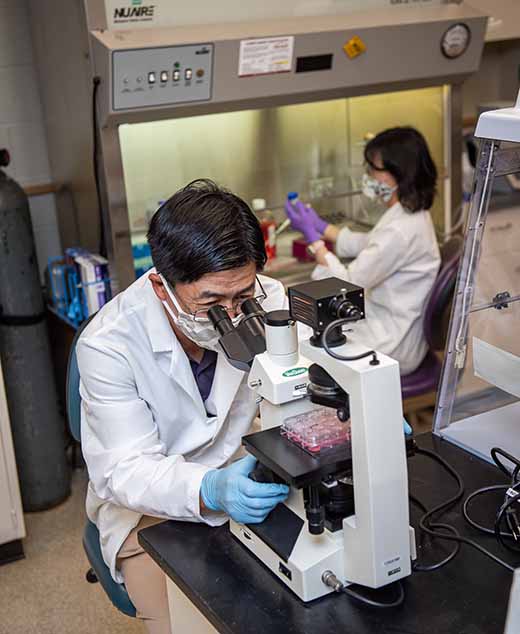
Kansas State University researchers Drs. Kyeong-Ok "KC" Chang, left, and Yunjeong Kim have published a new study about a successful postinfection for SARS-CoV-2, the virus that causes COVID-19.
Third-year student Jayden McCall chosen for veterinary research fellowship to identify African Swine Fever Virus protective antigens

Jayden McCall, third-year veterinary student at Kansas State University from Valley Center, Kansas, is one of 14 students selected nationally for a Veterinary Student Research Fellowship to Address Global Challenges in Food and Agriculture.
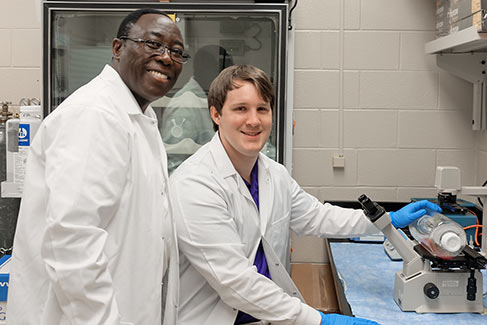
Dr. Waithaka Mwangi serves as Jayden McCall's mentor for his research into African swine fever virus (ASFV).
The Foundation for Food and Agriculture Research (FFAR), in partnership with the Association of American Veterinary Medical Colleges invests in future veterinarians and provides the opportunity to pursue research expertise outside of the traditional biomedical course. Veterinarians trained in multi-species medicine, animal science and public health are key to addressing many real-world challenges. The three-month fellowship culminates with student presentations at the annual National Veterinary Scholars Symposium in August.
Jayden’s research project focuses on African swine fever virus (ASFV) which causes a highly contagious and deadly disease of swine for which there is no vaccine. He is identifying protective antigens, viral proteins that induce a protective immune response in the body, within the ASFV genome. This information is critical to developing an efficient vaccine against ASFV, a tool that will greatly benefit global pork producers. Jayden ’s research mentor is Dr. Waithaka Mwangi, professor in the College of Veterinary Medicine.
“Jayden is a hardworking and highly motivated student,” Dr. Mwangi said. “He has potential to make significant contributions to ASFV vaccine development efforts as judged by his selection to receive the FFAR-AAVMC national award. The award committee mentioned that he was ‘selected as one of the most promising among a group of veterinary students interested in pursuing wide-ranging research across the agricultural and veterinary sciences.’”
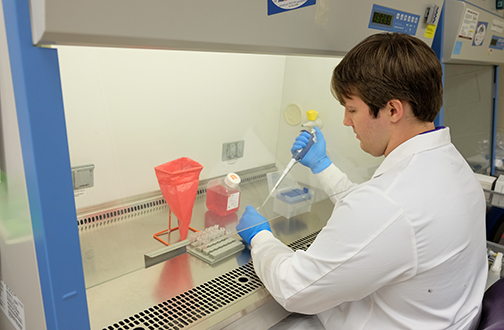
Jayden is currently working with Dr. Mwangi through K-State’s Veterinary Research Scholars Program (VRSP), an annual summer program that provides veterinary students with in-depth, hands-on research opportunities with experienced faculty mentors. The program’s goal is to motivate students toward a research-focused career, with many VRSP students pursuing research related to food and agriculture.
“I began working with Dr. Mwangi almost two years ago and was immediately interested in the research done in his lab group,” Jayden said. “Always having had an interest in immunology and vaccine development, this project has been a great way to dive deeper into the subject and gain hands-on experience in the techniques needed to perform this work. I applied for the FFAR Fellowship because African Swine Fever Virus (ASFV) has had a massive impact on the global pork industry.”
“Jayden has been an exemplary VRSP scholar, and we are very proud of him for being named a FFAR fellow this summer,” said Dr. Kate KuKanich, VRSP director. “His work with Dr. Mwangi to develop an ASF vaccine will benefit swine health and food safety globally, and we are grateful to FFAR and AAVMC as this fellowship will further strengthen his potential for future impactful research.”
Jayden said the production of an effective vaccine against this virus has never been more needed and would provide great security to pork producers around the world.
Jayden added, “Upon graduation with my Doctor of Veterinary Medicine degree in two years, I plan to finish my Ph.D. training with Dr. Mwangi and then continue to pursue development of therapies and vaccines against ASFV and other infectious diseases affecting animal health.”
The FFAR Vet Fellows program supports student research on agricultural productivity, public health and environmental sustainability. FFAR and AAVMC adjusted the parameters of the fellowship in response to the COVID-19 crisis to also include zoonotic or pandemic research.
“Investing in the development of our scientific workforce is a cornerstone of FFAR’s mission,” said FFAR’s Advanced Animal Systems Scientific Program Director Dr. Tim Kurt. “We are thrilled to support the research of the Vet Fellows this year who are developing tools, technologies and strategies to solve real-world issues affecting animal production, disease evolution and animal and human health.”
Stipend support of $10,000 per student is provided for up to 15 students per year (limit up to two students per institution) to perform research with a qualified mentor and to attend the National Veterinary Scholars Symposium.
This program is open to students currently enrolled in a DVM or VMD degree programs, including combined degree programs. Students that have already received a DVM or Ph.D. degree are not eligible. Prior research experience is not necessary to apply.
Summer heat means time to keep an eye on pets for signs of heat stress, dehydration
With high temperatures scorching much of the country, a Kansas State University veterinarian is reminding pet owners that dogs, with that layer of fur, are susceptible to the heat.
As the summer heat index rises, the risk for dehydrated and overheated dogs does the same, said Dr. Susan Nelson, clinical professor at the university's Veterinary Health Center. She said it's important to recognize the signs of heatstroke in your pet and know what you can do to prevent it from becoming a problem. According to the Centers for Disease Control and Prevention, when temperatures outside range from 80 to 100 degrees, the temperature inside a car parked in direct sunlight can quickly climb to between 130 to 172 degrees. That means it's best to leave pets at home when running errands, Nelson said. "Even with the windows cracked, we should never leave our pets in a vehicle unattended," Dr. Nelson said. "For what might seem like a short trip into the bank, it can end up being fatal for our pets." To prevent heatstroke in your pets, Dr. Nelson said to keep in mind the time of day you take them outside for walks or runs. She recommends taking them out in the cooler morning or later evening hours. "Even if they have never had a problem with heat before, watch for signs of lagging behind, thick saliva and dark mucus membranes," Dr. Nelson said. These are all indications your dog might be starting to get heat stress." The following are some of the symptoms Dr. Nelson said to watch for when trying to detect heatstroke in your dog: • Body temperature above 103 degrees. If you think your dog is starting to become overheated, move it to a shaded area and offer cool water to drink until the dog has cooled down, Dr. Nelson said. If your dog is showing signs of more advanced heat stress, wet it down with cool water — not ice water — and place the dog in front of a fan. If its condition does not change, run the air conditioning in your car and get the dog to a veterinarian for further treatment immediately, as every second counts, she said. Dehydration also can be a problem with pets on hot summer days. Dr. Nelson said signs of severe dehydration, especially in dogs, include the appearance of sunken eyes, gums feeling dry and tacky, and overall weakness in the animal. Dogs pant to cool down, and they tend to pant frequently when overheated and tired, she said. "When the air goes by, they dissipate the heat by breathing this way, but this also means it is easier for them to dehydrate more quickly when they're panting a lot," Dr. Nelson said. Dr. Nelson also recommends that outdoor dogs and cats have access to plenty of fresh, clean water. Water bowls should be checked and filled as needed several times per day during hot weather. Food should be changed a minimum of twice daily, as it spoils quickly in warm weather and flies are attracted to food that is left out, she said. If left outside, your pets should have access to shade any time of the day, so be sure to check periodically throughout the day to ensure shade is available. If you don’t have any trees, etc., you can hang a tarp to create shade for them. If you notice your pet having medical problems contact a veterinarian immediately. You can also reach out to the Kansas State University Veterinary Health Center at 785-532-5690.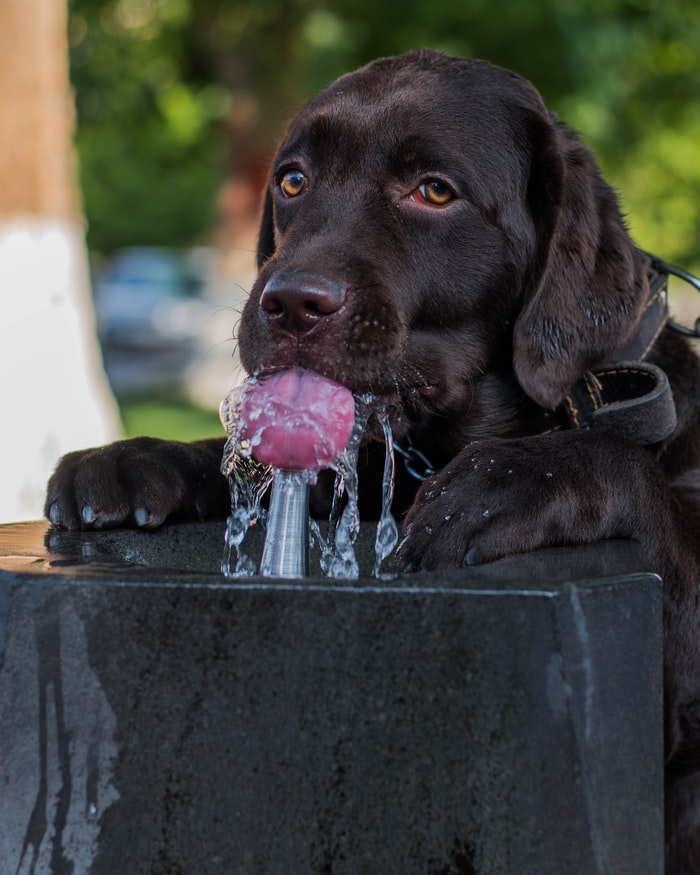
Keeping your pets hydrated when summer temperatures climb will reduce the risk of heat exhaustion and heatstroke, according to Dr. Susan Nelson in the Veterinary Health Center at Kansas State University. The body temperature of a dog should be between 100 and 102.5 degrees; above 103 degrees is considered abnormal.
• Excessive or vigorous panting.
• Dark red, blue or purple gums.
• Thick saliva and excessive drooling.
• Dizziness or disorientation.
• Restlessness or appearing distressed.
• Rapid heart rate or irregular heartbeat.
• Vomiting or urinating blood, or traces of blood in bowel movements.
• Seizures and muscle tremors.
• Lying down and unwilling or unable to get up.
• Collapse or loss of consciousness where the animal cannot be awakened.
More Headlines
Veterinary Medical Library begins new chapter

Gayle Willard, professor/director of the Veterinary Medical Library, is retiring after more than 50 years of service to Kansas State University and the College of Veterinary Medicine. Andi Parrish has been named as the new director.
Willard received a Bachelor of Science in secondary education in 1970 and a Master of Science in educational media and technology in 1984 from the College of Education at Kansas State University. Initially hired as a student employee of the Veterinary Medical Reading Room in 1966, Willard continued to pursue a library career after learning of the new veterinary library. In 1973, she became the first library associate, assistant to the head, under Dean Trotter. She recalls how one of her first assignments was to go to the new library and mark every shelf to indicate where all of the journal titles would begin. In 1985, Willard became head, solidifying her leadership role in the Veterinary Medical Library. Willard received a Master of Library Science from Emporia State University in 1987 and became an assistant professor and director of the library. Willard was promoted to professor in 1999. She has worked with the past 10 deans of the College of Veterinary Medicine. Willard's leadership goals within the Veterinary Medical Library were to foster a flexible, yet cohesive, environment centered on staff and veterinary students. Her innovation and determination secured a myriad of grants to establish expansion and development of information literacy, technology and learning spaces for the Veterinary Medical Library. One such instance was during the 2014-2015 library renovation where she pressed for collaborative study spaces specifically for use by the Doctor of Veterinary Medicine students, smart technology to be accessible by all patrons, and electronic course resources; a project which continues at present. Peter and Louise Kaufman, frequent donors to the Veterinary Medical Library, said the following about Willard: "We met Gayle about 30 years ago. We were approached for a donation to the library in order to meet an outstanding need to satisfy the accreditation of the Veterinary College. Little did we know that we would be receiving a gift of Gayle and starting a long-term friendship. Gayle has been passionate about the library. Each year she would contact us to discuss the needs of the library. She has been an inspiration and visionary. Over the years, the library has grown under her direction and evolved to meet the changes in the students' needs. We will miss her and wish her the best in retirement. She should enjoy her time with Lloyd and her family." Willard's leadership led to becoming a founding member of several veterinary medicine and animal health associations. She recalls working with other veterinary medical librarians to establish the International Conference of Animal Health Information Specialists and acquiring monetary aid from Jack Mara Hill's Pet Nutrition for the first conference in Reading, England in 1992. She also became a founding member of the Evidence-Based Veterinary Medicine Association in 2004. Her successes continued through her involvement within numerous organizations, committees and services within Kansas State University. As evidenced by obtaining the Professorial Performance Award in 2007, 2013 and 2019, Willard demonstrated her solid leadership and dedication to the university. As such, Willard served on the Institutional Animal Care and Use Committee as the information specialist from 1999 to 2021 and fondly recalls her experiences with faculty across the university. Willard's dedication to the veterinary medical and health sciences earned her the Louise Darling Medal for Distinguished Achievement in Collection Development in Health Sciences in 2004. In 2006, Willard received the Brice G. Hobrock Distinguished Faculty Award for outstanding librarianship and superior accomplishments among the K-State Libraries faculty. In 2014, Willard was honored with the Phi Kappa Phi Meritorious Service Award. Most notably, she became a member of the Academy of Health Information Professionals in 1989 after passing all sections of the exam on the first try. In 1995, Willard was awarded distinguished member and in 2021, Willard was awarded the status of emeritus member. Her memberships include Phi Zeta Honor Society of Veterinary Medicine, Beta Phi Mu Library Honor Society, Phi Delta Kappa Education Honor Society, and the Phi Kappa Phi National Honor Society. After retirement, Willard plans to enjoy playing more bridge, learning mahjong, traveling, leisure reading, service to her community, and, most importantly, spending more time with her friends, grandchildren and family. Parrish worked as an administrative specialist for the Veterinary Health Center from 2011 to 2012 after graduating with her Bachelor of Arts in English from Kansas State University. In 2012, she enrolled in K-State's English master's program and earned her degree in 2014. In September 2014, Parrish started as the senior administrative specialist for the Veterinary Medical Library. She held that position until 2017 when she transitioned into one of the librarian positions. She completed her Master of Library and Information Sciences at Emporia State University in May 2018 and has been responsible for the veterinary library's day-to-day operations. She will now assume the added administrative responsibilities of the director and serve on the IACUC committee. 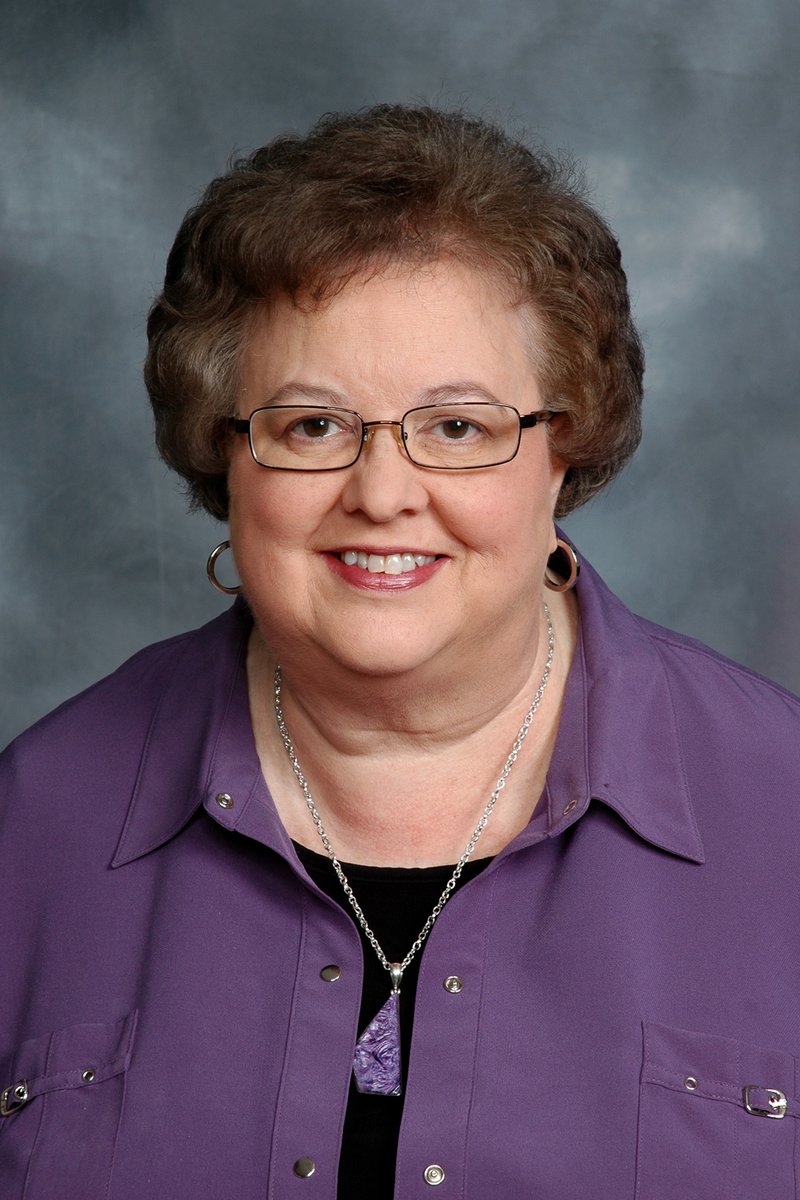
 The CVM has named Andi Parrish as director of the Veterinary Medical Library, effective July 1.
K-State veterinarian shares tips for managing cattle heat stress
By
Not only do hot summer days make people uncomfortable outdoors, it can also impact livestock. K-State Research and Extension beef veterinarian Dr. A.J. Tarpoff said temperature, humidity, wind speed and solar radiation all affect cattle.
Not only do producers need to watch daytime temperatures, Dr. Tarpoff said nighttime temperatures are just as important in preventing heat stress. “They really need about six hours of nighttime cooling to dissipate the heat load they accumulated during the day,” Dr. Tarpoff said. Two forecasting tools Dr. Tarpoff recommends are the U.S. Meat Animal Research Center’s heat stress monitor and the Kansas Mesonet. To minimize the amount of heat stress on the cattle, Dr. Tarpoff advises producers to finish all processing or handling work with cattle before 10 a.m. on hot days, and potentially to push feeding times to later in the evening. “When we feed cattle, they will actually increase their heat load just from digestion for the next 4 to 6 hours,” Dr. Tarpoff said. He also recommends reducing the stocking load, which increases spacing and allows for better air circulation and easier access to water. “During the summer months we want to increase wind speed as much as we can just to be able to dissipate some of that heat load,” he said. Another strategy that Dr. Tarpoff recommends is providing cattle bedding and shade so that animals have a cool place to lay. “Cattle have an immense shade seeking behavior,” he said. Dr. Tarpoff said water misters should only be used in the morning and evening for evaporative cooling of the pen surface. “We don’t wet the cattle to cool them during the heat of the day,” he said. “That can be disastrous because we can actually increase the humidity at the pen level at that time of day.” Dr. Tarpoff recently discussed heat stress on a recent edition of the weekday radio program, Agriculture Today. That podcast is available online.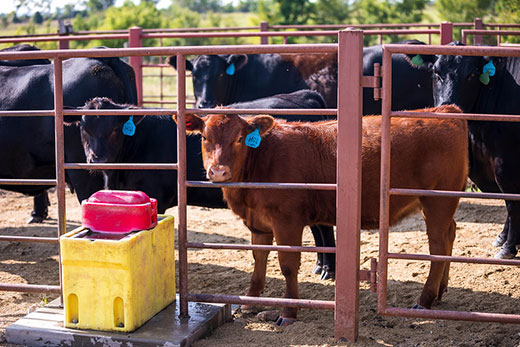
Cattle producers should monitor daytime and night-time temperatures to manage heat stress in their herds.
K-State’s US-China Center for Animal Health encourages public and private partnerships
The US-China Center for Animal Health (USCCAH) is a true example of "one world, one health." Established in 2010 at Kansas State's College of Veterinary Medicine, the Center aims to improve the veterinary training system in China to the level of the AVMA Council on Education's accreditation standards and to promote US-China research collaborations focused on combating emerging and major infectious animal diseases.
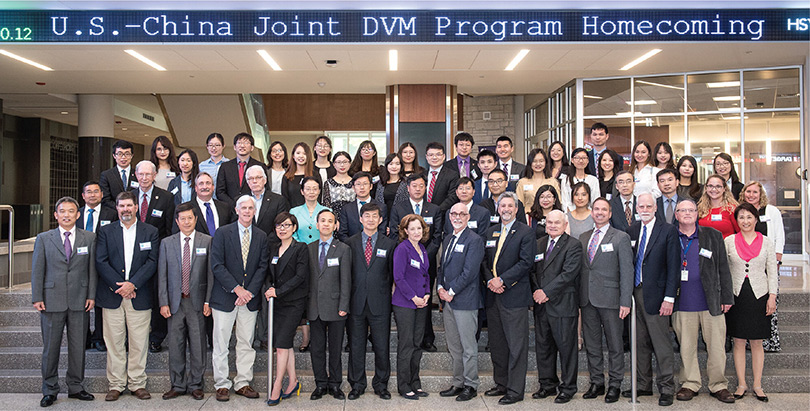
Drs. Lei Wang, manager of education programs for the USCCAH, and her colleagues, Jishu Shi, director of the USCCAH, and Frank Blecha, associate dean for research, recently published an article detailing the benefits and importance of this collaboration between the US and China. The value of global collaboration was made especially evident after the onset of the COVID-19 pandemic, as well as the 2018 outbreak of African swine fever in China, which has caused substantial damage to the swine industry. Veterinary services have a critical role in the control of infectious diseases from spreading worldwide, contributing to the One Health initiative.
“One important goal of the USCCAH is to bring top Chinese students to the United States to study veterinary medicine, with the goal of having them return to China once they receive their veterinary degree to teach the next generation of veterinarians at universities in China,” Dr. Wang said. “It provides an opportunity for partner universities in the United States to build connections with China and increase their global impact on veterinary education and the veterinary profession.”
“Today, more than ever, veterinary medicine has a global mission and responsibility. With each passing year our graduates of the US-China Joint Doctor of Veterinary Medicine Program return to China fulfilling our collective dream of “One World, One Health” and foretelling a bright future for veterinary medical collaboration in the world," Dr. Blecha said.
The article, titled “Building public-private partnerships to advance global veterinary medical education: the US-China Joint DVM Program,” was published in the Journal of the American Veterinary Medical Association and can be accessed here.
Regular features
Alumni Events, Development and Continuing Education
 The Veterinary Medical Alumni Association organizes alumni receptions at several of the national annual conferences plus continuing education events and more. This month's section includes the monthly listings of recently departed alumni and links to their obituaries, plus a new link for submitting nominations for Alumni Recognition Awards.
Dr. Molly McCue selected for 2021 Alumni Recognition Award
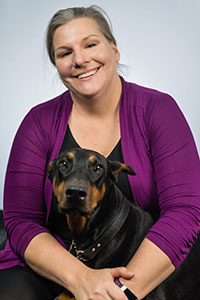
Dr. Molly McCue, St. Paul, Minnesota, has been selected by the Kansas State University College of Veterinary Medicine for its 2021 Alumni Recognition Award to be presented during a virtual reception in conjunction with the annual convention of the American Veterinary Medical Association (AVMA) being held online July 30. The award is given to veterinarians whose careers have served as exemplary role models for future alumni in a professional and community setting.
Dr. Molly McCue runs an equine-genetics laboratory and serves as the associate dean of research at the College of Veterinary Medicine at the University of Minnesota.
“It is an honor to be recognized by my alma mater for this award,” Dr. McCue said. “I have had a tremendous career in veterinary medicine thus far in large part due to the excellent education I received at K-State. Even though I also have a Ph.D. from the veterinary school at the University of Minnesota and have worked here for 17 years, the purple and Powercats in my office make it clear where my heart lies.”
See Dr. McCue's full bio here.
Submit nominations for Alumni Recognition Awards online
See our new online nomination form to nominate a fellow alumnus for one of our many annual recognition awards, presented at the national conferences: VMX, WVC, AVMA and the Annual Conference for Veterinarians. See full details at the link below.
Questions about Alumni or CE events?Contact:
|
 Tony Ballard
 Sarah Keatley
News Ticker
| More activities and accomplishments in the College of Veterinary Medicine: |
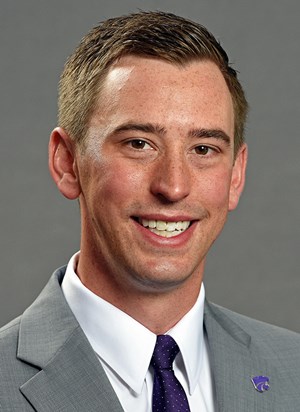 Austin Schilling was appointed as the new director of development at the KSU Foundation. Austin Schilling was appointed as the new director of development at the KSU Foundation.
The latest issue of Wildcat Veterinarian has been published. You can read the digital version here! Several faculty members and alumni contributed to Guideposts for Veterinary Professionals, a handbook that offers valuable guidance to complement the challenging years of a veterinary medical education and early career. Dr. Howard Erickson served on the editorial board and contributed several biographical sketches of individuals who have made significant contributions to veterinary medicine. Drs. Abbie Viscardi, Sara Mark and Jerry and Nancy Jaax wrote chapters, and Dr. Bonnie Rush provided a testimonial included on the back of the book. Copies will be presented to students at colleges of veterinary medicine in the United States and Canada at their annual white coat ceremonies or other special events over the next three years. The Johnson Cancer Research Center presented Deepa Upreti, Ph.D. student in Anatomy and Physiology, with a Cancer Research Award in the amount of $7,500. She and her mentor, Dr. Masaaki Tamura, are studying the role of intestinal microbiota in Euglena gracilis extract-dependent prevention of lung cancer. Congratulations to the following clinical sciences faculty members that will receive tenure and/or promotions:
Drs. Phillip Lancaster, clinical sciences, Chad Paulk, grain science and industry, and Raghavendra Amachawadi, clinical sciences, received a K-State Global Food Systems award for "Enhancing the economic value and business viability of food waste to animal feed conversion." Drs. Kate KuKanich and Waithaka Mwangi with VRSP trainee Jayden McCall received $10,000 in funding from the Foundation for Food and Agriculture Research (FFAR) and Association of American Veterinary Colleges (AAVMC) for the Development of African Swine Fever [ASFV] subunit vaccines. The Annual Conference for Veterinarians was held virtually from June 6-8. Thank you to the following faculty, adjuncts and staff from the department of clinical sciences that presented live streaming sessions or recorded presentations:
Drs. Matt DiFazio, Justin Thomason and James Carpenter had their ECG case featured as the ECG of the month in the JAVMA June 1 edition. Dr. Kate KuKanich was the source of an article published in the JAVMA news, June 15 edition, regarding accessibility in veterinary spaces. Terry Solis-Galvez passed his national pharmacy technician exam and will be adding the credential Certified Pharmacy Technician (CPhT) to his name. Becoming a CPhT demonstrates knowledge and commitment in medication safety and effective patient care. Congratulations, Terry! |
 Join the College of Veterinary Medicine on LinkedIn and add us to your profile under education and/or employment to help build and engage our online social community! Follow the LinkedIn page here: www.linkedin.com/company/kstatevetmed
New Arrivals/Recent Departures
Lifelines is published each month by the Marketing and Communications Office at the College of Veterinary Medicine. The editors are Joe Montgomery, jmontgom@vet.k-state.edu, and Piper Brandt, pnbrandt@vet.k-state.edu.