Monthly Newsletter
October 2020 - Vol. 15, No. 10
<September 2020 | November 2020>
Top Stories
Dr. Roman Ganta's team finding patented ways to help fight tick-borne diseases
By Piper Brandt
Research at Kansas State University is making progress on keeping both humans and animals safe from tick-borne diseases. Dr. Roman Ganta, professor and director of the Center of Excellence for Vector-Borne Diseases at the College of Veterinary Medicine, and his team of researchers received two patents on technology to develop vaccine candidates against tick-borne Ehrlichia and Anaplasma infections.
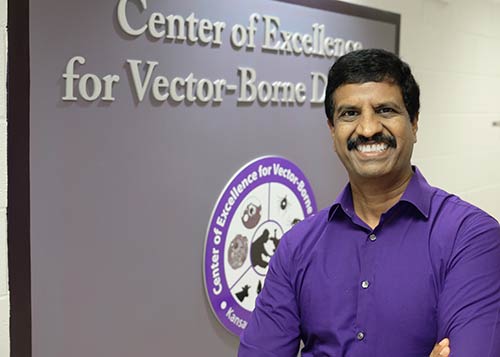
Dr. Roman Ganta and his team received two patents on technology to develop vaccine candidates to prevent tick-borne diseases like human monocytic ehrlichiosis.
Ehrlichia species pathogens transmitted by ticks can lead to ehrlichiosis, the general name for illness caused by the bacteria. Human monocytic ehrlichiosis, caused by E. chaffeensis, can lead to life-threatening illness and is associated with significant morbidity, especially in children, the elderly and people with compromised immunity.
Before the team's efforts, the only option for controlling E. chaffeensis infections and other related pathogens of Ehrlichia and Anaplasma in humans and dogs was antibiotic treatment. This showed a clear need for preventative vaccines.
"In our prior studies, we created several mutations in the tick-borne rickettsial pathogen, E. chaffeensis, which is responsible for causing ehrlichiosis disease in people and dogs," Dr. Ganta said. "Our team was the first to develop methods to generate gene mutations in obligate rickettsial bacteria belonging to the Ehrlichia species."
Gene mutations cause the inactivation of proteins in bacteria, which can render the bacteria incapable of causing disease. This knowledge led to the creation of the vaccines since mutated bacteria are ideal for inducing enough immunity to protect against infection.
"Because our mutagenesis and vaccine development methods are broadly applicable to other tick-borne pathogens causing diseases in dogs, cattle and humans, K-State filed the patents that cover our inventions for developing vaccine candidates against tick-borne infections of bacterial pathogens belonging to the Ehrlichia and Anaplasma species,” Dr. Ganta said.
The patent filings have helped Dr. Ganta generate additional support from the National Institutes of Health to expand the research on vaccine development to several related pathogens impacting human and animal health.
Kansas State University students to host SAVMA Symposium online in March 2021
While the venue may be different than originally planned, veterinary students at Kansas State University are moving forward as hosts for the 2021 SAVMA Symposium. The Student American Veterinary Medical Association, or SAVMA, is the national organization for veterinary students and works with local colleges of veterinary medicine to put on its annual symposium. For the first time ever, this year's event will take place online.
Kansas State University is set to host the first ever online SAVMA Symposium.
"COVID-19 interfered earlier this year, forcing the cancellation of the 2020 symposium that was to be held at Cornell University," said Savannah Christopulos, a third-year veterinary student and co-chair of the planning committee. "We feel fortunate to be able to bring back the symposium, albeit in a virtual format, to reinstate a traditional national meeting of veterinary students that dates back more than half a century. We are currently working out the details, but want people to know that the dates are set and that we are moving forward."
Christopulos explained how the symposium, scheduled for March 13-15, 2021, will consist of multiple tracks, workshops and virtual tours. This will be Kansas State University's first time to host the conference since 1986. The symposium rotates each year to a different campus among the 30-plus veterinary colleges in the U.S.
"We will incorporate a mixture of pre-recorded lectures and live lectures, along with some pre-recorded lectures while having a live question and answer session," Christopulos said.
Tyler Shima, also a third-year veterinary student is the other co-chair of K-State’s planning committee.
"We are planning how to hold opening and closing ceremonies," Shima said. "We hope to have some competitions to take place online so it will feel more like the annual in-person event."
Christopulos added, "We anticipate offering a reduced registration rate compared to a face-to-face conference. Official registration information should be coming soon."
"We believe that since travel costs will be eliminated and that a smaller time commitment would be needed, it will be much easier for more students to attend online than a traditional event," Shima said. "Another bonus is that content will be recorded and remain available for students to access after the symposium."
More information about the upcoming SAVMA Symposium will be available online.
Veterinary student publishes novel report on hernia surgery for parakeet
By Piper Brandt
 A tiny surgery on a tiny bird is turning out to be a big deal thanks to the care of Kansas State University veterinarians and the writing skills of a K-State veterinary student. A pet parakeet, weighing only 37 grams, was recently referred to the exotic animal services at the K-State Veterinary Health Center by its veterinarian following unsuccessful pharmaceutical treatment for a mass under the bird's tail.
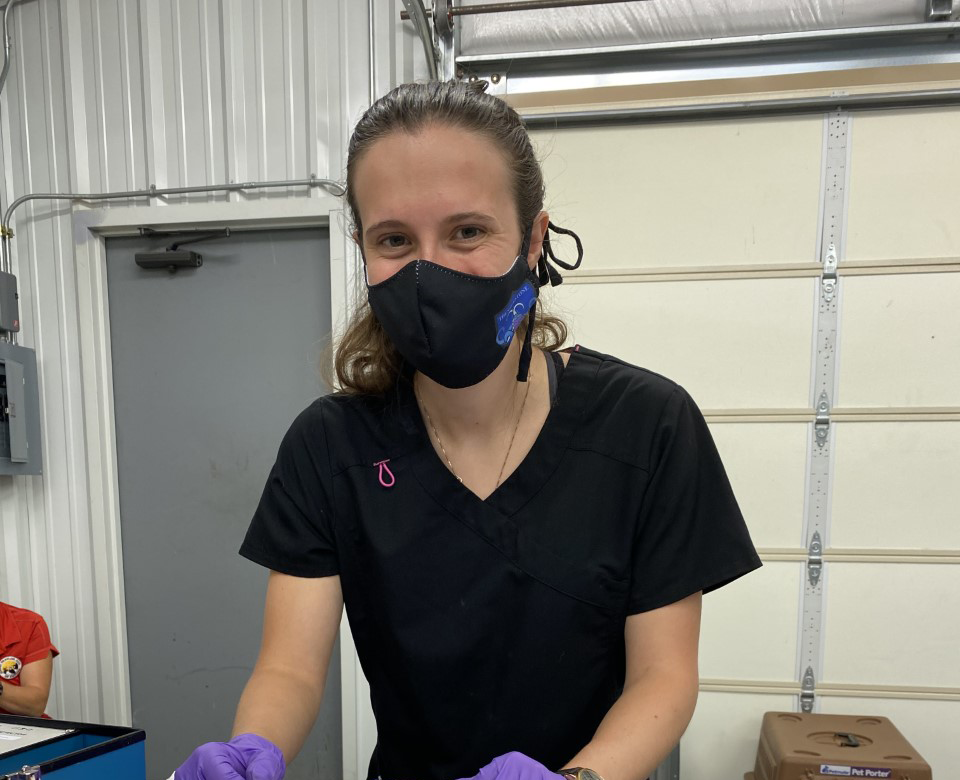
Daria Hagan, third-year veterinary student at the Kansas State University College of Veterinary Medicine, is the lead author of a recently published case report about an unusual hernia surgery on a parakeet.
After closer examination at the Veterinary Health Center, it was determined surgery would be necessary to remove the mass, which turned out to be caused by an unusual body wall hernia. A hernia occurs when an organ pushes through an opening in the muscle or tissue that holds it in place. Once identified in this case, the hernia was successfully surgically treated by Neta Ambar, former K-State zoological medicine intern, and David Eshar, associate professor of exotic and zoological medicine.
"Apart from the challenges of performing a delicate surgery on such a small bird, it was realized that the uterus — or oviduct — was the organ involved in that hernia, and she also needed to be spayed at the same time," Eshar said. "So far, the bird is doing well at home."
Daria Hagan, third-year veterinary student from Wichita, was asked by Eshar to help write report about the case, which was recently published in the Journal of Exotic Pet Medicine. The case is believed to be the first to describe surgery on this kind of herniation.
"I am very excited the case report has been accepted and honored that Dr. Eshar provided me the opportunity to write it up," Hagan said. "He was extremely helpful during every step of the process, and this publication is a major steppingstone toward my future career in zoological medicine."
Eshar and Hagan hope the report will encourage consideration of undertail body wall herniation in birds presented with similar lesions in this anatomical location.
Hagan is a 2015 graduate of Andover High School.
More Headlines
Livestock Services' renovations boast increased safety and new technology
 The Livestock Services' handling and treatment area in the Kansas State University Veterinary Health Center has recently undergone significant renovations and is now open to patients.
According to Dr. Matt Miesner, section head and clinical professor in Livestock Services at the Veterinary Health Center, improvements not only came from a need for structural repair, but also a need to ensure the standards of modern, safe, efficient and low-stress animal handling methods. He said these changes will benefit clients, clinicians and veterinary students.
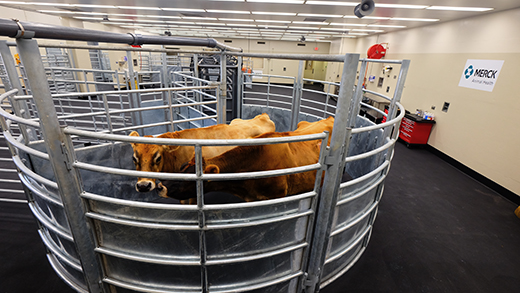
A new bud flow tub is one of many new additions that provide increased safety in the handling and treatment area for Livestock Services at K-State's Veterinary Health Center. Renovations will benefit clients, clinicians and veterinary students.
"We will be able to process more patients more safely and efficiently, and students will have the opportunity to see more cases safely and experience multiple handling methods recommended by leading experts in the cattle industry," Dr. Miesner said. "Clients should see an efficient, safe and modern service for their animals."
Upgrades include:
-
New drive-thru unloading feature to improve patient drop-off and pickup.
-
Holding pens, alleyways, sweep and bud tub handling of cattle to improve output and safer movement of patients.
-
A new tilt chute provides increased versatility to examine a variety of large animal patients that present for lameness.
-
An upgraded obstetrics handling area will improve services provided for pregnancy-related disorders.
"It is our mission to meet the highest accreditation compliance standards," said Dr. Elizabeth Davis, interim director for the Veterinary Health Center. "With this aim in mind, we planned for structural and equipment upgrades to provide optimal patient care and teaching space. We are pleased to have these upgrades complete which will allow us to provide high-quality large animal patient care in a contemporary facility."
The team began brainstorming ideas a few years ago, through careful design they developed plans that would be ideally suited for Veterinary Health Center clientele and their livestock. The project broke ground in February and was finished in just six months. During this time, clients delivered patients to an alternate receiving area.
Dr. Miesner said Livestock Services is incredibly grateful to its clients for their patience through the renovation process and looks forward to providing services in the newly renovated facility.
Merck Animal Health and the Veterinary Health Center made the renovations possible.
To schedule an appointment, please call 785-532-5700 or learn more about the livestock services section at vet.k-state.edu/vhc/services/livestock-services.
Early-admit students explore public health in the spirit of Sherlock Holmes
By Piper Brandt
 It’s public health, my dear Watson! A group of early-admit veterinary students have the opportunity to study nineteenth-century discoveries in microbiology, epidemiology and public health science that have coincided with literary classics, including Sir Arthur Conan Doyle’s Sherlock Holmes.
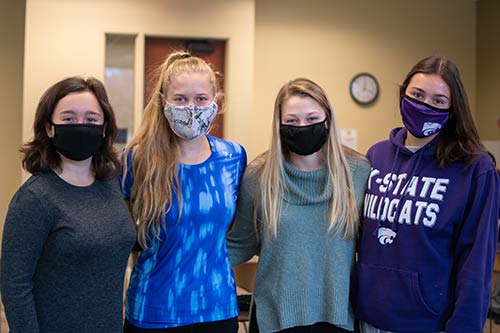
(From left to right) Sophie Sutton, Lucy Fischer, Alexis Justice and Kate Lewis are early-admit veterinary students in Dr. Kastner's class.
The University Honors Program course, titled Human and Veterinary Public Health in the Age of Sherlock Holmes, is taught by Dr. Justin Kastner, former director of the UHP and associate professor in the department of diagnostic medicine/pathobiology.
“For the last twenty years I have studied late 19th century trade disputes related to animal disease and food safety,” Dr. Kastner said. “This time period coincides with what I call ‘the age of Sherlock Holmes,’ or, more aptly, the age of Arthur Conan Doyle. When I was studying public health at the University of Edinburgh, I fell in love with the history of public health.”
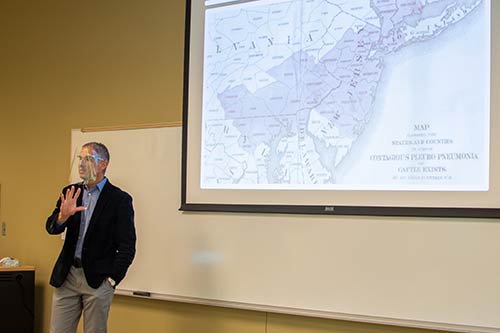
Dr. Kastner lectures on the role of epidemiological maps in a late-19th century trade dispute over contagious bovine pleuro-pneumonia.
The topics covered in the course are right down Dr. Kastner’s alley, who has studied at two British universities.
“Edinburgh is, incidentally, the birthplace of Doyle, and my wife Susie and I lived just a few minutes’ walk away from two of his homes,” Dr. Kastner said. “Doyle’s interest in disease causation and public health mysteries were no doubt inspired in part by his time in Edinburgh, and certainly during his time as a medical student at the University of Edinburgh.
Kate Lewis, Alexis Justice, Lucy Fischer and Sophie Sutton are early-admit students and aspiring veterinarians enrolled in Dr. Kastner’s course.
“One of the best parts about the class so far is the historical perspective it is giving me of the veterinary profession,” Kate said. “We’ve learned about the condescending attitudes towards vets in the 19th century and how it greatly contrasts with attitudes toward vets today.”
The students’ coursework covers late 19th century Britain’s, as well as early 20th century Kansas’s, contributions to professional identities, roles and rivalries in multiple professions at the nexus of human medicine, veterinary medicine, and public health.
“This course is helping me in my path to becoming a veterinarian because it is teaching me about the past endeavors of veterinarians and medical professionals in the area of public health, and how the One Health Initiative began,” Alexis said. “It is also very helpful in drawing connections between the things that happened in the past to what is occurring in modern times.”
“Knowing how much of an impact veterinary medicine has had in the history of the United States and other countries has further convinced me of the importance of receiving my DVM,” Lucy said. “I’ve learned a lot about the One Health Initiative and how veterinarians play a key role in protecting the health of not only animals, but also people and the environment as well.”
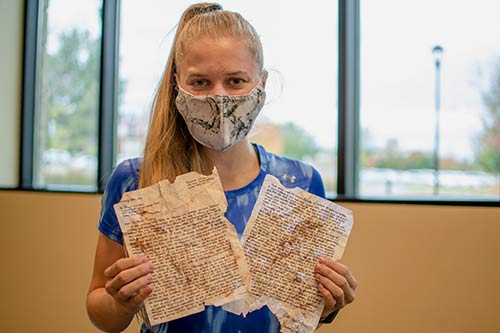
Lucy Fischer created a replica of a 19th century letter for a project in the class.
Other material in the course includes reflections on contemporary public health threats in light of lessons learned from historical and presently unfolding events, such COVID-19 and World War I and pandemic Influenza.
“Veterinary medicine is a field that is constantly evolving and requires you to continue to learn every day,” Sophie said. “I am even more excited now to become a veterinarian and work with doctors to solve epidemiological problems.”
K-State beef experts offer ways to capture the marketing value on calves
By Lisa Moser
 When putting money in the stock market, there is nothing like the feeling of watching a return on investment grow. The same can be true when cattle producers are financially rewarded at the point of sale for their time and money invested in pre-conditioning calves. But as the experts at the Kansas State University Beef Cattle Institute recently shared on a Cattle Chat podcast, that value can vary greatly.
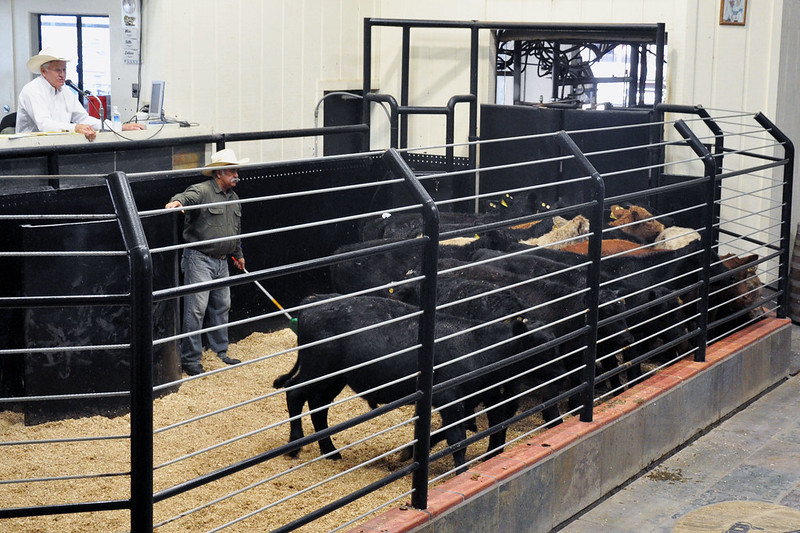
Providing documentation on the calves at the point of sale is one way to increase their value to potential buyers.
“The most profitable cattle producers find ways to add value to their animals by selecting good genetics, following health protocols and then telling people about how those calves were raised,” said veterinarian Bob Larson, adding that the average sale price is one of the biggest drivers of profitability.
K-State Research and Extension beef specialist Bob Weaber stressed the importance of using quality genetics to optimize the cow investment and maximize the performance of the calves, especially when considering retained ownership past weaning.
“Producers who make good breeding decisions can typically capture more value the longer they own the calves through either the stocker phase, or partnering on them through the animal’s time in the feedlot,” Weaber said.
To determine the best marketing plan for the operation, the experts advise producers spend time analyzing the costs against the profit potential.
“It is important to look at the costs versus the benefits to know when the right marketing endpoint will be for the calves and what makes the most sense for the operation,” said veterinarian Brad White.
Once the marketing endpoint is determined, Weaber said it is important to communicate all the information about the calves to prospective buyers.
“Spend time on marketing. Telling prospective buyers about the genetics and how the calves were cared for will increase their confidence in the calves and raise the value of the calves to the buyer,” Weaber said.
To hear the full discussion on maximizing the value on calves, listen to the BCI Cattle Chat podcast.
Regular features
Alumni Events, Development and Continuing Education
 The Veterinary Medical Alumni Association organizes alumni receptions at several of the national annual conferences plus continuing education events and more. This month's section includes the monthly listings of recently departed alumni and links to their obituaries, plus a new link for submitting nominations for Alumni Recognition Awards.
Lechtenberg family receives Don L. Good Impact Award
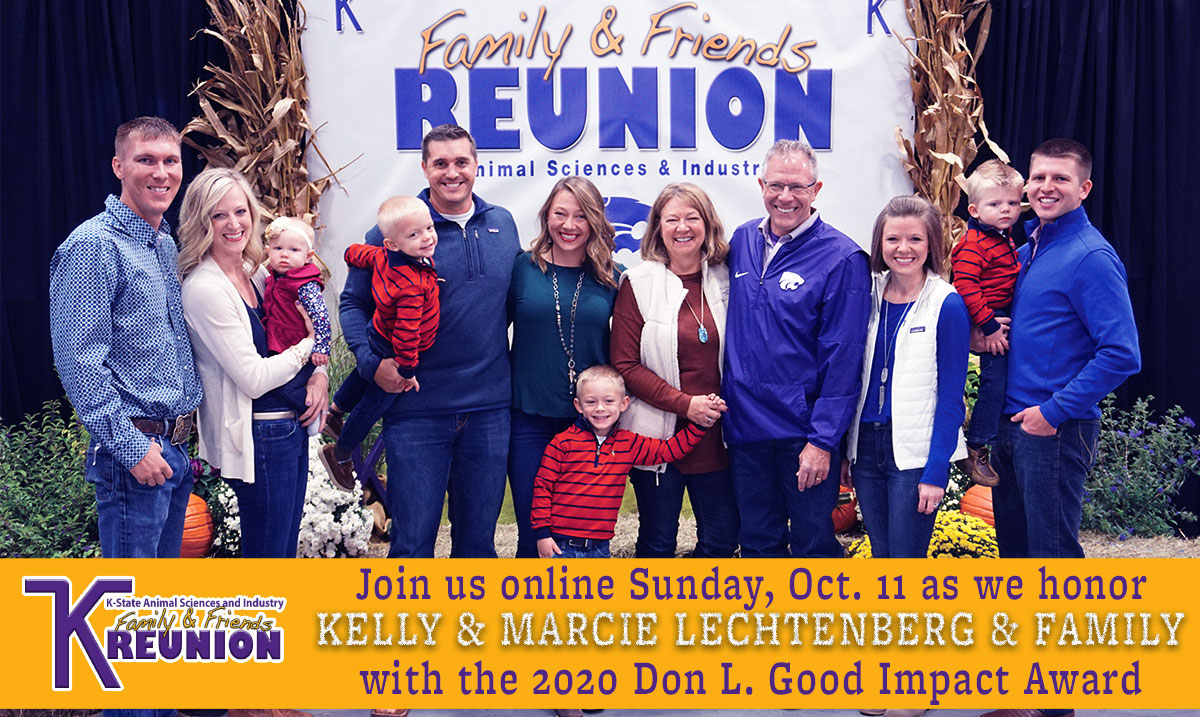
Dr. Kelly ('87) and Marcie Lechtenberg and family, proud supporters of the Kansas State University mission, have been selected to receive the 2020 Don L. Good Impact Award. The K-State ASI Department and the Livestock and Meat Industry Council Inc. (LMIC) recognized the Lechtenbergs on Sunday, Oct. 11 durng an online presentation. The award, presented annually by LMIC, is named in honor of Good, who is a former head of the ASI department, and recognizes positive impact on the livestock and meat industry or agriculture. Traditionally, the Impact Award has been presented during the K-State ASI Family & Friends Reunion. Due to COVID-19 this year's reunion has been canceled. The Lechtenberg family's K-State pride took root in 1983 when Kelly started veterinary school at the K-State College of Veterinary Medicine. Kelly simultaneously completed a DVM and doctorate in ruminant nutrition through the Department of Animal Sciences and Industry. During this time, Marcie taught at Riley County High School while working on a master's degree in Speech Communication from K-State. In 2014, Marcie completed her doctorate in what is now the College of Health and Human Sciences. She is currently serving as the clinic director for the Couple and Family Therapy Program and the K-State Family Center. A passion for purple runs deep in the Lechtenberg family. Combined, the family, including their three daughters Jana, Brooke and Paige, and their spouses, have accumulated 18 K-State degrees – soon to be 19, when Jana completes her doctorate studies in 2021. "Kelly's education at KSU was critical to founding successful research-based companies in Kansas and Nebraska that provide services focused on the development and regulatory approval of safe, efficacious products for cattle, swine and poultry," says Patsy Houghton, K-State ASI Family & Friends Reunion chairman from McCook, Nebraska, in her nomination letter to the Don L. Good Impact Award committee. "The Lechtenberg family is passionate about fostering lifelong relationships through the power of mentorship, education and friendship that makes us all part of the K-State family." |
|
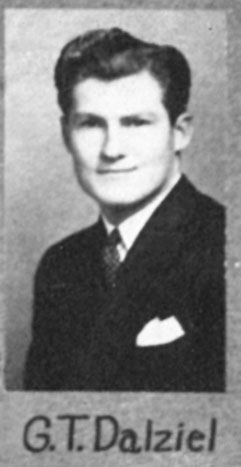
Col. Dolziel to celebrate 103!
After receiving his DVM, Dr. Dalziel served in the Army Veterinary Corps during World War II. He entered general practice in California after he was discharged from service. In 1949, Dr. Dalziel was recalled to active duty in the newly created Air Force Veterinary Service. As lieutenant colonel, he was responsible for the 59th Veterinary Inspection Flight stationed in the UK, and later became chief of the Air Force Veterinary Service from 1971 to 1974. After serving for 30 years, Dr. Dalziel retired in 1974 at the rank of Colonel, awarded with the Legion of Merit and two Oak Leaf Clusters. Dr. Dalziel is the grandson of Dr. Ira Barker Dalziel (1857-1942), a famous San Francisco horse dentist. |
|
Farewell to longtime educator and dean: Dr. William R. PritchardThe UC Davis School of Veterinary Medicine announced the passing of Dr. William R. Pritchard, professor and dean emeritus, on Oct 18, 2020. Pritchard served 20 years as dean for the school, from 1962 to 1982, and remained involved with the school and a Davis resident for the rest of his life. He leaves behind a legacy of veterinary education and service. Born Nov. 15, 1924, Dr. Pritchard received his DVM from Kansas State University in 1946, doctorate from the University of Minnesota in 1953, and doctor of jurisprudence (first in his class) from the University of Indiana in 1957. His experience in tropical veterinary medicine, international agriculture development and law led him to serve as an international consultant on several U.S. agriculture research and development programs and for the Rockefeller Foundation. He was a member of President Lyndon Johnson’s Science Advisory Committee Panel on the World Food Supply, chairman of the Scientific and Cultural Exchange Mission to the USSR in 1967, and served on President Richard Nixon’s Science Advisory Committee Panel on Biological and Medical Science. He also served two terms as president of the Association of American Veterinary Medical Colleges. Dr. Pritchard began as dean of the UC Davis School of Veterinary Medicine in 1962 by preparing for major expansions in facilities and the professional curriculum to meet the evolving needs of society. He and other faculty leaders completed a comprehensive self-study document that gave rise to major curricular and policy changes in the 1970s. Pritchard testified before the U.S. House of Representatives in 1966 regarding the future of veterinary education. As a result, his vision and leadership are largely credited with helping to gain federal funding for veterinary schools and teaching hospitals in the U.S., and with making UC Davis a model for U.S. and Canadian veterinary schools. Pritchard received the K-State Centennial Award for Distinguished Service in 1963, an Outstanding Achievement Award from the University of Minnesota in 1976, and was elected to membership in the National Academy of Practice in Veterinary Medicine in 1986. He was named a Kansas State University College of Veterinary Medicine Alumni Fellow in 1987. Dr. Pritchard established the Dr. William and Deanna Pritchard Veterinary Service and Outreach Award for K-State faculty to complement the existing Excellence in Teaching and Research Awards. Dr. Pritchard’s founding work with the UCD School of Veterinary Medicine led to national prominence and set the school on an exciting path, an impact which is still felt today and will persist well into the future. With the renaming of the Veterinary Medical Teaching Hospital in his honor in 2007, recognizing his career achievements in veterinary education and service, Dr. Pritchard’s name became synonymous with the world-class veterinary program that he helped create. “We celebrate his accomplishments and are saddened by his loss,” the school said in a statement. “Our thoughts are with his family at this time. |
|
Submit nominations for Alumni Recognition Awards onlineSee our new online nomination form to nominate a fellow alumnus for one of our many annual recognition awards, presented at the national conferences: VMX, WVC, AVMA and the Annual Conference for Veterinarians. See full details at the link below. |
|
In Memoriam - Recently Departed Alumni
Dr. Virgil Jack Capron, DVM 1965 (click highlighted names for obituary) |
|
Questions about Alumni or CE events?Contact:
|
 Tony Ballard
 Sarah Keatley
News Ticker
More activities and accomplishments in the College of Veterinary Medicine:
|
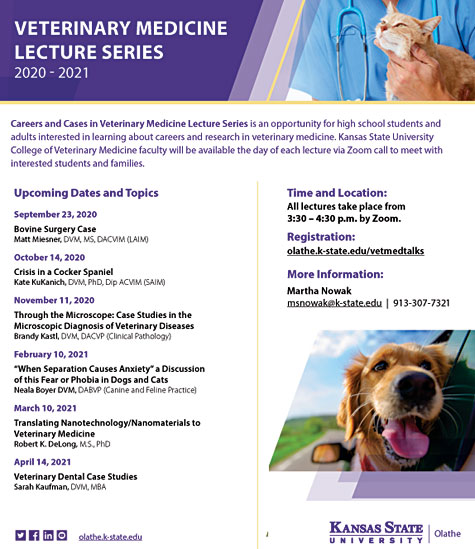
Drs. Phillip Lancaster (lead), DeAnn Presley (Agronomy), Walter Fick (Agronomy), Dustin Pendell (Ag Econ), Andrew Ricketts (Horticulture), Adam Ahlers (Horticulture) received $99,896 in funding from National Cattleman’s Beef Association for their study “Assessing human benefits of grazing rangelands in the Great Plains.” Drs. Calli Coffee, Jim Roush and Mary Lynn Higginbotham published “Carboplatin-induced myelosuppression as related to body weight in dogs” in the Veterinary and Comparative Oncology journal. Dr. Brad White was an invited speaker at the American Association of Bovine Practitioners Sept. 23-25. Dr. Matt Miesner lectured on Bovine Surgery Cases for the K-State Olathe Careers and Cases in Veterinary Medicine on Sept. 23. Congratulations to Drs. Mike Kleinhenz and Hans Coetzee for making headlines with their studies on industrial hemp in cattle feed. A special report was run on KSNT News out of Topeka, Kansas. Dr. Brad Crauer was interviewed by Fox43 News providing adoption advice for the Clear the Shelters event. Drs. David Eshar, Sara Gardhouse & Tess Rooney were interviewed for the K-State Today, Sept. 23 edition in the article, “Veterinary medicine students participate in tortoise anesthesia research.” Thank you to the State Fair Student Ambassador, Karissa Severud and other fourth-year students and faculty that participated in the Virtual State Fair event this year. Videos were posted throughout the week on social media depicting a day in the life of a veterinarian. The State Fair mascot, Ike the bison, came to K-State’s Livestock Services for a check-up in the first video! Other areas featured where small animal and exotics. Thank you to Laura Constance and Rebecca Whisler, fourth-year veterinary students, for participating in the Virtual American Royal Student Presentations event. They provided live Zoom sessions and pre-recorded videos to share with school age children, from 2nd grade up to high school. They all enjoyed talking about how to care for animals and what it takes to become a veterinary student to prepare for a career as a veterinarian. A Day in the Life of a K-State Veterinarian
Join the College of Veterinary Medicine on LinkedIn and add us to your profile under education and/or employment to help build and engage our online social community! Follow the LinkedIn page here: www.linkedin.com/company/kstatevetmed |

New Arrivals/Recent Departures
Lifelines is published each month by the Marketing and Communications Office at the College of Veterinary Medicine. The editors are Joe Montgomery, jmontgom@vet.k-state.edu, and Piper Brandt, pnbrandt@vet.k-state.edu.