
Monthly Newsletter
November 2020 - Vol. 15, No. 11
<October 2020 | December 2020>
Top Stories
Boehringer Ingelheim and Kansas State University join forces to invest in the future of veterinary medicine

Boehringer Ingelheim, a leading provider of animal health products, announced a strategic collaboration with Kansas State University’s College of Veterinary Medicine that will support a strong pipeline of highly skilled veterinarians and continued innovation in the heart of the Kansas City Animal Health Corridor.
 Boehringer Ingelheim’s U.S. Animal Health business will donate $800,000 over the next five years to the KSU Foundation. The funds will support interaction and collaboration between Boehringer Ingelheim and veterinary students at one of the leading animal health schools in the country, Kansas State University’s College of Veterinary Medicine.
The collaboration will create opportunities for Boehringer Ingelheim employees to train and present to students, and allow for additional professional development and learning initiatives between Boehringer Ingelheim and the university. As part of the strategic collaboration, Kansas State University’s College of Veterinary Medicine built a new auditorium named the Boehringer Ingelheim Animal Health Auditorium that was completed in August 2020. The building is now open to students for Fall 2020 classes.
“The Kansas City Animal Health Corridor and Boehringer Ingelheim share a history dating back more than 100 years,” said Randolph Legg, Head of the U.S. Commercial Business for Boehringer Ingelheim Animal Health. “The collaboration with Kansas State University furthers our commitment to this community, where so many of our dedicated employees live and work, and to the future of veterinary medicine.”
“The lives of animals and humans are connected in deep and complex ways. We know that when animals are healthy, humans are healthier, too. It is critically important that we help veterinary students prepare for the changing and growing role vets play in everything from caring for the animals we cherish, to food safety, public health and protecting the environment. This collaboration will help enhance the well-being of both humans and animals to create a healthier tomorrow for our animals, people and our communities.”
The auditorium is a premier space for student lectures, seminars and campus-wide events, as well as for national meetings for groups such as the student chapter of the American Veterinary Medical Association and the Pre-Vet Symposium. Boehringer Ingelheim will host trainings, symposiums and events in the auditorium, which will expose students to emerging trends in animal health as well as potential career opportunities.
“Boehringer Ingelheim’s belief in preventative care aligns with our commitment to advancing the health of animals through education and research,” said Dr. Bonnie Rush, Dean of College of Veterinary Medicine at Kansas State University. “We’re thrilled to work with Boehringer Ingelheim to expand our education programs and engagement with the community.”
Boehringer Ingelheim’s largest global animal health manufacturing site is not far from Kansas State University, in nearby St. Joseph, Missouri, where the company employs nearly 1,000 people. The site makes more than one billion doses of vaccine a year for livestock producers in the United States and 44 other countries. Boehringer Ingelheim has operated the site in St. Joseph for more than 100 years and has recently invested nearly $50 million to increase manufacturing capacity there.
Two K-State studies focus on SARS-CoV-2 transmission in domestic cats, pigs
Two recently published studies from Kansas State University researchers and collaborators have led to two important findings related to the COVID-19 pandemic: Domestic cats can be asymptomatic carriers of SARS-CoV-2, but pigs are unlikely to be significant carriers of the virus. SARS-CoV-2 is the coronavirus responsible for COVID-19.
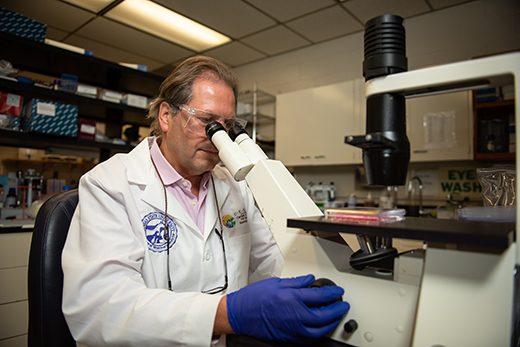
Dr. Jürgen A. Richt, the Regents distinguished professor at Kansas State University in the College of Veterinary Medicine, is the senior author on two recently published studies that focus on SARS-CoV-2 transmission in domestic cats and pigs.
"Other research has shown that COVID-19-infected human patients are transmitting SARS-CoV-2 to cats; this includes domestic cats and even large cats, such as lions and tigers," said Dr. Jürgen A. Richt, the Regents distinguished professor at Kansas State University in the College of Veterinary Medicine. "Our findings are important because of the close association between humans and companion animals."
There are about 95 million house cats in the U.S. and about 60 million to 100 million feral cats, Dr. Richt said.
Dr. Richt is the senior author on the two recent collaborative publications in the journal Emerging Microbes & Infections: "SARS-CoV-2 infection, disease and transmission in domestic cats" and "Susceptibility of swine cells and domestic pigs to SARS-CoV-2."
Through their in-depth study at the K-State Biosecurity Research Institute, or BRI, at Pat Roberts Hall, the researchers studied susceptibility to infection, disease and transmission in domestic cats. They found that domestic cats may not have obvious clinical signs of SARS-CoV-2, but they still shed the virus through their nasal, oral and rectal cavities and can spread it efficiently to other cats within two days. Further research is needed to study whether domestic cats can spread the virus to other animals and humans.
"This efficient transmission between domestic cats indicates a significant animal and public health need to investigate a potential human-cat-human transmission chain," said Dr. Richt, who is also the director of the university's Center of Excellence for Emerging and Zoonotic Animal Diseases, known as CEEZAD, and the Center on Emerging and Zoonotic Infectious Diseases, known as CEZID.
For the study involving pigs, the researchers found that SARS-CoV-2-infected pigs are not susceptible to SARS-CoV-2 infection and do not appear to transmit the virus to contact animals.
"Pigs play an important role in U.S. agriculture, which made it important to determine the potential SARS-CoV-2 susceptibility in pigs," Dr. Richt said. "Our results show that pigs are unlikely to be significant carriers of SARS-CoV-2."
The BRI has provided the high-security laboratories for Dr. Richt and collaborators to study SARS-CoV-2. It is a biosafety level-3 and biosafety level-3 agriculture facility that houses important multidisciplinary research, training and educational programs on pathogens that affect animals, plants and insects, as well as food safety and security.
Dr. Richt and his collaborators plan further studies to understand SARS-CoV-2 transmission in cats and pigs. They also plan to study whether cats are immune to SARS-CoV-2 reinfection after they have recovered from a primary SARS-CoV-2 infection.
"This research is important for risk assessment, implementing mitigation strategies, addressing animal welfare issues, and to develop preclinical animal models for evaluating drug and vaccine candidates for COVID-19," Dr. Richt said.
The research has involved other K-State researchers from the department of diagnostic medicine and pathobiology in the College of Veterinary Medicine: Konner Cool, Drs. Natasha N. Gaudreault, Jessie D. Trujillo, David A. Meekins, Igor Morozov, Daniel W. Madden, Sabarish V. Indran, Dashzeveg Bold, Velmurugan Balaraman, Taeyong Kwon, Bianca L. Artiaga, Wenjun Ma and Jamie Henningson, also director of the Kansas State Veterinary Diagnostic Laboratory.
Other researchers involved include Drs. Mariano Carossino and Udeni B. R. Balasuriya from Louisiana State University; Dr. William C. Wilson with the U.S, Department of Agriculture's Arthropod-Borne Animal Disease Research Unit; Dr. Adolfo García-Sastre with Icahn School of Medicine at Mount Sinai; and Dr. Heinz Feldmann with the National Institutes of Health's National Institute of Allergy and Infectious Diseases.
K-State veterinary students receive prestigious Lou and Norma Jane Ball Scholarship
By Piper Brandt
Three fourth-year veterinary students, Abby Ostronic, Kathryn Ryan and Bailey Wright, have received the Lou and Norma Jane Ball Scholarship. The scholarship is designated for students who are in the top 10 percent of their class, have an interest in small animal medicine and surgery and have an excellent chance of being accepted into a residency program at a renowned institution.
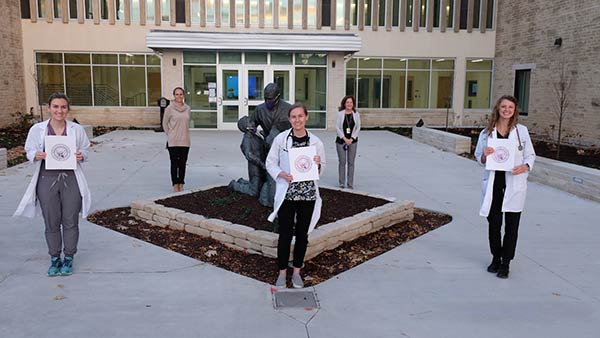
From left, Lou and Norma Jane Ball Scholarship recipients Bailey Wright, Kathryn Ryan and Abby Ostronic. Back row from left are Drs. Raelene Wouda, assistant professor of oncology, and Bonnie Rush, dean of the College of Veterinary Medicine.
The endowed scholarship helps to reduce the expenses for tuition and fees for the senior year.
"Prestigious scholarships, such as those provided by the late Lou and Norma Jane Ball, recognize the impressive efforts of some of the college's highest performing veterinary students and hopefully encourage them to consider pursuing further specialized study," said Dr. Raelene Wouda, assistant professor of oncology. "It is a great privilege to present these awards to such a wonderful group of students."
Louis Ball established the scholarship in memory of his wife, Norma Jane. The couple had four cats, lovingly called "the kids," that received lifelong care at the K-State Veterinary Health Center.
Ostronic said she was honored and grateful to receive the Lou and Norma Jane Ball Scholarship.
"With the aid of this scholarship, I can feel more secure in my decision to complete a rotating small animal internship and residency to pursue specialization in either internal medicine or oncology," Ostronic said. "One day I will be able to help cats and dogs that are loved just as much as Lou and Norma adored the cats they brought to K-State over the years."
"I feel extremely lucky to have received this scholarship," Ryan said. "When College of Veterinary Medicine Dean Bonnie Rush shared the history behind the scholarship, I was reminded of how lucky I am to be a part of a profession that strives to foster the relationship between people and their pets. My fourth year of veterinary school at K-State continues to teach me more than I could have asked for."
Wright said receiving the Lou and Norma Jane Ball Scholarship means a great deal to her.
"This award is a tremendous honor and I feel grateful to have so many clinicians and mentors here at the Veterinary Health Center who have motivated me to achieve an award like this," Wright said. "This award is a reminder that my efforts each day to learn how to become a better doctor, provide quality care to my patients, and encourage my peers do not go unnoticed."
More Headlines
K-State researchers collaborate to study antimicrobial use in food animal industries
By Piper Brandt
Kansas State University and University of Minnesota researchers are collaborating with the Food and Drug Administration's Center for Veterinary Medicine and food animal industries to evaluate systems for collecting and evaluating antimicrobial use data in food animal production, including U.S. beef feedlot, dairy, swine, turkey and chicken production settings. The project is largely funded by the Center for Veterinary Medicine.
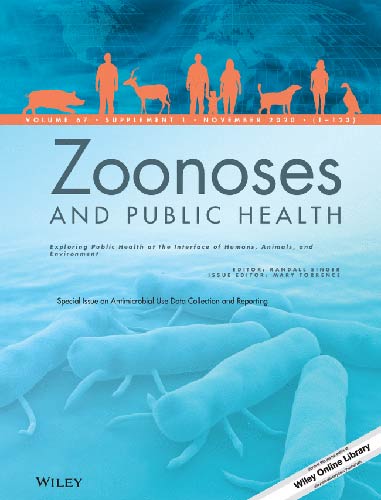 The researchers also are collaborating with the U.S. Department of Agriculture's Center for Epidemiology and Animal Health as they develop their data systems. Their results have just been published in a special issue of Zoonoses and Public Health, an international journal that publishes integrated and global approaches to disease transmission and public health at the interface of human and animal health.
Leading the collaborative research for beef feedlots and dairy is the K-State team, all connected to the university's College of Veterinary Medicine: Drs. Mike Apley, professor of production medicine; Brian Lubbers, associate professor of diagnostic medicine and pathobiology; and former graduate students Nora Schrag and Katie Hope, both now K-State doctoral graduates in pathobiology.
Collaborators at the University of Minnesota include Drs. Sandra Godden, dairy cattle; Randy Singer, chickens and turkeys; and Peter Davies, swine.
Preserving the ability to use effective antimicrobials in the therapy of disease for both humans and animals is the underlying goal for each of the projects. To better understand the future of antimicrobial use in animal agriculture, the researchers said it is important to fully understand current antimicrobial use. Food animal producers and veterinarians also benefit from knowing how their current antimicrobial use compares to their peers. These goals require systems that are capable of gathering data from varying record systems and standardizing and reporting the data in a meaningful way.
"One of the key components of antibiotic stewardship is understanding how we are using the antimicrobials in comparison to others," said Dr. Apley, the principal investigator for K-State's portion of the project. "In our papers, you will find an emphasis on the effect of how we choose to report and evaluate antimicrobial use data, as well as the unique aspects of each food animal production system and how they require different approaches to data collection and analysis."
The scope of the monitoring in each project varies, from approximately 90% of the chicken industry, represented in Dr. Singers' data, to convenience samples involving 22 beef feedlots and 29 dairies.
Dr. Apley said producers and veterinarians were key to success of the projects. Each producer received a confidential benchmark report comparing their antimicrobial use to the other participants. The reports and papers separate antibiotics by class and present them in relation to the animal populations from which the data were derived.
The beef feedlot and dairy papers are pilot projects that will help inform the structure of systems designed to describe antibiotic use in a manner that supports antibiotic stewardship.
"The projects would not have been possible without our collaborating beef feedlot and dairy producers," Dr. Apley said. "The ability of these producers to combine their own expertise with their veterinarian's in applying the data to their specific circumstances is a focus of our work. Their feedback on what is useful will shape our future efforts."
Dr. Apley is a current member of the Presidential Advisory Council for Combating Antibiotic-Resistant Bacteria, a council that Drs. Singer and Davies have previously served on. Collecting antimicrobial use data is one of the areas of focus in the most recent council report, which may be accessed at hhs.gov/ash/advisory-committees/paccarb/index.html.
Kansas State University and University of Minnesota researchers collaborate with the FDA Center for Veterinary Medicine and food animal industries to evaluate systems for collecting and evaluating antimicrobial use data in food animal production.
November is Pet Cancer Awareness Month
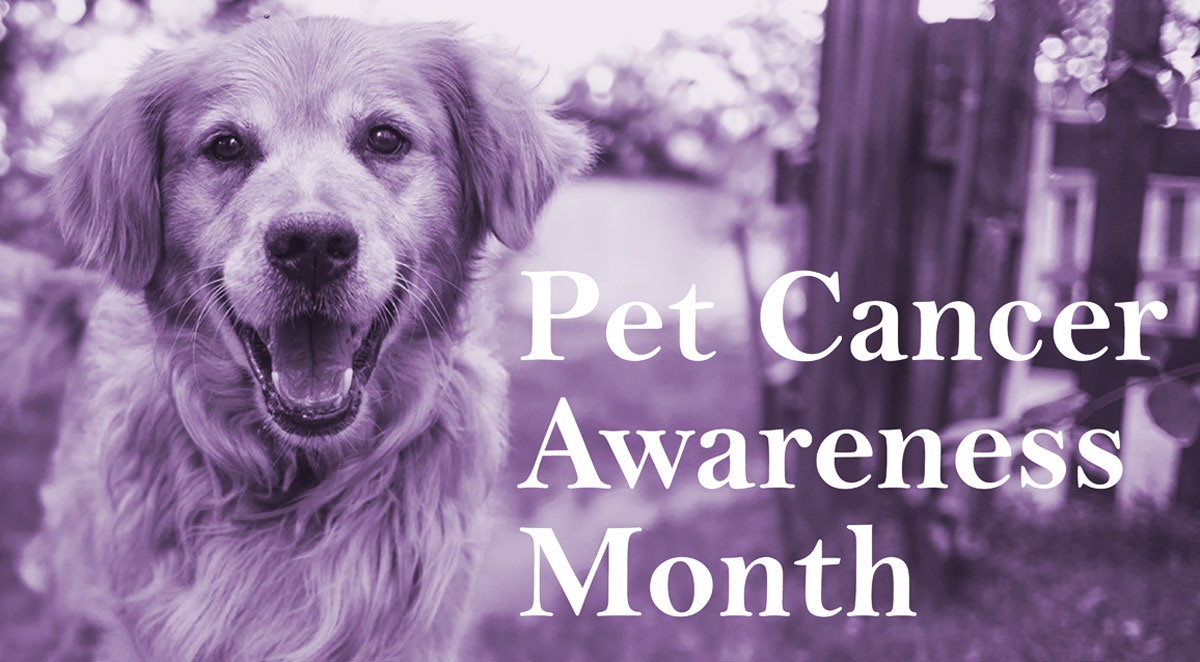
As our pets get older, they are at greater risk for certain diseases, especially caner. One in four dogs and one in five cats will develop some form of cancer in their lifetime with cancer being the most common cause of disease-related death in older animals. Do you know what the warning signs are for cancer in pets? Do you which types of cancer are more common in cats and dogs?
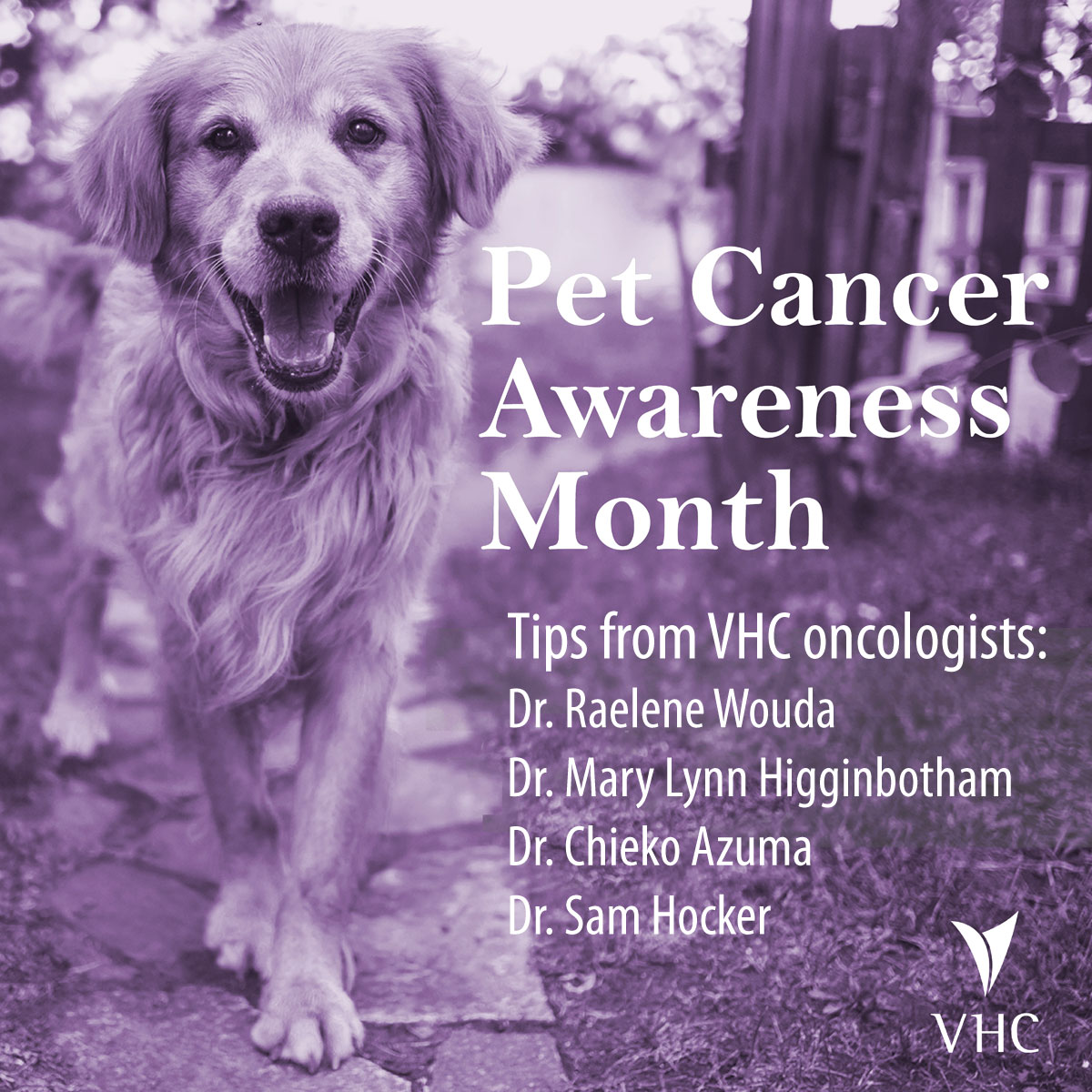 A our pets get older, they are at greater risk for certain diseases, especially cancer. A our pets get older, they are at greater risk for certain diseases, especially cancer. |
What are the signs of cancer to watch out for in your pet?
- New swellings, lumps or bumps that persist and/or continue to get bigger
- Abdominal swelling
- Weight-loss that is unexpected
- Loss of appetite or lack of interest in food
- Difficulty eating or swallowing
- Vomiting and/or diarrhea that is persistent and unexplained
- Difficulty urinating or defecating
- Bad odors – tumors in the mouth, nose, ears or rectum can cause offensive smells
- Discharge from the eyes, mouth, nose, ears or rectum
- Non-healing wounds, sores or unexplained bleeding
- Coughing or difficulty breathing
- Seizures
- Lameness or evidence of pain
- Unwillingness to play and interact, or loss of stamina
Although any of these symptoms are concerning, they do not absolutely mean your pet has cancer. If you are worried about your pet, it is important to consult with your veterinarian. It is also important that your pet have regular check-ups with your veterinarian. The key to successful cancer management is early detection.
The staff of the Veterinary Health Center and the hospital’s Specialist Veterinary Oncology Service are always here to help provide your pet the best care possible.
What types of cancer are most common in dogs and cats?
There are many different types of cancer which can develop in dogs and cats with some of the more common types including lymphoma, osteosarcoma, mammary carcinoma, mast cell tumors, hemangiosarcoma, melanoma, squamous cell carcinoma and transitional cell carcinoma. Interestingly, many cancers in dogs and cats are similar in nature to the same type of cancer in people. A biopsy or tissue sample is often necessary to determine the specific type of cancer present and other diagnostic tests such as x-rays, ultrasound or CT scans may be necessary to determine the extent of a tumor. Common treatment modalities available to treat cancer in pets include surgery, radiation therapy, chemotherapy, and immunotherapy and in many instances, a combination of treatment approaches may be recommended. At the Veterinary Health Center, we are able to utilize all of these approaches to treat pet cancers. We are fortunate to have veterinary medical oncologists, radiation oncologists and surgeons all specially trained to treat cancer in pets.
Lymphoma
When considering types of cancers which develop in animals, lymphoma is one of the most common to develop in both dogs and cats. Lymphoma is a type of cancer which originates in the lymph nodes or lymphatic tissues. While lymphoma can affect nearly any tissue, the lymph nodes are the most commonly affected tissue and lymph node enlargement is the most common abnormality noted in dogs with lymphoma. The majority of dogs feel well in spite of their lymph node enlargement; however, some may feel unwell. In addition to lymph node enlargement, other potential symptoms which may be present include weight loss, inappetence, lethargy, increased drinking, and increased urination, among others. Although cats can also develop lymph node enlargement, the most common form of lymphoma in cats affects the gastrointestinal tract with symptoms of weight loss, diarrhea, and vomiting being common. Because lymphoma often affects multiple lymph nodes and/or organs, systemic chemotherapy is the primary therapy utilized for treatment but surgery or radiation therapy may also be indicated in some instances. The majority of dogs and cats with lymphoma will have an excellent response to chemotherapy and typically tolerate treatments quite well.
Osteosarcoma
Osteosarcoma is the most common bone tumor to develop in dogs but is quite rare in cats. This is an aggressive form of cancer in dogs which causes swelling and bone loss at the tumor site. The majority of osteosarcomas develop in the legs of dogs but any bone can potentially be affected. In addition to swelling at the site of the tumor, many dogs will develop lameness associated with the tumor. Additional symptoms are possible depending upon the bone which is affected. Treatment for osteosarcoma involves tumor removal to relieve the source of discomfort. Due to the aggressive nature of this tumor, chemotherapy is also typically recommended to help control residual tumor cells. Amputation is often necessary for removal of an osteosarcoma if it occurs in a leg and fortunately most dogs ambulate quite well with only three legs.
Mammary Tumors
Mammary tumors are also common in dogs and cats, particularly in those who are spayed later in life. Dogs and cats who develop one mammary tumor are quite likely to develop multiple tumors in multiple mammary glands. There are many specific types of mammary tumors with approximately half of canine mammary tumors being malignant and the majority of feline mammary tumors malignant. Removal of the tumor(s) via surgery is the primary treatment for mammary tumors in both dogs and cats. Additionally, for those who have not been spayed, ovariohysterectomy is also recommended. Depending upon the type of mammary cancer, chemotherapy may also be utilized in the management of this disease.
Mast Cell Tumors
Mast cell tumors are one of the most common skin tumors to occur in dogs but they are uncommon in cats. Mast cell tumors may appear as a haired mass under the skin or they may be hairless in nature. Mast cells store histamine and therefore mast cell tumors may be red or inflamed or irritated in appearance. The behavior of mast cell tumors is quite variable with the majority being relatively benign in nature, however, some mast cell tumors grow quickly and behave quite aggressively. The behavior of a mast cell tumor can often be predicted based on the grade of the tumor as determined by a biopsy. In general, mast cell tumors are treated via surgery. Some mast cell tumors will benefit from being treated with radiation therapy and/or chemotherapy as well.
Hemangiosarcoma
Hemangiosarcoma is an aggressive type of cancer which most often occurs in the spleen of dogs. These tumors originate from blood vessels and can also develop in the heart, liver, muscle and subcutaneous tissues. The skin may also be affected but the behavior of cutaneous hemangiosarcoma is often much less aggressive than hemangiosarcomas which develop in the aforementioned sites. Because these tumors originate from blood vessels, bleeding due to a ruptured or ulcerated mass is common in dogs with hemangiosarcoma. In the case of splenic hemangiosarcoma, bleeding into the abdomen with a sudden onset of severe weakness and distended abdomen are possible. Surgical removal of the spleen or affected tissue is necessary for treatment of hemangiosarcoma. Chemotherapy may also be recommended to treat this tumor type.
Oral tumors
Oral tumors are another common location for tumors in dogs and cats. Melanoma is the most common oral tumor in dogs while squamous cell carcinoma is most frequent in cats. Both of these tumor types may be aggressive in nature. Symptoms of oral tumors include odor to the breath, bleeding from the mouth, difficulty eating or chewing, or a swelling associated with or in the mouth. A biopsy of the tissue is necessary to determine the type of cancer present. Surgical removal is the primary treatment considered for oral tumors, however, not all of them are amenable to removal. Radiation therapy and chemotherapy, or a combination thereof, are also often considered as treatment for oral tumors. Additionally, immunotherapy is frequently considered for treatment of melanoma.
Transitional cell carcinoma
Transitional cell carcinoma is the most common tumor to develop in the urinary bladder of both dogs and cats. Symptoms of a bladder tumor may include frequent urination or evidence of straining to urinate or pain with urination. Additionally, blood may be noted in the urine. Unfortunately, removal of urinary bladder tumors is not often possible due to the location of the tumor within the bladder and extensive nature of these tumors. Therefore, treatment with chemotherapy is considered the primary treatment for bladder tumors in dogs and cats. Many pets will also respond to treatment with anti-inflammatory type medications. Radiation therapy is currently being investigated as treatment for transitional cell carcinoma. Most important for patients with bladder tumors is a comfortable route for urination. Stents may occasionally be placed to allow dogs the ability to continue to urinate in spite of the continued presence of the tumor within their bladder.
K-State beef experts offer ways to measure genetic success at sale time
By Lisa Moser
Experts at the Beef Cattle Institute say an animal’s performance at sale time is often considered the test for the outcome of breeding decisions, but it is only a small consideration in measuring genetic success. Dr. Brad White, veterinarian and BCI director, laid out the following scenario to kick off a recent Cattle Chat podcast about evaluating the success of the breeding program.
“This is like finals week for the cow-calf operation: the calves were weaned 45 days ago and its sale time. The question is how producers grade their genetics decisions,” White said.
Often, producers define success by selling heavy weight calves, said Bob Weaber, beef cattle specialist and podcast contributor. But, he said success is really so much more than that one factor.
“The pounds of calves sold at sale time is only one determinant of farm level profitability,” Weaber said. “A better measurement of genetic success is the weaning weight per cow exposed. That metric demonstrates how the selection decisions performed related to the growth of the calves and maternal performance of replacement heifers. It also captures the influence of heterosis in crossbreeding systems to ensure the fertility of the cows resulting in the number of calves we take to market and how much they weigh.”
As a follow up, veterinarian Bob Larson added: “Reproductive efficiency of the herd is more important than the growth efficiency of those calves. Producers need to ask themselves what it cost to get that level of efficiency and that is part of the answer to the final exam.”
Larson said a producer will know if they passed reproductive efficiency part of the test if they weaned a high number of calves per cow exposed.
“Look at all the economics,” White said. “It isn’t just the gross return, but rather how that return compares to my cost structure so that I am evaluating a net value.”
To apply those calculations to the whole herd, Weaber said: “If you don’t have a scale to weight all you’re calves you can calculate an estimate of weaning weight per cow exposed by using the average sale weight of the calves sold as a proxy for the overall average multiplied by the number of calves weaned and divided by the number of cows and heifers exposed to bulls in the previous breeding season.”
Weaber advised producers to invest in a farm accounting system to help show their numbers as well as to assign values for purchased feed and hay fed to the herd.
To hear the full discussion on evaluating genetic success, listen to the BCI Cattle Chat podcast.
Regular features
Alumni Events, Development and Continuing Education

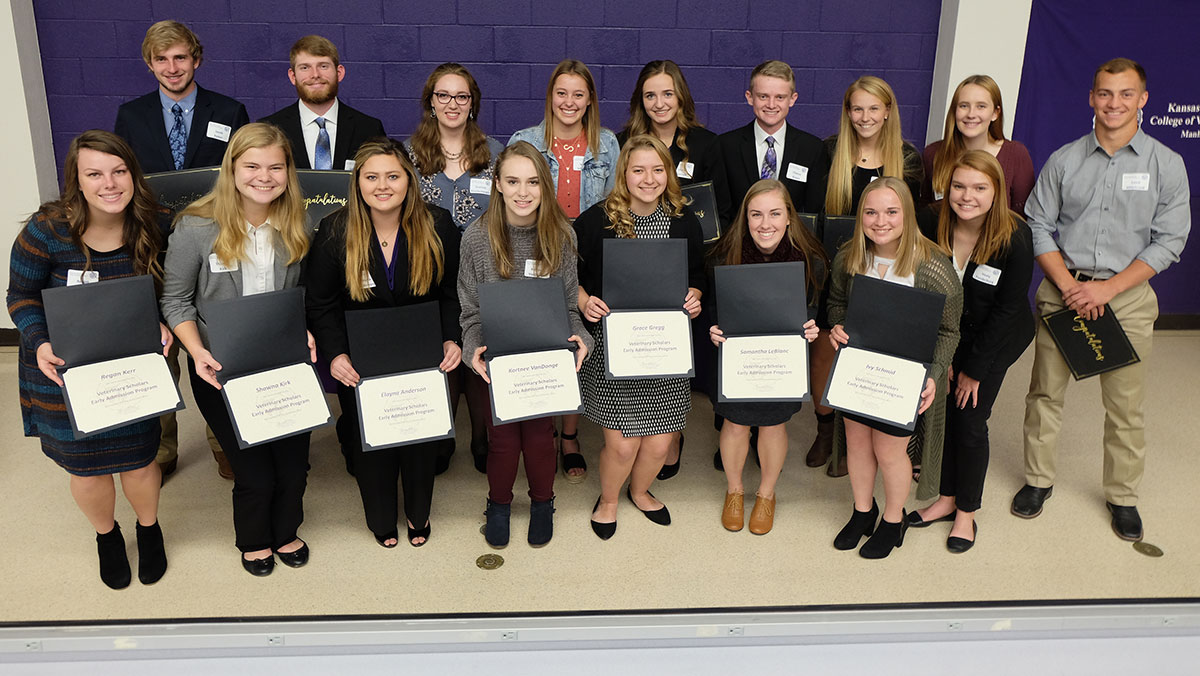
The Veterinary Medical Alumni Association organizes alumni receptions at several of the national annual conferences plus continuing education events and more. This month's section includes the monthly listings of recently departed alumni and links to their obituaries, plus a new link for submitting nominations for Alumni Recognition Awards.
Submit nominations for Alumni Recognition Awards onlineSee our new online nomination form to nominate a fellow alumnus for one of our many annual recognition awards, presented at the national conferences: VMX, WVC, AVMA and the Annual Conference for Veterinarians. See full details at the link below. |
|
In Memoriam - Recently Departed Alumni
Dr. Lewis J. Runnels, DVM 1946 Dr. Ernest J. Finocchio, DVM 1968 Dr. Jeffrie Fox, DVM 2003 |
|
Questions about Alumni or CE events?Contact:
|
 Tony Ballard
 Sarah Keatley
News Ticker
| More activities and accomplishments in the College of Veterinary Medicine: |
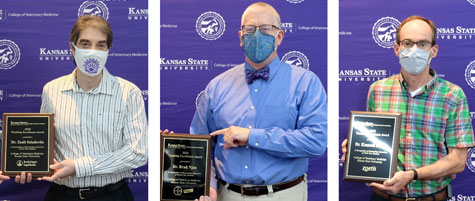
CVM presents teaching awards - special preview
Dr. Kate KuKanich presented a lecture, “Crisis in a Cocker Spaniel,” for the K-State Olathe Careers and Cases in Veterinary Medicine lecture series on Oct. 14. Dr. Taryn Pestalozzi, nutrition intern, was interviewed for the Oct. 14 edition of K-State Today in an article titled, “Kansas State University veterinarian has tips for preventing pet obesity.” https://www.k-state.edu/today/announcement/?id=69361 Dr. Kate KuKanich was interviewed for the Oct. 22 edition of K-State Today. The article, “Safe and timely drug disposal important to keeps kids, pets safe during COVID-19,” stressed the importance of removing all unused medications from your household and highlighted the Drug Enforcement Administration’s National Prescription Drug Take-Back Day that was held on Saturday, Oct. 24 in Riley County. https://www.k-state.edu/today/announcement/?id=69731 Dr. Maria Jugan provided a presentation, “Gastrointestinal Microbiome: What is it and how does it relate to GI disease?” for the Hill’s Fall Virtual Continuing Education Series on Oct. 27, 2020. Dr. Brad Crauer and Ron Orchard, third-year student and RVT, presented talks during for, “Creating a Community Cat Program in Manhattan, KS” on Oct. 28, 2020. The online Zoom event was organized to inform the Manhattan community about the importance of trap-neuter-return and how to start a community cat program. Dr. Sue Nelson was interviewed for the Oct. 29 edition of K-State Today in an article, “K-State vet shares tips to make Halloween a treat for furry friends.” https://www.k-state.edu/media/newsreleases/2020-10/halloween-pet-safety102920.html Drs. James W. Carpenter, Tess Rooney and Butch KuKanich received a $20,843 gift from Canna Companion, Mill Creek, WA, thru the KSU Foundation to support a study on the “Pharmacokinetics of cannabidiol administered orally in the rabbit (Oryctolagus cuniculus).” Dr. Brad Crauer and Dr. Brooke Davis, shelter intern, provided two hours of CE to the Kansas Department of Agriculture’s Animal Facilities Inspection Program. Topics covered included the basics of epidemiology: disease prevention and outbreak response, Common Canine Infectious Diseases: Canine Distemper Virus, Canine Parvovirus, Rabies and Brucellosis. We are very proud of the relationship the K-State Shelter Medicine Program has with the KDA. Dr. Megan Niederwerder was an invited speaker for Dr. John Clifford's webinar series on feed as a fomite for pathogens presented by Anitox, Feed Strategy, and WATT Global Media. Her webinar "Risk and mitigation of African swine fever in feed" was livestreamed on Oct. 27th to an international audience. She was also a speaker at the Iowa State University James D. McKean Swine Disease Conference in Ames, Iowa, on Nov. 5. The title of her talk was "Reducing Risk of ASFV in Feed." Dr. Raghavendra Amachawadi was honored by Kanas State University’s Office of International Programs during International Education Week for his collaboration with colleagues in India, which led to publication in PLOS ONE. Dr. Amachawadi was recognized at the IEW Awards Ceremony on Nov. 19. Pharmacy Technician/Compounding Manager, Molly Carstenson, BS CPhT, TPV, CSPT has received a passing score on her national Hazardous Drug Management Certification! We are excited to have her credentialed in this area, as it enhances her knowledge of defined guidelines and requirements for managing hazardous drugs and demonstrates her ability to play a vital role in helping ensure safety of dispensary personnel. Third-year student selected for veterinary student loan program Third-year student Sydney Bigger is one of two national recipient for the Illinois Farm Bureau's Illinois Veterinary Education and Training program. Illinois Farm Bureau is lending support to the next generation of veterinary professionals through its Illinois Veterinary Education and Training program. IFB recently selected third-year K-State veterinary student Sydney Bigger, along with Mackenzie Michels at the University of Illinois, as its two IVET recipients for 2020. “IVET helps reduce part of the financial burden of veterinary school and makes the decision to move back home upon completion of my degree even easier,” said Bigger, who grew up in Henderson County and is a third-year vet student.The IVET Program helps offset the high cost of veterinary education. The program loans up to $40,000 to as many as three veterinary students each year. Loans are made for a period of two to three years. IVET awards recipients a $1,500 stipend during their fourth year in school to help pay expenses associated with clinical rotations. The loans are repaid over five years, during which time graduates must commit to working in a food animal practice that services Illinois livestock producers. “Illinois Farm Bureau encourages veterinary students to pursue a career in caring for food animals,” said Tasha Bunting, IFB associate director of commodities and livestock programs. “To succeed, farmers need the services of a food animal veterinarian to help them care for their beef cattle, swine, sheep and poultry. It’s an opportunity to help bring a calf into the world and share in the love that farmers have in caring for their animals.” IFB established IVET in 2005. Since then, the organization has awarded more than $430,000 to 24 veterinary students who focus on caring for food animals in Illinois. For more information about the program, visit www.ilfb.org/IVET.
A Day in the Life of a K-State Veterinarian
|
New Arrivals/Recent Departures
Lifelines is published each month by the Marketing and Communications Office at the College of Veterinary Medicine. The editors are Joe Montgomery, jmontgom@vet.k-state.edu, and Piper Brandt, pnbrandt@vet.k-state.edu.