Monthly Newsletter
September 2020 - Vol. 15, No. 9
<August 2020 | October 2020>
Top Stories
Grant supports research to mitigate COVID-19 in meat and poultry processing facilities
A team of Kansas State University researchers is using a $1 million grant from the U.S. Department of Agriculture — and an additional grant from the state of Kansas — to study how to effectively control the spread of SARS-CoV-2, the virus that causes COVID-19, in the nation's meat and poultry processing facilities.
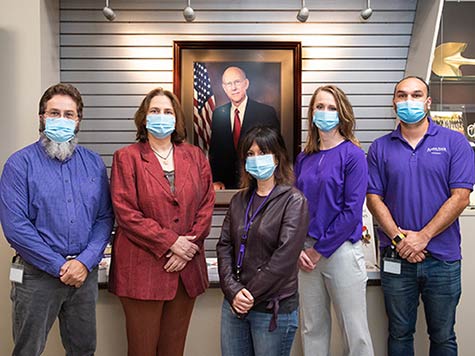
Kansas State University researchers involved in a U.S. Department of Agriculture-funded project to protect meat plant workers and their surrounding communities from the spread of COVID-19. From left: Randy Phebus, Sally Davis, Valentina Trinetta, Sara Gragg and Daniel Vega. Not pictured are Jeanette Thurston, Erin Schirtzinger and Yunjeong Kim.
The study "Translating SARS-CoV-2 Research Into Practical Solutions For The Meat And Poultry Processing Industry"seeks to protect meat plant workers and their surrounding communities from the spread of COVID-19. It involves researchers from K-State's College of Veterinary Medicine and College of Agriculture.
As part of the study, $330,000 from the State of Kansas National Bio and Agro-Defense Facility Transition Fund will be used for research in K-State's Biosecurity Research Institute, or BRI, at Pat Roberts Hall. The BRI is a high-containment research facility.
A key objective of the project will be verifying the effectiveness of many of the approved cleaners and sanitizers for inactivating SARS-CoV-2 during plant processing and sanitation operations.
"Nationally and internationally, many facilities that produce meat and poultry products have been temporarily closed because of COVID-19 outbreaks," said Dr. Sally Davis, an assistant professor of experimental pathology in the College of Veterinary Medicine and project director of the K-State grant. "This has put a major strain on food production, limiting the amount of meat and poultry on grocery store shelves and disrupting food and feed supply chains across the globe. Research is necessary to understand why SARS-CoV-2 is such a problem in meat and poultry processing environments and how we can mitigate the problem."
Dr. Davis said infections with SARS-CoV-2 are primarily thought to occur by exposure to infectious micro-droplets in the air and contaminated surfaces.
"We are investigating the conditions within meat and poultry processing environments, such as low temperatures, relative humidity, increased air movement and workers being in close proximity to one another, to help identify areas and surfaces that are at high risk for contamination and spread of infectious SARS-CoV-2," Dr. Davis said.
The team will evaluate potential sources of exposure and determine the amount and the longevity of infectious virus that is present during and after meat processing and packaging activities. The team seeks to identify, develop, validate and deliver practical cleaning and disinfection strategies, plus develop mathematical models to predict and reduce the risk of SARS-CoV-2 exposure in meat and poultry processing facilities.
Joining Dr. Davis on the research team are food safety faculty from K-State's Food Science Institute, including Drs. Randall Phebus, co-project director and professor of animal sciences and industry, and Jeanette Thurston, director of the Food Science Institute and co-investigator on the project. The project also will rely on input from an industry advisory board.
"Our advisory board will be regularly updated on research progress," Dr. Thurston said. "We will communicate with them in real time to make sure we are on the right track with our research and recommendations, and ensure that our findings are rapidly deployed across the processing sector."
The industry advisory board is composed of senior-level directors of food safety and plant operations at Hormel Foods, Smithfield Foods, National Beef Packing Company, Cargill Protein North America, JBS USA, Wayne Farms, Jennie-O Turkey Store, Tyson Fresh Meats and Costco Wholesale.
Dr. Bonnie Rush, dean of K-State's College of Veterinary Medicine, said K-State, known as the "Silicon Valley of biodefense," is the ideal place to conduct this vital research.
"This is an advantageous collaboration between the College of Veterinary Medicine and College of Agriculture," Dr. Rush said. "It combines our expertise in the study of viruses, our high-containment research facility in the BRI and our national experts in food safety."
Dr. Ernie Minton, dean of the College of Agriculture and director of K-State Research and Extension, said COVID-19 has hit the agricultural industry and its workers hard.
"We certainly felt the impact when COVID-19 hit our meat processing plants in Kansas and across the nation this spring," Dr. Minton said. "In April, nearly 5,000 workers in U.S. processing plants became infected, causing plant closures, a backlog of animals waiting to go to market, higher feed costs, lower market prices, and a scarcity of meat and poultry in some areas. It's a tremendous privilege to receive USDA support and work with a team of top academic and industry leaders to find solutions to help us avoid this type of problem in the future."
Collaborating with the K-State team are co-project directors from the University of Georgia poultry science department, Harsha Thippareddi and Dr. Manpreet Singh, who will provide extensive poultry experience and industry connections and lead the grant's industry outreach efforts. Drs. Valentina Trinetta and Sara Gragg, food safety faculty from the Food Science Institute, are co-project directors. Co-investigator Dr. Anke Richter, a public health-focused operation research specialist at the Naval Postgraduate School, will lead the risk assessment driven by mathematical modeling. Co-investigators Dr. Yunjeong Kim and Erin Schirtzinger in the College of Veterinary Medicine and the Food Science Institute's Daniel Vega round out the project team.
CVM announces 2020 class of Early Admission Scholars in online ceremony
By Piper Brandt
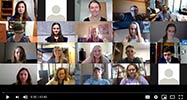
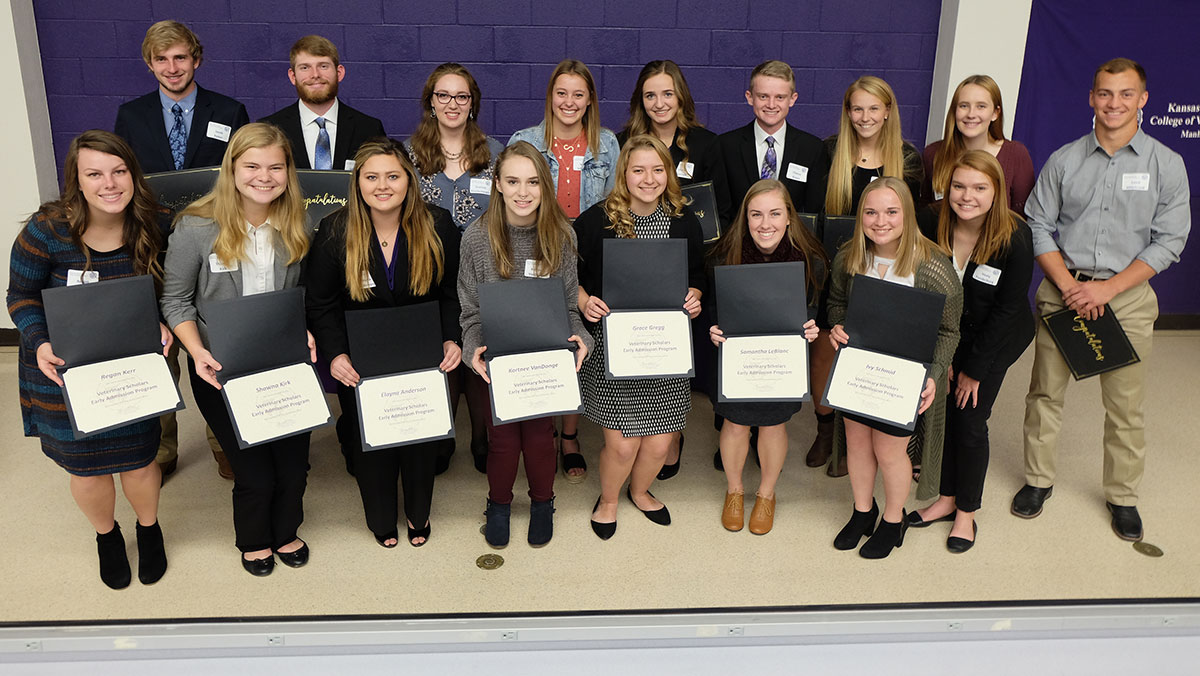
An elite group of Kansas State University undergraduate students has the special opportunity to become veterinarians. The College of Veterinary Medicine recognized these students for being selected in its Early Admission Program during a virtual ceremony via Zoom on Aug. 21.
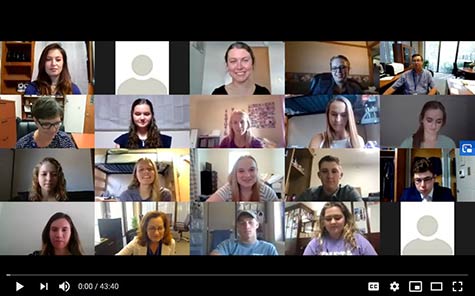
A lucky group of undergraduate students are inducted to the Early Admit Program during a Zoom meeting with Dr. Callie Rost, assistant dean for admissions in the College of Veterinary Medicine.
Established in 1999, the Early Admission Scholars program has recruited the best and brightest undergraduate students who are committed to studying veterinary medicine.
“The young men and women inducted into the Veterinary Scholars Early Admission Program represent the top 5% of Kansas State University students academically,” said Dr. Callie Rost, assistant dean for admissions. “I want to say congratulations to all of you. We had between 40 and 50 applications for the program this year, so you are a very select group who impressed the selection committee with your potential for veterinary medicine. We are thrilled to have you in the program and thrilled you’re at Kansas State University.”
Members of the 2020 class of Early Admission Scholars:
Mallory Beltz, Sterling; Katherine Lewis, Overland Park; Sophia Pogranichniy, Manhattan; James Schneider, Olathe; Emily Swiger, Coffeyville.
From out of state: Lucy Fischer, Hinsdale, Illinois; Aaron Goldberg, Hewlett, New York; Sallie Gutt, Lake Zurich, Illinois; Porter Jenkins, Dyersburg, Tennessee; Alexis Justice, Clarksville, Tennessee; Jimena Kilian, McKinney, Texas; Sophia Sutton, Delaware, Ohio.
Successful candidates in the Early Admission Scholars program must maintain a 3.3 grade point average during completion of the science prerequisites and complete the 64 hours of prerequisites by the end of the spring semester prior to beginning the Doctor of Veterinary Medicine curriculum in the fall. GRE graduate school entrance exam scores are no longer required for any applicant. The science courses on the prerequisite list must be completed at Kansas State University. In addition, candidates must strengthen their veterinary experiences, attend K-State events and participate in volunteer work.
The College of Veterinary Medicine assigns a veterinary student mentor to each Early Admit Scholar to stimulate career and academic development and to provide orientation and access to college activities. The pre-veterinary students attend regular meetings during the academic year to develop a sense of community and share their progress.
Information on how to apply for the program, including a link to a PDF on program requirements, is located at: https://www.vet.k-state.edu/admissions/early-admit/index.html
K-State research among first to analyze safety of industrial hemp as cattle feed
 A pair of studies at Kansas State University is bringing new insight to farmers and producers seeking to incorporate industrial hemp in cattle feed. After the 2018 Farm Bill legalized hemp production in the U.S., interest has grown in industrial hemp as an agricultural commodity, including as feed for animals.
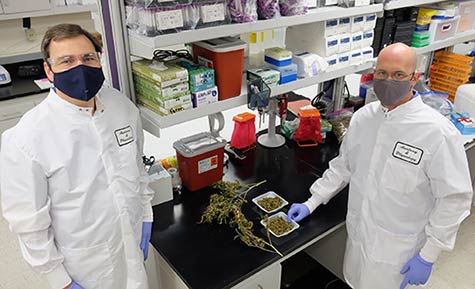
Drs. Hans Coetzee, left, and Michael Kleinhenz are studying the safety of using industrial hemp in feed for cattle.
FDA approval, however, through the Association of American Feed Control Officials would be required before hemp could be fed to livestock or pets.
"Although hemp can be legally cultivated under license in Kansas, feeding hemp products to livestock remains prohibited because the potential for cannabinoid drug residues to accumulate in meat and milk has not been studied," said Dr. Hans Coetzee, professor and head of the anatomy and physiology department.A team of K-State researchers recently received a $200,000 Agriculture and Food Research Initiative Competitive Grant from the U.S. Department of Agriculture's National Institute of Food and Agriculture to establish concentrations of cannabinoids in livestock after exposure to industrial hemp.
"Industrial hemp is typically grown to produce oil, seed, fiber and medicines," said Dr. Michael Kleinhenz, assistant professor of beef production medicine. "While varieties of hemp may be planted for a single or dual purpose, such as for seed and fiber, byproducts consisting of leaves, fodder and residual plant fibers remain after harvest. These byproducts could serve as potential feedstuffs for animals. Because these are predominantly cellulose-containing plant materials, the ideal species for utilizing these feeds are ruminant animals, specifically cattle."
While there is interest in the use of hemp for cattle feeds, there are questions about whether the feed can be used safely because of concerns about tetrahydrocannabinol, or THC, intoxication and the presence of other bioactive cannabinoids. Dr. Kleinhenz noticed that most research was focused on humans, mice and swine, but not on cattle.
"This is surprising because cattle can readily utilize industrial hemp byproducts as they can digest cellulose plant materials in their rumens," Dr. Kleinhenz said.
Dr. Kleinhenz is part of a multidisciplinary research team consisting of pharmacologists, toxicologists, analytical chemists and horticulture experts. The hemp used in the studies was grown at K-State's John C. Pair Horticultural Center near Wichita. Other K-State researchers involved include Shawnee Montgomery, Andrew Curtis, Miriam Martin, and Drs. Geraldine Magnin, Zhoumeng Lin, Steve Ensley, Jason Griffin, Katie E. Kleinhenz and Coetzee. The research team also included Dr. John Goeser and Eva Lynch, Rock River Laboratories.
"We observed that the acidic cannabinoids, such as CBDA and THCA, are more readily absorbed from the rumen than other nonacid cannabinoid forms, such as CBD and CBG," Dr. Kleinhenz said. "Now that we have found that some cannabinoids are readily absorbed from the rumen, the next steps are to study the tissue and milk residue depletion profiles of these compounds after animal feeding experiments. The effects of cannabinoids on cattle are also unknown."
Follow-up experiments will include pilot studies to examine the effect of feeding hemp on animal behavior and immune function.
"Our goal is to fill in the knowledge gaps," Dr. Kleinhenz said. "Until feedstuffs containing hemp are established as safe in animals, our data will assist producers in managing situations involving intentional or unintentional hemp exposures."
The two published studies are "Nutrient concentrations, digestibility, and cannabinoid concentrations of industrial hemp plant components," which can be found in the journal Applied Animal Science, and "Plasma concentrations of eleven cannabinoids in cattle following oral administration of industrial hemp (Cannabis sativa)," which was published in Scientific Reports.
More Headlines
CVM students participate in tortoise anesthesia research
By Piper Brandt
Students in the College of Veterinary Medicine are getting an inside look at how to provide good medical care to a four-legged animal that isn’t known for moving quickly. “Turtles and tortoises (known as chelonians) are often kept as pets and in zoological collections, but due to their shy nature, they can be very challenging to handle, even if sick,” said Dr. David Eshar, associate professor of exotic and zoological medicine.
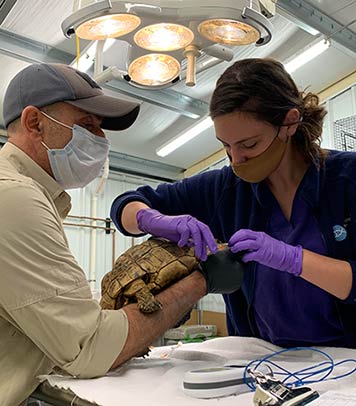
Drs. David Eshar (left) and Tess Rooney performing injectable anesthesia in a leopard tortoise.
“Sedation or anesthesia is often needed for their treatments, obtaining blood samples or performing diagnostic imaging. However, effective and safe immobilization protocols have not yet been established for many captive species.”
In this study, led by Drs. Eshar, Sara Gardhouse and Tess Rooney from the Exotics and Zoological Medicine Service at the Veterinary Health Center, an injectable anesthesia protocol was tested in three different tortoise species: leopard tortoises, red-footed tortoises and ornate box turtles.
“This opportunity provided third- and fourth-year students with great training in clinical research and tortoise anesthesia,” Dr. Eshar said. “This work will improve their clinical skills, promote their development as researchers and offer conference presentation and publication opportunities.”
The students performed physical exams and anesthesia monitoring, including recording the vital parameters (heart rate, respiratory rate and body temperature) and reflex responses.
“The novel data from this study will enhance the clinical knowledge of these species,” Dr. Eshar said. “It is expected this project will generate several scientific publications and conference presentations, thus contributing to the reputation of the CVM in promoting the growth of reptile medicine knowledge.”
The participating fourth-year students were Meghan Lancaster, Anna Richard, Camille Pizarro, Ariella Barry, Megan McKenney, Rachel Sahrbeck, Alexis Sutter, Danielle Russell, Carly Erickson, Stephanie Esmond and Miranda Thomas (a visiting student). The third-year students were Daria Hagan, Tori Matta, Carolyn Mark, Kallie Woodruff and Tess McPheeters.
Dr. Alice Wang, small animal medicine intern, and Amber Melton, exotics veterinary nurse, also assisted with the research.
The study was performed with the generous collaborations of the Milford Nature Center, Sunset Zoo, Sedgwick County Zoo, Rolling Hills Zoo, The David Traylor Zoo of Emporia and the Lincoln Zoo in Nebraska.
First-year veterinary student receives scholarship from American Jersey Cattle Association

Jessica Marie Hanson, Ulysses, Kan., is the recipient of the $5,000 scholarship for advanced studies. She earned her undergraduate degree from Kansas State University (KSU) in 2019 and is now enrolled in the College of Veterinary Medicine in her first year of studies.
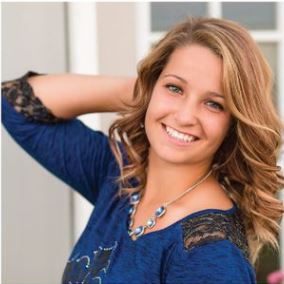 She plans to return to rural southwest Kansas and establish a clinic that offers affordable care for local dairies due to the shortage of large animal veterinarians in the area.
Jessica’s parents, Phil and Barbara Hanson, have been raising dairy cattle since the 1970s. She became involved with them early, showing Jerseys when she was just two. Though they initially farmed in Wisconsin, the family moved to the farm in Kansas when Jessica was nine.
Jessica's scholarship is presented by the American Jersey Cattle Association, which is giving out scholarships overall totaling $31,600 to 12 Jersey youth continuing their education. These young people are pursuing higher education at universities and colleges in 10 states—Indiana, Iowa, Kansas, New York, Oregon, Pennsylvania, South Dakota, Tennessee, Virginia and Wisconsin. They are pursuing degrees in agricultural business, agricultural communications, agriculture science, animal science, dairy production and veterinary medicine.
These juniors are scheduled to receive their awards at the Junior Banquet, which concludes events of Junior Day — November 7, 2020 — at The All American in Louisville, Kentucky.
K-State beef experts offer advice for managing calves prior to weaning
By Lisa Moser
As college kids leave home for the first time, it is important that they transition with a plan that includes being current on immunizations, following good study habits, establishing self-control at the buffet counter and having financial support in place so they have the greatest chance for success in their new environment.
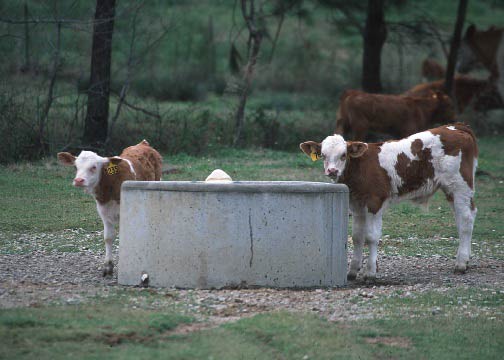
Getting pre-weaned calves accustomed to drinking from cattle waterers is one way to prepare them for their transition off the farm.
In much the same way, calves are most successful in transitioning off the farm when they’ve had good care, are current on their vaccinations, and have been exposed to the challenges of a changing diet.
“The goal of any pre-conditioning program should be to prepare the calf for the next event in its life,” said Bob Weaber, K-State beef cattle extension specialist. Pre-conditioning refers to the care the calf gets on the ranch before it’s weaned and before it enters the feedlot or a stocker operation.
From a health standpoint, vaccinations should be given while the calf is still nursing its dam, said K-State veterinarian Dr. Bob Larson.
“The best immune response to vaccinations will happen when the calves are not stressed and they are not carrying a parasite load,” Larson said. He added that immunity often does not reach effective levels until about three weeks after the vaccines are administered.
Another step in preparing the male calves is to have them castrated. The veterinarians advise cow-calf producers to take care of that early in the calf’s life.
“Castrating calves when they are two to three months of age causes minimal stress, allowing them to recover quickly. But the older the calf is when he has that done, the more it will challenge him,” Dr. Larson said.
Along with taking care of the animal’s health needs, the experts said it is important to train the calves to eat from a feed bunk and locate the type of water source they will see during the next phase of life.
“If the calves get dehydrated and aren’t eating, then their immune response will be weakened,” Dr. Larson said.
Part of that preparation may include letting them drink from a cattle waterer instead of a pasture pond, Weaber said. Exposing them to grain prior to weaning will help them make the transition to the backgrounding operation easier, as well. Backgrounding refers to co-mingling weaned calves of a similar age and continuing to grow them prior to entering the feed yard.
To build the best pre-conditioning program, the experts recommend the following:
- Prepare the calves for their new environment by exposing them to new water sources and feed.
- Manage the nutritional needs of the calves.
- Minimize stressors prior to weaning.
- Stimulate immunity through a vaccination program that matches the disease challenges those calves are going to face.
- Create a comprehensive plan for understanding optimum pre-weaning activities.
To hear the full discussion on caring for calves prior to weaning, listen to the BCI Cattle Chat podcast online.
CEEZAD researchers receive two grants, totaling nearly $1.5 million, for work on SARS CoV-2 virus
The Center of Excellence for Emerging and Zoonotic Animal Diseases (CEEZAD) at Kansas State University has received a pair of grants totaling nearly $1.5 million for research related to SARS CoV-2. One of the grants, for $861,253, is from the Department of Homeland Security and will underwrite a study into preclinical animal models such as hamsters, mice and ferrets.
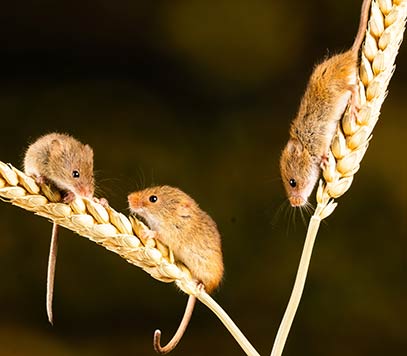
One of the grants will fund a study into small animal species, such as hamsters, mice and ferrets, that are susceptible to SARS-CoV-2. Photo by Nick Fewings on Unsplash.com
Each of those species is susceptible to SARS-CoV-2. The goal is to evaluate antiviral therapies against COVID-19.
The second grant, for $625,460, is from St. Jude Research Hospital through the National Institutes of Health Centers of Excellence for Influenza Research and Surveillance. The purpose of the proposed work is to develop a preclinical animal model for testing COVID-19 vaccines.
Research on the susceptibility of different animals to SARS-CoV-2 infection will greatly contribute to develop future mitigation strategies against SARS-CoV-2 infections since it may lead to valuable preclinical models for the evaluation of efficacious vaccines and therapeutics against SARS-CoV-2 infections.
Dr. Juergen A. Richt, CEEZAD’s director, said the two grants will underwrite a continuation of CEEZAD’s vital research into strategies for mitigating the spread of the SARS CoV-2 virus. “Given the threat posed by the spread of this virus globally, these projects may be the most important ongoing research efforts we could undertake,” Richt said.
Regular features
Alumni Events, Development and Continuing Education
 The Veterinary Medical Alumni Association organizes alumni receptions at several of the national annual conferences plus continuing education events and more. This month's section includes the monthly listings of recently departed alumni and links to their obituaries, plus a new link for submitting nominations for Alumni Recognition Awards.
Whitehair family celebrates their purple connections
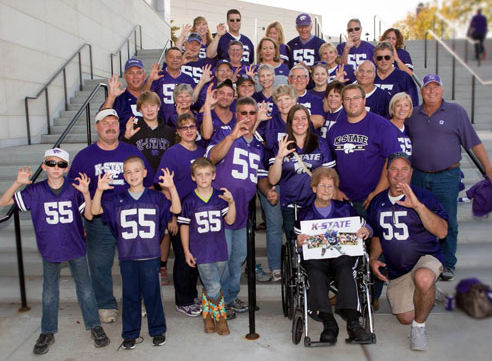
Virtual Family Day has a veterinary medicine connection this year! The Whitehair family was selected as the Family of the Year by Chimes, the junior honorary, which sponsors the annual competition. The family was honored during Virtual Family Day Saturday, Sept. 12, via the Chimes Facebook Page and website, and the K-State Parents and Family Program social media pages.
Two of the Whitehair family members are Alumni Fellows of the College of Veterinary Medicine, from two generations: Dr. Leo Whitehair, Doctor of Veterinary Medicine '53 in 1995, and Dr. Michael Whitehair, Doctor of Veterinary Medicine '74, Abilene, in 2018. Edited to add: Two other members of the family are also DVM graduates,
Dr. Charles K. Whitehair '40 (deceased 1994) and Dr. Jon G. Whitehair '88. Congrats to Drs. Whitehair and their entire family!
Submit nominations for Alumni Recognition Awards online
See our new online nomination form to nominate a fellow alumnus for one of our many annual recognition awards, presented at the national conferences: VMX, WVC, AVMA and the Annual Conference for Veterinarians. See full details at the link below.
https://www.vet.k-state.edu/asp/alumni-awards/awards.aspx .
In Memoriam - Recently Departed Alumni
Dr. Richard Gayek, DVM 1961
Aug. 19, 2020
Dr. James Cook, former professor and Ph.D. alumnus (in pathology)
Sept. 10, 2020
(click highlighted names for obituary)
Questions about Alumni or CE events?
Contact: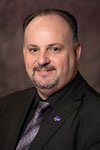 Tony Ballard
Alumni and Events Coordinator
785-532-4833
tballard@vet.k-state.edu
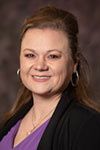 Sarah Keatley
Event Coordinator
785-532-4528
keatley@vet.k-state.edu
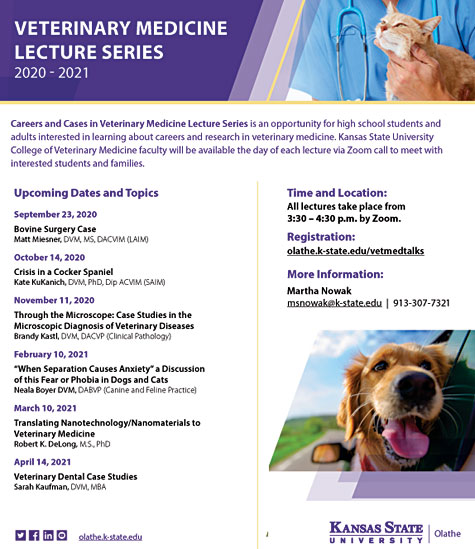
News Ticker
More activities and accomplishments in the College of Veterinary Medicine:
|
The CVM and Veterinary Health Center welcomes its newest Clinical Sciences faculty members: Dr. Clay Hallman, assistant professor of Diagnostic Imaging; Dr. Shane Lyon, clinical associate professor of Clinical Skills; Dr. Bryan Weaver, clinical assistant professor of Livestock Services; and Dr. Cody Dressler, clinical assistant professor of Shelter Medicine. Several Clinical Sciences faculty members provided presentations for the Virtual Vet Med ROCKS Summer Camp: Drs. James Carpenter, Elizabeth Davis, Sarah Kaufman, Kate KuKanich, Jessica Meekins, Matt Miesner and Melissa Upchurch. Sessions from the Summer Camp can be accessed online on the Vet Med ROCKS Facebook page. Drs. Butch KuKanich, Kate KuKanich and David Rankin are contributing authors on, “Pharmacokinetics and pharmacodynamics of a novel analgesic with a deterrent to human opioid abuse (methadone-fluconazole-naltrexone) after oral administration in dogs,” that was published in the American Journal of Veterinary Research August 2020 edition. Drs. James Carpenter and Tess Rooney darted a 40-kg pregnant chimp (Nia) for transportation to the Oklahoma City Zoo so that she could deliver her baby while associated with an older, experienced female chimp. Dr. Brian Lubbers was part of a team that worked for a year and a half with the AVMA’s Committee on Antimicrobials to produce “Antimicrobial Resistant Pathogens Affecting Animal Health in the United States,” a comprehensive report detailing the impact of antimicrobial-resistant bacteria on different animal species in the United States. The AVMA has developed a webpage highlighting certain aspects of the report at https://www.avma.org/resources-tools/one-health/antimicrobial-use-and-antimicrobial-resistance/antimicrobial-resistant-pathogens-affecting-animal-health Dr. Chris Blevins organized an alternative Dodge City Rodeo rotation experience in response to COVID-19 related restrictions. Students met with KDA members, the secretary and under secretary of agriculture, completed media training, had Zoom sessions with Large Animal Rescue Training and Zoom sessions with American Royal Veterinarian Dr. Brian Hodes (KSU DVM '11). Hands-on laboratories included tying rope knots, learning casting positions rope throwing. The group toured Cico Park rodeo grounds and developed their own SOP for veterinarians at a horse show/rodeo, and emergency scenario discussion and lab.
A Day in the Life of a K-State Veterinarian
We have expanded our social channels! Join the College of Veterinary Medicine on LinkedIn and add us to your profile under education and/or employment to help build and engage our online social community! Follow the LinkedIn page here: www.linkedin.com/company/kstatevetmed
|

Lifelines is published each month by the Marketing and Communications Office at the College of Veterinary Medicine. The editors are Joe Montgomery, jmontgom@vet.k-state.edu, and Piper Brandt, pnbrandt@vet.k-state.edu.