
Monthly Newsletter
August 2020 - Vol. 15, No. 8
<July 2020 | September 2020>
Top Stories
CVM appoints Dr. Mike Sanderson as new W.S. and E.C. Jones Chair of Clinical Epidemiology
An analysis of data has led the Kansas State University College of Veterinary Medicine to select Mike Sanderson as the newest holder of the W.S. and E.C Jones Departmental Chair of Clinical Epidemiology. "I grew up around beef cattle and always enjoyed the production system," Dr. Sanderson said.
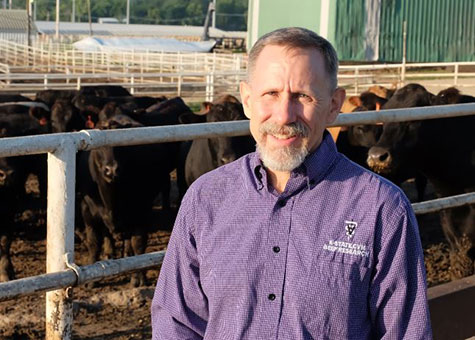
Dr. Mike Sanderson is the new Jones Departmental Chair for Clinical Epidemiology.
"I was in private practice five years, and realized in working with beef herds that I lacked some of the skills I really needed to manage data and be able to better understand causes of disease and production loss."
Dr. Sanderson had earned a Doctor of Veterinary Medicine at Colorado State University in 1988 and, after practice, attended graduate school at Washington State University to obtain more training in epidemiology. He completed his master's degree in 1995 and became a diplomate in the Epidemiology Specialty of the American College of Veterinary Preventive Medicine in 2004.
"I focused on epidemiology and data — how to analyze data and how to model disease and production systems — to try and make better decisions in production enterprises," Dr. Sanderson said.
After graduate school, Dr. Sanderson was hired at K-State.
"I started working in clinical sciences as a beef cattle production specialist, along with general food animal clinics with students while also having something of a research appointment," Dr. Sanderson said. "Then in 2004, I transitioned to a predominantly research appointment."
Dean Bonnie Rush said Dr. Sanderson met all criteria established by the donor family for awarding the W.S. and E.C Jones Chair.
"This five-year, renewable chair is designated in our college for an epidemiologist who is actively engaged in hypothesis-driven livestock research and training of graduate students," Dean Rush said. "He is well-respected nationally and internationally in the field of veterinary epidemiology through research collaborations and invited presentations. Dr. Sanderson was selected earlier this year as the recipient of the Zoetis Excellence in Research Award. The quality of his work was a perfect fit to match donor intent."
Dr. Sanderson's focus on beef is also a good fit under the designation of the Jones Chair, which was established in 1987. The chair helps honor the memory of a pair of brothers who raised cattle near Emporia Kansas: Walter S. and Evan "Evie" C. Jones. The two brothers died in 1953 and income from their estate was to be used for providing medical assistance for needy children who reside in Lyon, Coffey or Osage counties. Later, education benefits were added as part of the mission of the Walter S. Jones and Evan C. Jones Foundation.
Now a professor in the diagnostic medicine and pathobiology department, Dr. Sanderson also serves as an associate director of the college's Center for Outcomes Research and Epidemiology, led by Dr. David Renter.
"We use large datasets from commercial feedlot operations to help producers better understand the factors responsible for driving high or low morbidity rates in feedlot cattle," Dr. Sanderson said. "We are constantly working to develop better data streams from cow-calf all the way to feedlot so we can understand risks and make better health, welfare and production decisions."
Despite the COVID-19 pandemic, Dr. Sanderson and the Center for Outcomes Research and Epidemiology group have been able to continue their work.
"A great deal of our work in collecting and analyzing data, as well as working with grad students, hasn't really changed," Dr. Sanderson said. "We can send data electronically and we perform a great deal of our work on a computer. COVID-19 has slowed up a couple of clinical trials, but mostly we've been able to continue working with data, just like we always have."
As an epidemiologist, Dr. Sanderson's work is focused on infectious diseases that impact livestock. His work includes modeling of disease outbreaks.
"I also work a lot on foot and mouth disease, modeling outbreaks and how to manage them, if indeed foot-and-mouth disease was introduced to the country," Dr. Sanderson said. "We look for the best ways to manage both the outbreak and maintain business continuity for livestock operations in general, but beef in particular."
Second-year student to conduct mentored anaplasmosis research with national fellowship
Lauren Herd, from Wichita, a second-year veterinary student at Kansas State University, is one of 12 students selected nationally for a Veterinary Student Research Fellowship to Address Global Challenges in Food and Agriculture.
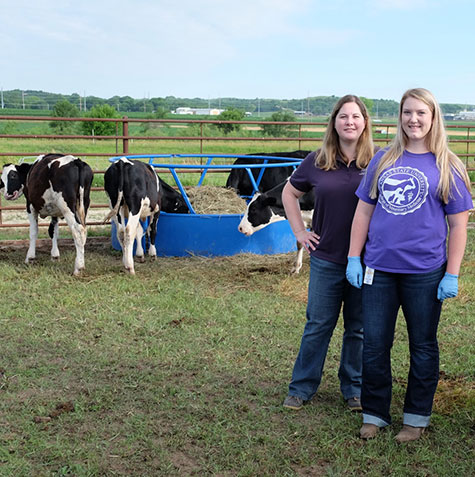
Dr. Katie Reif mentors second-year student Lauren Herd during the Veterinary Research Scholars Program in summer 2020.
Lauren’s research project focuses on anaplasmosis, considered the most prevalent tick-transmitted disease in cattle worldwide, and a disease that affect almost 50% of Kansas beef cattle herds. Lauren’s research mentor is Dr. Kathryn Reif, assistant professor in the College of Veterinary Medicine.
“Cattle that survive initial infection with Anaplasma marginale, the bacterial pathogen that causes anaplasmosis, become chronic carriers of the pathogen and can serve as future transmission reservoirs,” Dr. Reif explained. “Chlortetracycline is the only FDA-approved antimicrobial indicated for the control of active anaplasmosis in carrier cattle.”
Dr. Reif said clinical anaplasmosis can reoccur in carrier animals if they become immunocompromised and their immune system isn’t able to keep the pathogen under control. Cattle often experience transient periods of immunosuppression in a normal production season during estrus, calving, harsh weather conditions, or concurrent infections.
For her project, Dr. Reif supervised Lauren in assessing whether chlortetracycline protects transiently immunosuppressed calves from developing clinical anaplasmosis. Dr. Reif said the results of Lauren’s research could impact the way producers manage this disease and will provide data related to the efficacy of the current legal dose.
Lauren and Dr. Reif were paired up by K-State’s Veterinary Research Scholars Program (VRSP), a summer program that provides veterinary students with in-depth, hands-on research opportunities with experienced faculty mentors. The program’s goal is to motivate students toward a research-focused career.
“We are so proud of the impactful research that Lauren and Dr. Reif were able to accomplish this summer and so grateful to the Foundation for Food and Agricultural Research and AAVMC for their support of Lauren and other fellows in their pursuit of important agricultural research,” said Dr. Kate KuKanich, Veterinary Research Scholars Program director.
“I am excited to be a part of this project because anaplasmosis has such a large economic impact on the US cattle industry,” Lauren said. “Tetracycline antimicrobials, including chlortetracycline, are commonly used in cattle production. If chlortetracycline is not effectively controlling anaplasmosis at the current legal dose, it would need to be re-evaluated. It is important to assist producers in making the best economical decision for their herds, as well as maintaining the efficacy of these medically important antimicrobials by ensuring they are used judiciously.”
“Anaplasmosis conservatively costs the U.S. cattle industry $300 million annually,” said Dr. Kathryn Reif, assistant professor in the diagnostic medicine/pathobiology department. “Use of chlortetracycline-medicated feed products is one of the most common ways producers control anaplasmosis in their herds; however, data from our lab demonstrates that there are many strains of Anaplasma marginale circulating in Kansas and not all strains may be equally susceptible to chlortetracycline.
“To be most effective, use of chlortetracycline should protect carrier animals from re-developing clinical disease during times of transient immunosuppression. Lauren’s project will directly evaluate this using two different A. marginale strains – one a historic strain isolated over 30 years ago, and a second strain isolated from a Kansas beef cattle herd two years ago and that is still actively infecting cattle. We are excited to be doing research that contributes needed information to support U.S., and especially Kansas, cattle producers.”
Organizers of the fellowship program said veterinary medicine is critical to addressing global challenges related to food security, economic well-being and public health. The fellowship creates opportunities for veterinary students to pursue research related to global food security and sustainable animal production.
“Veterinary science is essential for understanding and mitigating a host of serious global health challenges, including the coronavirus – the latest example of pathogens that move between humans and animals,” said FFAR’s executive director Dr. Sally Rockey. “Pests and diseases are constantly changing to survive in new environments. We must urgently equip the next generation of veterinary scientists to ensure the veterinary community has the expertise to address future pandemic pests and diseases.”
The three-month long fellowship annually allows up to 12 students to conduct research with a mentor. The fellowship normally culminates with student presentations at the annual National Veterinary Scholars Symposium in late July/early August, which was converted to a virtual symposium this year.
Historical research collaboration puts cute squirrel on journal cover
 While it looks relatively harmless – and cute – international trade involving the five-striped palm squirrel has led to some very undesirable problems. New research in the Kansas State University College of Veterinary Medicine is helping to put this species of squirrel on the map, so to speak, and on the cover of the latest issue of the Journal of the American Association for Laboratory Animal Science.
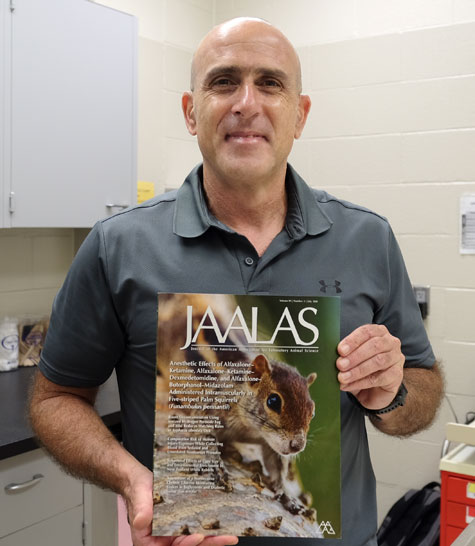
Dr. David Eshar says he was surprised to his research featured on the cover of the new JALAAS.
Dr. David Eshar, associate professor in companion exotic pets, wildlife and zoo animal medicine, spent the last two years collaborating with the Tisch Family Zoological Gardens in Jerusalem, Israel, examining the northern palm squirrel. The five-striped palm squirrel is native to India, Pakistan, Nepal, Bangladesh and Iran, but can become a feral invasive species through illegal pet trade.
“This squirrel species is a huge problem in Australia,” Dr. Eshar explained. “For me, as a zoo medicine specialist, this has been a great opportunity to perform research and generate novel clinical knowledge in an uncommon species. This is part of the historical collaboration I have with the Jerusalem zoo. This is a great opportunity for Israeli Zoo vets and students to take part in zoo related research.”
In his research article on these squirrels, Dr. Eshar explored three different injectable anesthesia protocols thanks to support by a Department of Clinical Sciences research grant. The research title is “Anesthetic Effects of Alfaxalone–Ketamine, Alfaxalone–Ketamine–Dexmedetomidine, and Alfaxalone–Butorphanol–Midazolam Administered Intramuscularly in Five‑striped Palm Squirrels (Funambulus pennantii).”
This publication is added to another recent and major publication from this project by Dr. Eshar and his collaborator, Dr. Hugues Beaufrère, a faculty member at the Ontario Veterinary College at the University of Guelph. That article was titled, "Anesthetic effects of dexmedetomidine-ketamine-midazolam administered intramuscularly in five-striped palm squirrels (Funambulus pennantii),” and was published in the American Journal of Veterinary Research in 2019.
“A systematic review of the literature showed that no similar anesthesia regimens had been used previously in palm squirrels,” said Dr. Eshar. “The combination of agents we tested was designed to provide balanced and—depending on the protocol— partially reversible anesthesia that enables practical recommendations for treatment of these animals. It was exciting to have this research featured on the cover of JAALAS. This is a nice gesture and an honor for anyone, as JAALAS is the most respected journal in its field.”
The Jerusalem Zoo is opening an exhibit for this squirrel species to better the public about the squirrels. Dr. Eshar said this is an invasive species under strict control by the Israeli national wildlife authorities. The research serves a part in allowing zoo officials to educate the public on the dangers of such invasive species.
More Headlines
USDA-NIFA grant supports research to control respiratory disease in young swine
 A new $500,000 grant will help Dr. Megan Niederwerder look for ways to control one of the most important viral agents in pigs: porcine reproductive and respiratory syndrome virus. She is the project director on the three-year grant from the U.S. Department of Agriculture National Institute of Food and Agriculture.
Dr. Megan Niederwerder's new research is titled, "Assessing the Microbiome as a Tool for the Mitigation of Viral Disease in Nursery Pigs."
"Porcine reproductive and respiratory syndrome virus, or PRRSV, causes the most costly disease to swine production in the United States," Dr. Niederwerder said. "The disease caused by this virus often involves secondary bacterial pathogens and results in polymicrobial lung infections, which exacerbate respiratory disease and increase antimicrobial administration in young growing pigs."
Although commercial vaccines are used to reduce the effects of PRRSV on swine health, Dr. Niederwerder said that currently available vaccines are generally considered inadequate for disease control. She said alternative strategies for control of PRRSV are needed to maintain swine health and welfare while lessening the economic effects of this disease on pork producers.
"The goal of our work is to investigate the gut microbiome as a novel tool for PRRSV control due to its impact on the immune system and nutritional outcomes after infection," Dr. Niederwerder said. "We plan to investigate the effects of microbiome modulation on the outcome of swine with respiratory disease and identify what beneficial microbes are associated with improved health. We anticipate the data generated in this project will allow us to characterize and determine the gut microbes that improve pig health in the presence of PRRSV."
Dr. Niederwerder hopes to determine how beneficial gut microbes may be used as a preventative medicine tool to reduce the effects of respiratory disease and decrease the need for antimicrobials in swine.
"As we continue to discover how gut microbes communicate with the lungs and influence the response to pathogens causing pneumonia, the gut microbiome provides an opportunity to improve swine health and welfare, lessen the economic losses to producers associated with PRRSV, and reduce the risk of antimicrobial resistance in swine," Dr. Niederwerder said. "Ultimately, use of the gut microbiome to improve respiratory health and growth of livestock is an emerging and exciting area of study. With a need to increase production efficiency and provide food for a growing world, the gut microbiome represents tremendous potential in animal agriculture."
New published study from CVM virologists identifies potential COVID-19 treatments
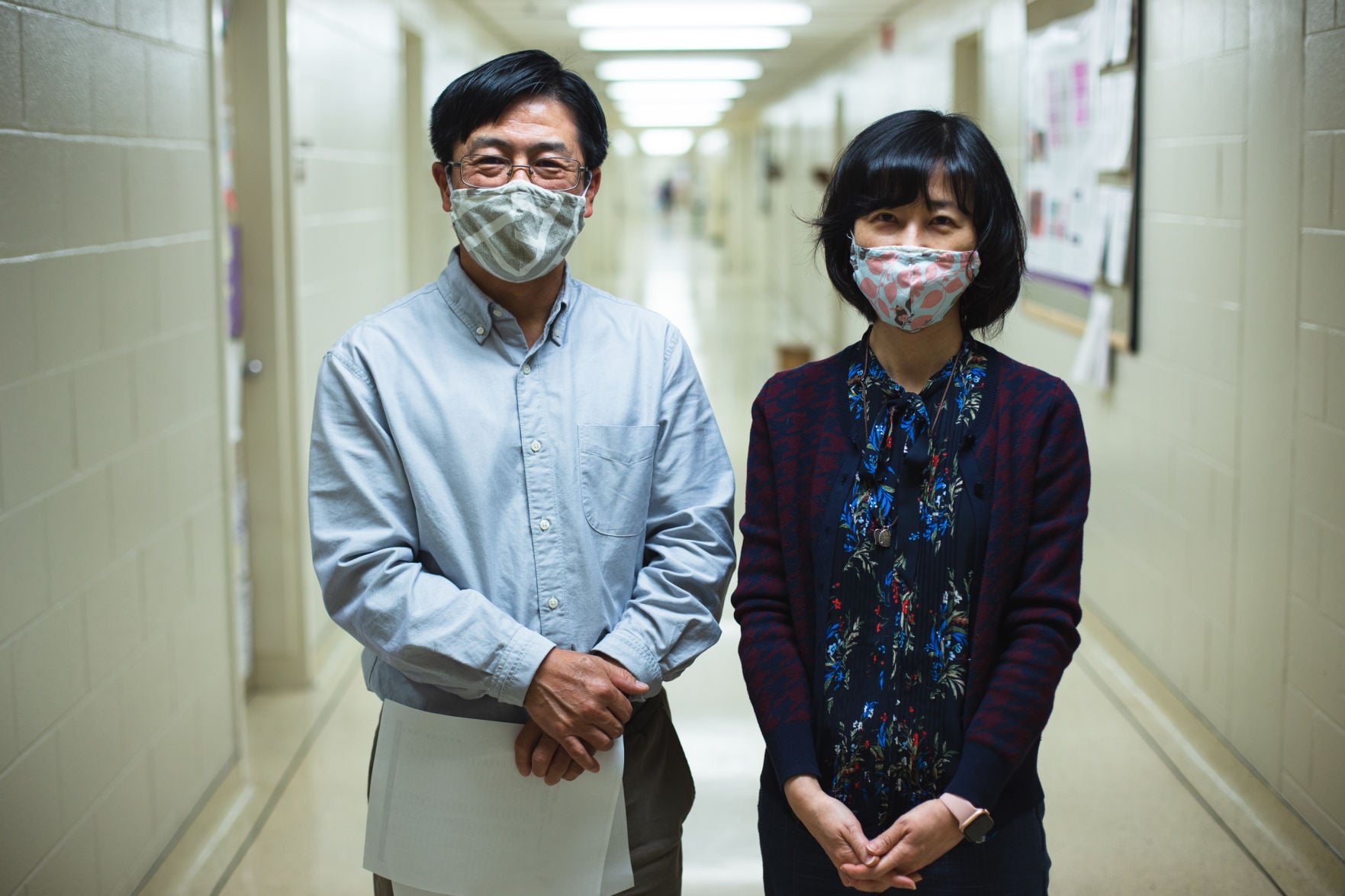 Drs. Yunjeong Kim and Kyeong-Ok "KC" Chang, virologists in the CVM, have published a study showing a possible therapeutic treatment for COVID-19. Pathogenic coronaviruses are a major threat to global public health, as shown by severe acute respiratory syndrome coronavirus, or SARS-CoV; Middle East respiratory syndrome coronavirus, known as MERS-CoV; and the newly emerged SARS-CoV-2, the virus that causes COVID-19 infection.
Drs. Yunjeong Kim and KC Chang have published a new study that shows how specific protease inhibitors may block coronavirus replication.
The study, "3C-like protease inhibitors block coronavirus replication in vitro and improve survival in MERS-CoV-infected mice," appears in the Aug. 3 issue of the prestigious medical journal Science Translational Medicine. It reveals how small molecule protease inhibitors show potency against human coronaviruses. These coronavirus 3C-like proteases, known as 3CLpro, are strong therapeutic targets because they play vital roles in coronavirus replication.
"Vaccine developments and treatments are the biggest targets in COVID-19 research, and treatment is really key," said Chang, professor of diagnostic medicine and pathobiology. "This paper describes protease inhibitors targeting coronavirus 3CLpro, which is a well-known therapeutic target."
The study demonstrates that this series of optimized coronavirus 3CLpro inhibitors blocked replication of the human coronaviruses MERS-CoV and SARS-CoV-2 in cultured cells and in a mouse model for MERS. These findings suggest that this series of compounds should be investigated further as a potential therapeutic for human coronavirus infection.
Chang and Kim have been using National Institutes of Health grants to develop antiviral drugs to treat MERS and human norovirus infections. Their work extends to other human viruses such as rhinoviruses and SARS-CoV-2.
"The work that this group of collaborators has been doing on antivirals and inhibitors for SARS and MERS at K-State for a number of years has been vital to their ability to quickly pivot to emphasize research on SARS-CoV-2 virus and therapeutics," said Peter K. Dorhout, vice president for research at K-State.
Co-collaborators on the research include teams lead by Bill Groutas at Wichita State University, Stanley Perlman at the University of Iowa and Scott Lovell at the University of Kansas.
"Drs. Groutas, Perlman and Lovell brought decades of experience to our research team," Chang said. "We would not have been able to come this far without important collaborations with our colleagues at other institutions."
“Getting things published right now is very important for the scientific community," Kim said. "I think we are adding valuable information to the antiviral field."
The new compounds in the publication are exclusively licensed and being developed by Cocrystal Pharma for COVID-19. K-State Innovations Partners handles commercial technology licensing for the university.
Determining record keeping priorities
K-State beef cattle experts advocate for data as a valuable decision-making tool
Humans consume data daily, from knowing the latest COVID-19 counts to learning which baseball pitcher threw the most strikeouts from the mound. In sports, that data can determine which player gets called up to play. Likewise, data can also help beef producers decide which cows to keep or cull.
Knowing what is the most important data to collect can sometimes be hard to determine, but the experts at the Kansas State University Beef Cattle Institute offered some advice on how to set those priorities on a recent Cattle Chat podcast. Joining veterinarians Drs. Bob Larson and Brad White was agricultural economist Dustin Pendell and a special guest, Phillip Lancaster, a beef cattle nutritionist with BCI.
“A good record keeping system is more than just assigning identification to an animal; it is gathering information and then using it to make decisions about the herd,” White said.
Depending on the marketing goals of the operation, the type of data collected will vary, but the experts agreed on one key statistic for all cow-calf herds.
“The most important metric to collect for any cow-calf operation is the number of calves weaned, or even better, the number of pounds of calves weaned per the number of cows exposed to a bull,” Dr. Larson said.
He noted that the pounds of calves weaned gives producers a rough estimate of income potential, while the number of cows exposed allows cattle ranchers to calculate an expense estimate.
Along with tracking breeding success, Lancaster said an effective record keeping system must allow producers to monitor the herd inventory.
“Producers need to know which cows were brought into the herd at what time and how many cows left the herd by being sold,” Lancaster said.
Pendell said there are times in the production cycle when it is easy to collect data, such as at weaning and when the herd is given vaccinations. He said the amount of data collected on purebred operations may need to be more than on a typical commercial herd.
“The data collected can then be shared with the person who buys them and that may influence the perceived value of the animal,” Pendell said. “There are a lot of marketing opportunities for animals that are individually identified.”
Dr. White agreed with the added value of individual data tracking but said for other herds, managing the data as a group may suffice.
“A record keeping system doesn’t have to be complex. It just needs to match the needs of the herd,” he said.
To hear the full discussion about record keeping and advice on rotational grazing and introducing grain into a grass-based diet, listen to the BCI Cattle Chat podcast online.
Regular features
Alumni Events, Development and Continuing Education
 The Veterinary Medical Alumni Association organizes alumni receptions at several of the national annual conferences plus continuing education events and more. This month's section includes the monthly listings of recently departed alumni and links to their obituaries, plus a new link for submitting nominations for Alumni Recognition Awards.
Happy 100th Birthday Doc Hardin
|
|
Submit nominations for Alumni Recognition Awards onlineSee our new online nomination form to nominate a fellow alumnus for one of our many annual recognition awards, presented at the national conferences: VMX, WVC, AVMA and the Annual Conference for Veterinarians. See full details at the link below. |
|
In Memoriam - Recently Departed Alumni
Dr. Ellsworth Elmer Thebert, DVM 1955 (click highlighted names for obituary) |
|
Questions about Alumni or CE events?Contact:
|

 Tony Ballard
 Sarah Keatley
News Ticker
More activities and accomplishments in the College of Veterinary Medicine:
|
Drs. Hannah Turner, David Biller, J. Sago and Ken Harkin published, “Use of radiographs, ultrasound and computed tomography for diagnosis of a meningomyelocele in a dog” in the Journal of Small Animal Practice. Drs. Matthew DiFazio, Justin Thomason, Natalia Cernicchiaro, David Biller, Sasha Thomason and Paxton Harness published, “Evaluation of a 3-dimensional ultrasound device for noninvasive measurement of urinary bladder volume in dogs,” in the Journal of Veterinary Internal Medicine. Dr. Raghavendra Amachawadi was a contributing author on the publications, “Tumoricidal Potential of Novel Amino-1, 10-phenanthroline Derived Imine Ligands; Chemical Preparation, Structure, and Biological Investigations,” in the MDPI' “Coronavirus (COVID-19) forecasting in India: Application of ARIMA and periodic regression models,” in the International Journal of Advanced Scientific Research; and “Indole moiety induced biological potency in pseudo-peptides derived from 2-amino-2-(1H-indole-2-yl) based acetamides: Chemical synthesis, in vitro anticancer activity and theoretical studies,” in the Journal of Molecular Structure. 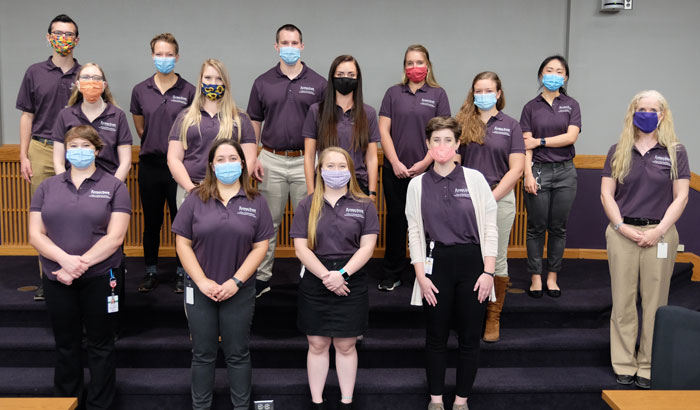
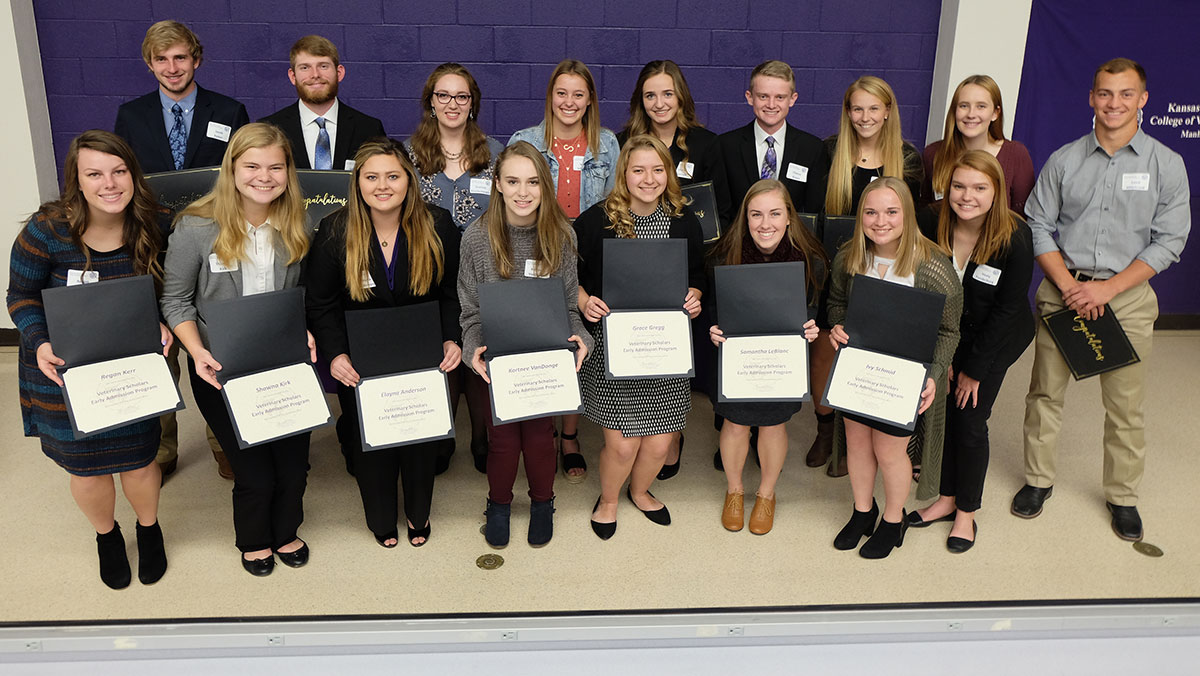
Congratulations to Dr. Kate KuKanich and the Veterinary Research Scholars Program (VRSP) students! From left to right (back row): Zack Bieberly, Maddie Butterfield, Jayden McCall, Cierra Roubicek and Zixuan Wang. Middle row: Laura Favreau, Lauren Herd, Martha (MJ) Wenger and Breanna Fox. Front row: Alex Zabiegala, Payton Wise, Marissa Komp and Molly Allison. (Not pictured: Shanice Harris and Ariel Carruth.) The program was able to continue this summer to provide these 15 veterinary students with impactful research projects mentored by faculty within the CVM and across campus. The students presented their research at a Poster Session on July 28. The students also presented at the virtual National Symposium in August. Congratulations also goes to Dr. Kate KuKanich for receiving five more years of funding for the “This is How We ROLE” program! The program teaches veterinary STEM lessons to K-4 elementary students that are educationally disadvantaged due to socioeconomic status, race or ethnicity that do not have other opportunities in STEM and hope to become future veterinarians. The Kansas State University Veterinary Health Center Dispensary announces it has another technician who has been certified in Technician Product Verification (TPV), which brings our total number up to three employees with this certification! Reagan Johnson, CPhT (Pharmacy Technician) passed her national exam for this credential! The TPV Certificate demonstrates skill in safeguarding patients from dispensing errors and expresses commitment to excellence as pharmacy technicians. "We are elated to be able to bring this level of training, service and safety to our patients," said Landa Colvin-Marion, director of the dispensary. "Reagan completed a 15-hour training program, which is a requirement to be eligible to sit for the national examination." 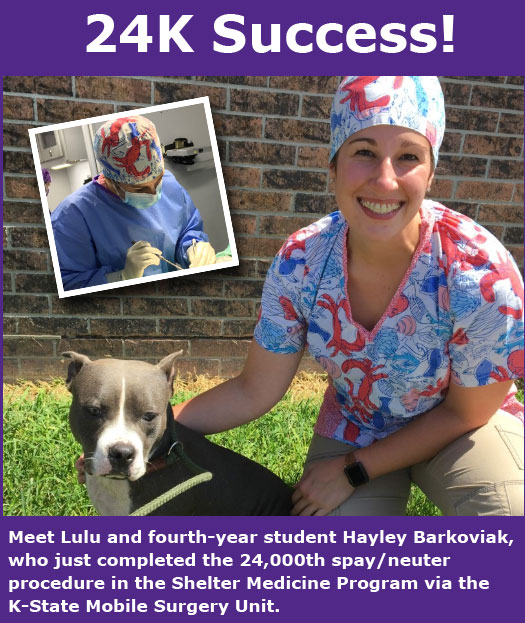 Congrats to Hayley on her work at the Junction City/Geary County Animal Shelter! |
Welcome Class of 2024
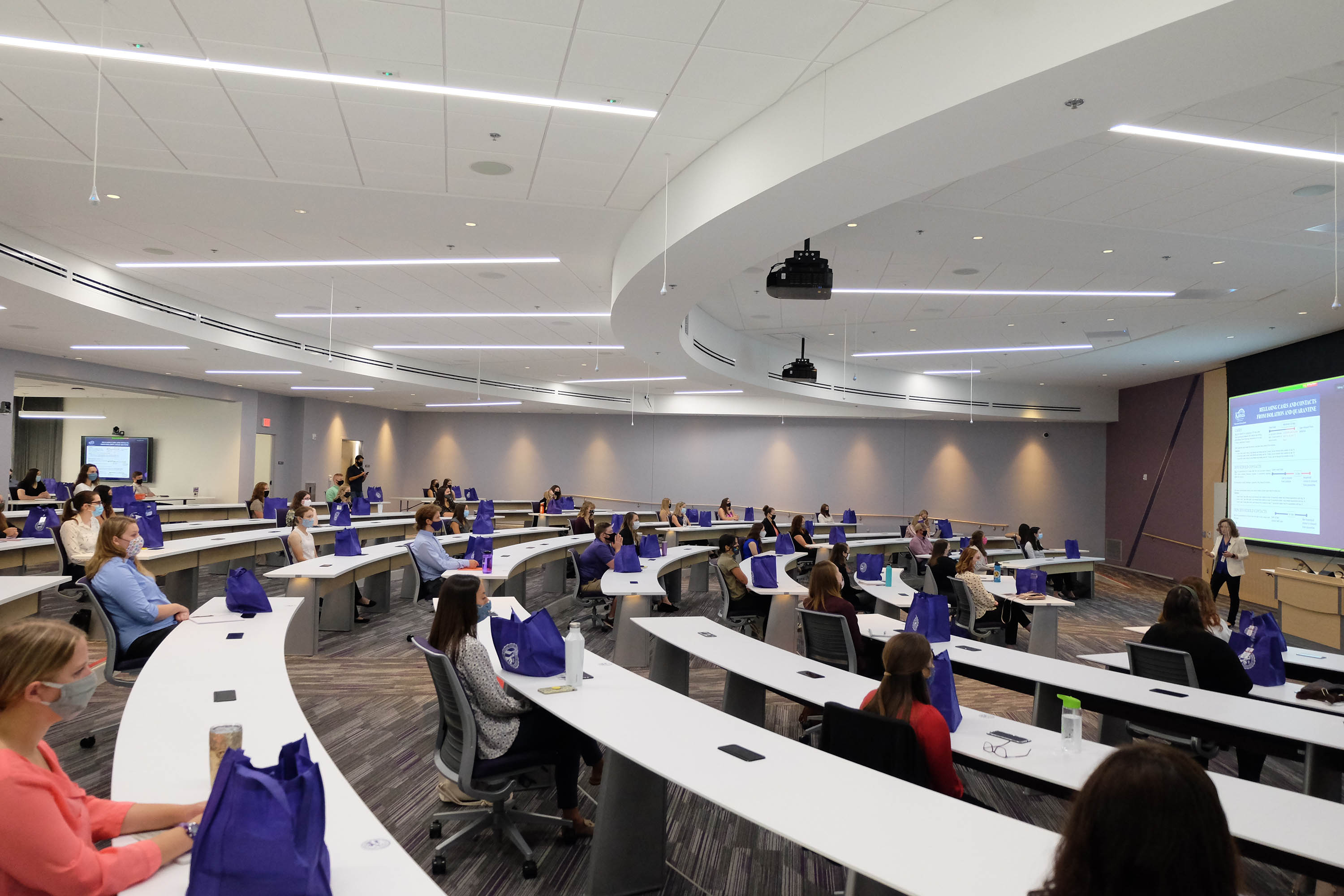
Dean Bonnie Rush welcomes the class of 2024 in the college's new auditorium. Students are being asked to wear masks and maintain social distancing while attending classes in person, along with other measures to help mitigate potential spread of COVID-19. |
|
We have expanded our social channels! Join the College of Veterinary Medicine on LinkedIn and add us to your profile under education and/or employment to help build and engage our online social community! Follow the LinkedIn page here: www.linkedin.com/company/kstatevetmed |
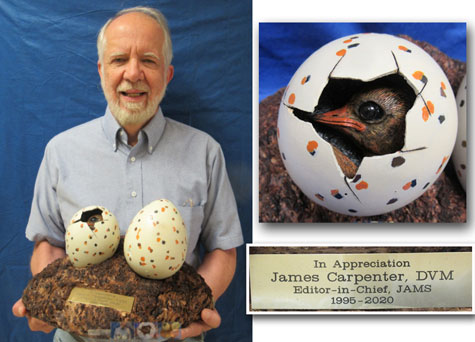

New Arrivals/Recent Departures
Lifelines is published each month by the Marketing and Communications Office at the College of Veterinary Medicine. The editor is Joe Montgomery, jmontgom@vet.k-state.edu.