
Monthly Newsletter
October 2022 - Vol. 17, No. 10
<September 2022 | November 2022>
Top Stories
Meet Snyder and Ohlde: CVM welcomes KSDS service dogs for training
Two puppies in training, named for Kansas State University athletics legends, are being welcomed at the College of Veterinary Medicine — although not as patients in the Veterinary Health Center. In cooperation with Kansas Specialty Dog Service (KSDS) Assistance Dogs Inc., the two service dogs, Snyder and Ohlde, are part of a new student community service initiative.
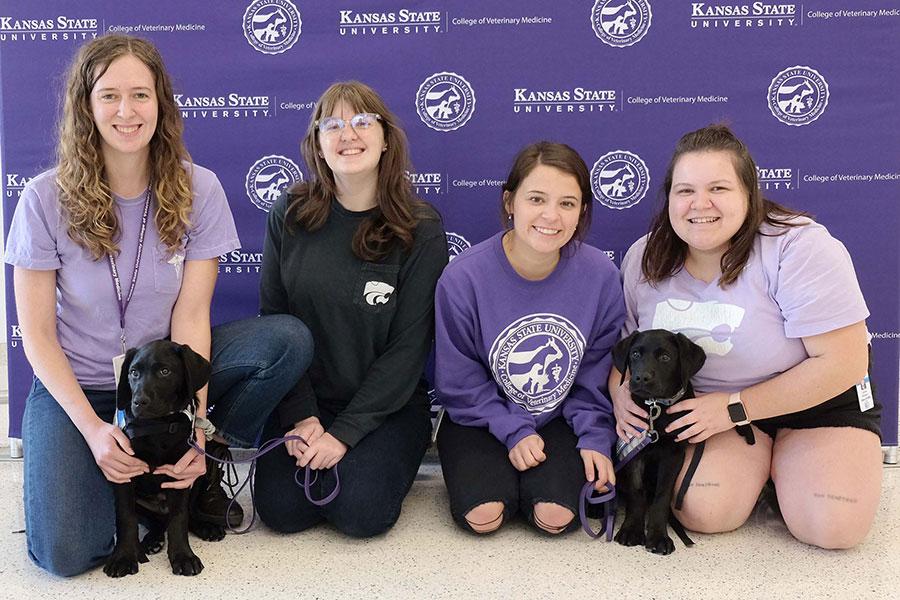
Rebekah Arnold, Ohlde, Kathleen Wardman, Madison Lathem, Snyder and Jayme Williams
“Snyder and Ohlde are the two newest members of our veterinary family as the ‘class dogs’ for our first- and second-year DVM [Doctor of Veterinary Medicine] students,” said Hodes Family Dean Bonnie Rush. “We are delighted to support the KSDS Assistance Dogs Inc. with puppy-raising. There is no better environment for their socialization and command training. We look forward to contributing to the development of a service dog that will significantly enhance someone’s life in the future.”
At 14 weeks old, the two male Labrador puppies are part of the KSDS training program. Each will be trained and socialized by sets of two host students acting as the official “puppy-raisers,” while other students in the college will be able to assist. The puppy raisers are Madison Lathem and Jayme Williams, who will care for Snyder in the first-year class. Second-year students Kathleen Wardman and Rebekah Arnold will be responsible for Ohlde.
“The goal for the first phase of training is to provide the puppies with socialization and teach them a set of 30 commands,” Dr. Rush said. “The college will provide faculty mentorship and an oversight committee. The puppies will be socialized in the lecture halls and student study areas and will attend college events, but will not be introduced to teaching laboratories or the clinical training program. Their healthcare will be provided by the Veterinary Health Center, where they will receive excellent medical care and extra special attention.”
Upon completion of an initial training period of 18 months, Ohlde and Snyder will be returned to KSDS for specialty training as a guide, service or facility dog or may remain at KSDS as part of the breeding program. KSDS will regularly check on the puppies’ progress and provide guidance as needed.
“We’ve posted training commands in our first-year and second-year lecture halls and student success centers so that all of our students can easily help out in training Snyder and Ohlde,” said Dr. James Roush, associate dean for academic programs and student success. “We look forward to enjoying their presence in our facilities, although we are reminding students that the puppies are not allowed to have human food or treats at any time. Also, their puppy-raisers will have final say on how the puppies are cared for.”
CVM receives 2022 Health Professions Higher Education Excellence In Diversity (Heed) Award

For the second year in a row, the College of Veterinary Medicine at Kansas State University has been recognized for its efforts to enhance diversity in its academic environment. The college received the 2022 Health Professions Higher Education Excellence in Diversity (HEED) Award from INSIGHT Into Diversity magazine, the oldest and largest diversity-focused publication in higher education.
As a recipient of the annual Health Professions HEED Award — a national honor recognizing U.S. health colleges and universities that demonstrate an outstanding commitment to diversity and inclusion — Kansas State University will be featured, along with 62 other recipients, in the December 2022 issue of INSIGHT Into Diversity magazine.
“It is a great honor to be chosen a second time for the Health Professions HEED Award represents,” said Dr. Bonnie Rush, Hodes Family Dean of the College of Veterinary Medicine. “We believe it’s important for us to continue to strengthen and grow in our efforts to provide an inclusive, welcoming environment for all. As we prepare the leaders of tomorrow, we are committed to help them foster the values of diversity, equity and inclusion wherever their future destinations take them. I am grateful to Dr. Callie Rost, our assistant dean for admissions and director of diversity, inclusion, equity and belonging, in helping our college maintain a high standard, and continue to lead our efforts for this critical mission.”
INSIGHT Into Diversity magazine selected K-State because of the veterinary college’s efforts to identify and incorporate opportunities for growth in diversity, equity and inclusion.
“Recognition from Insight into Diversity with the HEED Award reflects the efforts of our students, faculty and staff who take pride in contributing to the culture of inclusiveness in our college. We regularly seek feedback to evaluate our progress and to identify new opportunities to enhance our learning environment,” Dr. Rost said.
Faculty, staff and students are encouraged to complete a wide variety of DEIB training through the Diversity and Resilience Institute of El Paso, Purdue Certificate for Diversity and Inclusion in Veterinary Medicine and American Veterinary Medical Association’s Brave Space Certificate Program.
In addition to training, the Walter C. Bowie Scholarship is specifically designated for students demonstrating commitment to bringing diverse people together and for serving disadvantaged populations. Fourth-year veterinary student Bairon Madrigal was presented with the Bowie Scholarship. He was noted for his efforts in creating the LatinX Student Veterinary Medical Association, Avian Club and LVMA to promote opportunities for student interaction and inclusion.
The College of Veterinary Medicine also experienced growth by expanding its recruiting practices with two USDA NIFA grants: SPARK and SPRINT. These programs focus on recruiting students from rural Kansas and students with an indigenous, native or tribal heritage.
Internal activities include the development of a monthly “Intercultural and Inclusion Lunch and Learn” series.
Outreach activities include “This is How We ROLE,” a program where veterinary students demonstrate the potential for a career in veterinary medicine to a local, underrepresented youth population. A large group of faculty, staff and students participate annually in “Everybody Counts – Manhattan,” a grassroots effort to provide social services and information in Riley County.
The college’s Community Veterinary Outreach Program regularly travels to provide animal health services at the Santee Sioux Reservation in Nebraska, the Metro Lutheran Ministry Mission in Kansas City, Missouri, the Street Dog Coalition in Topeka, Kansas, and other regional locations.
In December 2021, outreach coordinator Dr. Ron Orchard, then a fourth-year veterinary student was recognized by the American Association of Veterinary Medical Colleges as the recipient of the 2022 Patricia M. Lowrie Diversity Leadership Scholarship. In summer 2022, the outreach team collaborated with participants in the Washington Mandela Fellowship, a national program that engages young African leaders in hands-on leadership education and practical community-building experiences. The group participated in a community vaccination clinic for pets in Manhattan.
“The Health Professions HEED Award involves a rigorous application process that examines the recruitment, retention and support of underrepresented students and employees, effective leadership in diversity mission-setting, innovative programming aimed at inclusive excellence and many other aspects of diversity and inclusion across campus,” said Lenore Pearlstein, publisher of INSIGHT Into Diversity magazine. “Our HEED Award recipients have demonstrated extraordinary resolve in working to build a more equitable, safe and diverse campus environment.”
Extra pair of students join Veterinary Training Program for Rural Kansas
Recent legislative changes in Kansas are bolstering a long-running, successful program at the College of Veterinary Medicine at Kansas State University. Increased funding by the state of Kansas for FY2023 and beyond allows for the selection of additional annual loan recipients and an increase in the funding of all students currently in the Veterinary Training Program for Rural Kansas, or VTPRK.
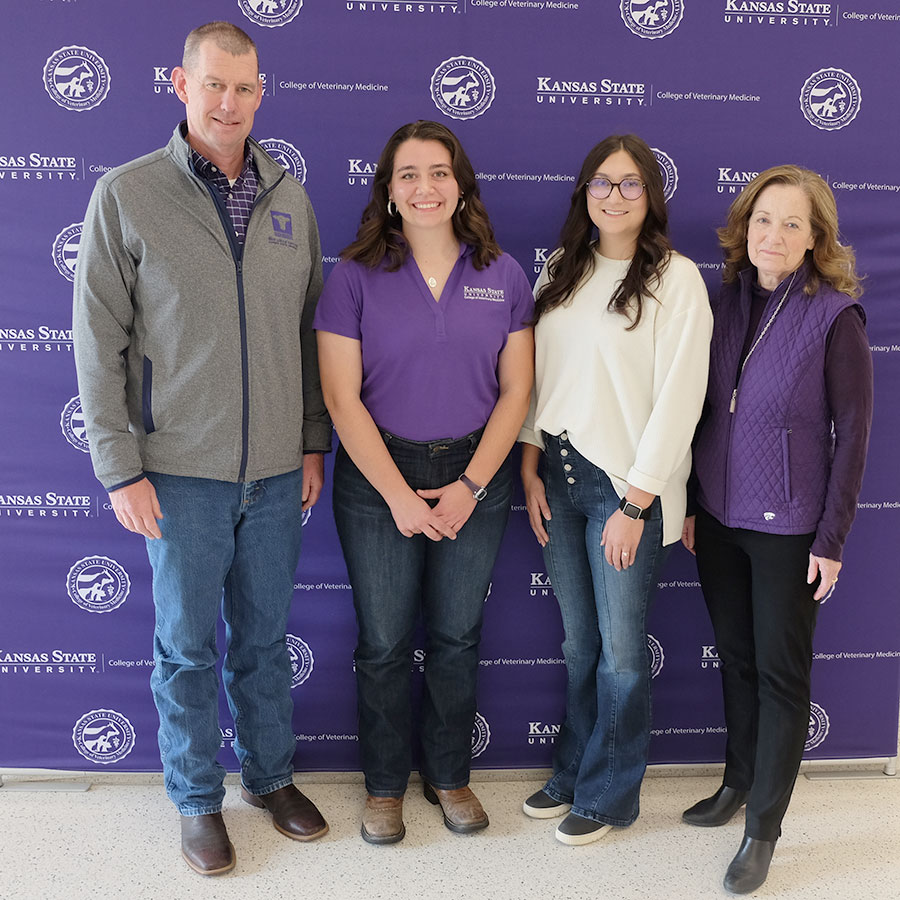
Dr. Brad White, Violet Biggs, Jayden Hann and Hodes Family Dean Dr. Bonnie Rush
New additional VTPRK-loan recipients are Violet (Cecelia) Biggs, Pittsburg, and Jayden Hanna, Elkhart. They are joining Chelsey Bieberle, Bushton; Emma McClure, Hugoton; Bryant Karlin, Manhattan; and Chandler Rogers, Topeka, selected earlier this year, who are all second-year veterinary students scheduled to complete their Doctor of Veterinary Medicine degrees in May 2025.
"We are excited to be able to add Violet and Jayden to the VTPRK," said Bonnie Rush, Hodes Family Dean of the College of Veterinary Medicine. "This program is fulfilling a critical mission to provide veterinary care and service in rural areas of Kansas. We are grateful to the Kansas legislature for recognizing the impact of this program and for committing to its growth and allowing us to train more students than before.”
The Veterinary Training Program for Rural Kansas was originally passed by the state Legislature in 2006 to provide a financial incentive to provide rural areas in Kansas with committed veterinarians and it was enhanced in 2022 (HB 2605) based on the demonstrated success of the program of increasing the availability of veterinary care in rural Kansas. Currently, upon completion of their Doctor of Veterinary Medicine degree, each student is required to work at a full-time veterinary practice in one of 92 Kansas counties with fewer than 40,000 residents. For each year the student works in rural Kansas, up to $25,000 per year of qualifying students' loans are forgiven over a period of four years.
To date, 96% of graduates are completing or have completed their loan obligation through service. Graduates who do not complete through service are required to repay the loan. The funds are reinvested through the addition of students to the program. Ninety-three percent of previous graduates who completed their four-year obligation remain in a qualifying county. Seventy percent remain in the original practice and community they entered after graduation.
"The VTPRK helps retain some of the brightest and best veterinary students in Kansas," Rush said. "The participants — past, present and future — join a unique community of supportive colleagues and represent the future of rural veterinary practice in Kansas."
Additional changes to the program include the creation of an advisory board consisting of two representatives from the Kansas Department of Agriculture, two members of the Kansas Veterinary Medical Association, the Kansas Animal Health Commissioner and two representatives from the College of Veterinary Medicine. A subgroup of these board members now serves as the selection committee that chooses the student recipients.
“We appreciate the guidance and input from our new advisory board,” Rush said. “In the spring semester, we plan to choose seven students for the VTPRK program for the class of 2026, so we are also thankful to the members of the selection committee for their efforts in choosing these new students.”
Part of the required training includes the completion of a Food Animal Veterinary Certificate. The student scholars also spend time during the summer and breaks in the academic year learning about foreign-animal disease preparedness, natural disaster response, rural sociology, small business management and public health. During their senior year, they will spend three weeks in a rural veterinary practice, applying the principles of small business management to rural veterinary practice.
2022-2023 VTPRK Advisory Committee
KVMA Representative: Executive Board Member: Dr. Brian Hodes
KVMA Representative: VTPRK Alumni: Dr. Tera Barnhardt
Kansas Animal Health Commissioner: Dr. Justin Smith
KDA Representative: Matt Teagarden
KDA Representative: Mary Ann Kniebel
KSU CVM Representative: Associate Dean for Student Success: Dr. Jim Roush
KSU CVM Representative: Director VTPRK: Dr. Brad White
More Headlines
Dr. Hans Coetzee receives 2022-23 Distinguished Graduate Faculty Award
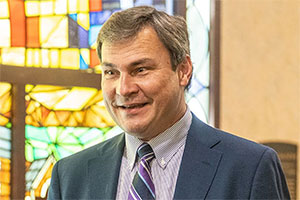
Internationally recognized Kansas State University graduate faculty Dr. Hans Coetzee, University Distinguished Professor and head of anatomy and physiology department, joins Yoonseong Park, professor of entomology as one of two university-wide recipients of the 2022-2023 Commerce Bank and W.T. Kemper Foundation Distinguished Graduate Faculty Award.
The award, funded by the W.T. Kemper Foundation and Commerce Bank, honors current graduate faculty who are recognized nationally and internationally for their outstanding scholarly achievements and their contributions to graduate education at the university. Award recipients receive an honorarium and will deliver public lectures on their research to the campus community. "It is because of wonderful educators and researchers like Dr. Park and Dr. Coetzee that Commerce Bank and the W.T. Kemper Foundation continue to support these awards to recognize outstanding graduate faculty at Kansas State University," said Shawn Drew, market president and CEO of Commerce Bank, Manhattan. "We are honored to recognize them for their outstanding work, their care of the students and their advancement of the highest quality education. Congratulations on a job very well done." An internationally recognized scholar, Dr. Coetzee has made high-impact contributions to improving the health and welfare of farm animals. His laboratory developed models to study pain in livestock that supported the approval of the first analgesic drug for use in cattle in the United States. Drug protocols developed by his research group have positively impacted the welfare of over 10 million calves that experience painful management procedures each year. Recently, Dr. Coetzee's research discovered methods to reduce pain at processing, which affects over 100 million piglets each year, by delivering pain relief medications through milk from the sow to the piglets. Successfully securing more than $21.5 million in research funding, Dr. Coetzee has authored or co-authored 216 peer-reviewed manuscripts with more than 7,000 citations. Since the start of his academic career, he has averaged one publication per month and $1 million in funding each year. He has been recognized as among the top 2% of researchers in the world by Stanford University and ranked in the top 0.02% of 222,715 authors publishing research on cattle worldwide. Dr. Coetzee's contributions to graduate education at K-State include establishing the A&P Graduate Assistantship Program. This program provides an opportunity for new graduate students to rotate through research laboratories using departmental funding for their first year of the program, resulting in a threefold increase in the number of doctoral students enrolled in the physiology program since 2018. Dr. Coetzee has mentored 28 graduate students 10 as a major professor and 18 as a committee member. In 2022, Dr. Coetzee received the university's highest faculty ranking of university distinguished professor, a lifetime title. Dr. Coetzee is nationally and internationally recognized for his work. He was the first North American recipient of the World Veterinary Association Global Animal Welfare Award and the second recipient of the World Buiatrics Congress Ruminant Well-being Achievement Award. His contributions to advancing animal welfare also have been recognized with the American Veterinary Medical Association Animal Welfare Award and the American Association of Bovine Practitioners Award of Excellence. At K-State, Coetzee recently received the 2022 Dr. Ron and Rae Iman Outstanding Faculty Award for Research from the K-State Alumni Association. Park will give a public presentation on his work at 1:30 p.m. Wednesday, Nov. 30, in Town Hall at the Leadership Studies Building. Dr. Coetzee will present his public lecture in the spring 2023 semester.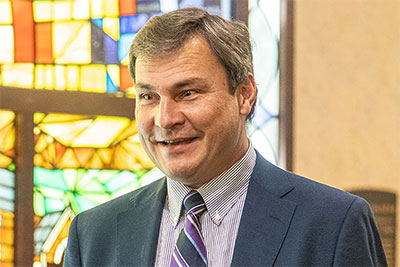
Dr. Coetzee earned his Bachelor of Veterinary Science from the University of Pretoria, South Africa, in 1996 and a doctorate in veterinary microbiology from Iowa State University in 2005. He holds dual board certification from the American College of Veterinary Clinical Pharmacology and American College of Animal Welfare and is a European specialist in animal welfare science, ethics and law.
Chengappa publishes fourth edition of 'Veterinary Microbiology'
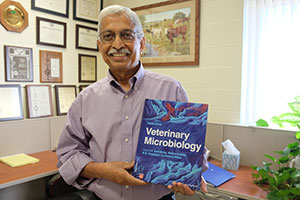
The fourth time is a charm for Dr. M.M. Chengappa, University Distinguished Professor and former head of the Department of Diagnostic Medicine and Pathobiology.
The newest and fourth edition of "Veterinary Microbiology" just arrived off the printing presses.
Dr. Chengappa wrote another textbook, "Essentials of Veterinary Microbiology" with Drs. G.R. Carter and A.W. Roberts; and with Dr. Carter, he wrote two more books: "Microbial Diseases: A Veterinarian's Guide to Laboratory Diagnosis" and "Essentials of Veterinary Bacteriology and Mycology." He co-edited the third edition of "Veterinary Microbiology" with Scott McVey and Melissa Kennedy, which is in multiple languages, including Chinese, Portuguese, Spanish and Italian. Dr. Chengappa's other scholarly activities include that he has authored or co-authored more than 130 refereed publications and 135 abstract presentations, numerous book chapters and has nine U.S. patents. He has made numerous presentations as an invited guest speaker locally, regionally, nationally and internationally. In addition, to his extensive research and prolific academic publications, Dr. Chengappa is committed to education. He has been a faculty member for more than 38 years, mostly at Kansas State University in the College of Veterinary Medicine, where he has advised 15 doctoral and master's students and postdoctoral fellows. During his tenure, he served as department head from 1997 to 2016, director of the Veterinary Diagnostic Laboratory from 1997 to 2001, and director of the Food Animal Health Center from 2000 to 2005, all in the K-State College of Veterinary Medicine.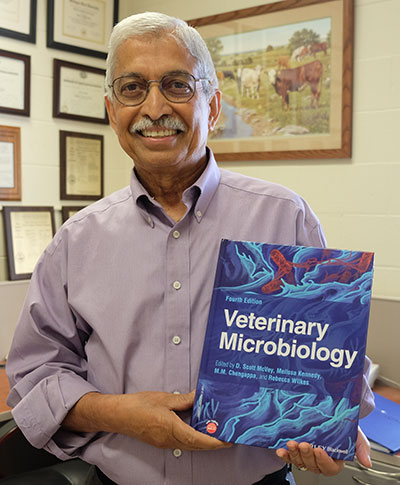 Co-edited by Drs. D. Scott McVey, Melissa Kennedy and Rebecca Wilkes, the textbook/reference book presents comprehensive information based on the most recent research, diagnostic and clinical publications for bacterial, fungal and viral animal diseases. The information provided is most relevant for veterinary students, researchers, diagnosticians and practitioners.
Third-year veterinary student receives Amstutz Scholarship at AABP
Paige Schmidt, third-year veterinary student at Kansas State University, Medina, North Dakota, is one of nine students selected nationally for the prestigious Harold E. Amstutz Scholarship. Schmidt received a one-time $10,500 scholarship from the American Association of Bovine Practitioners, or AABP. She is working concurrently on a master’s degree in veterinary biomedical sciences and is the president of the K-State student chapter of the AABP.
Paige grew up on a fourth-generation cow-calf/backgrounding operation in North Dakota and plans to enter rural private practice to consult and do research at the cow-calf and feedlot level along with traditional bovine medicine. In 2022, a total of $249,500 in scholarships were awarded by the association to its student members. The scholarship enables recipients to pursue their careers in bovine medicine further. The scholarship recipients were acknowledged at the association's 55th annual conference Sept. 22-24 in Long Beach, California. The American Association of Bovine Practitioners Foundation received a total of 177 scholarship applications and awarded 43 scholarships.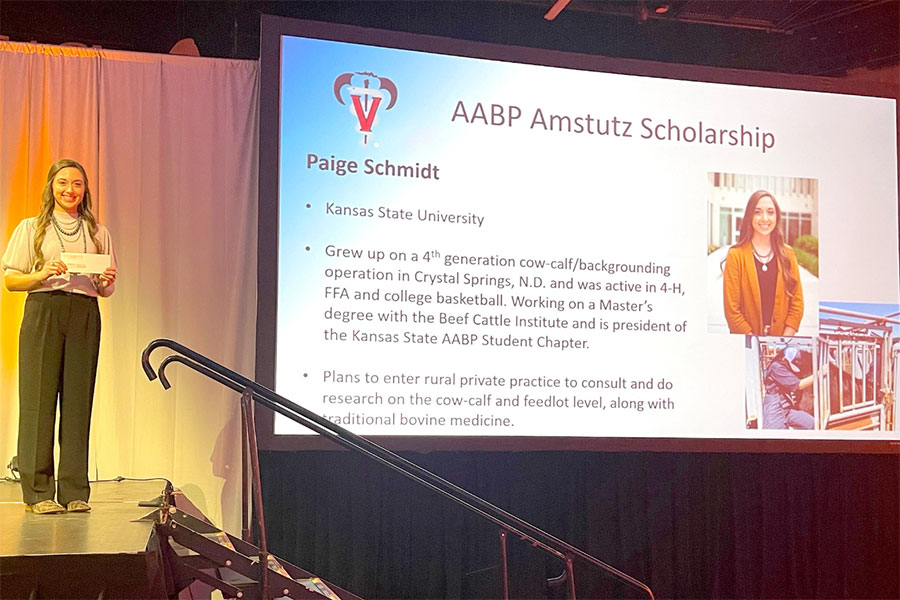
Third-year student Paige Schmidt is one of nine recipients of the Amstutz Scholarship, which was presented at the AABP conference in Long Beach, California.
Veterinary Diagnostic Laboratory develops new test for cattle diseases
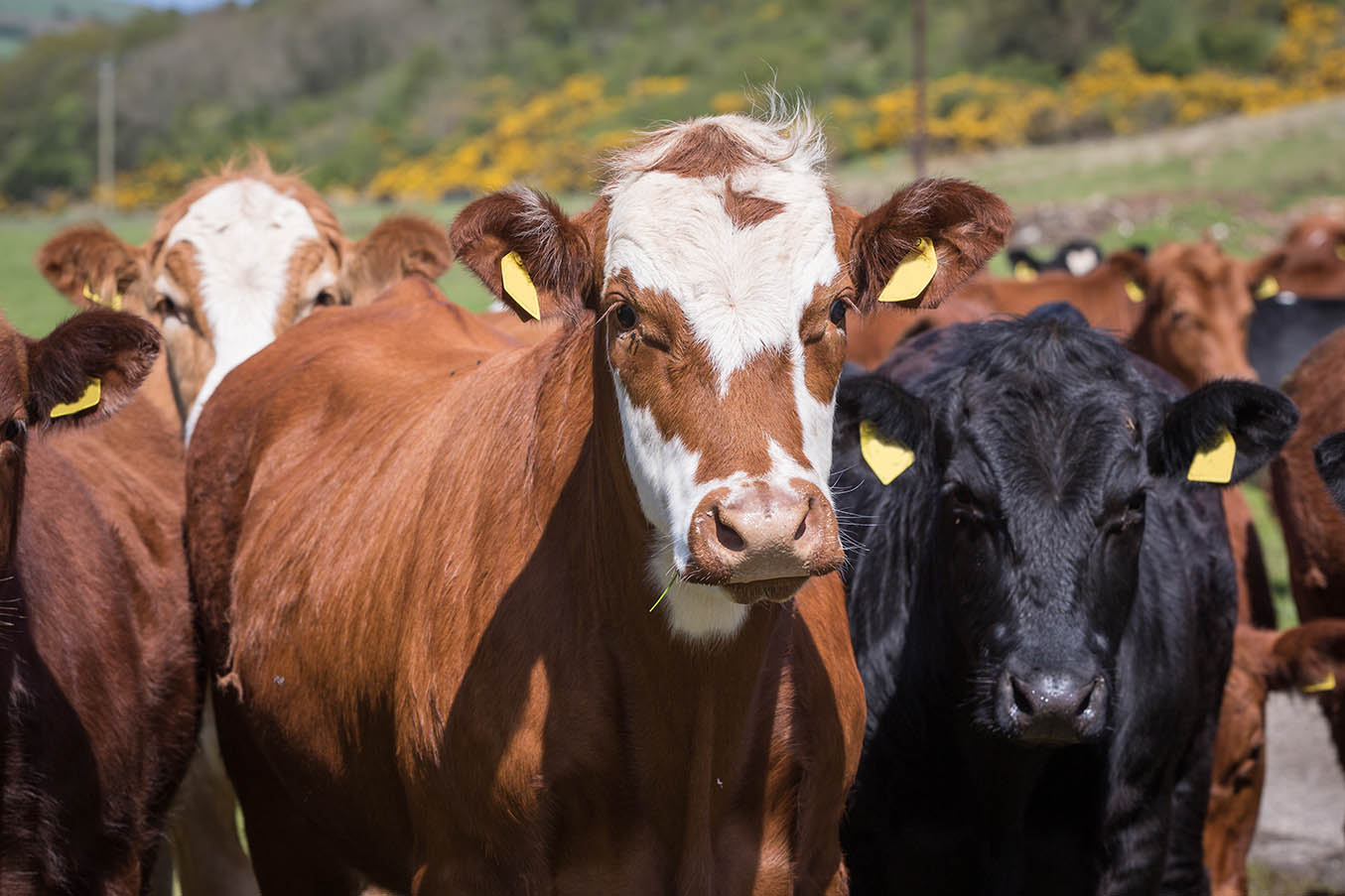 The Kansas State Veterinary Diagnostic Laboratory has developed a new test for two major blood-borne diseases in cattle. The laboratory's Molecular Research and Development section, led by Dr. Jianfa Bai, clinical professor of diagnostic medicine and pathobiology, has developed a unique polymerase chain reaction, or PCR, bovine test specific for the endemic disease anaplasmosis and the emerging disease Theileriosis.
These insect vector-transmitted diseases are caused primarily in the U.S. by the American dog tick for anaplasmosis, and the Asian longhorned tick for Theileria. The new K-State test will allow veterinarians and cattle producers to screen their herds and herd additions for these specific disease-causing organisms, helping them more effectively prevent and manage the diseases. Although there are more than one Anaplasma organism species present in cattle, anaplasmosis is caused by a specific bacterium called Anaplasma marginale. This organism can be found in all states except Hawaii and is endemic in many areas of the U.S. Infection can occur at any age, but clinical signs are usually only observed in animals over 2 years old. Anemia, difficulty breathing and death are common clinical signs. Treatment is usually successful with currently available antimicrobials. Multiple Theileria species are present in cattle populations, but only Theileria orientalisgenotypeIkeda and T. orientalisgenotypechitose cause disease. As an emerging disease, Theileriosis has been reported in only a few states. The Asian longhorned tick responsible for the disease's transmission has been found in only 17 states, but its range is expanding. This tick has not been found in Kansas, but it has been found in western Missouri and northwest Arkansas. T. orientalis infection can occur at any age. Clinical signs are similar to anaplasmosis, but these signs can be observed in both calves and adults. Unlike A. marginale, treatment for Theileria is much less successful. "In the Molecular Research and Disease section of the Kansas State Veterinary Diagnostic Laboratory, our main goal is to develop molecular assays for detection of emerging and reemerging animal diseases," Dr. Bai said. "Developing assays that can detect the targeted pathogens and differentiate closely related but less pathogenic ones is an important aspect contributing to disease management." For more information about the new test, contact the Kansas State Veterinary Diagnostic Laboratory's client care service at clientcare@vet.k-state.edu or 866-512-5650.
Scholarship grant supports public health workforce training for Kansas, nation
 A new grant leverages expertise in public health education at Kansas State University to promote the expansion of public health systems and workforce through strategic scholarships. The U.S. Health Resources and Services Administration approved a three-year $1,486,217 grant for the program Ready to Serve: Building a Day-1-Ready Public Health Workforce for Kansas and Beyond.
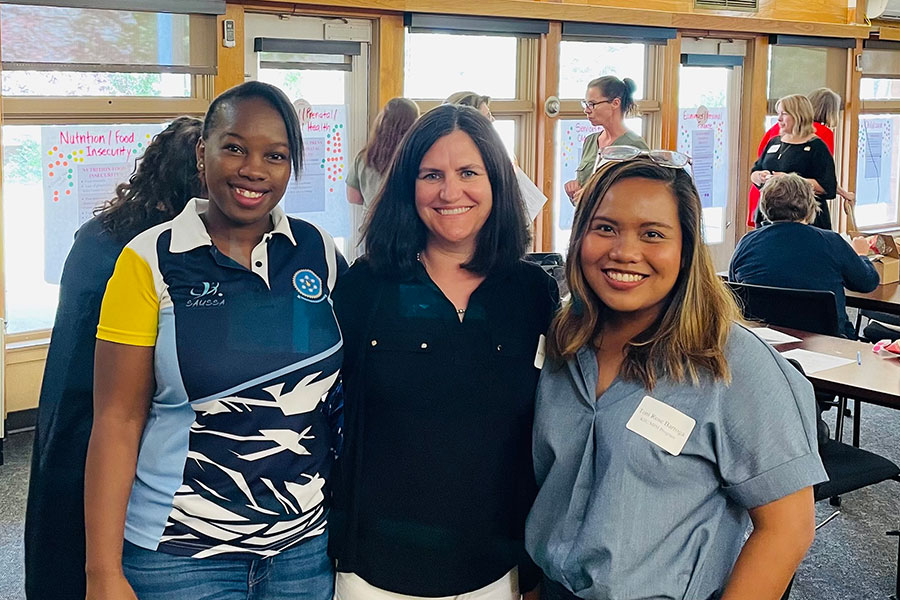
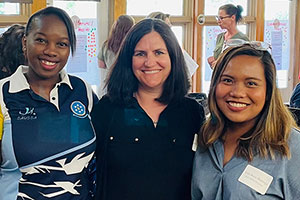
K-State Master of Public Health students Nokwanda Hlophe, left, and Toni Rose Barroga, right, attend the 2022 Riley County Community Health Improvement Plan meeting with Ellyn Mulcahy, center, director of the university's Master of Public Health Program.
The grant allows the university to offer up to 73 scholarships for tuition, supplies, books and travel for part-time and full-time students in the K-State Master of Public Health program emphasis areas. Students pursuing a public health graduate certificate and in accelerated degree paths such as the Doctor of Veterinary Medicine/Master of Public Health degree program or concurrent public health bachelor's degree/Master of Public Health program are eligible.
"This funding will allow us to offer scholarships for up to 73 students over three years," said Dr. Ellyn Mulcahy, principal investigator and director of the K-State Master of Public Health program. "We will provide scholarships for tuition, supplies and books, and travel for part-time and full-time students in our Master of Public Health emphasis areas and graduate certificate, including for students who are pursuing accelerated degree paths such as the Doctor of Veterinary Medicine/Master of Public Health and public health bachelor's degree/Master of Public Health students."
"This project will train career-ready professionals prepared for the public health workforce by awarding scholarships for tuition and training in both the graduate public health certificate and Master of Public Health programs," Dr. Mulcahy said. "Scholarships for graduate public health certificates and Master of Public Health degrees will be awarded to 41 trainees in year one, 21 new trainees in year two and 11 new trainees in year three. A total of 73 trainees in public health will be prepared for careers in public health to meet the public health needs of Kansas and our nation."
Dr. Mulcahy said the objectives of the program include expanding public health systems' capacities by recruiting and training day-one-ready public health workers; meeting public health workforce needs for skilled workers by deploying an equity-infused training program; facilitating career planning for public health trainees through a career readiness and mentoring program using public health partners; and identifying and delivering practicum sites for public health trainees with public health partners, and experiential-learning exposure to career opportunities.
The project team also includes Dr. Susan Rensing, co-principal investigator and teaching associate professor of social transformation studies; Dr. Justin Kastner, professor of diagnostic medicine and pathobiology; Dr. Kate KuKanich, professor of small animal internal medicine; Dr. Jennifer Miller, director of the bachelor's degree program in public health; Dr. Elaine Johannes, associate professor of applied human sciences and extension specialist; and Dr. Fred Burrack, director of assessment.
Students must apply and be accepted into the K-State Master of Public Health program to be eligible for these scholarships. Details on how to apply will be announced before the spring 2023 semester. Apply for the program at k-state.edu/mphealth/admissions.
Regular features
Alumni Events, Development and Continuing Education
 The Veterinary Medical Alumni Association organizes alumni receptions at several of the national annual conferences plus continuing education events and more.
Alumni Updates
In the Army now!
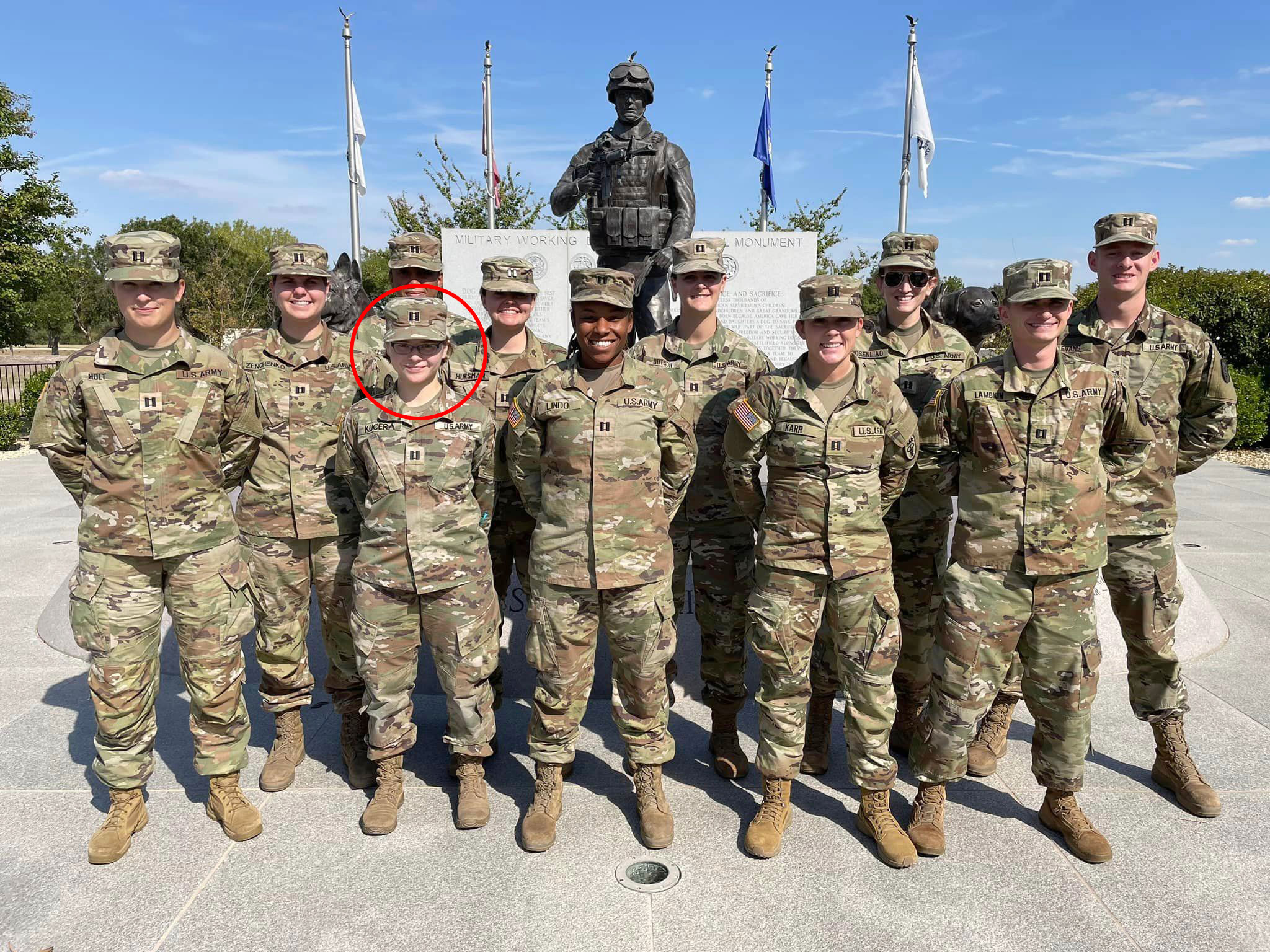 Congratulations to Dr. Anna Kucera, DVM class of 2022, one of the newest Veterinary Corps Officers who graduated Vet Track.
Another season awaits the Heartland Docs
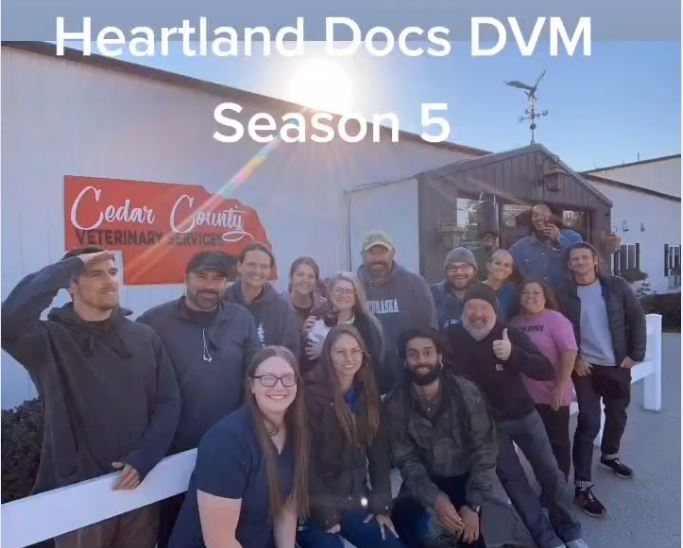
Congrats to Drs. Erin '04 and Ben Schroeder '02 on the continued success of the Heartland Docs reality TV show. It's great to see rural practice being highlighted at a national and international level.
Join us for the K-State College of Veterinary Medicine Pregame Tailgate for the 2022 K-State Football Season!

Hosted at the College of Veterinary Medicine (1710 Denison)
We hope to see you at our K-State College of Veterinary Medicine Pregame Tailgate this season! We will be hosting a meal at each home game two hours prior to kickoff. Be sure to bring your friends and family for a great time with other alumni, faculty members, and students of the K-State College of Veterinary Medicine. Festivities will wrap up 30 minutes before kickoff to allow for travel time to the stadium. Come together and join the Vet Med family as we cheer on the Cats!
Parking for K-State College of Veterinary Medicine Alumni is free at the College of Veterinary Medicine – we will offer a shuttle service to and from The College of Veterinary Medicine and the Southeast entrance to the parking lot that connects with Jardine’s parking lot.
Submit nominations for Alumni Recognition Awards onlineSee our new online nomination form to nominate a fellow alumnus for one of our many annual recognition awards, presented at the national conferences: VMX, WVC, AVMA and the Annual Conference for Veterinarians. See full details at the link below. |
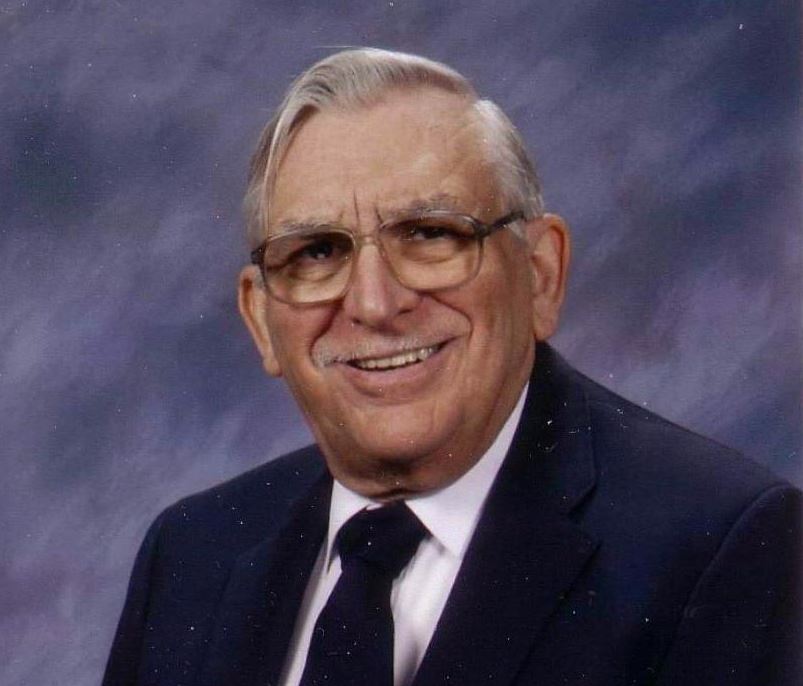
In Memoriam - Recently Departed Alumni
Dr. Phil Lukert, DVM 1960 Dr. Steve Mosier, DVM 1966 Barbara Jean Strahm, Dr. Andrew "Andy" L. Martinsen, DVM 1973 |
Questions about Alumni or CE events?Contact:
|
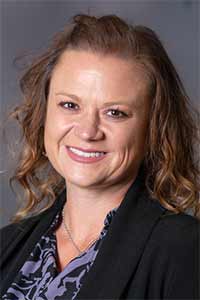 Sarah Keatley
News Ticker
|
More activities and accomplishments in the College of Veterinary Medicine: |
|
Congratulations to Drs. Erica Chavez-Peon and Erin Hennessey for passing the American College of Veterinary Radiology (ACVR) board exams. Also, congrats to Dr. Matt DiFazio for successfully passing the ACVR preliminary examination. Congratulations to Drs. Maggie Ewald and Jordan Roberts (former ophthalmology residents) who passed their American College of Veterinary Ophthalmologist boards. Congratulations to Dr. David Upchurch who received his Masters of Veterinary Education, or MVetEd, from the Royal Veterinary College. Dr. Michael Kleinhenz received $24,540 as the American Association of Bovine Practitioners Foundation Cattle Welfare Grant winner for his project, “Evaluation of pain associated with scours in calves.” Dr. Chris Blevins had an article, “Making health care part of the routine,” in the Ranch Horse September issue of the Kansas Stockman. Several faculty members participated in the 2022 American Association of Bovine Practitioners Annual Conference in Long Beach, California, Sept. 22-24 with several presentations.
Dr. Ken Harkin provided continuing education seminars at the Southwest Veterinary Symposium in Fort Worth, Texas Sept. 23-24, His presentations included:
Dr. Mike Apley presented three sessions at the Iowa State Veterinary Medical Association Annual Meeting in Ames Sept. 29-30. His presentations were titled:
Dr. Thomas Schermerhorn served on the Boehringer Ingelheim Diabetes Advisory Panel held Sept. 30. Dr. Roman Ganta, university distinguished professor and director of the Center of Excellence for Vector-Borne Diseases at K-State veterinary college, made a visit to his home country of India that included a series of scientific lectures at several top universities. See full story in K-State Today. |
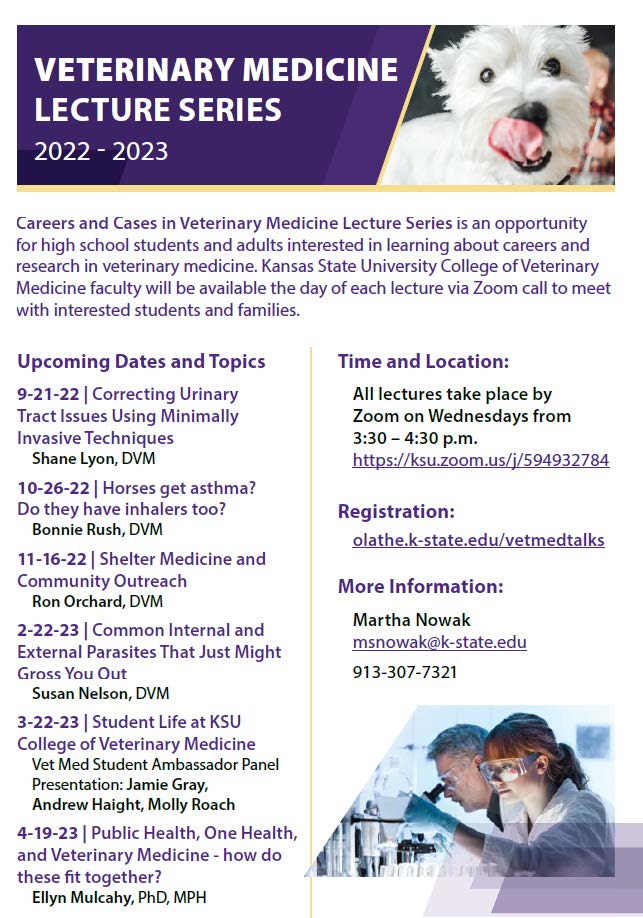
K-State Olathe features professional development in animal health topicsAdvanced Animal Pharmaceutical | Nov. 9-10 Roadmap to Market: Supply Chain in Animal Health | Dec. 8 |
 Join the College of Veterinary Medicine on LinkedIn and add us to your profile under education and/or employment to help build and engage our online social community! Follow the LinkedIn page here: www.linkedin.com/company/kstatevetmed
New Arrivals/Recent Departures
Lifelines is published each month by the Marketing and Communications Office at the College of Veterinary Medicine. The editor is Joe Montgomery, jmontgom@vet.k-state.edu.