
Monthly Newsletter
November 2022 - Vol. 17, No. 11
<October 2022 | December 2022>
Top Stories
Fall teaching awards put spotlight on first-time recipients
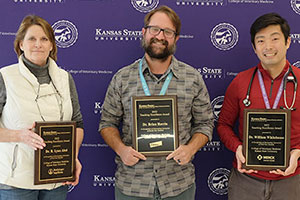
Three faculty members have been recognized for preclinical teaching excellence in the College of Veterinary Medicine at Kansas State University. Drs. Lynn Abel, Brian Herrin and William Whitehouse were each named as the top teachers for the first, second and third years of instruction, respectively, as voted on by the students they taught in the 2021-2022 school year.
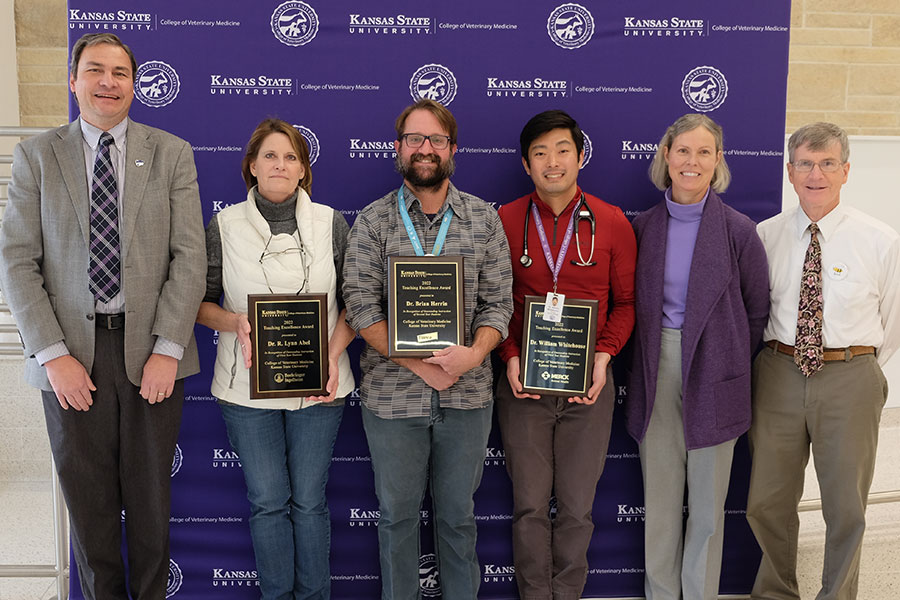
Celebrating a talented trio of preclinical teaching award recipients: Drs. Hans Coetzee, Lynn Abel, Brian Herrin, William Whitehouse, Elizabeth Davis and Dererk Mosier.
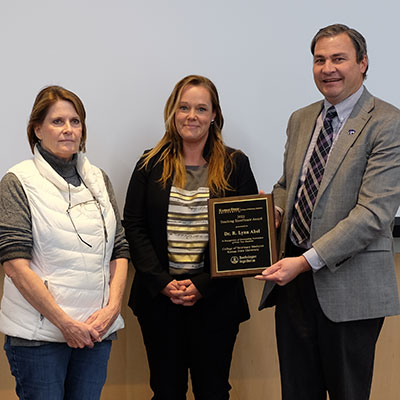 Dr. Hans Coetzee (right) joins Boehringer Ingelheim's Dr. Kristin Williams, professional services veterinarian, in presenting the first-year award to Dr. Lynn Abel. Dr. Hans Coetzee (right) joins Boehringer Ingelheim's Dr. Kristin Williams, professional services veterinarian, in presenting the first-year award to Dr. Lynn Abel. |
“We were thrilled, this year, to recognize three professors who are all first-time recipients of our annual teaching awards,” said Dr. James Roush, associate dean for academic programs and student success. “Drs. Abel, Herrin and Whitehouse are dedicated teachers who provide our students with unique, professional perspectives in their classrooms. They each engage closely with their students to help ensure academic success and their mastery of important veterinary principles.”
Dr. Abel was presented with the 2022 Boehringer Ingelheim Teaching Excellence Award in recognition of outstanding instruction of first-year veterinary students. She received her Doctor of Veterinary Medicine degree at K-State in 1998. Dr. Abel is a clinical assistant professor in the Department of Anatomy and Physiology. Outside of the college, she is the owner and practitioner of the Riley Animal Clinic.
“Thank you to the class of 2025,” Dr. Abel said. “I strive to cultivate and encourage success, in each and every student. I'm quite surprised and humbled for being chosen for this award."
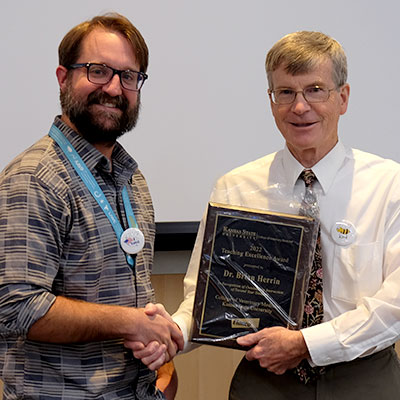 Dr. Derek Mosier (right) presents the second-year award to Dr. Brian Herrin. Dr. Derek Mosier (right) presents the second-year award to Dr. Brian Herrin. |
Dr. Herrin was named recipient of the 2022 Elanco Teaching Excellence Award, which is presented in recognition of outstanding instruction of second-year veterinary students. Dr. Herrin received his Doctor of Veterinary Medicine degree in 2014 and a doctorate in parasitology in 2016, both from Oklahoma State University. He is a diplomate of the Diplomate American College of Veterinary Microbiologists under the subspecialty of parasitology. He is an assistant professor in the Department of Diagnostic Medicine and Pathobiology, where he teaches the clinical veterinary parasitology course for second-year veterinary students and the parasitology portion of fourth-year clinical rotations.
“It's such an honor to be nominated for this award,” Dr. Herrin said. “It was so much fun working with the class of 2024 last year. I definitely want to acknowledge that this course couldn't happen without the great team members of our parasitology group. It takes everyone's collective effort to develop the labs and materials that the students enjoy in our course.”
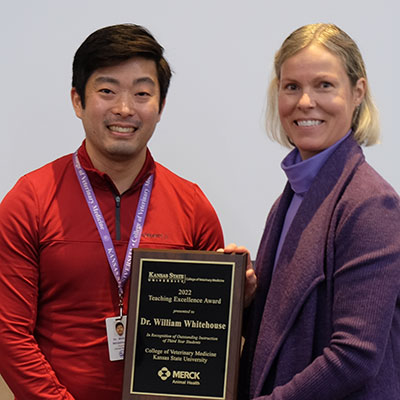 Dr. Elizabeth Davis the third-year award to Dr. William Whitehouse. Dr. Elizabeth Davis the third-year award to Dr. William Whitehouse. |
Dr. Whitehouse was chosen as recipient of the 2022 Merck Animal Health Teaching Excellence Award, in recognition of outstanding instruction of third-year veterinary students. Dr. Whitehouse earned his Doctor of Veterinary Medicine degree in 2010 from the University of Georgia and completed an internship at the University of Illinois and a residency at the University of Wisconsin. He currently teaches the medicine II course to third-year veterinary students and small animal internal medicine to fourth-year students.
“Of all of the things I get to do at K-State, getting to work with the students is by far my favorite,” Dr. Whitehouse said. “The curriculum is pretty arduous since they have to learn so much in such a short time, but there is a lot about veterinary medicine that is really cool and rewarding. I try to bring perspective and relevance to the information they are learning, and it's awesome seeing them get excited about what they are doing and succeed. I'm incredibly honored and humbled by this award and want to thank the Class of 2023.”
Lifetime of achievements leads to ACZM recognition for Dr. James Carpenter
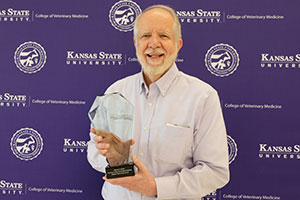
Dr. James W. Carpenter was recently honored by the American College of Zoological Medicine, or ACZM, with the Murray E. Fowler Lifetime Achievement Award, presented at the annual business meeting Nov. 7. The award recognizes one of the organization’s diplomates who has demonstrated exceptional commitment and contribution to the ACZM while making significant lifetime contributions that have advanced the discipline of zoological medicine.
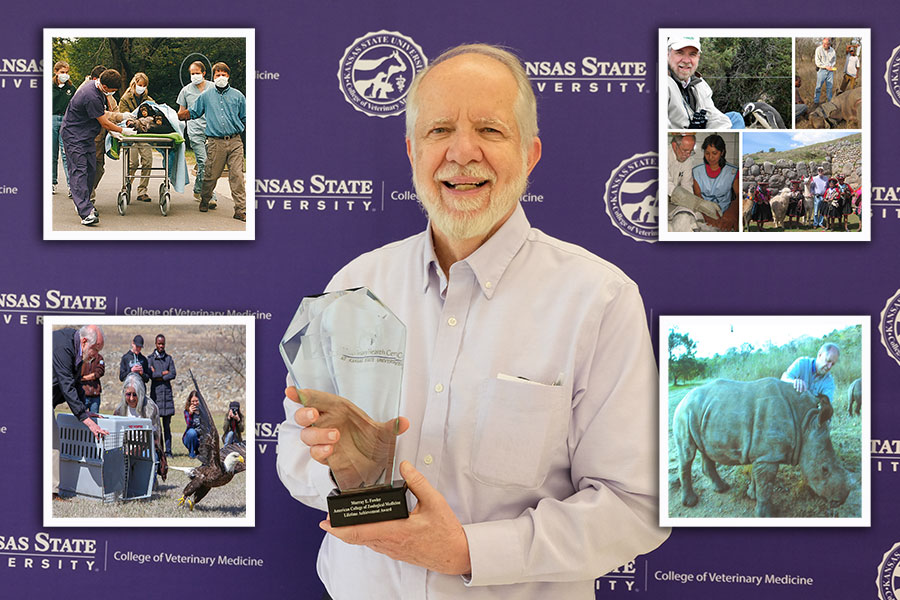
Dr. James Carpenter was recognized with the Fowler Lifetime Achievement Award by the ACZM, noted for his many activities worldwide to promote zoological medicine.
Dr. Carpenter was recognized for his “48 years of contributions as a clinical and research veterinarian in the field of exotic animal, wildlife (including endangered species), and zoo animal medicine.” Dr. Carpenter was noted for his assistance in developing an internationally recognized program in zoological medicine at K-State, where he has trained 45 Interns and residents. He is the author of numerous scientific papers, book chapters, and proceedings articles; co-editor of “Ferrets, Rabbits, and Rodents: Clinical Medicine and Surgery”; and editor of the “Exotic Animal Formulary.” Dr. Carpenter is the past president of the American Association of Zoo Veterinarians, Association of Avian Veterinarians, and American College of Zoological Medicine.
Other noted accomplishments included Dr. Carpenter being awarded the Edwin J. Frick Professorship in Veterinary Medicine from K-State in 2002, the Exotic DVM of the Year for 2000, the T.J. Lafeber Avian Practitioner of the Year for 2012, and was the Oxbow Exotic Mammal Health (Quest) recipient in 2019.
In addition, Dr. Carpenter was named the Alumni of the Year by the Oklahoma State University College of Veterinary Medicine in 2009. In 2013, the Veterinary Health Center at K-State named the new veterinary facility at Manhattan’s Sunset Zoo the “James W. Carpenter Clinic at Sunset Zoo.” Dr. Carpenter is also the former Editor-in-Chief of both the Journal of Zoo and Wildlife Medicine and the Journal of Avian Medicine and Surgery.
This award was created in honor of Murray Fowler (considered the “Father of Zoological Medicine”), who was also the award's first designee in 2014.
Second-year student accepts Throlson American Bison Foundation scholarship
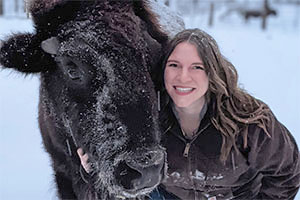
Mikayla Lacher, second-year veterinary student at Kansas State University, Christine, North Dakota, is one of three students selected nationally for the Throlson American Bison Foundation scholarship. The Throlson Foundation scholarship review committee considered several applications and narrowed it down to three stand-out students.
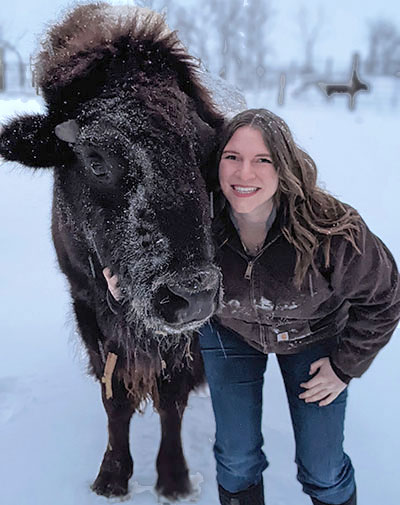 Mikayla Lacher grew up on a bison ranch in North Dakota and Dr. Ken Throlson was a veterinary mentor when she was growing up.
This year’s scholarships include funding from the Rich Zahringer Memorial Scholarship Fund, which supports those students who focus on agricultural business and accounting in recognition of the fund’s namesake, who was a longtime bison industry accountant and is among the pioneers of the modern bison-business.
The scholarship is made possible by Rocky Mountain Natural Meats.
Mikayla grew up on a bison ranch in North Dakota.
“Dr. Ken Throlson is the founder of this scholarship and my veterinary mentor growing up,” Mikayla said. “He has now retired, but I plan to follow in his footsteps.”
The primary mission of the foundation is to annually award scholarships in bison-related studies. Some previous winning students have pursued degrees in veterinary medicine (production or pathology research), nutrition (livestock or meat), animal science, and behavior science. One common theme they have all possessed is an interest in the advancement of the bison industry.
More Headlines
CVM grad student Dr. Kamilyah Miller finds success at research forum
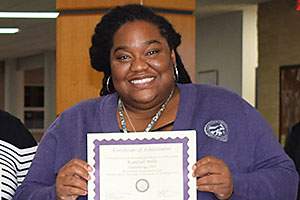
A CVM grad student was among a group of participants for a campus research forum. Featured projects included research on food science and safety, climate change, family therapy, and energy as well as the research by Dr. Kamilyah Miller, a pathobiology Ph.D. student under Dr. Brian Herrin. She had one of the winning research presentations by Kansas State University graduate students in the Graduate Student Council's annual Research and the State poster forum, which took place on Oct. 27.
Research and the State involved 50 participants from seven academic colleges and over 20 graduate programs. Ten graduate students were chosen to represent the university and present their work at the Capitol Graduate Research Summit in spring 2023. Each winner receives a $250 scholarship. "Research and the State poster forum is a great opportunity for any graduate student to communicate research that directly benefits the state of Kansas and the society, said Claudia Petrescu, vice provost for graduate education and dean of the Graduate School. "These 10 students selected to present at the Capitol Graduate Research Summit on March 22, 2023, will showcase their high-quality research to the Kansas Legislature, the Board of Regents and the public. This event is one of the many opportunities in which the Graduate School and the Graduate Student Council collaborate to showcase our graduate students' contribution to advancing science that benefits the state of Kansas." The Capitol Graduate Research Summit is an annual statewide summit that features current research of graduate students at Kansas State University, the University of Kansas, the University of Kansas Medical Center, Wichita State University, Emporia State University, Fort Hays State University and Pittsburg State University. Academic and industry judges evaluate the presentations and select award recipients from each university. The following K-State graduate students were selected as winners at the 2022 Research and the State and will represent K-State in the 2023 Capitol Graduate Research Summit: • Dr. Kamilyah Miller, a doctoral student in pathobiology, Miami, Florida, for "Surveillance of Echinococcus multilocularis in coyotes in Midwest United States." Dr. Miller's graduate faculty advisor is Dr. Brian Herrin, assistant professor of diagnostic medicine and pathobiology. She earned her DVM degree at Tuskegee University and holds a bachelor's degree from Floria A&M University. • Rachel Keen, a doctoral student in biology, Manhattan, Kansas, for "Impacts of woody encroachment on grassland water yield." Keen's faculty advisor is Jesse Nippert, professor of biology. • Tucker Graff, master's student in grain science, Marienthal,for "Grain sorghum as a sustainable ingredient in aquatic feed – grinding and processing energy studies." Graff's faculty advisor is Sajid Alavi, professor of grain science and Industry. • Mayra Perez-Fajardo, a doctoral student in grain science, Topeka,for "Impact of cricket protein powder addition on wheat dough properties and bread quality." Perez-Fajardo's faculty advisor is Hulya Dogan, Ross Endowed professor of grain science. • Lindsay Howard, a doctoral student in human ecology specializing in Couple and Family Therapy, King City, California, for "Effectiveness of a brief filial therapy model on child, parent, and relationship outcomes." Howard's faculty advisor is Glad Topham, professor of applied human sciences. • Nicholas Gallivan, a doctoral student in psychology, Philo, Illinois, for "Americans express blind optimism for overcoming climate change." Gallivan's faculty advisor is Laura Brannon, professor of psychological sciences. • Lindsay Morris, a doctoral student in physics, D'lberville, Mississippi, for "Physics in the field: Application of field-deployable ultrafast laser to measure agricultural significant gasses." Morris' faculty advisor is Brett DePaola, professor of physics. • Shiseido Robinson, master's student in industrial engineering, East Islip, New York, for "Printable conducting layered materials for electronic and energy applications." Robinson's faculty advisor is Suprem Das, assistant professor of industrial and manufacturing systems engineering. • Olivia Haley, a doctoral student in horticulture and natural resources, Columbia, South Carolina, for "There's a photon in my water! The application of ultraviolet light technology to enhance the safety of agricultural water on Kansas fresh produce farms." Haley's faculty advisor is Manreet Bhullar, research assistant professor of horticulture and natural resources. • Endy Lopes Kailer, a doctoral student in agronomy, Brazil, for "The complex relationship between native mycorrhizal community and phosphorus addition in commercial mycorrhizal inoculant effectiveness." Lopes Kailer's faculty advisor is Charles Rice, university distinguished professor of agronomy. Photos from the 2022 Research and the State can be viewed online.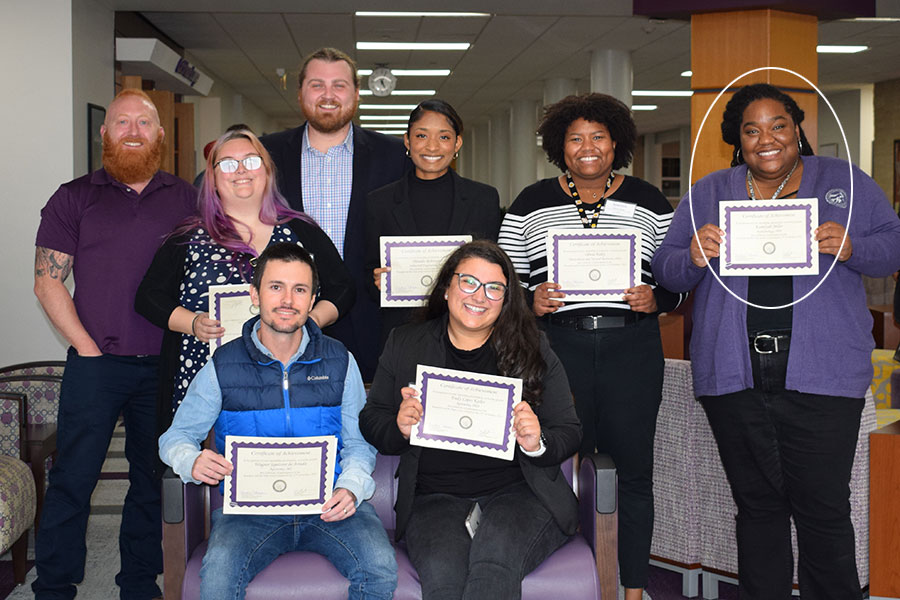
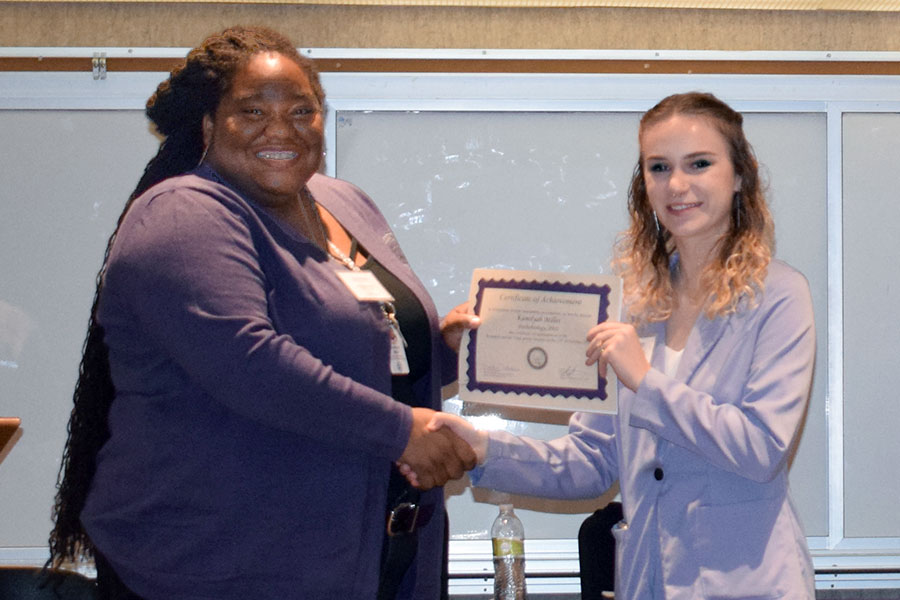
The CVM's Dr. Kamilyah Miller, a Ph.D. student in DMP, was one of 10 graduate students chosen to represent the university and present their work at the Capitol Graduate Research Summit in spring 2023.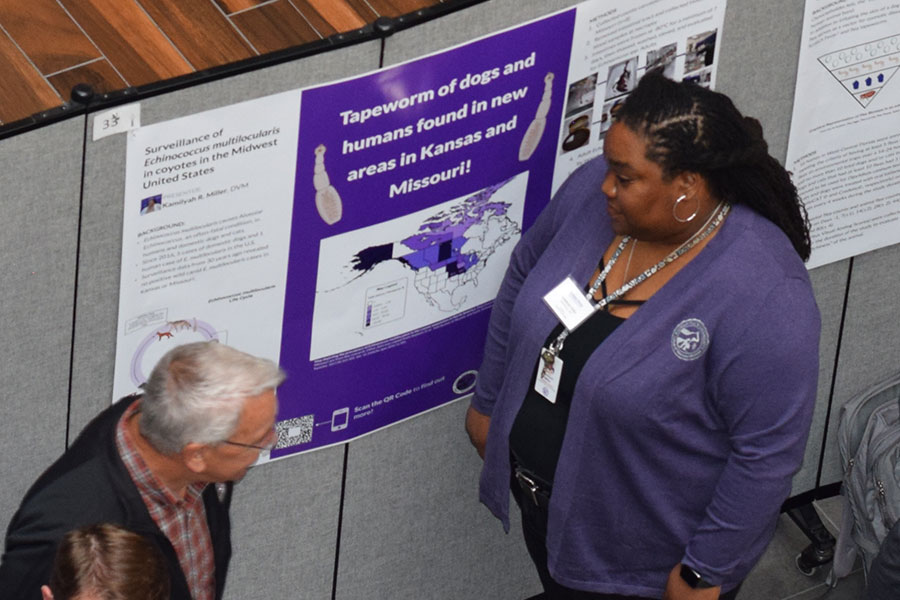
Dr. Miller presents her research poster in the K-State Student Union.
Dr. Susan Nelson gives tips to prevent holiday weight gain in pets
The holiday season is filled with hearty, delicious food, visiting with friends and family, decreased physical activity, busy schedules and weight gain. According to a Kansas State University veterinarian, it is also a time for our family pets to gain weight as well. According to the CVM's Dr. Susan Nelson, many pets gain weight during the holidays due to special treats being consumed and/or a few of those delicious table scraps making it into their bowls as well.
"Table scraps are high in calories and fat, lead to weight gain and can also cause gastrointestinal upset or life-threatening pancreatitis," Dr. Nelson said. "I advise owners to offer low-calorie fruits and vegetables — not cooked in butter — as a substitute for other types of table scraps, if they are going to be fed." Dr. Nelson offers the following tips to limit pet weight gain during the holidays and throughout the year: Limit the number of treats fed to less than 10% of total caloric intake. Your veterinarian can help calculate a pet's caloric intake if needed. Break a single treat into several smaller portions that you can distribute throughout the day. Pets do not know the difference and will consume fewer calories from treat consumption. Use a treat dispenser or food puzzle to prolong the amount of time it takes a pet to eat and offer mental stimulation. Reserve some of the daily kibble to feed as treats instead. Keep your pet out of the dining room when eating and kitchen when cooking to be less likely to succumb to those pleading, big brown eyes that are begging for a bite. For pet owners with less time to exercise or play with pets, Dr. Nelson suggests hiring a professional pet walker, family friend or neighbor to walk or play with your pets. Pet day care centers also offer opportunities for pet activity and socialization. Pet owners concerned that a pet may be overweight can learn more about K-State's Veterinary Health Center Healthy Weight Clinic, a part of the Hill's Pet Health & Nutrition Center, at ksvhc.org/services/pet-health-center/pet-obesity-clinic.html.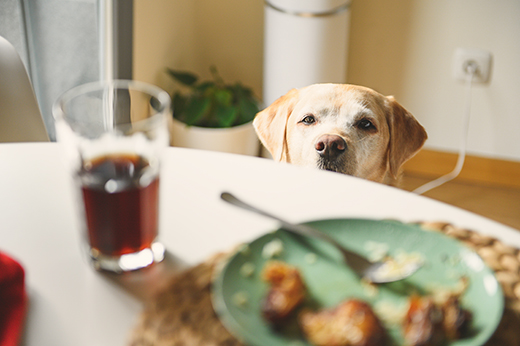 Owners also may not be able to be as physically active or have as many play sessions with their pets because of busy holiday schedules.
Cattle Chat: Unexpected cow death questions answered
By Lisa Moser, K-State Research and Extension news service

No matter whether it is a pet or livestock, an animal dying unexpectedly is sad and concerning. It often leaves owners with questions about what happened and whether other animals will be impacted. To get to the bottom of what is going on, Kansas State University beef cattle veterinarians emphasize the importance of a producer working with their local veterinarian to determine the cause of death.
On a recent Cattle Chat podcast, the veterinarians discussed a listener question in which two cows recently died unexpectedly in the herd and anaplasmosis was determined to be the cause of death.
“Anaplasmosis is a disease of the blood in which a parasite causes the red blood cells to be destroyed and the animal can die due to a lack of oxygen,” veterinarian Dr. Bob Larson said.
Veterinarian Dr. Brian Lubbers added that this disease more significantly impacts cows older than age 2 than it does the others in the herd.
“With this infection, the immune system takes the damaged red blood cells out of circulation and younger animals do a better job of regenerating them more quickly,” Dr. Lubbers said.
Both veterinarians agree that the cattle death comes with little warning.
“Two days before they die, the cattle can appear normal, but then they fail quickly. It isn’t uncommon to have cattle death be the first sign of anaplasmosis in the herd,” Dr. Larson said.
The only visual sign of the disease prior to death is pale or yellow mucous membranes, Dr. Lubbers said.
Because the infection is spread primarily by ticks, the likelihood of disease is often greatest in the fall, a few weeks after tick populations peak. And, Dr. Larson said, the amount of anaplasmosis in the area will vary among geographic regions.
“If you live in an area that has anaplasmosis, then I would only buy replacement animals from areas that also expose replacements to the disease,” Dr. Larson said.
Once animals have recovered from this illness, they can be carriers of the disease, explains Dr. Lubbers.
Because this blood-borne disease is carried by ticks, it easily spreads through the herd. Syringe needles and palpation sleeves that are used with multiple animals in the herd can also spread the disease.
The K-State veterinarians also said cattle that do recover from this acute sickness may require a few months to build back healthy red blood cells.
Prevention is difficult, say the veterinarians, but prescribed feed additives can be used to mitigate the spread.
“This parasite is susceptible to some antimicrobials, and one FDA-approved drug used to treat it is tetracycline,” Dr. Lubbers said.
At this point in time there is not a good vaccine option to prevent this disease, said Dr. Larson.
“There is a lot of anaplasmosis vaccine research being done at K-State; this disease is difficult to build a safe and effective vaccine for, but I am hopeful that this research will lead to a better option in the future,” Dr. Larson said.
To hear the full discussion, listen to the Cattle Chat podcast online or on your preferred streaming platform.
Frontier students follow 'clues of contamination' for 38th annual field trip
Story by Amelia Brady, graduate student MPH program
 Twenty K-State students took part in the 38th Frontier Field Trip, and second annual excursion, to Council Grove, Kansas, where they experienced, “Clues of contamination: An overnight disease investigation,” as part of the field trip model developed by Dr. Justin Kastner. He and longtime colleague, Dr. Jason Ackleson, have paved the way for students to meet and work together across multiple disciplines since 2004.
Through their design of the Frontier Field Trip model, students can grow their collaboration and multidisciplinary skills. For previous field trips, students have traveled to international trade ports-of entry; policy centers in Washington, D.C.; archives and libraries along America’s eastern seaboard; and private-industry venues. During this most recent trip, Dr. Justin Kastner and Dr. Valentina Trinetta, associate professor of food microbiology in the Food Science Institute, asked students to discuss possible scenarios and brainstorm solutions to an unfolding disease outbreak. Each student was assigned a character and given background information to set the scene. Once students had discussed possible agents, the causative agent was exposed. For many students, this was their first opportunity to meet students from different backgrounds and fields of study outside of the traditional classroom setting. The Frontier Field Trip model allows students to make friends, network with peers, and apply skills and knowledge they have learned in their respective programs. These connections with peers have become increasingly important to more students since many missed crucial connection points with their peers during the pandemic and the shift to increased online learning. Aysu Deinz, graduate student in food science, said, “It was a unique experience to be able to work on a case with people from different disciplines, and I had a chance to observe their problem-solving approach along with their thought process to the case. Besides, it was really fun to make new friends.” Speaking from a personal perspective as a first-year MPH student, this Frontier Field Trip was my first experience connecting with peers at K-State and one of only a few in-person opportunities since the pandemic. It was incredibly impactful after the isolating experience of completing my undergraduate degree during the pandemic. Dr. Kastner and his team plan to continue conducting Frontier Field Trips that give students chances to grow and learn across disciplines. 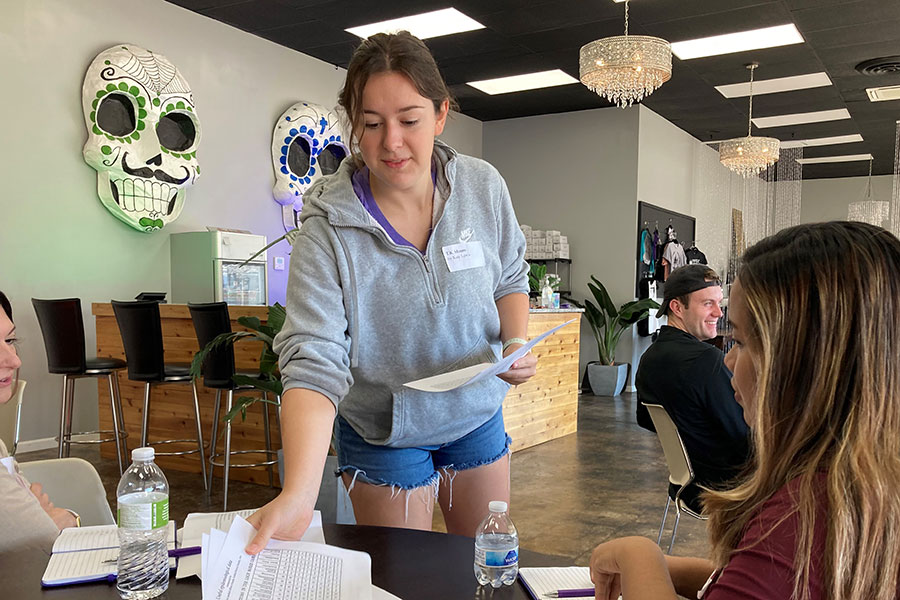
Frontier Field Trip participant Kate Lewis distributes epidemiologic data from the mysterious botulism cases in 1922 at Loch Maree, Scotland.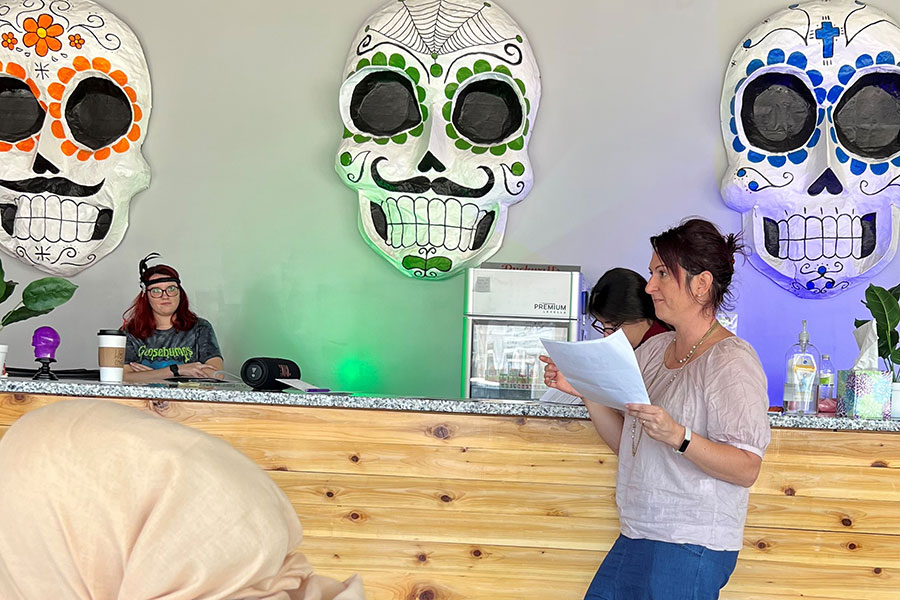
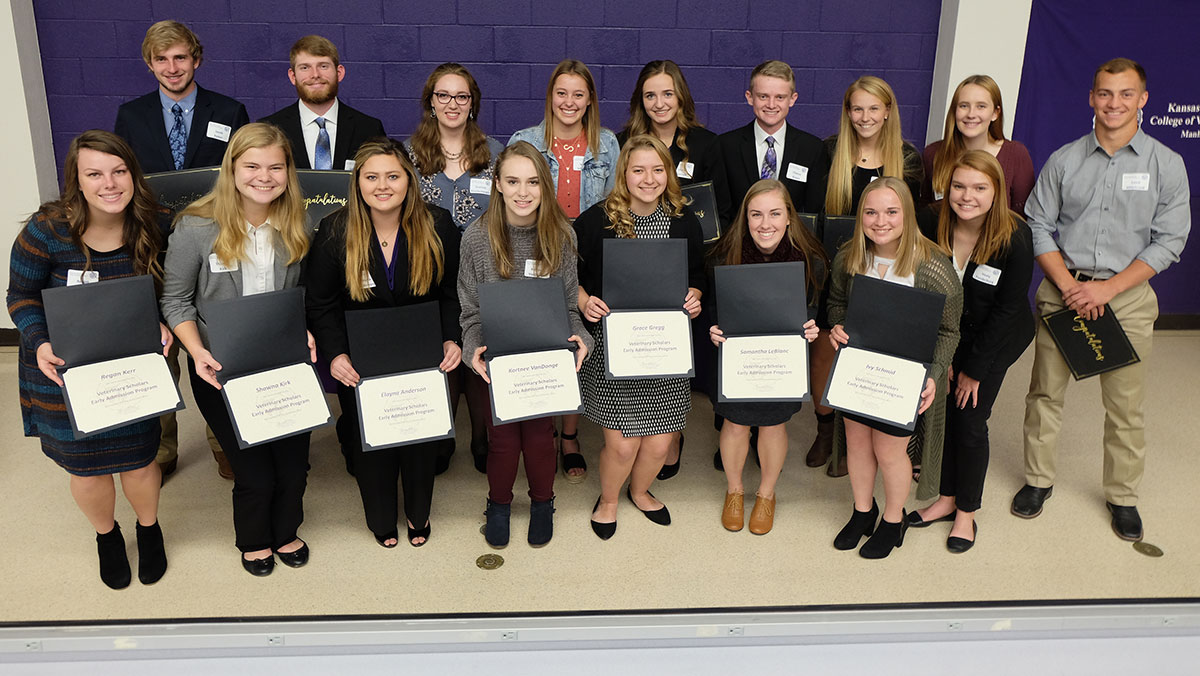
Dr. Valentina Trinetta explains the microbiology behind the public health mystery.
Regular features
Alumni Events, Development and Continuing Education
 The Veterinary Medical Alumni Association organizes alumni receptions at several of the national annual conferences plus continuing education events and more.
Alumni Updates
Celebrating birthday No. 105; Cheers to Col (RET) George T. Dalziel, DVM 1942
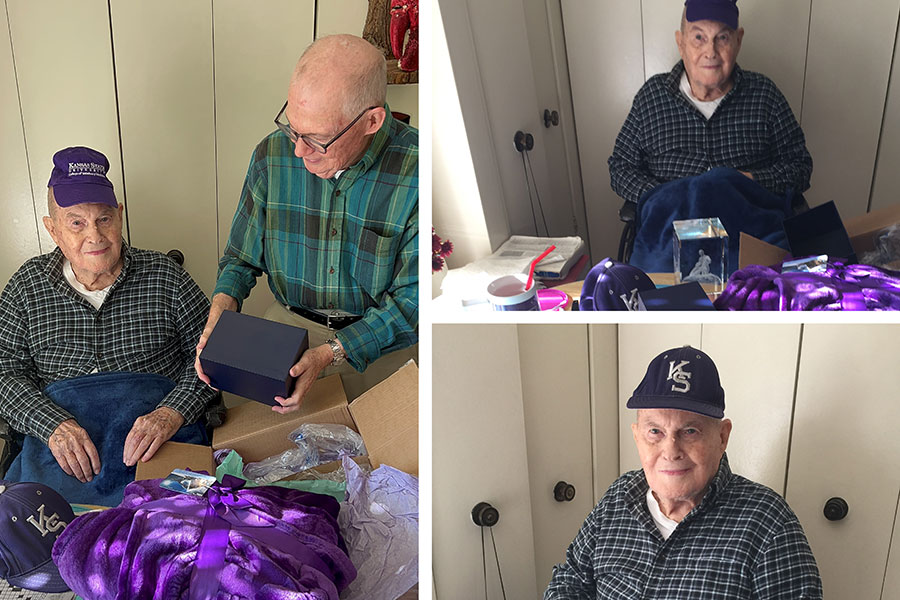
The VMAA selected Col. (Ret) George T. Dalziel, DVM class of 1942, as a recipient of an AVMA Alumni Recognition Award for 2022. He just turned 105 on Nov. 3, so the college delivered the honorary etched crystal award, A CVM ball cap, blanket and a special video (see below) to help mark the occasion. His son, Teddy, helped open the awards package and shared a few photos. Happy Birthday, Col. Dalziel!
Honoring our Veteran Veterinarians for Veterans Day
Meet a few of our alumni who served our country as they share some of their duties in this special Veterans Day video. Thank you for your service!
Congratulations to Dr. Jeffrey Foland on the AAEP Alumni Recognition Award
 Dr. Jeffrey Foland, Weatherford, Texas, has been selected to receive a 2022 Alumni Recognition Award at Kansas State University College of Veterinary Medicine alumni reception in conjunction with the American Association of Equine Practitioners (AAEP) annual conference in San Antonio, Texas, on Nov. 20.
A native of Wyoming, Dr. Foland attended the University of Wyoming for three years of pre-veterinary instruction. He graduated with his Doctor of Veterinary Medicine degree from Kansas State University in 1987. Upon completing a one-year internship at Alamo Pintado Equine Medical Center in Los Olivos, California, Dr. Foland stayed for an additional year as an associate veterinarian. He was accepted into surgical residency program at Colorado State University in 1989, completing it in June 1992.
Dr. Foland moved to Oakdale, California, in July 1992 and took a position as surgeon at Pioneer Equine Hospital. He became board certified by the American College of Veterinary Surgeons in 1994. The following year, he moved to Texas in 1995 to start a new practice. In June 2001, he started the Weatherford Equine Medical Center with two other doctors, which has become one of the largest practices in north Texas.
Dr. Foland married Jennifer Christmann in June 1992, and they have three children. He helped to start Weatherford Christian School in 2001, with 58 students, and he has have served as chairman of its board of directors since 2011, with a current enrollment of over 400.
New Alumni Biography videos
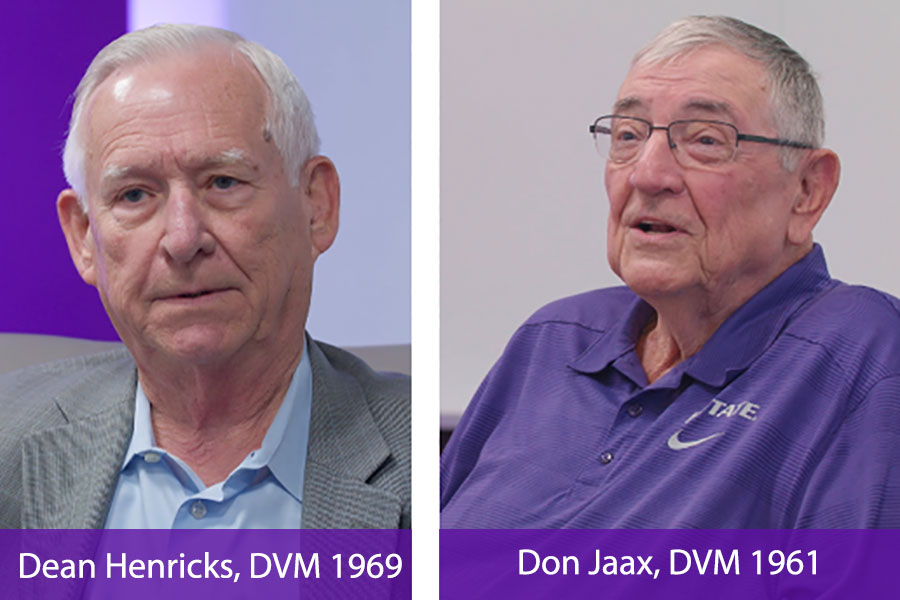
New video biographies have been added to the Alumni Biography pages for Dr. Dean Henricks, DVM class of 1969 and Dr. Don Jaax, DVM class of 1961. The college is compiling biographies of our Extraordinary Graduates with 40 years of experience or more, to share the stories of their lives and careers in the hope of creating an enduring legacy and to inspire future generations of veterinary students. If you are interested in taking part in this exciting and meaningful project, please contact alumni@vet.k-state.edu.
Submit nominations for Alumni Recognition Awards onlineSee our new online nomination form to nominate a fellow alumnus for one of our many annual recognition awards, presented at the national conferences: VMX, WVC, AVMA and the Annual Conference for Veterinarians. See full details at the link below. |
In Memoriam - Recently Departed Alumni
Dr. D.L. "Ferd" Waddell, DVM 1955 |
Questions about Alumni or CE events?Contact:
|
 Sarah Keatley
News Ticker
|
More activities and accomplishments in the College of Veterinary Medicine: |
|
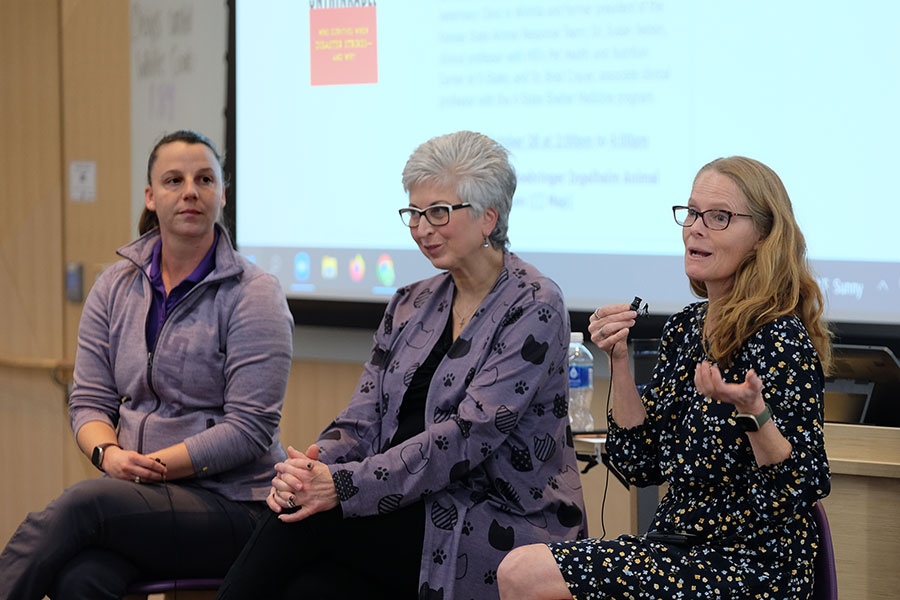
Dr. Michael Kleinhenz presented at the Hemp Feeds Workshop at Oregon State University, held Oct. 25-27. His presentation was, “High cannabinoid plant materials as a cattle feed,” and he served as a member of the analytical standards panel. Dr. Jim Carpenter hosted a darting wet lab for Exotic, Wildlife Zoo Med interested students on Oct. 16. Drs. Katie Delph Miller and Chris Blevins hosted the Guiding Wildcats into Future Equine Vets on Oct. 1. Dr. Mike Apley presented continuing education lectures Oct. 1-2 at the Georgia Veterinary Medical Association in LaGrange, Georgia. His lectures included: "Pharmacology: Application and Misapplication of Antimicrobial Principles in Practice," "Antimicrobial Resistance as We Understand It Today," "Pharmacology: Understanding of Antimicrobial Susceptibility Testing (AST) and a Drug-by-Drug Discussion of How AST May Be Used," "Pharmacology: The Use of Antimicrobials and Ancillary Therapy in the Treatment and Control of Anaplasmosis, Bovine Respiratory Disease, Musculoskeletal Disease, CNS Disease, and Enteric Disease," and "Pharmacology Regulations: extralabel use, upcoming changes, and VFDs." Dr. Thomas Schermerhorn served on the Elanco Diabetes Advisory Panel on Oct. 5-6. He also presented lectures at the Wild West Vet Show in Reno, Nevada, from Oct. 12-15 on these topics: "Applying Insulin Fundamentals to Clinical Practice," "Highs and Lows: Understanding Lab Results in Patients with Endocrine Disease," and "Beyond Clinical Signs: Laboratory Monitoring in Diabetic Dogs and Cats." Susan Rose gave a short presentation as part of the 16th online Show & Tell Clinical Skills and Simulation Forum’s program hosted by Bristol University in the UK. On Nov. 9, she gave a short talk and instructions on how to make a “Low Cost But High Learning Value Anal Sac Expression Model.” She said the idea seemed to be well received by an audience of more than 60 people from all over the world. Dr. Katie Reif was featured in the Nov/Dec 2022 edition of the Kansas Stockman Convention Issue! She provided an update on the infectious blood disease and discussed best management practices to reduce its impact at K-State's Ranch Management Field Day. Dr. Reif is also mentioned in an article from the Kansas Livestock Assocation. Dr. Ellyn Mulcahy has been elected to the Kansas Public Health Association Board of Directors, to serve a two-year term as director at-large, starting in 2023. Discussing 'Unthinkable' situations and scenarios
|
K-State Olathe features professional development in animal health topicsRoadmap to Market: Supply Chain in Animal Health | Dec. 8 |
 Join the College of Veterinary Medicine on LinkedIn and add us to your profile under education and/or employment to help build and engage our online social community! Follow the LinkedIn page here: www.linkedin.com/company/kstatevetmed
New Arrivals/Recent Departures
Lifelines is published each month by the Marketing and Communications Office at the College of Veterinary Medicine. The editors are Joe Montgomery, jmontgom@vet.k-state.edu.