
Monthly Newsletter
December 2021 - Vol. 16, No. 12
<November 2021 | January 2022>
Top Stories
CVM plays significant role in K-State's plan to increase jobs, investment in Kansas
You can plan on it: Kansas State University is launching a new strategic initiative to help people and businesses in Kansas. The university's Economic Prosperity Plan will add thousands of jobs and billions of dollars into the Kansas economy by leveraging K-State's strengths in four key areas: food and agriculture systems innovation; digital agriculture and advanced analytics; biosecurity and biodefense; and extension and outreach.
"Our Economic Prosperity Plan will allow K-State to create 3,000 new jobs and $3 billion in additional investments into the state of Kansas in the next 10 years," said David Rosowsky, vice president for research. "This new initiative will allow K-State to truly demonstrate the value that universities provide to local, state and national economies through job growth and job creation, as well as retaining and attracting talent in the state." "Kansas State University is becoming a preeminent US resource to facilitate private-public collaboration for pathogens of worldwide significance," said Bonnie Rush, dean of the College of Veterinary Medicine. "Success in discovery and commercialization will enhance our opportunities to attract corporate pharmaceutical partners, licensing agreements and workforce talent. " The plan is a response to a request from the Kansas Board of Regents to demonstrate how Kansas institutions of higher education will add to economic prosperity in the state. "As the country’s first operational land-grant institution, K-State has always focused on excellent teaching, research and service that advance the well-being and economic prosperity of our state," said Richard Myers, university president. "This new initiative has the potential for significant economic growth for the region and state but will require many dedicated partnerships and support from the state to be successful. The university will continue to work vigorously to build those partnerships to make this plan a reality." Two focus areas in the plan center around food and agriculture. The food and agriculture systems innovation area will ensure Kansas retains greater value-added opportunites throughout the food system value chain. The plan also will leverage K-State's deep strengths across crops, livestock and natural resources research and innovation to attract outside investment and help Kansas become the global leader in digital agriculture and advanced analytics "The resulting competitive advantages for Kansas within five to 10 years include economic growth and job creation; profitable, regenerative and sustainable food and agriculture systems; new technologies and innovation; and better health for Kansas citizens through nutritional security," said Ernie Minton, dean of the College of Agriculture and director of K-State Research and Extension. K-State's plan also will focus on using university strengths in biosecurity and biodefence to attract new companies and partnerships to the state. A biotechnology development module within the university's Biosecurity Research Institute will allow corporate partners to develop diagnostic, therapeutic and preventive countermeasures for a broad range of emerging zoonotic diseases while addressing scalable production. This secure space also will enable emergency rapid manufacturing to protect the nation's animal and food supply during a crisis. A final area of focus in the plan is an initiative called K-State 105: Every Town to Gown, which leverages K-State's statewide extension presence to assist businesses and communities in all of the state's 105 counties to access K-State innovation, talent and training through local liaisons and coordinated resources. "Our plan is bold, it is audacious, but it is achievable," Rosowsky said. "I am excited to get to work and start demonstrating real results."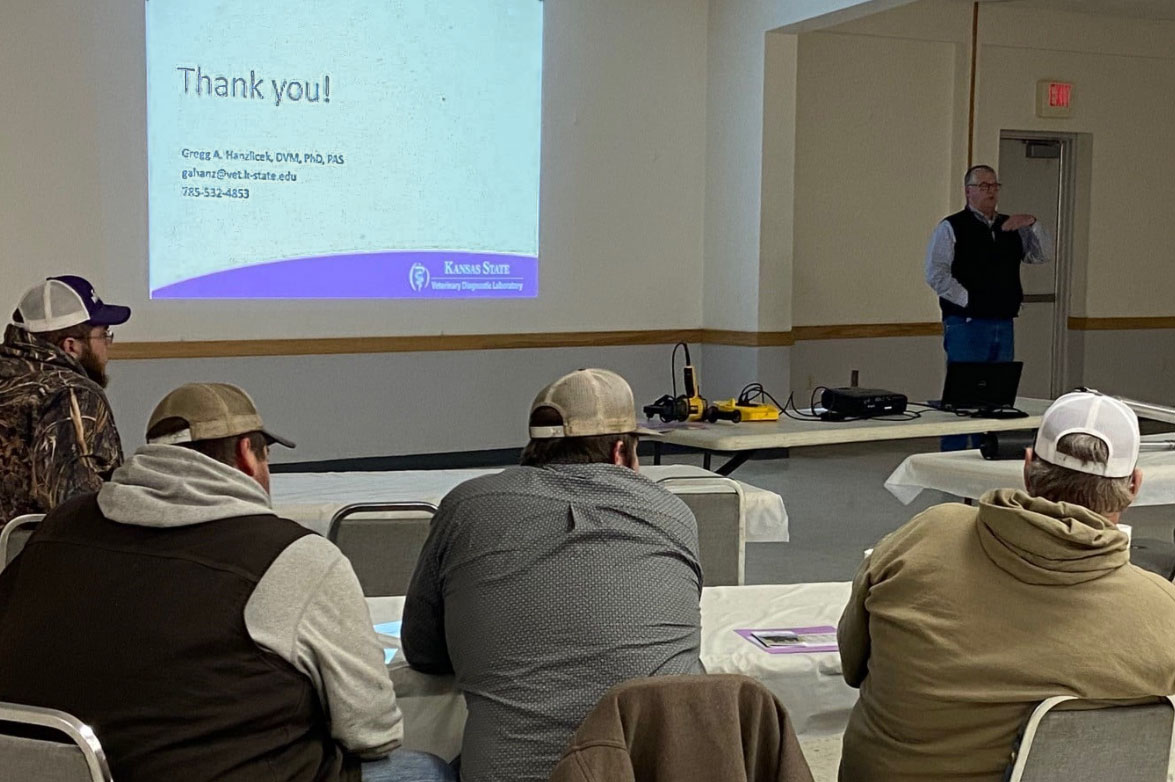
Dr. Gregg Hanzlicek presenting at the K-State Fall Ranch Management Seminar Series in Larned, Kansas. This series has been focused on presentations to enhance profit in beef production. Activities such as this will be leveraged by Kansas State University as part of its larger Economic Prosperity plan.
Drs. Ganta and Nagaraja join new class of international research fellows
Two faculty members in the College of Veterinary Medicine were recently inducted into the inaugural class of fellows of the Conference of Research Workers in Animal Diseases.
Two faculty members in the College of Veterinary Medicine were recently inducted into the inaugural class of fellows of the Conference of Research Workers in Animal Diseases. Drs. Roman Ganta and T.G. Nagaraja were recognized in a special ceremony on Dec. 6 during the annual research conference in Chicago. Dr. M.M. Chengappa, university distinguished professor at Kansas State University, serves as president of the Conference of Research Workers in Animal Diseases and presented the awards along with the other 17 recipients in this year's class. The fellows represent an eminent cadre of scientists from all types of research careers, including academia, industry and government. Election as a Conference of Research Workers in Animal Diseases fellow is a lifetime honor and all fellows meet the highest standards of professional ethics and scientific integrity. Scientists recognized as fellows have distinguished research careers evidenced by the outstanding impact and importance of their work and their ability to communicate and interpret science to stakeholders and the public. Dr. Ganta, who serves as professor and director of the Center of Excellence for Vector-Borne Diseases in the diagnostic medicine/pathobiology department, was cited for more than three decades of research experience focused on important human and animal vector-borne diseases. He has an internationally well-recognized research program focused on emerging tick-borne infectious diseases of global animal health and public health importance. Dr. Nagaraja, a university distinguished professor of microbiology in the diagnostic medicine/pathobiology department, was recognized for his research expertise in gut microbiology of cattle and swine. His research has focused primarily on the role of ruminal microbes in function and dysfunction of the rumen of beef cattle and on foodborne pathogens, particularly Shiga toxin-producing Escherichia coli and Salmonella in cattle and swine. Conference of Research Workers in Animal Diseases fellows have made significant contributions to scientific literature reflecting fundamental discoveries and/or innovative applied research in animal health and disease, population health and translational medicine. Another important contribution of the Conference of Research Workers in Animal Diseases fellows is their mentoring of young research scientists to help further their careers, which reflects the tradition and spirit of the organization, the fellows are scientists who have made sustained and notable contributions to the Conference of Research Workers in Animal Diseases through service or participation in the organization and annual meetings.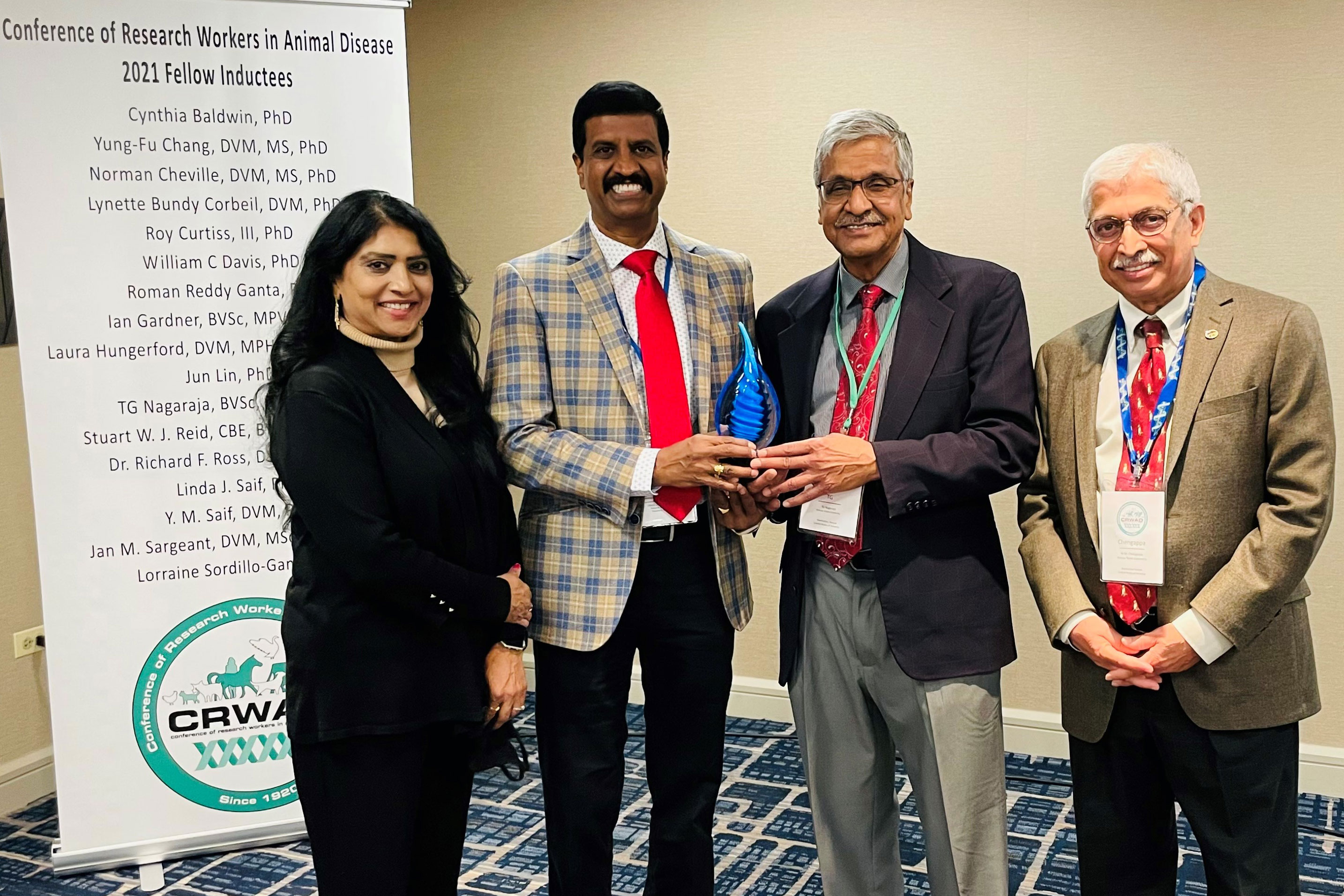
Drs. Roman Ganta and Dr. TG Nagaraja share a trophy moment after being inducated as part of the inaugural class of Fellows for the Conference of Research Workers in Animal Disease. They are joined by Suhasini Ganta (far left) and Dr. MM Chengappa (far right). Dr Chengappa is the current president of CRWAD.
Fourth-year veterinary student receives Lowrie Diversity Scholarship from national association

The American Association of Veterinary Medical Colleges, or AAVMC, has announced the recipient of the 2022 Patricia M. Lowrie Diversity Leadership Scholarship: Ron Orchard, a fourth-year veterinary student and recent graduate of Kansas State University’s Master of Public Health Program.
The $6,000 Lowrie scholarship recognizes veterinary students who have demonstrated exemplary promise as future leaders and have made significant contributions to enhancing diversity and inclusion in academic veterinary medicine. “The AAVMC is proud to recognize these outstanding individuals,” said AAVMC Chief Executive Officer Dr. Andrew T. Maccabe. “Their contributions inspire colleagues, provide a model for future generations of veterinarians and elevate the overall excellence of our member institutions. We look forward to honoring them during our 2022 annual conference.” “I’m proud to receive this acknowledgement, both personally and to represent K State on a national level,” Ron said. “To be mentioned at the same time as Ms. Lowrie is humbling. This award is significant for the veterinary profession because diversity and inclusion will ultimately allow us to provide the best care for the widest portion of patients possible.” Ron worked extensively as a veterinary technician before entering veterinary medical school. He is a certified animal welfare administrator who completed forensic training to detect animal cruelty, as well as training in disaster response, and foreign animal disease recognition. In 2018, Ron received a Certificate in Organizing Social Change from the Midwest Academy, and in July 2021, he completed the Certificate for Diversity and Inclusion in Veterinary Medicine from the Purdue University College of Veterinary Medicine, with an eye toward working to increase diversity and inclusion in veterinary medicine. Whether mentoring students or advocating for homeless pets, Orchard has volunteered countless hours supporting efforts to provide free preventive veterinary care to vulnerable community members and at-risk animals. Nominees for the Lowrie award are chosen of the basis of being consistent champions in addressing inequities and under-representation in the veterinary profession, advocating for social justice and valuing diversity and inclusion at AAVMC member institutions. Lowrie, now retired, served as senior advisor to the dean of the Michigan State University College of Veterinary Medicine and director of its Women’s Resource Center. She is a long-time champion of diversity and inclusion in the veterinary profession and in academic life overall. The Lowrie scholarship was established by the AAVMC in her honor in 2012. The scholarship and other professional diversity awards will all be formally presented during the AAVMC’s 2022 Annual Conference and Iverson Bell Symposium, which will be held both in-person and virtually March 3-5, 2022. The member institutions of the American Association of Veterinary Medical Colleges (AAVMC) promote and protect the health and wellbeing of people, animals and the environment by advancing the profession of veterinary medicine and preparing new generations of veterinarians to meet the evolving needs of a changing world. Founded in 1966, the AAVMC represents more than 40,000 faculty, staff and students across the global academic veterinary medical community. 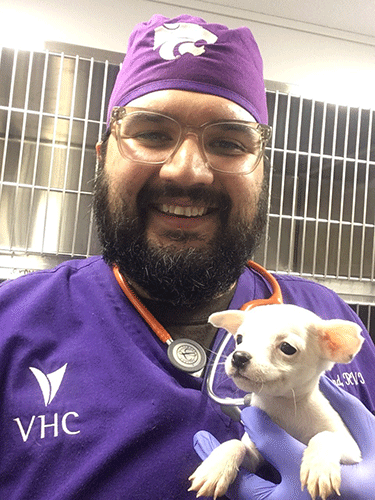
Special Video: Happy Holidays from the College of Veterinary Medicine
More Headlines
AAEP Honors Dr. Elizabeth Santschi with Distinguished Educator – Academic Award
The American Association of Equine Practitioners honored Kansas State University Professor of Equine Surgery Elizabeth Santschi, DVM, DACVS, with its Distinguished Educator – Academic Award for her substantial influence on veterinary students, interns, residents and the practice of veterinary medicine during three decades in academia.
The Distinguished Educator – Academic Award recognizes an individual who by his or her actions and commitment has demonstrated a significant impact on the development and training of equine practitioners. Dr. Santschi received the award during the December 7 President’s Luncheon at the AAEP’s 67th Annual Convention in Nashville, Tenn. Lauded by colleagues and former students for her ingenuity, practicality, openness and honesty, Dr. Santschi has advanced the field of equine surgery and improved outcomes for countless horses through her pioneering research in distal limb perfusion and cortical screw compression of subchondral bone cysts. Her sustained dedication to the education of colleagues is evidenced as author or co-author of more than 100 journal articles and 92 research abstracts. In addition, she has given over 300 invited presentations around the world. In recent years, she has collaborated with the University of Georgia to develop two digital Apple Books about the equine stifle—Ultrasound of the Equine Stifle and Radiographic Diagnosis of Equine Stifle Disease—that have been downloaded in more than 40 countries. Dr. Santschi received her veterinary degree from the University of Illinois in 1984 and became boarded with the American College of Veterinary Surgeons in 1992 at a time when there were very few women in equine surgery, particularly orthopedics. Since entering academia in 1991 as an instructor of surgery at Purdue University, Dr. Santschi has mentored 30 residents, 23 of whom have become board certified; and served on the graduate committees for 10 MS or Ph.D. students. Exemplifying her influence, Dr. Santschi is one of only three female equine surgeons recognized in the ACVS Honor a Mentor Program. “For over 30 years, Dr. Santschi has positively impacted numerous veterinary students, interns, residents, and faculty members as an exceptional educator and mentor, as she continues to model superior professionalism, surgical and medical expertise, and courageous leadership in the equine veterinary field,” said co-nominator Dr. Rebecca McConnico. “Her career exemplifies both passion and compassion for the horse and for those who care for them and about them.” Prior to joining Kansas State University in 2014, Dr. Santschi served on faculty at the University of Minnesota from 1994–1998, University of Wisconsin from 1998–2006, and The Ohio State University from 2007–2014. About AAEP The American Association of Equine Practitioners, headquartered in Lexington, Ky., was founded in 1954 as a non-profit organization dedicated to the health and welfare of the horse. Currently, AAEP reaches more than 5 million horse owners through its over 9,000 members worldwide and is actively involved in ethics issues, practice management, research and continuing education in the equine veterinary profession and horse industry.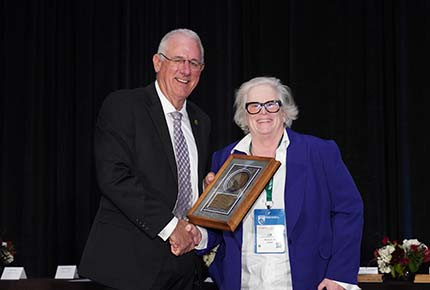
K-State veterinary team burrows toward safer care for prairie dogs
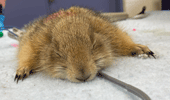
A group of veterinary faculty and students in the College of Veterinary Medicine at Kansas State University are digging deep to make medical care safer for a species commonly found on Kansas prairies.
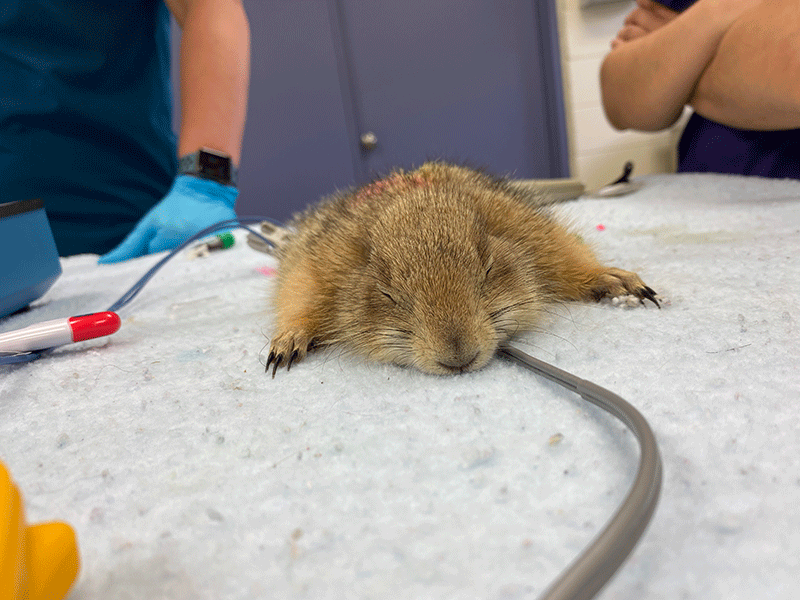
This black-tailed prairie dog from the Sunset Zoo collection is being closely monitored while anesthetized as part of the study.
Dr. David Eshar, associate professor of exotic and zoological medicine, recognized a need to develop safe, effective and species-specific anesthetic protocols for prairie dogs due to a lack of studies in this field.
"Prairie dogs are a keystone species in the prairie ecosystem and are studied both in the wild and in controlled settings," Dr. Eshar said. "They are kept as pets and presented to the public for educational purposes in zoological collections. However, being a fractious, squirrel-like species, they can fiercely resist handling and require chemical immobilization in the form of anesthetic gas or injectable drugs."
In a new study, Dr. Eshar is joined by Kara Hiebert and Jasmine Sarvi with K-State's Exotic and Zoological Medicine Service to evaluate and compare two novel injectable anesthetic drug combinations for their anesthetic and physiological effects on captive black-tailed prairie dogs. The prairie dogs were recently acquired for the collection at the Sunset Zoo in Manhattan, so evaluations were performed during the required quarantine period for incoming zoo animals.
"This research will help us develop safe, species-specific immobilization protocols when we need to perform exams or procedures in prairie dogs that are not amenable to handling," Hiebert said. "Anesthesia protocols in rodents can vary greatly from species to species. Doses that are safe in some species are much too high in others, so species-specific research into safe anesthesia doses is required. Additionally, this study evaluated entirely injectable anesthesia, which can be helpful when gas anesthesia is not available."
The data from this study will be published in a scientific journal to disseminate the gained knowledge and also demonstrate the Exotic and Zoological Medicine Service and the Sunset Zoo's commitment to the advancement and knowledge of exotic species.
The study has provided fourth-year veterinary students with a unique clinical research exposure during their zoological medicine rotations. The students helped record the data collected by Hiebert and Sarvi while the prairie dogs were under anesthesia. With a small species like prairie dogs, special attention must be paid to ensure data is recorded accurately.
"The students gained an appreciation for how detailed-oriented you need to be when conducting scientific investigation," Hiebert said. "Consistency in the data collection was emphasized throughout, all the way down to the order in which reflexes were tested while animals were under anesthesia."
Trio of veterinary students among scholarship winners at Kansas Livestock Association Convention
Three veterinary students were among 29 scholarship winners statewide recognized during the annual Kansas Livestock Association (KLA) Convention Dec. 1 in Wichita. A total of $30,000 was presented by the Kansas Livestock Foundation (KLF) and its partners.
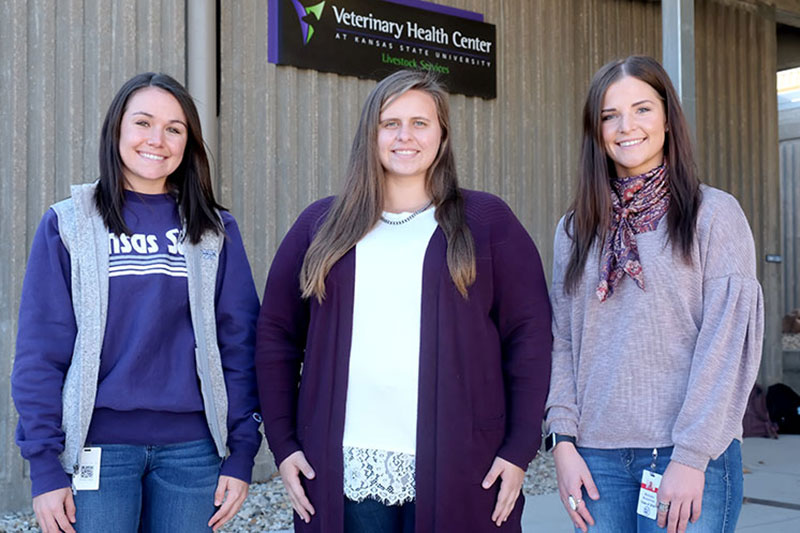
Chelsey Bieberle, Brooke Falk and Michaela Musselman were among 29 statewide scholarship recipients supported through the Kansas Livestock Foundation, Merck Animal Health and Altosid IGR (insect control products).
Third-year student Brooke Falk, Harveyville, and second-year student Michaela Musselman, Clifton, each received a $1,500 Cartridges for Cash Scholarship that is designated for veterinary students. These scholarships are co-sponsored by Merck Animal Health.
First-year student Chelsey Bieberle, Bushton, was one of five students awarded with a $1,000 Altosid IGR Scholarships. This scholarship is awarded to any student entering their junior or senior year, graduate or veterinary school at Kansas State University or Fort Hays State University and pursuing a degree in agriculture. Preference will be given to students majoring in animal sciences and industry with a career goal of being actively engaged in livestock production or veterinary services.
"I am very honored to have received a KLF Merck Cartridges for Cash Scholarship," Brooke said. "I have always had a passion for working with livestock and this scholarship will help me to pursue my interests in large animal medicine. I hope to one day work in either a mixed or large animal clinic in rural Kansas. I am very grateful to the Kansas Livestock Foundation for presenting me this scholarship."
“Scholarship support helps me to focus more on my education and not have to stress about how I am going to pay for it,” Chelsey said. “After veterinary school, I would like to work at a mixed animal clinic and eventually buy into or own a clinic. Scholarship support allows me to keep my loan amounts down so I am able to achieve this goal.”
Michaela said she also hopes to practice in a mixed animal clinic after she graduates. She wants to focus on beef cattle production medicine.
“Large animal veterinarians are important for serving rural Kansas livestock producers and these KLA scholarships are really valuable to support and encourage veterinary students,” said Dr. Brad White, professor of production medicine and director of the Beef Cattle Institute at Kansas State University.
KLF was established in 1983 to operate solely and exclusively for charitable, scientific and educational purposes. For information about KLF scholarship opportunities or to receive an application, contact the foundation at 6031 S.W. 37th St., Topeka, KS 66614 or email shelbi@kla.org.
KLA is a trade organization protecting the business interests of independent ranchers, feeders and dairy farmers. Members of the association are involved in all segments of the livestock industry, including cow-calf production, backgrounding, cattle feeding, swine, dairy and sheep. The association’s work is funded by voluntary dues dollars paid by its 5,700 members.
CVM researchers join multidisciplinary cancer research project
The Johnson Cancer Research Center at Kansas State University has launched a Cancer Research Collaboration of Excellence in Tumor Microenvironment Studies. The multidisciplinary collaboration (which includes a pair of researchers from the CVM) will examine how environmental conditions within tumors impact their development, growth and aggressiveness, and apply the findings to improve cancer therapies.
The Johnson Cancer Research Center at Kansas State University has launched a Cancer Research Collaboration of Excellence in Tumor Microenvironment Studies. The multidisciplinary collaboration will examine how environmental conditions within tumors impact their development, growth and aggressiveness, and apply the findings to improve cancer therapies. The collaboration is made possible with a two-year, $100,000 award from the cancer research center. Brad Behnke, professor of kinesiology and associate dean of research and graduate studies for the College of Health and Human Sciences, leads the collaboration. The members are investigating changes in the tumor microenvironment due to exposure to different levels of radiation, oxygen pressures and vitamin D. "Many conventional cancer therapies fail due to factors related to the tumor's environment," Behnke said. "We want to identify microenvironment changes that cause cancer growth and therapy resistance, and devise methods to combat them." The collaboration's four main research projects aim to answer the following questions. What DNA mutations occur in response to radiation? Does exercise increase oxygen in breast tumors and thus improve response to chemotherapy and radiation? Does nitrate supplementation increase tumor oxygenation and thus decrease tumor growth? And how do ovarian tumors respond to different levels of vitamin D? "We are excited to establish this Cancer Research Collaboration of Excellence in Tumor Microenvironment Studies that brings together outstanding K-State scientists from multiple disciplines to investigate how various treatments change tumor growth," said Sherry Fleming, director of the Johnson Cancer Research Center and professor of biology. "We're grateful to our supporters for making it possible to fund this excellent group of investigators." Other researchers involved in the collaboration are Amir Bahadori, associate professor in mechanical and nuclear engineering; Carl Ade, associate professor in kinesiology; David Poole, university distinguished professor of anatomy and physiology and kinesiology; Chieko Azuma, clinical associate professor of radiation oncology; and Wei-Wen Hsu, associate professor in statistics. "This research collaboration is an exciting step forward in helping to understand the basic mechanisms underlying cancers and identifying strategies for novel therapies," said Beth Montelone, senior associate vice president for research. "We look forward to the outcomes of this work and the follow-on projects that could result from it." This is the Johnson Cancer Research Center's second Cancer Research Collaboration of Excellence. The first was for pancreatic cancer studies. This program supports multidisciplinary teams fighting cancer synergistically in a focused area of cancer research. The Johnson Cancer Research Center, in the College of Arts and Sciences, supports and advances cancer research and education at Kansas State University. Its programs are made possible by private funding. Information about the center is at cancer.k-state.edu.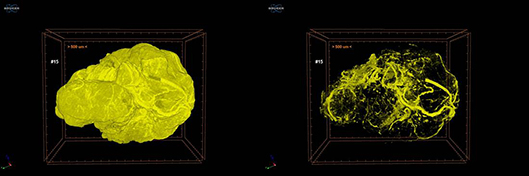
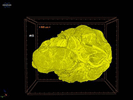
This micro-CT image shows a whole breast tumor on the left, and the tumor's microenvironment with diminished blood vessels and chemo- and radiation therapy-resistant regions on the right. Brad Behnke, professor of kinesiology and associate dean of research and graduate studies for Kansas State University's College of Health and Human Sciences, leads the new Cancer Research Collaboration of Excellence in Tumor Microenvironment Studies, established by K-State's Johnson Cancer Research Center. More information on this image and the collaboration can also be found at cancer.k-state.edu/research/CRCE-tumor-microenvironment.html.
First-year student gives her life trying to help someone in need
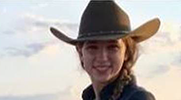
Our prayers and condolences to the family and friends of Autumn Johnson, a first-year veterinary student from Wasilla, Alaska, who worked part-time in the Veterinary Health Center, in Central Prep and Small Animal Surgery.
“Autumn Johnson died rushing to help total strangers in their time of crisis,” her family posted on a GoFundMe page. “That is who she was and what her passion encompassed; helping those who needed assistance.” "Her loss will be felt by the entire college," Dean Bonnie Rush said. "We all share in shock and sorrow at this tragic loss. Autumn was an incredible individual." A remembrance/candlelight vigil was held at the veterinary college. KSNT-TV has video coverage of the vigil and more information on this story posted here: Family honor memory of K-State student struck by car on highway (ksn.com)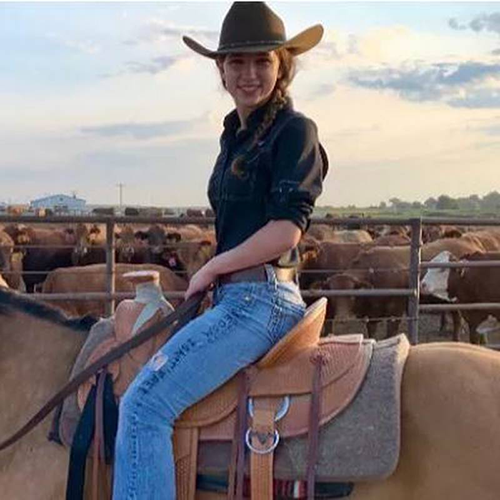 According to reports, Autumn ran "through traffic on Interstate 70 in Shawnee County when she was struck by a vehicle shortly before 3:30 p.m. Sunday, Dec. 5." A report from the Kansas Highway Patrol said she was taken to a Topeka hospital, where she was pronounced dead.
Regular features
Alumni Events, Development and Continuing Education
 The Veterinary Medical Alumni Association organizes alumni receptions at several of the national annual conferences plus continuing education events and more. This month's section includes the monthly listings of recently departed alumni and links to their obituaries, plus a new link for submitting nominations for Alumni Recognition Awards.
Alumni Updates
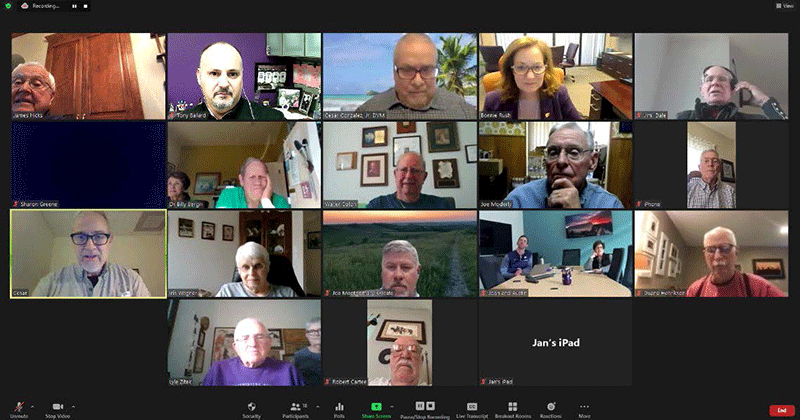
Dr. Cesar Gonzalez, 1967 DVM alum, received the VMX Alumni Recognition award early. Due to health concerns, he is unable to attend in January. Classmates (12) from 1967 were invited to attend a virtual event. They stayed on and chatted with each other after the award was given.
Special AAEP Award for Dr. Larry Bramlage
Dr. Larry Bramlage, (below right) DVM class of 1975, was graciously bestowed by the American Association of Equine Practitioners with its Sage Kester "Beyond the Call" Award. Read more about the award.
Submit nominations for Alumni Recognition Awards onlineSee our new online nomination form to nominate a fellow alumnus for one of our many annual recognition awards, presented at the national conferences: VMX, WVC, AVMA and the Annual Conference for Veterinarians. See full details at the link below. |
|
In Memoriam - Recently Departed Alumni[Editor's note: We have an unusually large number of deceased listings this month due to recent changes in the university's reporting system.]
Dr. Winfred A. Andrews, DVM 1955 Dr. Gary Lee Baehler, DVM 1980 Dr. Victoria Marie Beale, DVM 2013 Dr. Francis Max Beam, DVM 1951 Dr. Warren Sheldon Bivin, DVM 1964 Dr. David M. Carlson, DVM 1960 Dr. Oscar F. Clabaugh, DVM 1962 Dr. Charles Daniel Clinkenbeard, DVM 1964 Dr. Merton Lyle Dierks, DVM 1961 Dr. Jack Saunders Dunham, DVM 1967 Dr. Delvin Duane Duntz, DVM 1958 Dr. Bradley Willard Fenwick, DVM 1984 Dr. Matthew Charles Garver, DVM 1991 Dr. Lannie L. Hanel, DVM 1971 Dr. Russell W. Hardin, DVM 1946 Dr. Donald Lee Harris, DVM 1966 Dr. Charles E. Herren, DVM 1954 Dr. Bruce Parker Hull, DVM 1963 Dr. Glen Eugene Hurley, DVM 1953 Dr. James Stanley Jewell, DVM 1951 Dr. Myron Nels Jorgensen, DVM 1964 Dr. Robert Joe Keener, DVM 1998 Dr. Thomas Jefferson Landis, DVM 1958 Dr. Robert Paul Litt, DVM 1946 Dr. Anne Jane Michaux, DVM 1963 Dr. William B. Miesse, DVM 1943 Dr. Leon J. Mills, DVM 1964 Dr. Robert Wiley Minter, DVM 1966 Dr. Bradley Phillip Neer, DVM 1959 Dr. Ronald Charles Poppy, DVM 1959 Dr. Dean Arthur Rice, DVM 1974 Dr. Rodney J. Schieffer, DVM 1971 Dr. Herschel A. Stacey, DVM 1966 Dr. C. Michael Stafford, DVM 1978 Dr. Steven Michael Stiefel, DVM 1979 Dr. John J. Swanson, DVM 1954 Barbara Leith (wife of Dr. David Leith) (click highlighted names for obituary) |
Questions about Alumni or CE events?Contact:
|
 Tony Ballard
 Sarah Keatley
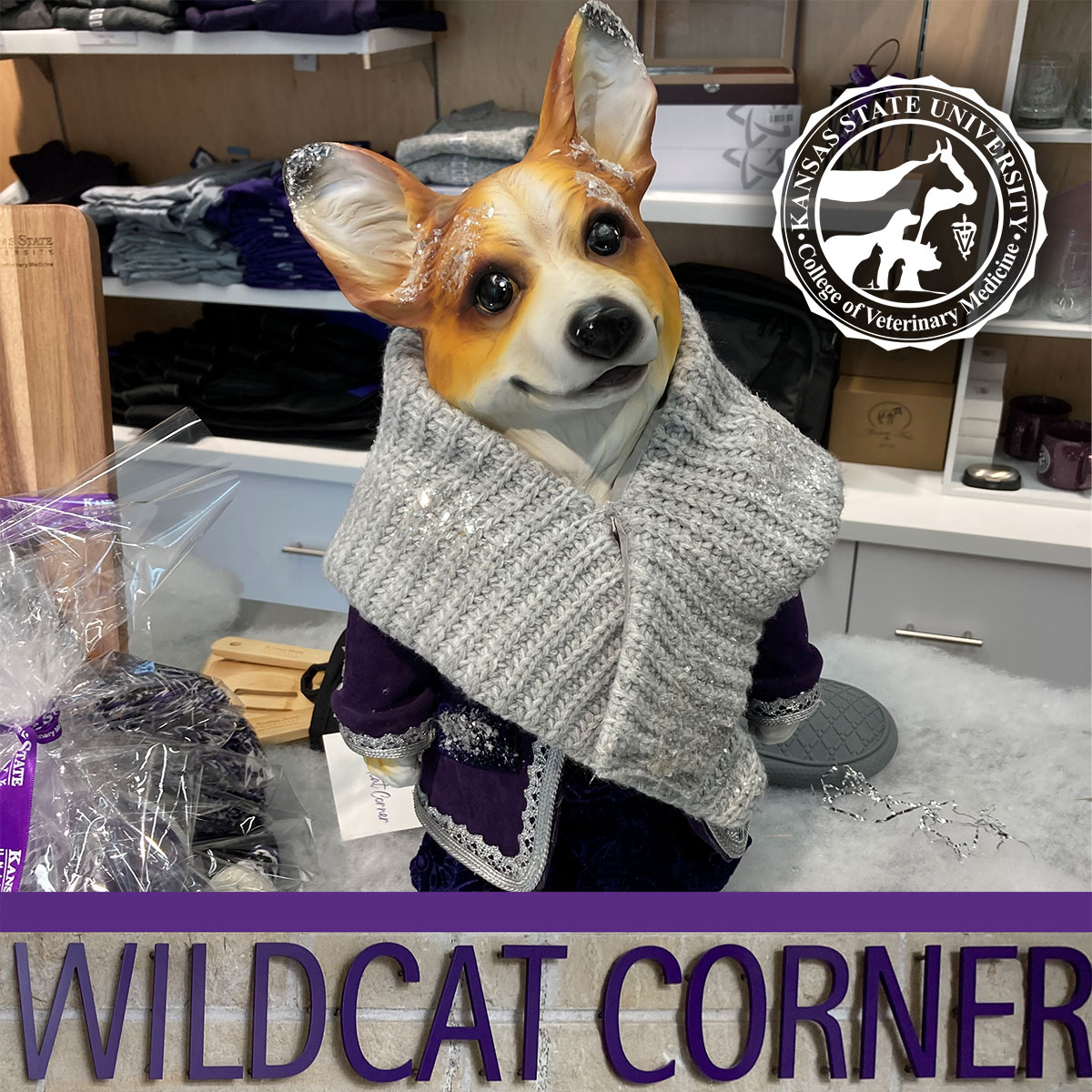
We recently opened Wildcat Corner with CVM merchandise, next to Trotter Hall, and now we're happy to announce these items in the store are also available online! We are excited to offer a wide variety of College of Veterinary Medicine-logo-imprinted products. Check back often for new products! https://wildcatcorner.myshopify.com/
News Ticker
| More activities and accomplishments in the College of Veterinary Medicine: |
Virtual Assessment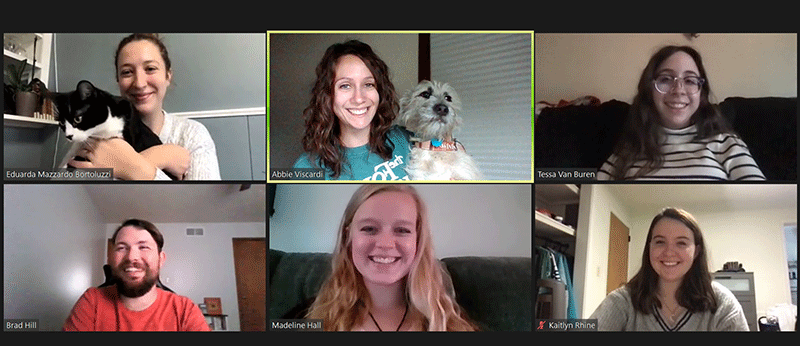
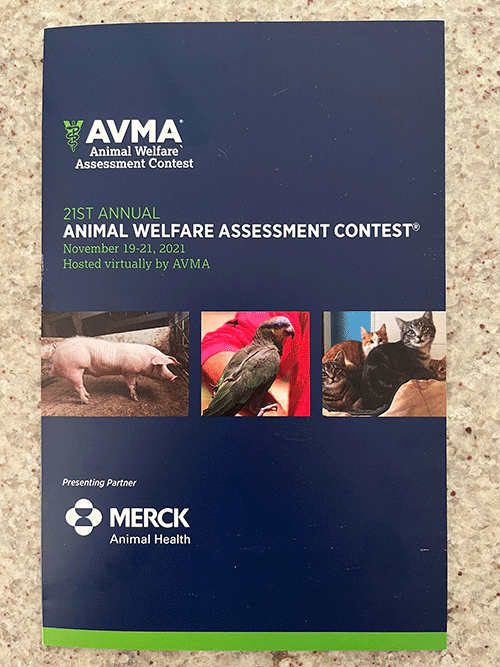
Four students represented K-State at the 21st annual AVMA Animal Welfare Assessment Contest, held virtually Nov. 19-21. Brad Hill, Tessa van Buren, and Kaitlyn Rhine competed as a team in the Undergraduate Senior Division, and Madeline Hall (Class of 2024) competed as an individual in the Veterinary Division. The contest species this year were boar studs, psittacines as pets, and cats in a research setting. Dr. Abbie Viscardi served as the lead coach with Eduarda Mazzardo Bortoluzzi (PhD Ca |
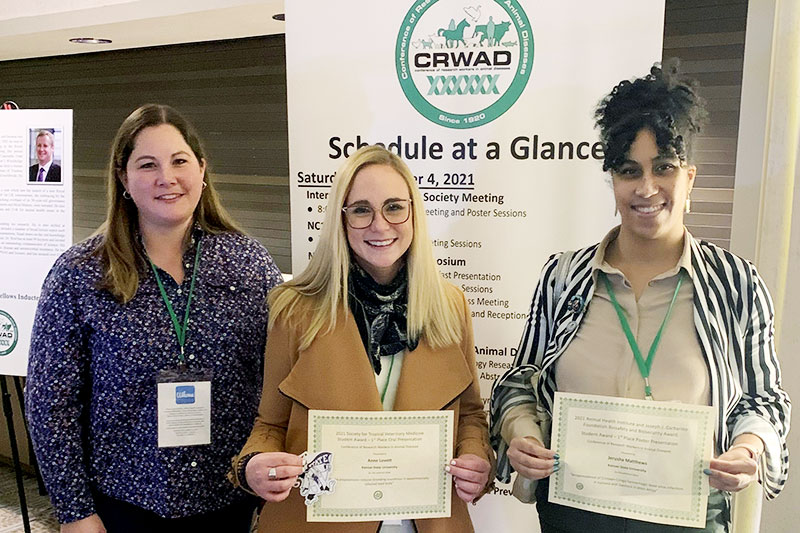 At the Conference of Research Workers in Animal Diseases (CRWAD), Dr. Anne Lovett (middle), Master's student in Dr. Katie Reif's lab and concurrent large animal medicine resident, received the Society for Tropical Veterinary Medicine Best Student Presentation Award as well as a $500 student travel award. Jerusha Matthews (right), NSTP Master's student, received an Animal Health Institute and Joseph J. Gabarino Foundation Biosafety and Biosecurity Award. Konner Cool (not picture) doctoral student in pathobiology, also won a $500 student travel award. |
Closure of the Exotic Animal Medicine Club’s Teaching HerpetariumBecause of the costs (i.e., animal care, facility maintenance, and veterinary care), amount of student volunteer time and effort required in caring for the animals, and current diminished teaching opportunities, this appears to be an appropriate time to close the Teaching Herpetarium. This very difficult decision was done in consultation with the Herpetarium Managers, numerous students, and Dr. Beth Davis. Historically, our reptiles served a valuable purpose as education animals that were used in wet labs, training students, Open House, and visitor and incoming student tours. But their current limited use makes “retirement” of the animals at this time a reasonable solution. The reptiles will be adopted out to “loving” homes beginning in January. We appreciate the support that the Administration and numerous volunteer students have provided the Herpetarium over the years. Drs. James W. Carpenter and Sara Gardhouse |
New JEDI AwardsThe first JEDI awards have been given! Thank you to these JEDI Recipients for their work toward an inclusive environment where all members of our community feel valued: Reese Bailey, Lorna Bryce, Javier Funes, Jocelyn Stedman, Jen Teeter and Anne Lovett. Students, faculty or staff are eligible to receive the JEDI award. This award is intended for those who: stand up for Justice of others, provide opportunities for Equity, support and celebrate Diversity and promote Inclusion for all. |
|
Dr. Mark Weiss was a keynote speaker at the fourth International Caparica Christmas Conference on Translational Chemistry held in Caparica, Portugal, on Dec. 6. His presentation was titled “Using Extracellular Vesicles for Cancer Detection” The Department of Clinical Sciences Research Committee has awarded $35K in research funds in November through the Mark Derrick awards program:
Dr. Neala Boyer presented, “Taking the fear out of the veterinary visit and why it matters,” at the K-State Olathe Careers and Cases in Veterinary Medicine lecture series on Nov. 10. After months of planning, the San Diego Zoo Wildlife Alliance Academy put on their internationally-recognized “Safe Capture Chemical Immobilization Program” as a live, online course on Nov. 6-7. There were 20 K-State students enrolled and they received a certificate of completion. As a bonus, Dr. Jim Carpenter also provided the students with an on-site wet lab on darting on Nov. 14. The course and lab will help the students become more competitive in the field of zoological/wildlife medicine. Thank you to Drs. Matt Miesner, Shaun Huser, Brad White and the BCI group for participating in Celebrate Ag Day before the Nov. 13 KSU vs. West Virginia football game. Dr. Chris Blevins, the Equine Field Service rotation and other members of the equine section went to Fort Riley on Nov. 16 to provide dental services to approximately 25 horses that are part of the mounted color guard. The Shelter Medicine Outreach Vehicle (Wellness on Wheels) partnered with the Community Veterinary Outreach in Kansas City. They provided veterinary care and human health care to the homeless population. The vice president of Community Veterinary Outreach is Dr. John Teeter, DVM class of 1981, who was also at the event and was wonderful with the students. |
Staff Spotlight
Her favorite part of the job: “I love seeing all the different species that are brought to the VHC for care. Animals are a huge part of my life! I have a wide variety of pets, 14 chickens, two dogs, a cat, a guinea pig and a bearded dragon." Jennifer also has three children that have small pocket pets. She says a lot of their time is spent playing with these pets and taking care of them. “I really enjoy helping my children learn how to care for their pets." A fun fact about Jennifer: her favorite childhood pet was an iguana. |
|
Best wishes to Allan Leikam, former director of veterinary medical facilities, who recently retired. A reception was held Dec. 2. In the group picture, Allan wanted to express to several co-workers. From left: Scott West, Gary Morgan, Nate Harstine, Allan, Joe Alter and Brandon Weber. |
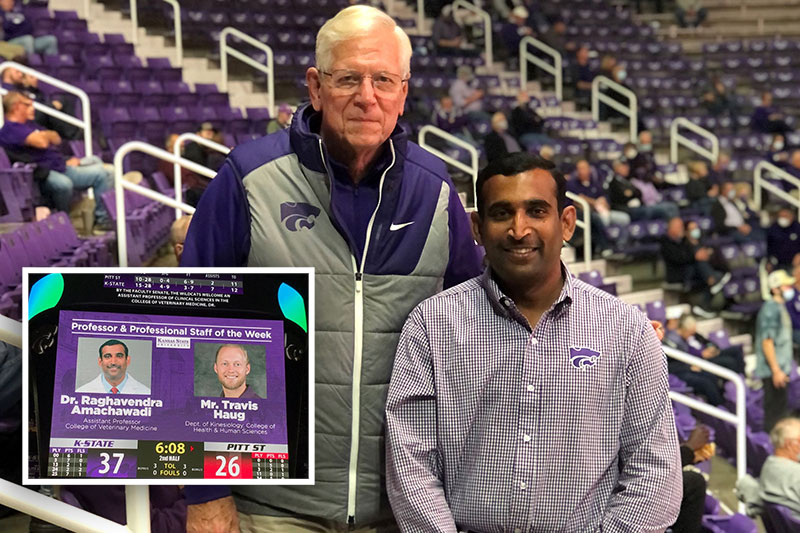
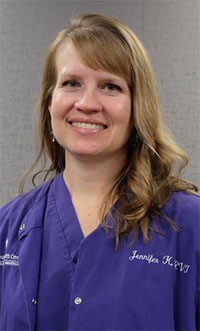 Jennifer Klingele works in ophthalmology as a nurse III. Jennifer began here in October 2016.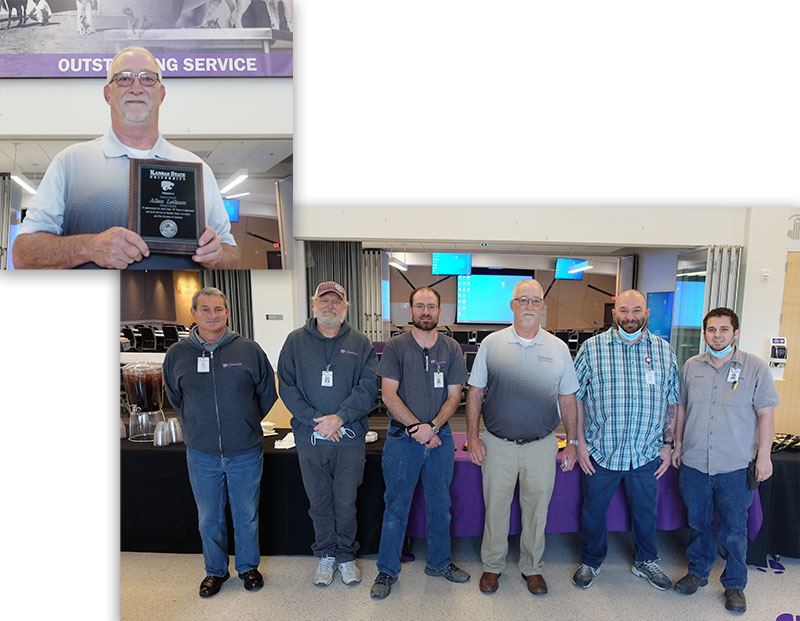
 Join the College of Veterinary Medicine on LinkedIn and add us to your profile under education and/or employment to help build and engage our online social community! Follow the LinkedIn page here: www.linkedin.com/company/kstatevetmed
New Arrivals/Recent Departures
Lifelines is published each month by the Marketing and Communications Office at the College of Veterinary Medicine. The editors are Joe Montgomery, jmontgom@vet.k-state.edu, and Piper Brandt, pnbrandt@vet.k-state.edu.