2026 VRSP Mentor Projects
 Dr. Chieko Azuma
Email/Department: Clinical Sciences
Proposed project title: Evaluation of ELISA for quantification of Imidacloprid in feline testicular tissues from TNR cats in Kansas
Project description: The scholar will be involved in:
- Understanding of study questions, design of study to answer the questions, data acquisition, sample collection, data management and data analysis.
- Understanding of environmental exposure in TNR cats as a sentinel.
The scholar will participate in:
- Sample collection and preparation
- Assist analysis
The scholar will be responsible for:
- Data collection and organization form the animal records including estimated age, location of TNR colonies and use of tick and flea preventive in the colonies..
- Handle biospecimens and sample preparation for ELISA assay
- Perform ELISA assay
- ELISA data validation by LC-MS in the same animals
- Prepare abstract and poster presentation.
 Dr. Eduarda Bortoluzzi
Email/Department: Anatomy & Physiology
Proposed project title: Using Enrichment to Enhance Pen Welfare
Project description: This project will develop enrichment objects that will be placed within an animal pen. Cameras will be used to record interaction with objects. Videos will be annotated and analyzed with the objective to determine which is the best enrichment object based on animal interaction with it. Scholar will be involved in the design of the study, development of enrichment objects, IACUC protocol, data collection and analysis.
 Dr. Jordan Gebhardt
Email/Department: Diagnostic Medicine & Pathobiology
Proposed project title: Effect of sanitation practices on animal health in swine facilities
Project description: The student will work directly alongside graduate students to conduct hand on research with swine at the KSU Swine Enteric Health Research Center and/or KSU Swine Farm. The majority of the experience will be focused on hands on work with research animals including daily care and data capture. The student will likely help support the ongoing research by conducting laboratory analysis on samples collected from the experiment including fecal dry matter, bacterial enumeration, or other applicable laboratory techniques. Throughout the experience, students will gain exposure to both hands on swine research as well as exposure to some laboratory skills and techniques.
 Dr. Todd Gunderson
Email/Department: Clinical Sciences
Proposed project title: Effect of semen fixation method and storage time on morphology assessment
Project description: The student will assist with collection of semen samples from bulls and fixing the samples in isotonic neutral buffered formal saline. The student will be involved with coordinating evaluation and analysis of the data. The student will also capture images of sperm morphology slides for use in other projects.
 Dr. Clay Hallman
Department: Clinical Sciences
Proposed project title: Creating realistic ultrasound phantoms of the canine abdomen using 3D printed materials
Project description: The summer scholar will receive training from Radiology faculty in ultrasonography of the canine abdomen including B-mode and Doppler interrogation with a focus on settings adjustments to maximize diagnostic image quality. After receiving this training, the summer scholar will work with both Radiology faculty as well as Biomedical Engineering faculty to develop a series of objective measurement criteria to assess the quality of different 3D printable materials and phantom organs compared to those in a live patient. The student will then actively apply these criteria to 3D printed phantom organs. The summer scholar will gain experience with abdominal ultrasonography, ultrasound physics, 3D printing and materials, data acquisition and data analysis.
 Dr. Nate Kapaldo
Department: Clinical Sciences
Proposed project title: Pharmocokinetics and Tolerability of Oral Ketamine in Healthy Dogs
Project description: The scholar will gain hands-on experience in pharmacokinetics and veterinary clinical research, including study design, sample handling, and data interpretation.
The student will assist with drug administration, blood sample processing, and quantification of ketamine and its active metabolite (norketamine) using established analytical techniques.
Additional training will include pharmacokinetic modeling, calculation of parameters such as CMAX, TMAX, AUC, half-life, and relative bioavailability, and interpretation of safety and tolerability data.
The scholar will participate in literature review, data analysis, and preparation of results for presentation or manuscript development.
 Dr. Butch KuKanich
Department: Anatomy & Physiology
Proposed project title: Improved use and efficacy of analgesics and anticonvulsants in dogs
Project description: The student will help collect and analyze data, monitor dogs and perform health exams. The student will also perform laboratory procedures analyzing drug content using methods such as HPLC (high-pressure liquid chromatography) and mass spectrometry.
 Dr. Phillip Lancaster
Department: Clinical Sciences
Proposed project title: Improving cow herd sustainability modeling by developing simulated cow fertility genotypes
Project description: The summer student will be responsible for developing the objective and scope of the study; performing literature search and work with breed databases to collect data; adapting computer simulations to incorporate new fertility genotypes; and performing computer simulations to evaluate fertility genotypes under low and high nutritional conditions. The expected outcome is that developing fertility genotypes will provide simulations more similar to empirical data improving our understanding of beef cow fertility and our ability to simulate beef cow efficiency.
 Dr. Kamilyah Miller
Department: Diagnostic Medicine & Pathobiology
Proposed project title: Parasites of coyotes in the Midwest (U.S.)
Project description: The summer student will be responsible for extracting DNA from the parasites collected, and identifying the parasites to species using PCR, either conventional or qPCR. The obtained sequences will be compared to those on GenBank for comparison. The additional tissue samples collected at necropsy will be sent to Histology to be examined for tissue parasites such as Hepatazoon americanum, Trypanosoma cruzi, etc.
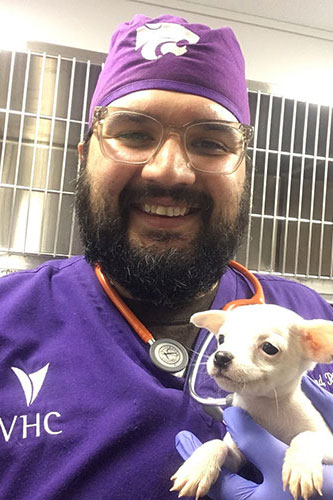 Dr. Ron Orchard (Project #1)
Department: Clinical Sciences
Proposed project title: Sounding out stress: Correlating decibel levels with heart rate variability and cortisol in shelter dogs
Project description: This study will investigate whether noise levels in animal shelters are linked to measurable indicators of stress in dogs. The scholar will help record daily decibel readings in kennels and collect physiological data such as heart rate variability and cortisol samples. By comparing these values, the project aims to identify environmental thresholds that may affect canine welfare. The results will provide practical insights to help shelters design quieter, healthier spaces for the animals in their care.
Dr. Ron Orchard (Project #2)
Proposed project title: Seeing care in action: A visual ethnography of human–animal interaction and clinical communication in community outreach clinics
Project description: This project explores how veterinary teams, pet owners, and animals communicate during community outreach clinics that serve people with limited access to care. Using brief video recordings from real clinic encounters, the scholar will examine moments of trust-building, empathy, and shared decision-making between clients and providers. The goal is to understand how communication practices support the human–animal bond and promote equitable care. The findings will help inform future training approaches that prepare students to serve diverse communities with compassion and skill.
 Dr. T.G. Nagaraja
Department: Diagnostic Medicine & Pathobiology
Proposed project title: Etiology and pathogenesis of Bovine Liver Abscesses
Project description: The exact project is yet to be determined. The project is likely to involve:
- Analyses of liver with abscesses, laryngeal tissue, gut tissues, lungs, uterine endometrium at a slaughter plant.
- Culture- and PCR-based analyses to detect and quantify major liver abscess pathogens (Fusobacterium necrophorum, Trueperella pyogenes, and Salmonella enterica
- Use of MALDI-TOF and qPCR assay to confirm species.
-
Scholar may have opportunity to go to a slaughter house to participate in sample collection and will have opportunity to work with two experienced lab technicians to learn and have hands-on training of the techniques for detection, isolation and quantification of the pathogens.
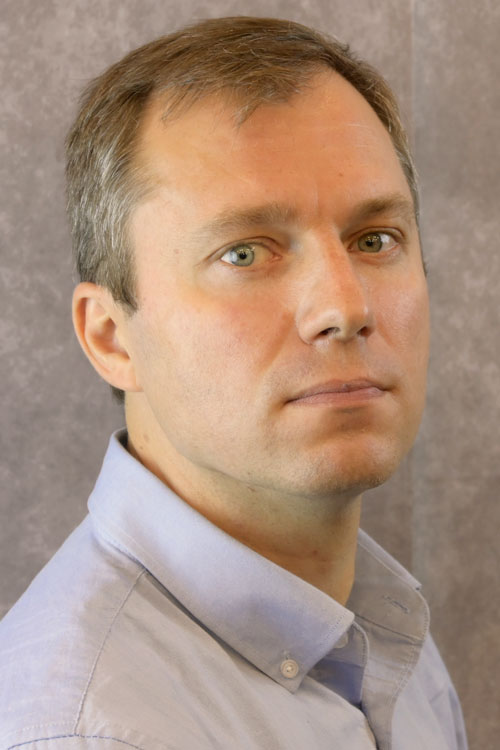 Dr. Sergei Raev
Department: Anatomy & Physiology
Proposed project title: Development of a L1C.5-based Autogenous Inactivated PRRSV Vaccine and Pre‑Challenge Evaluation of Safety and Magnitude of Immune Responses Compared with HP‑PRRSV MLV Vaccination
Project description: Our hypothesis is that prime-boost vaccination with a L1C.5-based autogenous inactivated PRRSV vaccine will be safe and induce PRRSV-specific immune responses comparable to those induced by HP PRRSV MLV vaccination.
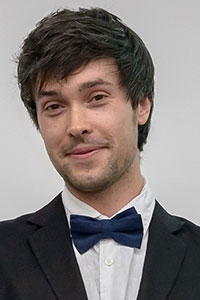 Dr. Jakob Trimpert
Department: Diagnostic Medicine & Pathology
Proposed project title: The Evolution of Exclusion: Can Viruses Evolve Faster Superinfection Exclusion?
Project description: This summer project will investigate the genetic adaptations that strengthen or accelerate SIE. To do this, we will first infect cultured cells with a “target” virus and, after a defined delay, introduce a second “selection” virus. The selection virus contains a gene that activates a toxic drug, thereby killing both itself and any target virus that has not yet established SIE. Under this selective pressure, only target virus mutants that rapidly initiate SIE will persist. The student will assist in designing, performing, and analyzing these infection experiments to identify mutations that enhance SIE. This project provides hands-on experience in molecular virology, cell culture, and experimental evolution.
 *Dr. David Upchurch
Department: Clinical Sciences
Proposed project title: Cadaveric study of a ‘reverse Boari’ flap for repair of urethral defects in dogs
Project description: The scholar will conduct a literature review on the Boari flap and urethral/bladder surgery. They will be involved in designing a protocol for the study as well as an approval form to use cadavers from IACUC. The scholar will be directly involved in conducting the experimental study, including helping perform surgery, collecting measurements and analyzing data. They will have the opportunity to write a manuscript for submission to a peer-reviewed veterinary journal on the results of the project, with the option to be first author if warranted by the level of involvement.
*NOTE: A student has already been identified for this project, as they are applying for a special grant. Dr. Upchurch will not be taking any additional students for the summer.
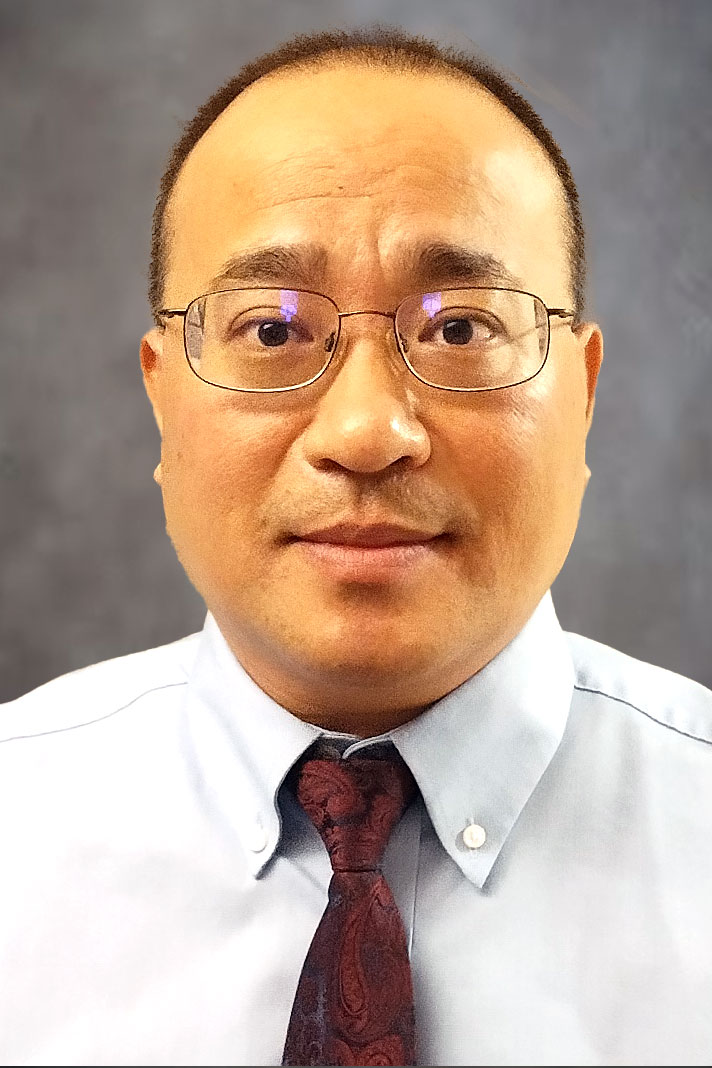 Dr. Lihua Wang
Department: Anatomy & Physiology
Proposed project title: Development of AAV Producer Cell Lines for AAV-Vectored Vaccines Against High-Impact Infections Diseases
Project description: The scholar will collaborate with Dr. Wang and his research team to develop AAV-vectored vaccines against high-impact animal infectious diseases, such as Classical swine fever, African swine fever, canine distemper, and rabies. The scholar will acquire expertise in literature searching, molecular cloning, AAV producer cell line development, ELISA, western-blotting, recombinant AAV (rAAV) purification, rAAV titration, and quality testing.