Monthly Newsletter
January 2021 - Vol. 16, No. 1
<December 2020 | February 2021>
Top Stories
University-licensed compound selected as candidate against COVID-19
As the pandemic continues, hope is in sight with the production and distribution of new vaccines and treatments. Kansas State University is continuing to help in the fight with a licensed technology against coronaviruses, including SARS-CoV-2, the virus that causes COVID-19.
Cocrystal Pharma, a clinical-stage biotechnology company, recently announced that a series of broad-spectrum protease inhibitors developed at K-State and licensed through K-State Innovation Partners in April 2020 has been selected as a preclinical lead compound for further development.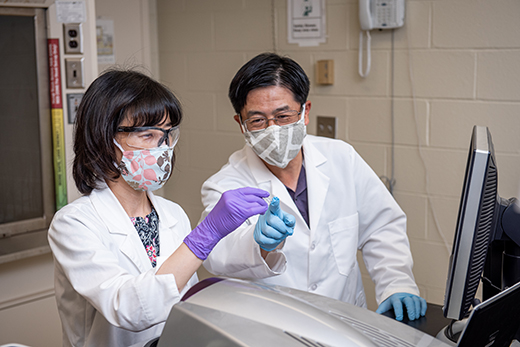
Drs. Yunjeong Kim, left, and Kyeong-Ok "KC" Chang, both virologists in the Kansas State University College of Veterinary Medicine who have developed broad-spectrum protease inhibitors that have been selected as the preclinical lead compound for further development by Cocrystal Pharma.
The licensed protease inhibitors were developed by Drs. Kyeong-Ok "KC" Chang and Yunjeong Kim, virologists in the K-State College of Veterinary Medicine, in collaboration with William Groutas at Wichita State University and Stanley Perlman at the University of Iowa.
"The current FDA-approved drugs for COVID-19 have different mechanisms of action," Dr. Kim said. "Further studies are required to reveal the therapeutic potency of our protease inhibitor compared to other approved drugs. Drugs targeting different virus proteins are often combined to maximize their efficacy, so it is always nice to have a repertoire of drugs that work in different ways."
Preclinical animal studies of these K-State coronavirus compounds published in the prestigious medical journal Science Translational Medicine showed in vivo efficacy against Middle Eastern respiratory syndrome, or MERS, a related deadly human coronavirus infection, in a mouse model. Further testing allowed Cocrystal to identify this promising candidate for preclinical lead development for COVID-19. According to the company, there is significant potential for delivering this compound either for injection or inhalation and for potential use as both a therapeutic and prophylactic, protecting uninfected individuals who may become exposed.
“Choosing a preclinical candidate is a very significant milestone decision,” Dr. Chang said.
With the selection of this candidate, the company will initiate studies to evaluate potential toxicity risks and conduct safety pharmacology studies before the phase 1 clinical trial.
"It is very exciting to see the basic research from Drs. Chang and Kim and their colleagues translated into drug development to fight COVID-19," said Beth Montelone, K-State interim vice president for research.
This is one of several new technologies that K-State has licensed to corporate partners to combat the disease. Additionally, more than $7.7 million in contracts for COVID-19 research at K-State have been secured.
"Long before COVID-19 came along, we worked collaboratively on protease inhibitors for important human and animal viruses, such as MERS, human norovirus and feline infectious peritonitis, a deadly feline coronavirus infection — some of which are also under commercial development," Dr. Kim said. "So, we think that our research, along with other high-impact COVID-19-related research currently going on at Kansas State University by many different laboratories, shows our strengths as a research institution."
Dr. Raelene Wouda elected to national role in ACVIM

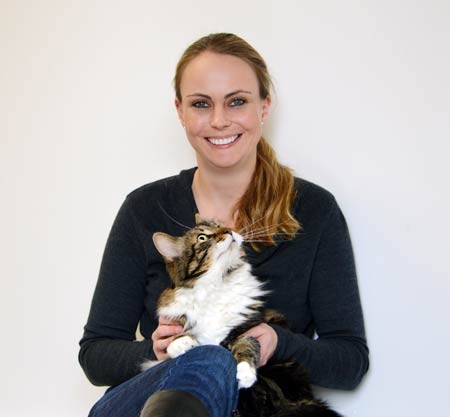
After a nationwide search, the Board of Regents and Executive Board of the American College of Veterinary Internal Medicine (ACVIM) has announced the appointment of Dr. Raelene Wouda, BVSc DACVIM (Oncology), to the position of Certification Liaison.
This newly created role is a division of duties that, in the past, was fully held by the ACVIM’s Professional Liaison. The role involves participation with the organization’s Board, as well as collaboration with the American Board of Veterinary Specialties (ABVS) and Veterinary Specialty Organizations Committee (VSOC).
As the Certification Liaison, Dr. Wouda will work closely with the ACVIM staff and other volunteer leaders to facilitate and encourage activities associated with the certification process. She will contribute her subject matter expertise and knowledge as a recent graduate of an ACVIM residency program to the creation, maintenance, execution, and communication of sound certification policy. Additionally, Dr. Wouda will provide leadership as the ACVIM moves toward a re-imagined organizational model that provides clear autonomy for certification-related decisions.
Dr. Wouda’s wide-ranging experience as a volunteer for the ACVIM, along with her ongoing responsibilities in overseeing current ACVIM candidates, uniquely qualifies her to understand the importance of this role. Her passion for the values and highly regarded reputation of the ACVIM are central to her desire to serve in this position.
In accepting the role, Dr. Wouda stated, “The ACVIM is fundamental to the promotion of the veterinary profession and best practice specialized veterinary care for our patients and their families. I am looking forward immensely to continuing to contribute to the ACVIM at an administrative level. This new role is a wonderful opportunity not only to help guide the redesign of ACVIM governance, but to play a daily part in encouraging, supporting and inspiring our candidates.”
Dr. Wouda is currently an Assistant Professor at Kansas State University’s College of Veterinary Medicine, where her position spans clinical, research and teaching responsibilities. She has also been extensively involved in administrative committee work at the College level, and is currently the re-elected Chair of the Awards and Scholarship Committee.
Dr. Juergen Richt receives Higuchi-KU Endowment Research Achievement Award
Dr. Juergen Richt, the Regents and University Distinguished Professor in the College of Veterinary Medicine at Kansas State University, joins three professors from the University of Kansas as 2021 recipients of prestigious Higuchi-KU Endowment Research Achievement Awards.
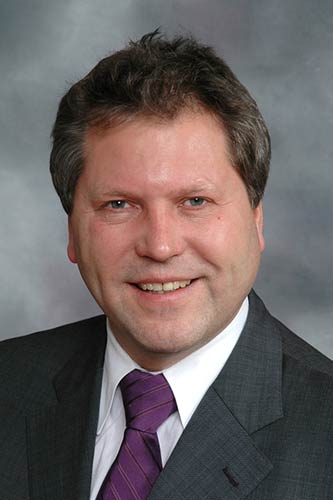
The recognition program was established by Dr. Takeru Higuchi, a distinguished professor at KU from 1967 to 1983, and his late widow, Aya. Four awards, each named for former leaders of the KU Endowment, are presented annually to honor outstanding accomplishments in research by faculty members at Kansas Board of Regents institutions. Dr. Richt is the recipient of the 2021 Dolph C. Simons, Sr. Award in Biomedical Sciences.
Dr. Richt said it is a “tremendous honor” to receive such a prestigious award from the University of Kansas. He expressed gratitude in the confidence the award showed in the focus of his research, which is zoonotic and emerging pathogens. “Since more than half of all human infectious diseases and the majority of emerging infectious diseases are zoonotic in nature, I believe our area of work is of tremendous importance to the future of biomedical research and to society at large,” he said.
“This is an extremely well-deserved recognition of Dr. Richt and his collective research accomplishments,” said Dr. Derek Mosier, head of the Department of Diagnostic Medicine/Pathobiology. “Dr. Richt is internationally recognized for his research on emerging and zoonotic disease. The recent pandemic has particularly highlighted his passion to conduct impactful research and his extraordinary ability to rapidly form high quality research teams that contribute to discoveries for the benefit of both animals and humans.”
Each award includes a plaque and $10,000 grant for ongoing research efforts. The award money can be used for research materials, summer salaries, fellowship matching funds, hiring research assistants or other support related to research.
At K-State, Dr. Richt investigates zoonotic, emerging and transboundary diseases of livestock, focusing mainly on viral diseases. His work has led to strategies to identify, control and/or eradicate pathogens with significant impact on veterinary medicine, human health and food security. His recent work focuses on the establishment of preclinical animal models for SARS-CoV-2 in order to evaluate the efficacy of vaccines and therapeutics for COVID-19.
More Headlines
Passion inspires K-State veterinarians to help homeless animals
By Piper Brandt
Faculty and students at the Kansas State College of Veterinary Medicine are sharing their passion for shelter medicine with the Riley County Humane Society by providing veterinary care and finding homes for homeless animals in Riley County and beyond.
Drs. Lisa Pohlman, associate professor of clinical pathology, and Jessica Meekins, associate professor of ophthalmology, serve as president and vice president of the human society, respectively. After earning her Doctor of Veterinary Medicine from the Ontario Veterinary College in 2001, Dr. Pohlman worked in small animal practice for several years providing discounted veterinary services to a county shelter and developing policies and procedures for disease control. "There was just so much need, and not enough resources or awareness of the massive problem of pet overpopulation," Dr. Pohlman said. "I think from that time on, I knew I'd always have to volunteer my time and skills to help." Dr. Pohlman became involved with the Riley County Humane Society shortly after joining the College of Veterinary Medicine faculty at K-State, and upon spending time with the organization, she took on the role of president. "I felt an obligation to offer to help local organizations, so I started volunteering for the Riley County Humane Society," Dr. Pohlman said. "At first, I was a foster parent. Then, I ran their community microchip and vaccination clinics. Then in 2012, the organization went through upheaval and was going to fold because there was no one willing to run it. So, with much trepidation, at the last minute, I volunteered for the job." In 2013, Dr. Meekins joined the humane society as vice president. Despite the struggles of running the organization, she says the hard work is more than worth it. "Every time a foster animal finds a forever home, we save a life and make an impact," Dr. Meekins said. "I am also excited that we have the ability to provide quality medical care to animals with special needs, as many shelters and rescue groups are unable to do this due to limited resources. We are able to rescue dogs and cats that would otherwise face humane euthanasia for health problems that are manageable and often curable." In addition to Drs. Pohlman and Meekins, many veterinary students have volunteered their time with the Riley County Humane Society assisting with fostering and veterinary care. Among them are Stephanie Helmer, second-year student, and Amanda Bennett, third-year student. While working in the intensive care unit in the Veterinary Health Center, Helmer's involvement with the humane society began when a stray animal was brought in for care. "This injured kitten immediately stole my heart, and when asked for a volunteer to foster her, I jumped on the opportunity," Helmer said. "I ended up adopting that foster kitten, but I've since fostered other cats with special medical needs. I love that I get the opportunity to be involved in the care of these sick animals. Not only is it extremely fulfilling and rewarding to observe their healing process, but it also allows me the opportunity to further develop my veterinary skills and knowledge." Bennett started out fostering dogs with RCHS and has been involved with new dog/cat intake and vaccinations for new rescues for about a year. "My favorite part has and always will be the feeling you get when an animal finds a new home or comes to the Riley County Humane Society from a place of need," Bennett said. "Seeing the changes that happen to these animals and the trust that they have in us makes it all worth it. I absolutely love using the skills I have learned in veterinary school and applying them to these incoming animals." RCHS has recently developed an emergency pet food pantry for owners who are experiencing financial hardship during the COVID-19 pandemic. The missions of the pantry are to keep pet owners from having to choose between feeding themselves and their pets and to keep loved pets in their homes and out of over-crowded shelters. Started with the help of major donations from Sunflower Natural Pet Supply and the Caroline Peine Charitable Foundation, the pantry is located at the west entrance of Colony Square at 555 Poyntz Ave. and occurs on the first and third Saturdays of the month from 9 a.m. to 10 a.m. Those who are interested in requesting services from the pantry can apply at https://bit.ly/RCHSPANTRYAPP.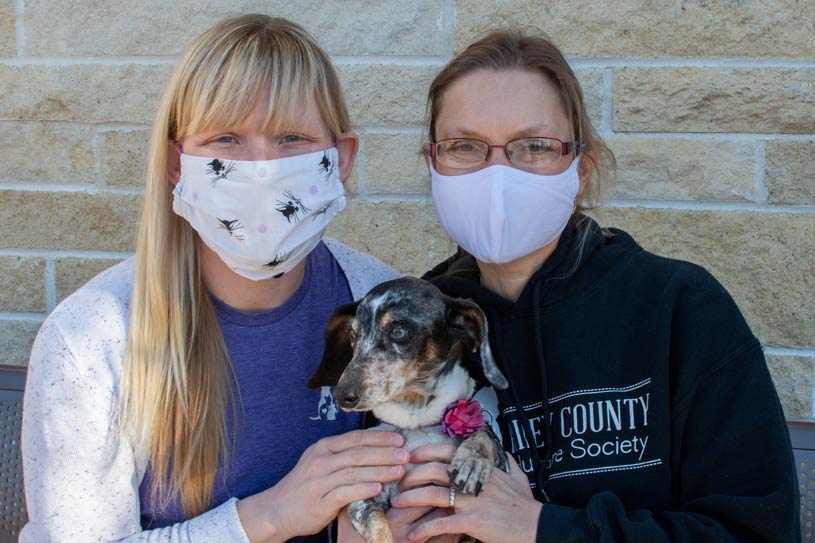
Drs. Jessica Meekins and Lisa Pohlman with foster dog Poppy.
Dr. Douglas Winter shares tips for Pet Dental Health Month
Next month is Pet Dental Health Month and the perfect time to learn how to keep up with your pet’s pearly (or not so pearly) whites. Dr. Douglas Winter, member of the American Veterinary Dental College, has a few dental health tips to share:
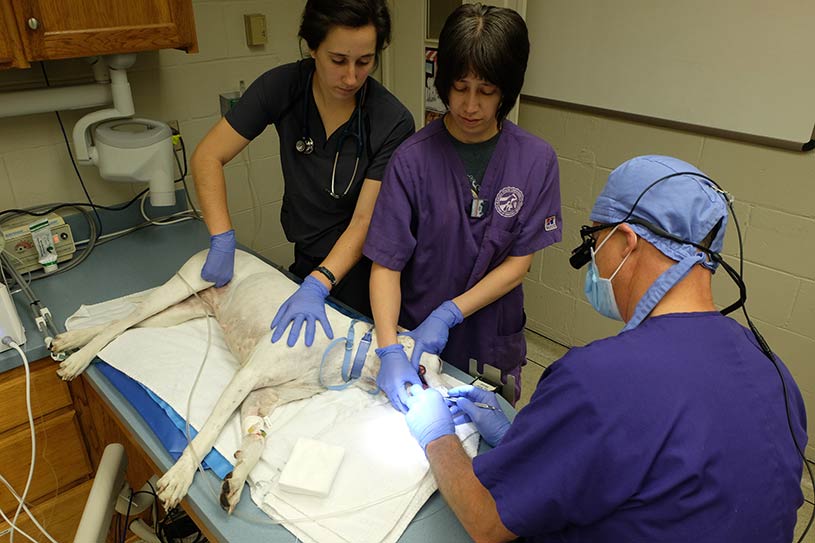
Dr. Douglas Winter performs a dental procedure on a dog.
- Daily tooth brushing is the gold standard of veterinary dental oral care. When performed properly and regularly, it is the most effective defense against plaque, which is the cause of periodontal disease
- Tartar control diets can decrease tartar and plaque buildup. These diets contain abrasives and are shaped to remove plaque from the teeth and calcium chelators to decrease dental calculus.
- Soluble dental chews also help mechanically remove plaque and tartar. Always supervise when giving your pet a treat, as there is potential for choking or obstructive hazards with any treat.
- Water additives can help reduce the accumulation of plaque, tartar or both.
- Antiseptic solutions and gels can decrease gingivitis and plaque formation.
Lastly, always consult your family veterinarian if you have questions about your pet’s oral care.
Regular features
Alumni Events, Development and Continuing Education
 The Veterinary Medical Alumni Association organizes alumni receptions at several of the national annual conferences plus continuing education events and more. This month's section includes the monthly listings of recently departed alumni and links to their obituaries, plus a new link for submitting nominations for Alumni Recognition Awards.
Frank W. Jordan Seminar
We are excited to host the 38th Annual Frank W. Jordan Seminar online on March 21, 2021! This year's seminar features Drs. Amy Rankin, Jessica Meekins, Jordan Roberts and John Angelos discussing Veterinary Ophthalmology.
Location
Due to the ongoing COVID-19 pandemic, the 2021 Frank W. Jordan Seminar will be held virtually. The 2020 Frank W. Jordan Seminar provided us with more than 300 virtual attendees! The 2021 version promises to be just as successful. The 2021 seminar will be held via zoom. Please register for this seminar on the registration page.
Contact Hours
4 CE Hours are available
Questions
For additional information, contact the Office of Continuing Education & Events at 785-532-4528 or by emailing: vmce@vet.k-state.edu.
Submit nominations for Alumni Recognition Awards online
See our new online nomination form to nominate a fellow alumnus for one of our many annual recognition awards, presented at the national conferences: VMX, WVC, AVMA and the Annual Conference for Veterinarians. See full details at the link below.
|
|
|
In Memoriam - Recently Departed Alumni
Dr. Larry Charles Caster, DVM 1963 Dr. Marvin James Farr, DVM 1968 Dr. Steven Robert Welty, DVM 1972 Dr. Yuval Nir, DVM 1988 Dr. Jane Westfall, professor emeritus (click highlighted names for obituary) |
|
Questions about Alumni or CE events?Contact:
|
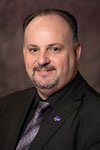 Tony Ballard
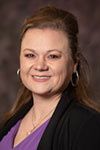 Sarah Keatley
News Ticker
| More activities and accomplishments in the College of Veterinary Medicine: |
|
Congratulations to Dr. Clay Hallman for successful completion of the American College of Veterinary Radiologist board certification process! Congratulations to Dr. David Hodgson for being recognized as Professor of the Week during the Dec. 11 men’s basketball game. The Professor of the Week recognition is coordinated by Faculty Senate, the president's office, K-State Athletics and the Division of Communications and Marketing. Recipients are faculty members selected by Faculty Senate caucuses. Congratulations to Dr. Leah Freilich and research mentor Dr. Maria Jugan for receiving the American College of Veterinary Internal Medicine Resident Fellowship Award in the amount of $9,776 for their project titled, “Effect of dietary nutrient profile on plasma glucagon-like peptide 2 concentrations in healthy cats.” Congratulations to former graduate student Sarah Remfry, Drs. Raghavendra Amachawadi, Xiaorong Shi, Jianfa Bai, Jason C. Woodworth, Mike D. Tokach, Steve Dritz, Robert D. Goodband, Joel M. DeRouchey and T. G. Nagaraja. Their research article, “Polymerase Chain Reaction-Based Prevalance of Serogroups of Escherichia coli Known to Carry Shiga Toxin Genes in Feces of Finisher Pigs,” from the Foodborne Pathogens and Disease Journal was selected as a High-Impact article for the month of December. The journal selects three high impact articles from every issue. Two fourth year students, Laura Constance and Rebecca Whisler, participated in this year’s virtual American Royal Field Trip. The K-State College of Veterinary Medicine was featured in the December field trip. The students filmed video clips exploring the life of a veterinarian and answering common questions. The American Royal had over 400 teachers/parents enrolled in the program, representing more than 6,000 students in 24 states and two countries! The Kanas State University College of Veterinary Medicine and Hill’s Pet Nutrition 2nd Annual Clinical Nutrition Symposium was held virtually on Dec. 15. Drs. Neala Boyer, Tom Schermerhorn and Taryn Pestaloozi presented seminars. The event was a great success with 1500 registered participants! https://hillsathomece.com/ Drs. Mary Lynn Higginbotham, Sam Hocker and Raelene Wouda received $54,950 in funding from ELLIAS Animal Health for their research project, “Clinical trial to evaluate the safety and effectiveness of ELIAS Cancer Immunotherapy combined with surgery as treatment for appendicular osteosarcoma in dogs.” |
 We have expanded our social channels!
Join the College of Veterinary Medicine on LinkedIn and add us to your profile under education and/or employment to help build and engage our online social community! Follow the LinkedIn page here: www.linkedin.com/company/kstatevetmed
New Arrivals/Recent Departures
Lifelines is published each month by the Marketing and Communications Office at the College of Veterinary Medicine. The editors are Joe Montgomery, jmontgom@vet.k-state.edu, and Piper Brandt, pnbrandt@vet.k-state.edu.