College of Veterinary Medicine hosts international conference on streptococcal disease in horses
Caption for top photo: Dr. Alix Carpentier, equine R&D manager with Innovative Diagnostics in France, talks about new diagnostic tools for strangles.
By Joe Montgomery
July 24, 2026
Global equine-health experts recently gathered at K-State’s College of Veterinary Medicine in an effort to corral a highly prevalent disease called “strangles.”
Dr. Laurie Beard, clinical professor of equine medicine and surgery at K-State, served as the local host of the workshop, which is entitled, “Getting to Grips with Strangles and other Streptococcal Diseases.” The workshop was organized under the leadership of Dr. Rob Keene, professional services veterinarian with Boehringer Ingelheim, in Duluth, Georgia.
“Strangles is a highly prevalent infectious disease characterized by upper respiratory tract lymph node abscessation secondary to infection with Streptococcus equi equi,” Dr. Beard said. “We invited abstract submissions and accepted 22 abstracts for presentation in four areas of interest: general, diagnostics, genetics and control.”
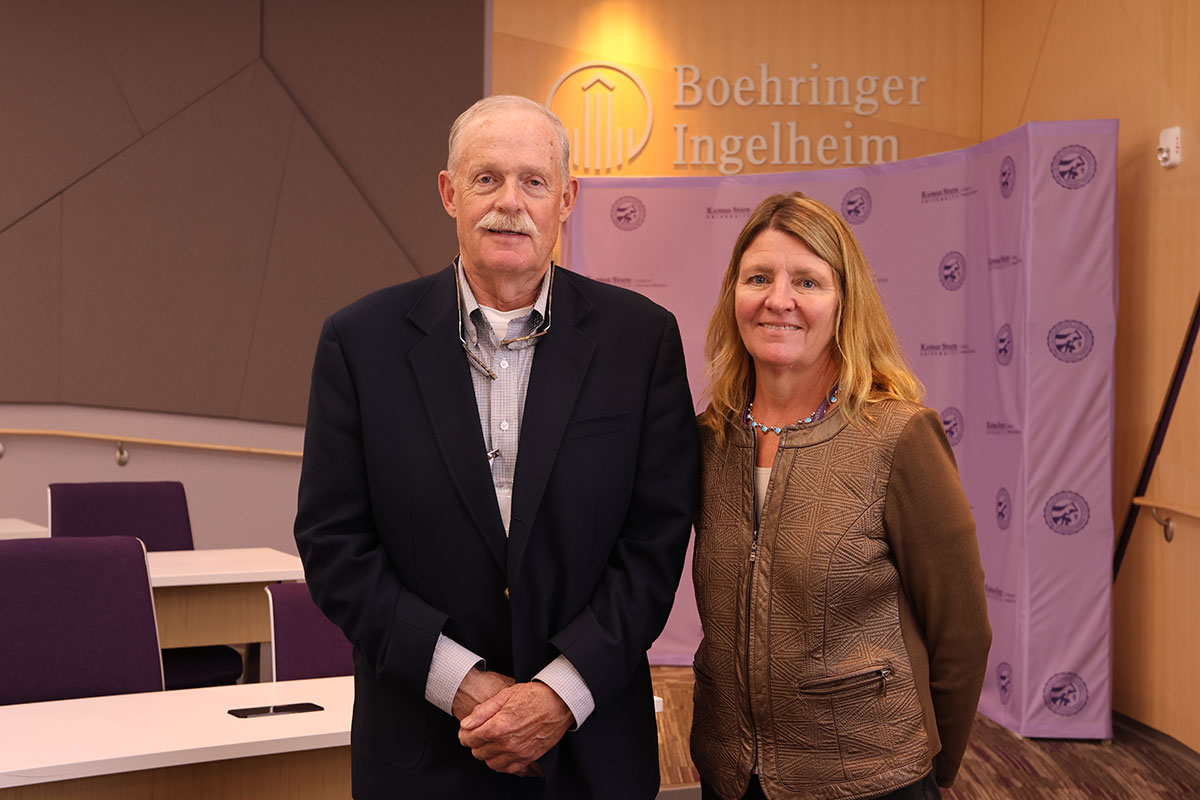
The workshop is organized through the Dorothy R. Havemeyer Foundation, which was founded in 1979 to advance equine health and science. Unique to the Havemeyer Foundation have been nearly 200 international workshops bringing together the top researchers in specific areas to present, discuss and collaborate on their research.
“Havemeyer workshops are designed to bring together the greatest minds in specific equine fields for the exchange of ideas and to build collaborations to further that mission,” Dr. Keene said. “The attendees of Havemeyer workshops are selected to represent a mix of both established and new researchers. This gives new researchers an opportunity to meet and interact with leading researchers.”
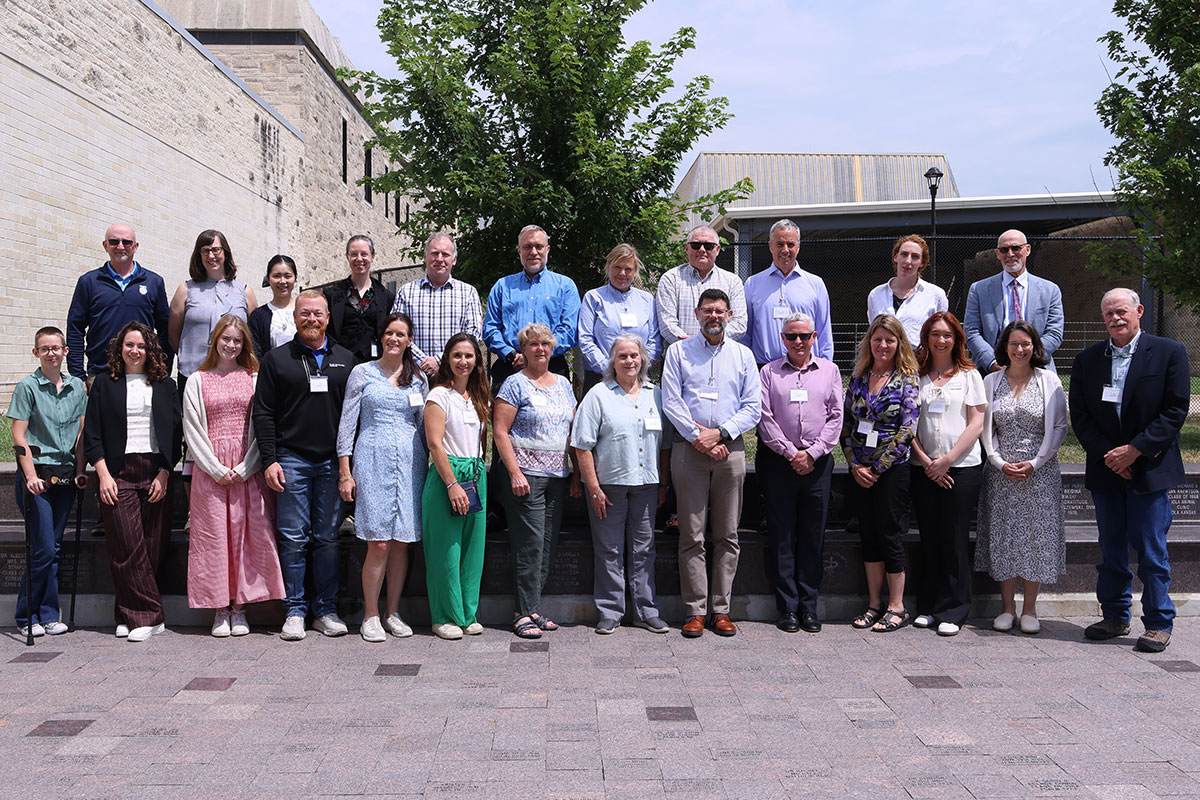
The strangles workshop includes researchers from the UK, Austria, the Netherlands, Canada, Sweden, Norway, France, South Africa, China and the United States.
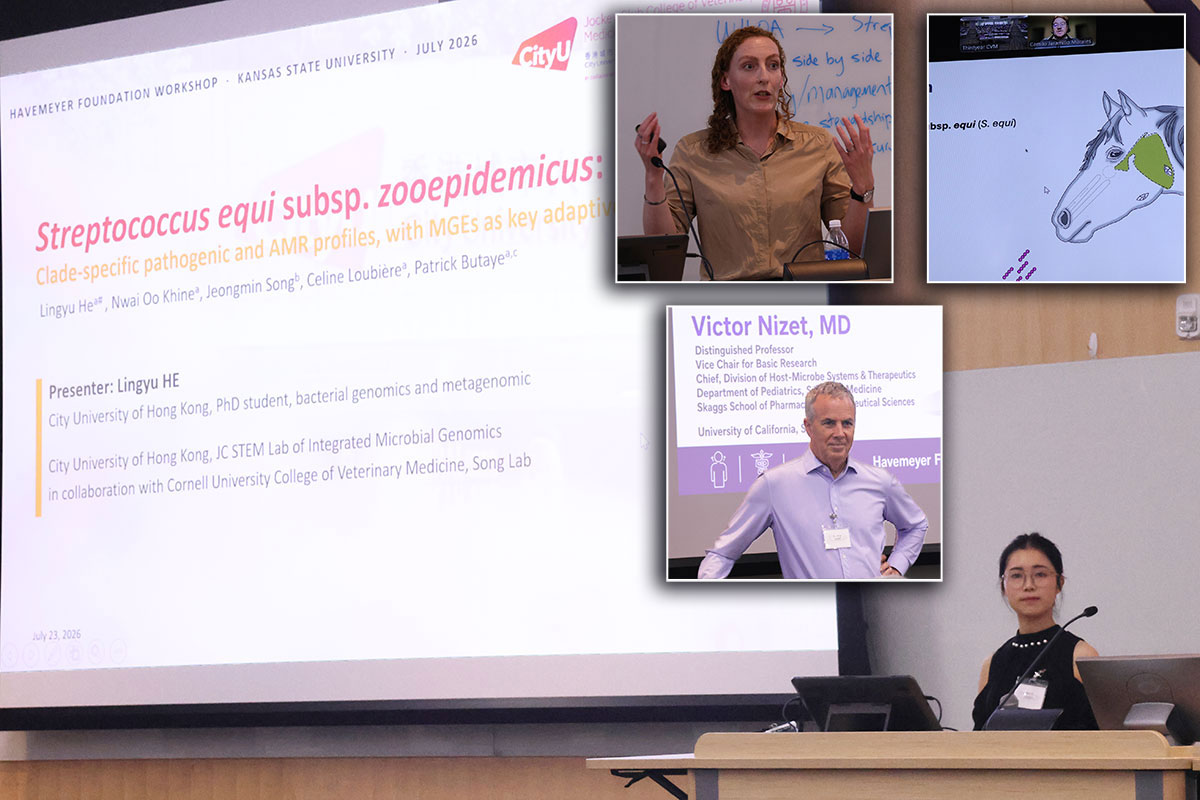
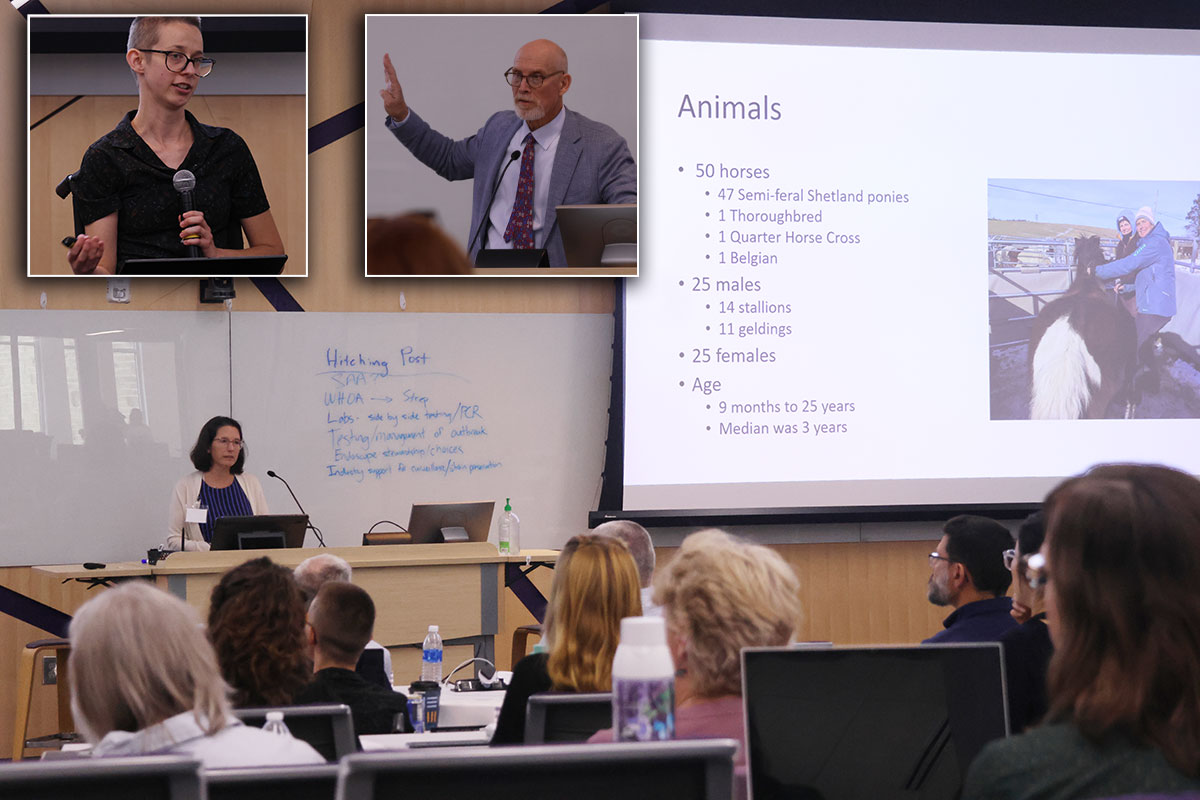
K-State’s Dr. Katie Delph Miller was one of the invited researchers. She gave a presentation on the testing of endoscopes prior to screening horses after a natural outbreak of strangles.
The workshop also featured two plenary speakers. Victor Nizet, M.D., spoke about unique virulence factors of “group A” streptococcus and new cellular nanoparticle vaccines for any bacteria that his team studies at the University of California at San Diego. Chad Mire, Ph.D., research leader with the National Bio and Agro-defense Facility, or NBAF, in Manhattan, shared some insights about the new facility and his role with the the Foreign Arthropod-Borne Animal Diseases Research Unit under the United States Department of Agriculture.
As part of the workshop, the participants were also invited to attend the Kaw Valley Rodeo in Manhattan.
Other supporters for the workshop include Boehringer Ingelheim Animal Health, Equine Diagnostic Solutions, Intervacc and Merck Animal Health.
###
For more information about the Kansas State University College of Veterinary Medicine, please visit our website at vet.k-state.edu or follow us on Facebook, Instagram, and X.