Brushing up on history
Second-year student composes artful historical essay for second-place finish in Smithcors essay competition
Story by Joe Montgomery
October 23, 2026
By drawing on the past, Mahayla Harris found a unique way to bridge two of her passions: veterinary medicine and art appreciation. The second-year student from Inman, Kansas, exhibited a creative way to link these two topics into an award-winning essay as recognized by the American Veterinary Medical Historical Society (AVMHS) in its annual essay competition.
Mahayla earned a second-place tie for her essay, "Historical development of veterinary medicine throughout the Renaissance Era: The shift from art to science," that was announced in October. The award is accompanied by $1,000 prize.
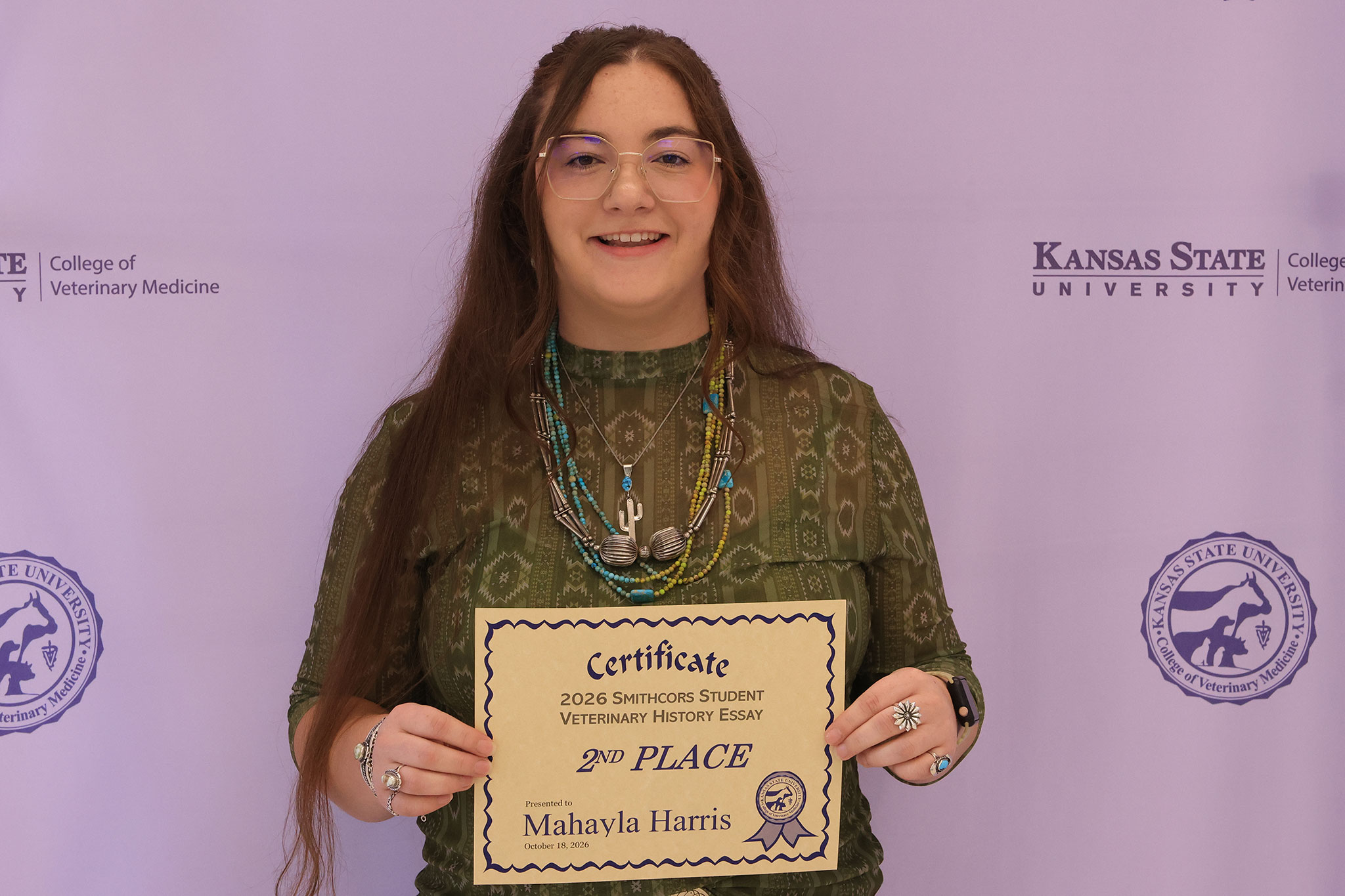
"My inspiration for writing this essay topic came from a personal love and appreciation for art, especially from the Renaissance era, and make a connection of that art to what I have been learning in veterinary medicine," Mahayla said. "I wanted to write this piece to highlight a few of the artists, scholars and observers of this period who looked at comparative anatomy between humans and animals with a new scientific perspective and approach."
Dr. Justin Kastner, professor in the Department of Diagnostic Medicine and Pathobiology, said K-State DVM students have competed in the AVMHS Smithcors Essay contest for many years.
"All students in the VAP888 'History of Veterinary Medicine' class are required to author a comprehensive final paper, and Mahayla chose to focus on key developments in veterinary medicine during the Renaissance era," Dr. Kastner said. "She did a great job with the assignment — incorporating material from the 1523 'The Boke of Husbandry,' which we explore in the course, to describing the contributions of such key veterinary thought leaders as the Italian Carlo Ruini and the anatomist Andreas Vesalius."
After the course was complete, Mahayla further optimized her paper for submission to the contest.
"We are so proud of her seizing this opportunity — and doing so with such excellence!" Dr. Kastner said.
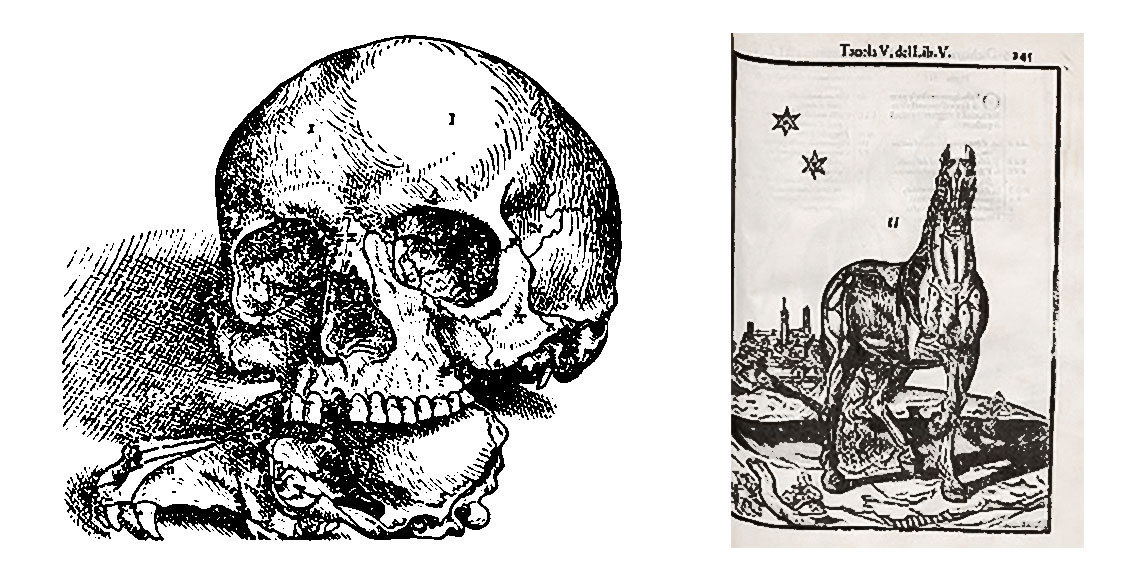
"By tracing their anatomical studies and detailed illustrations, particularly of horses and livestock, I wanted to show how these figures ultimately laid the anatomical foundations that would be later used in the first veterinary colleges," Mahayla said. "I am so glad that I took this opportunity and incredibly thrilled that my work received second place."
Dr. Susan Aiello, chair of the Essay Contest Committee, commented, “The AVMHS is delighted to
see students showing an interest in researching and writing about the rich history of the veterinary
profession. This year’s essays were submitted by students from 18 veterinary schools.”
About the Smithcors essay competition
Named in honor of Dr. J.F. Smithcors, the founder of AVMHS, the annual student history essay
contest was established in 1992 and awards monetary prizes each year for meritorious essays on
relevant topics in veterinary history. Students enrolled in DVM/VMD programs at colleges of
veterinary medicine worldwide who are citizens of the United States or Canada are eligible to submit
essays between 1,500 and 3,500 words.
This year’s panel of four knowledgeable judges evaluated 25 submissions in a blinded review
process. The contest was very competitive this year, with all four judges remarking that judging was
a difficult task because so many of the essays were high quality. Major criteria for evaluation include
historical interest and relevancy, scientific merit and accuracy, writing quality, and research
documentation and references.
Prize-winning essays are published in issues of Veterinary Heritage, the Society’s semi-annual
bulletin.
###
For more information about the Kansas State University College of Veterinary Medicine, please visit our website at vet.k-state.edu or follow us on Facebook, Instagram, and X.
*Art sources: Fabrica [Ball, J. M. (1910). Andreas Vesalius, the reformer of anatomy. Project Gutenberg.] and Anatomiadelcavallo [Ruini, C. (1618). Anatomia del cavallo, infermità, et suoi rimedii [Illustrated work, 2 vols. in 1]. Appresso Fiorauante Prati. National Library of Medicine Digital Collections.]