Beef-focused graduate students embrace interdisciplinary engagement through new K-State cohort
Students are leading students at Kansas State University with a goal of making a positive impact on the future of the beef industry.
Taylor McAtee, a Ph.D. student in the College of Veterinary Medicine has been coordinating the Interdisciplinary Beef Graduate Student Cohort Lunch and Learn series of seminars throughout the fall semester and other cohort activities.
“We just wrapped up our third session [Nov. 14] with an engaging conversation led by Dr. Abram Babcock, CEO of Adams Land and Cattle LLC,” Taylor said. “He shared his career journey from K-State graduate student to industry leader, offering perspective on the importance of pairing technical expertise with strong leadership.”
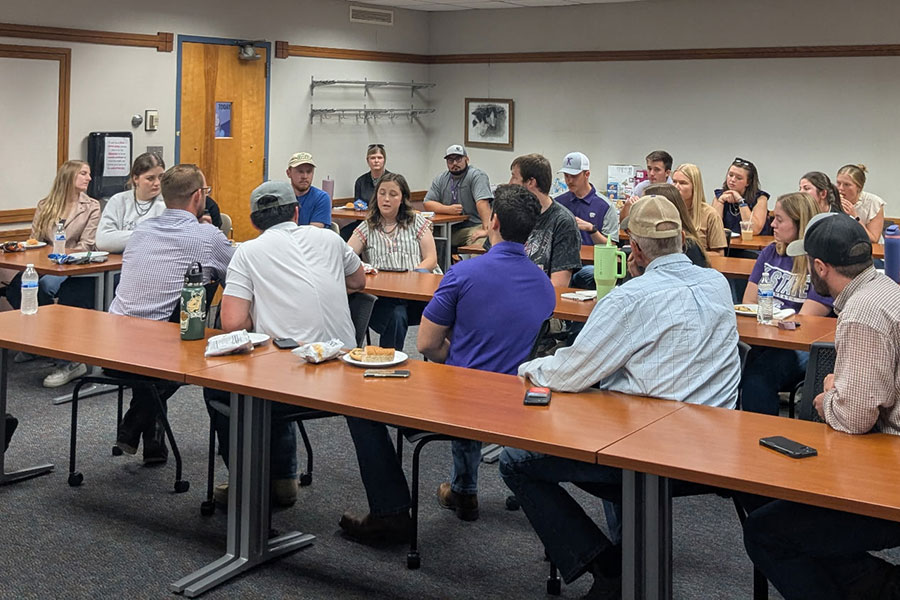
Students in the K-State Interdisciplinary Beef Graduate Student Cohort have a discussion on the beef industry.
For the sessions that have been held so far (the fourth is Dec. 12), Taylor said nearly 30 graduate students attend from across campus, representing agronomy, animal science & industry ( such as meat science, ruminant nutrition and genetics), diagnostic medicine and pathobiology, clinical sciences, anatomy and physiology, agricultural education, ag communications, and ag economics.
The idea for the K-State Interdisciplinary Beef Graduate Student Cohort grew out of a cross-campus brainstorming meeting held in the spring, where graduate students came together to discuss how to strengthen the beef-focused graduate experience beyond the classroom and lab. Despite the extraordinary depth of beef-related research at K-State — spanning meat science, genetics, ruminant nutrition, agricultural economics, ag communications, agronomy, and multiple departments within the College of Veterinary Medicine — students noted that they rarely interacted across colleges and often had limited awareness of each other's work.
“We realized that despite all the impactful beef research happening at K-State, most of us didn’t know each other or how our work connected,” Taylor said. “We saw an opportunity to create one K-State Beef community where students could connect, learn from one another, and think more broadly about how our disciplines intersect.”
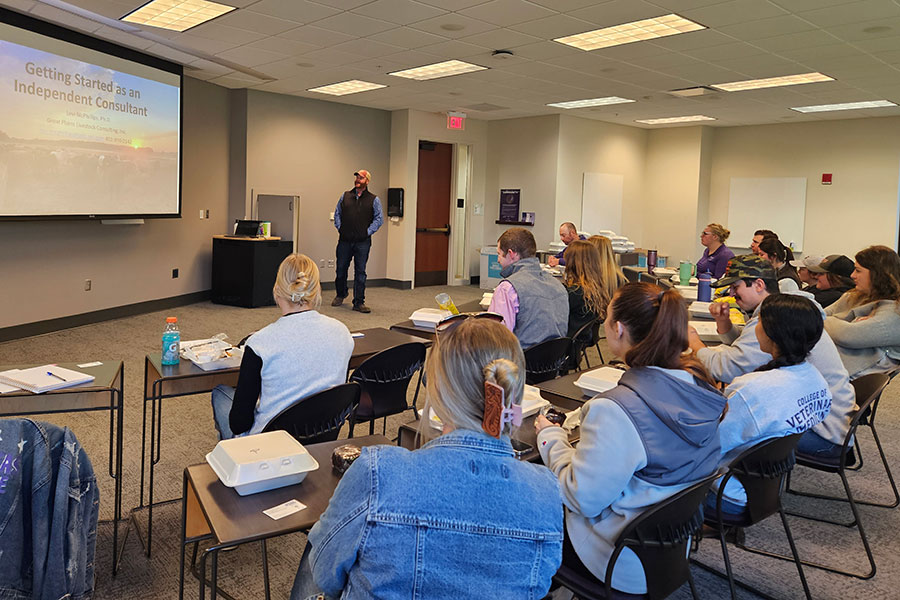
Dr. Levi McPhillips gives a presentation on Great Plains Livestock Consulting Inc. in November.
Taylor noted that several graduate students played an important role in shaping the cohort during its early development. Carlee Salisbury, a Ph.D. student in animal science working with Dr. Logan Thompson; Allen Schartz, a master’s student in animal science with Dr. Jason Warner and Dr. Nicholas Dias; Caitlyn Alderson, a master’s student in agricultural economics with Dr. Ted Schroeder; and Maddie Mancke, a Ph.D. student in veterinary medicine working with Dr. Brad White at the Beef Cattle Institute, all provided valuable feedback and perspective as the group took shape. Their involvement — spanning multiple colleges and disciplines — helped ensure the effort reached students across campus and reflected the truly interdisciplinary nature of the beef industry.
“The Interdisciplinary Beef Graduate Student Cohort has provided valuable opportunities to connect with students across departments who are also focused on the beef industry,” Schwartz said. “The Lunch and Learns along with this semester's ‘Industry Spotlight’ have created an informal setting to engage with industry leaders, fostering monthly growth in both knowledge and professional relationships.”
This vision for an interdisciplinary cohort led to the first “Beef Graduate Student BBQ” at the start of the semester in September, bringing students and faculty together to build relationships in an informal setting, and later to the Lunch and Learn series, designed to maintain momentum, encourage interdisciplinary thinking, and engage directly with leaders across the beef industry.
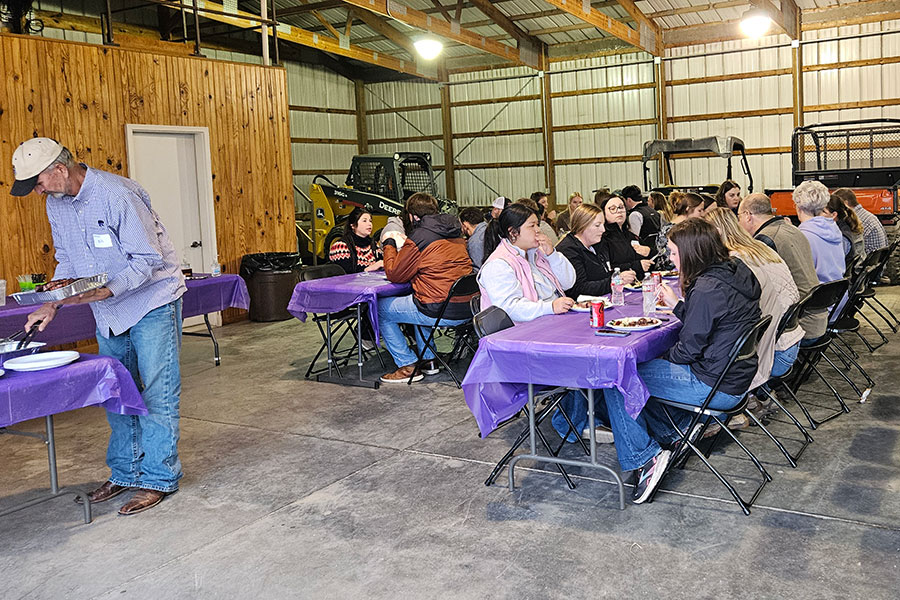
The graduates student network with each other, as well as with the industry partners and faculty at the introductory barbecue.
The first two lunch and learn sessions featured Dr. Tyler Spore from Innovative Livestock Services Inc., and Dr. Brandon Depenbusch with Irsik & Doll Feed Services Inc.
Dr. Spore shared insights from his role overseeing cattle operations at Innovative Livestock Services, discussing leadership in feedyard management, building resilient teams, and the importance of understanding both animal care and business strategy.
That discussion had the group looking ahead, and thinking of expanding their activities by launching an interdisciplinary “Beef Industry Challenge,” that would enable consulting-style experiential learning. The idea is to bring together cross-campus teams of graduate students to work with industry partners on real-world problems facing the beef sector. By providing a hands-on, consulting-type experience, the challenge would help prepare career-ready graduates with a systems-level understanding of the beef industry and the ability to collaborate across disciplines.
“The discussions have been deeply engaging and interactive, and sparked great conversation about the future of the beef industry,” Taylor said. “Dr. Depenbusch shared an inspiring message, ‘Build beef, build people,’ which truly resonated with the group. Our discussion centered on the relational side of the beef industry — how investing in people and fostering collaboration strengthens not only individual success but the industry as a whole. As Dr. Depenbusch put it, ‘A rising tide lifts all ships.’”
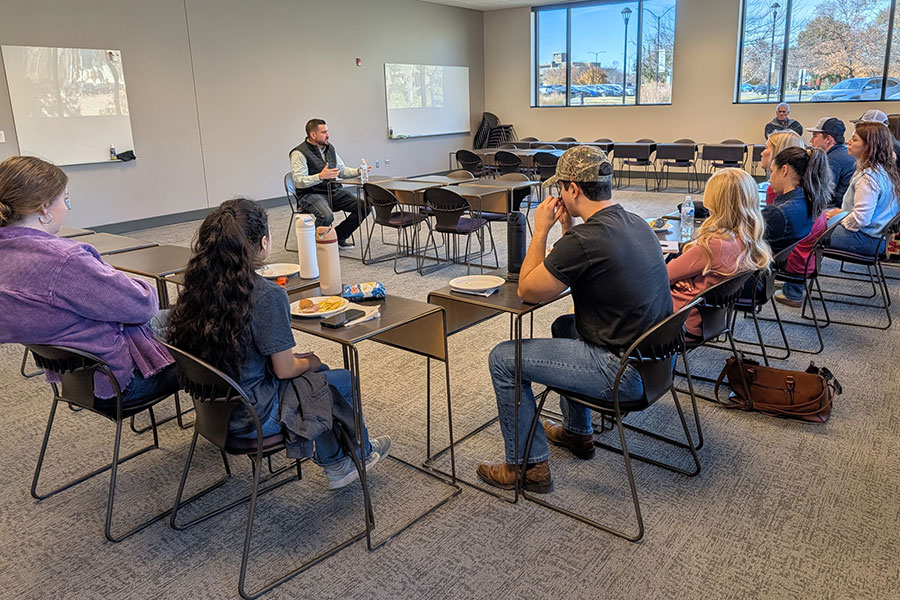 Dr. Abram Babcock talks to students about his approach to managing Adams Land & Cattle.
The third session in the Lunch and Learn series featured Dr. Abram Babcock in November.
“Our discussion for this most-recent session highlighted how data-driven decision-making, disciplined risk management and a commitment to continuous improvement shape both [Dr. Babcock’s] approach and the culture at Adams Land & Cattle,” Taylor said. “As someone who is also a graduate student of Dr. David Renter like Dr. Babcock was, I found his insights especially meaningful and motivating.”
Dr. Renter said the seminars are a great example of students supporting K-State’s Next-Gen approach by building engagement and emphasizing interdisciplinary collaboration.
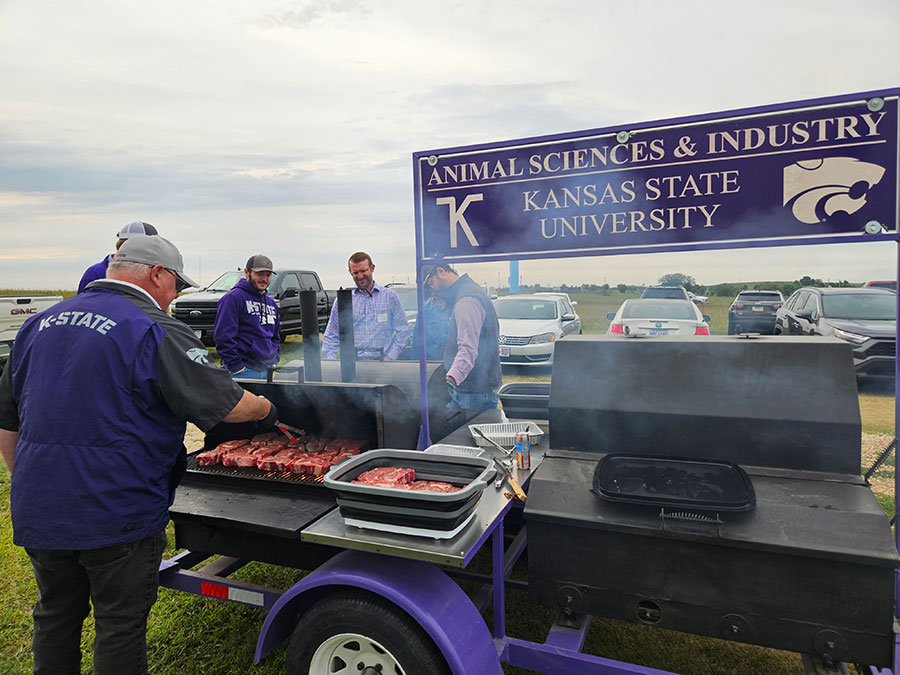
Faculty and students cook steaks provided by ILS while Dr. Spore supervises.
The next Lunch and Learn session is scheduled for Dec. 12 from 12:30 to 1:30 p.m. and will feature Dr. Glynn Tonsor, an agricultural economics professor and extension specialist at K-State. The meetings are held in Leadership Studies Building, Room 127.
“Whether you’re in animal sciences and industry, agricultural economics, agricultural communications, veterinary medicine or another discipline area, success in the beef industry requires collaboration across disciplines, so we hope this cohort continues to grow,” Taylor said. “And we want to give a since thank-you to Merck Animal Health for providing funding for the meals with this lunch and learn series and Innovative Livestock Services for supporting our barbecue event.”
###
For more information about the Kansas State University College of Veterinary Medicine, please visit our website at vet.k-state.edu or follow us on Facebook, Instagram, and X.